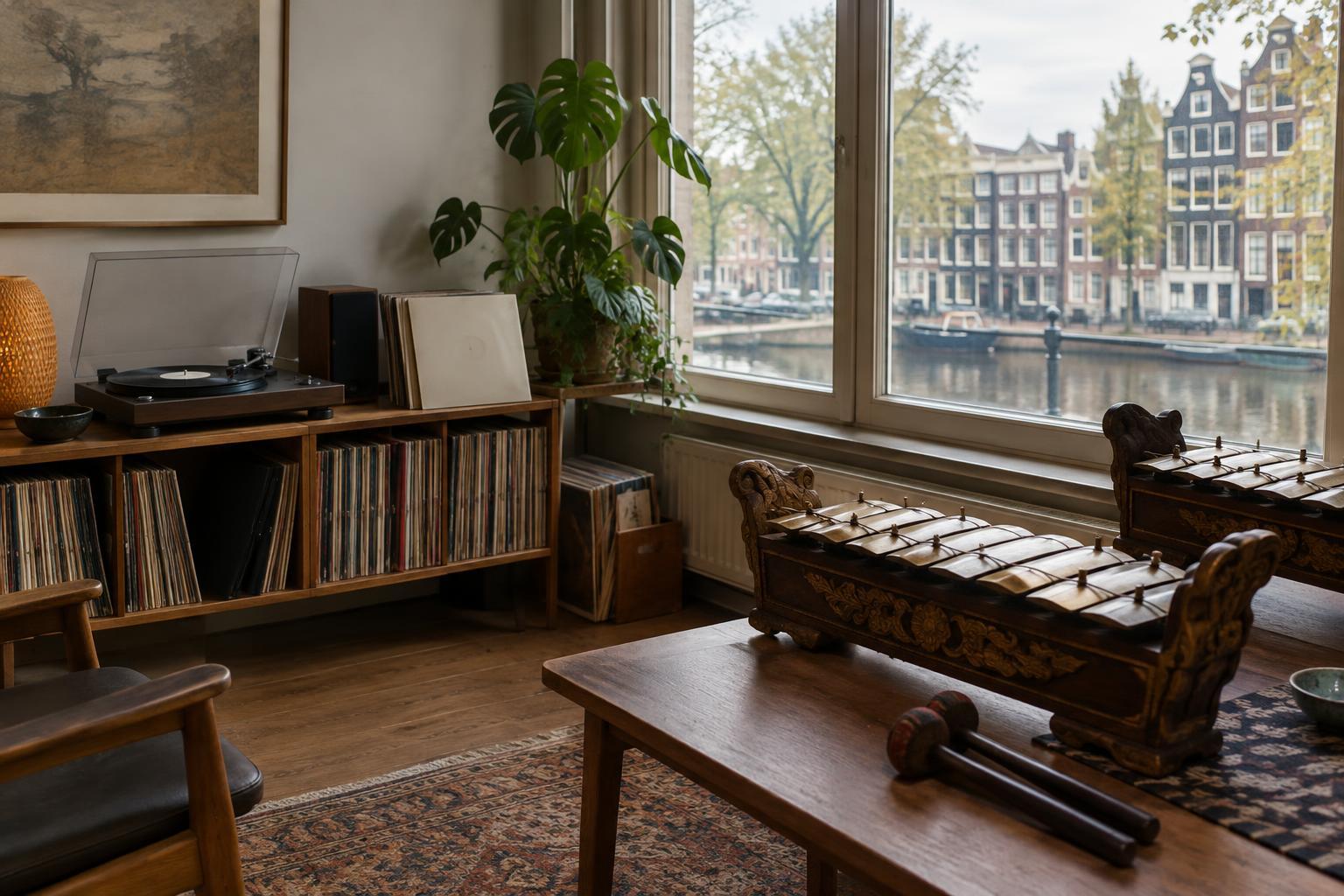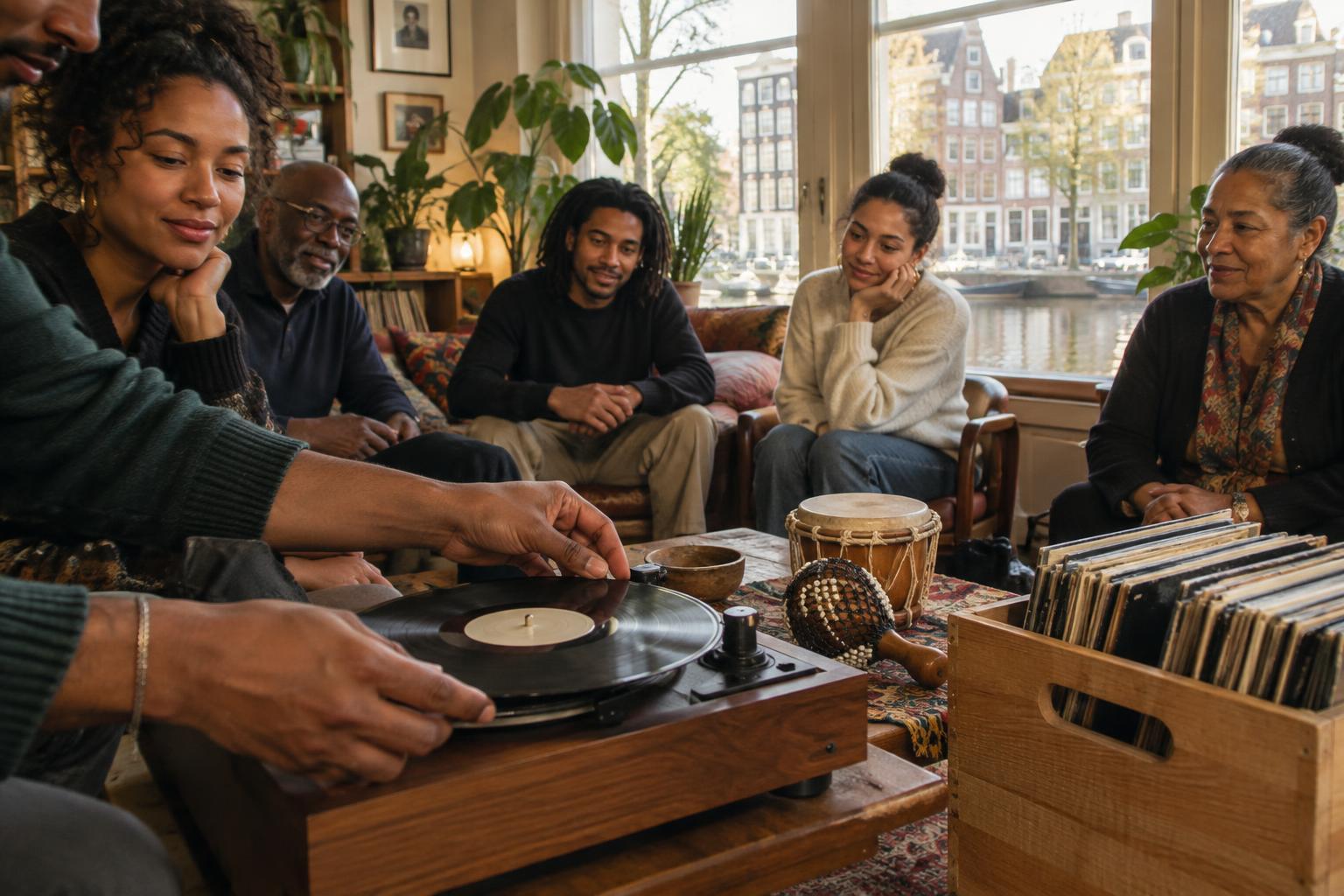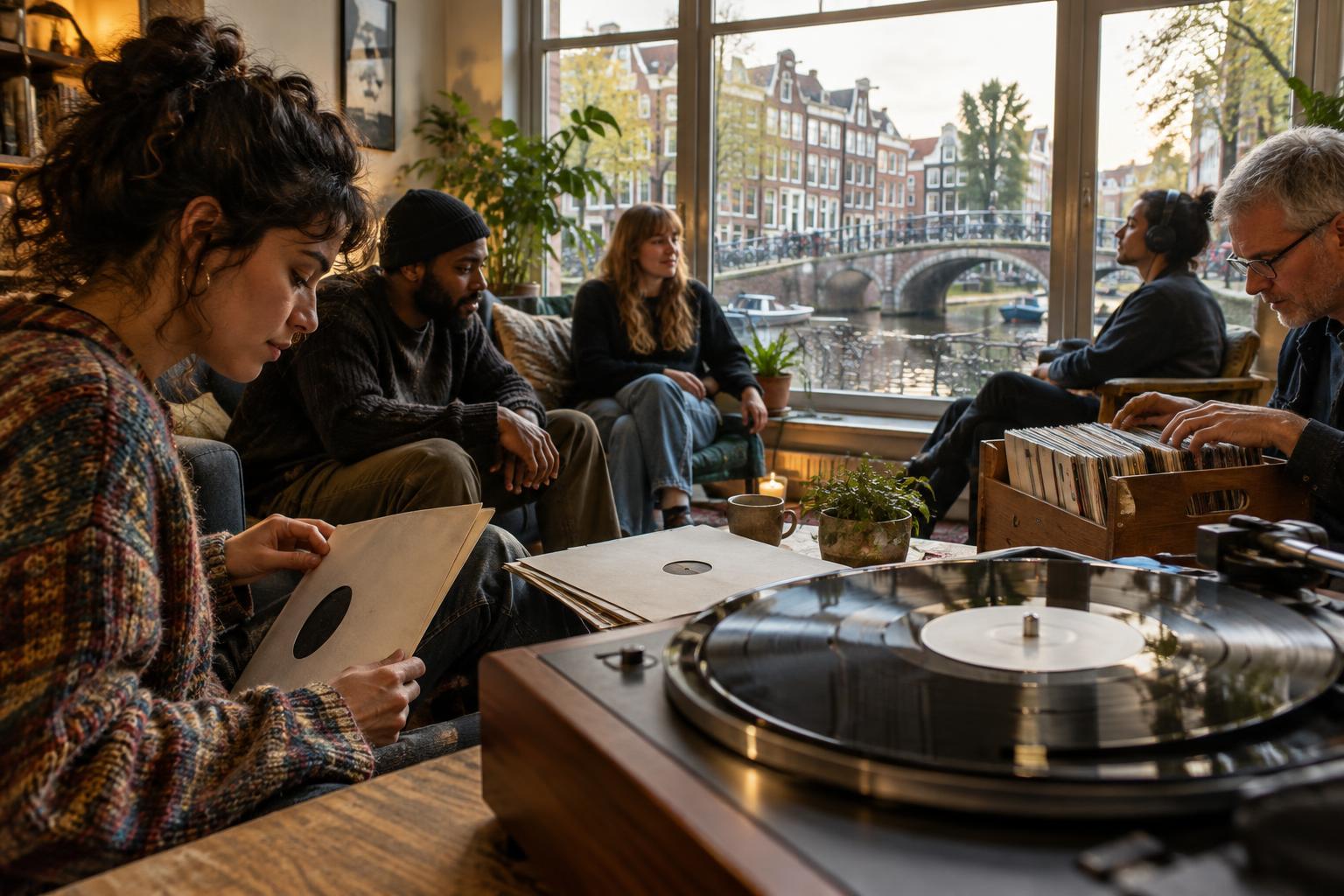
Start with a city of overlapping sounds
Amsterdam does not have one defining sound. Electronic music may be the first thing a newcomer associates with the city, but a useful introduction also makes room for jazz and improvised music, hip-hop, punk, pop and sounds carried by communities with ties to Suriname, the Caribbean, Indonesia and elsewhere. These traditions do not sit in separate boxes. Musicians, DJs and listeners move between them, and a night out may reveal connections that a genre label cannot.
Rather than trying to find the single most representative venue, follow a question: What happens to a song when it moves from a family gathering to a radio show, a record collection or a club set? Listening for those journeys can make the city feel less like a checklist of attractions and more like a place where people continually make music their own.
Notice what different spaces make possible
A large concert room, a small bar, a community space and a club offer different ways to meet music. One may foreground a performer onstage; another may invite dancing, conversation or close attention to a DJ’s selections. Record shops offer yet another kind of encounter: sleeves, labels and conversations can lead you toward artists you would not have searched for online. None of these spaces tells the whole story, and smaller events can be as revealing as prominent ones.
If you are new to a scene, look at how an event describes itself before arriving. Is it a seated performance, a listening session or a late-night dance event? Understanding the format helps you choose a place that suits your interest and behave considerately once you are there. It is also worth remembering that venues and programmes change. Treat any recommendation you hear as a starting point, then check the details before making plans.
Hear the history without flattening it
Amsterdam’s musical life reflects both local experimentation and connections beyond the city. Migration, touring, broadcasting and record collecting have all helped sounds travel. Electronic dance music has an important place in the city’s cultural imagination, while live performance, neighborhood celebrations and independent music-making offer other ways to understand its history. A style heard in Amsterdam need not have begun there to become meaningful to its listeners.
Approach that history with specific questions instead of broad claims about a single ‘Amsterdam sound.’ Who made the record? Where was it played? Who kept it in circulation? The answers may be different for a jazz recording, a Surinamese song, a punk release or a dance track. Liner notes, artist interviews and conversations with knowledgeable listeners can add context, but it is fine to say when you do not yet know a story.
Use records as a route into discovery
For a vinyl listener, digging can turn curiosity about the city into a practical habit. Begin with a genre you know, then spend time in a section you do not. Read credits and labels, and pay attention to connections between performers, producers and styles. A record need not be rare to be worth hearing; an inexpensive, well-loved release may teach you more than a sought-after pressing bought for its reputation.
Good crate-digging manners make the experience better for everyone. Handle sleeves and discs carefully, keep records in their original order, and ask before using a listening station or photographing a shop’s stock. If staff have time, a focused question—such as asking for an introduction to a style you enjoyed at a show—is often more useful than a request for something simply ‘authentic.’ Buying within your budget and listening closely matters more than collecting quickly.
Be a curious guest, then keep listening
Music culture is sustained by the people who make room for it: performers, organisers, sound crews, shop workers and audiences. At an event, respect the room’s cues. Keep conversation low during attentive performances, give dancers space, and follow policies on recording or photography. Remember that a place where you go for a night out may also be close to someone’s home.
A beginner does not need to master Amsterdam’s scenes in one visit. Choose a performance, explore a record shop or spend an evening with a few albums that raise new questions. Note the names you encounter and follow the connections at your own pace. The most rewarding guide to the city’s music culture is not a fixed list of essential stops, but the habit of returning with more attentive ears.