Start with a careful visual check
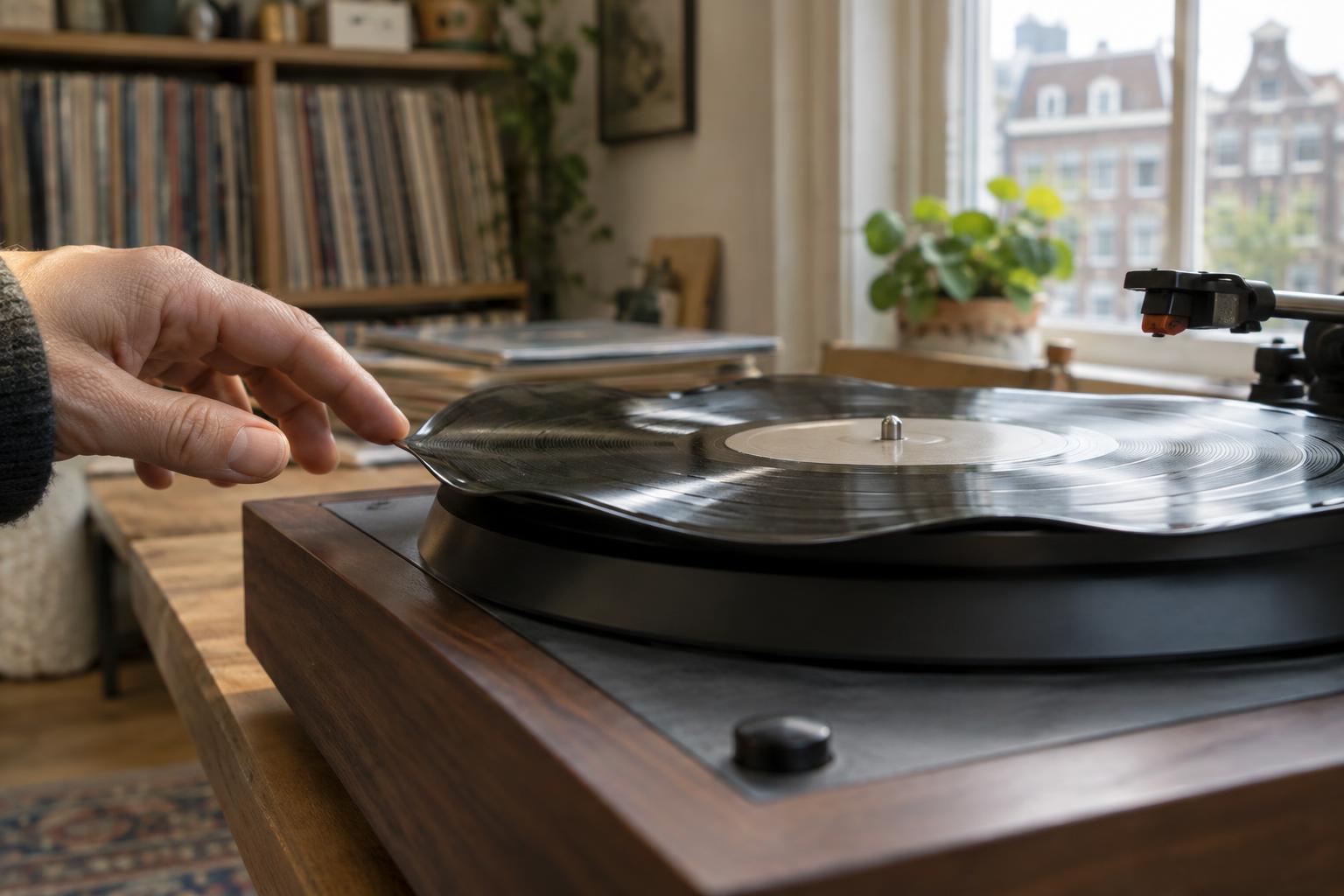
A warp is a change in a record’s flatness. It may appear as a gentle rise and fall around the edge, a lifted section or a dish shape in which one side sits differently from the other. Place the record on a clean, flat surface and look across it at eye level. Hold it by the edge and label rather than pressing on the playing surface. Inspect both sides: a bend that is hard to notice from above may be obvious when viewed from the edge.
Check that the apparent warp is in the record, not the setup. A turntable mat that is folded, uneven or sitting on debris can make a flat record seem to wobble. If you inspect the record on a stationary platter, check that it is properly seated around the spindle. Do not push down on a raised edge to test whether it will stay flat; that tells you little about how it will play and risks putting stress on the disc.
Watch how the stylus would have to travel
The useful question is not simply whether the record looks imperfect. It is whether the stylus can follow the groove without an unusually large or sudden movement. A mild, gradual rise may play without an obvious problem on some setups. A sharp lift can make the tonearm jump, skip or momentarily lose contact. A dish warp may behave differently when the record is turned over, so assess each side separately.
If you decide to try playback, begin at a low volume and watch the tonearm from the side for a short period. Stop if it bounces sharply, the stylus leaves the groove, or you hear repeated skipping or severe distortion. Avoid holding the record down by hand while it spins. If your turntable has adjustable tracking force, do not increase it beyond the cartridge maker’s recommended range in an attempt to force playback. A record that cannot be tracked reliably is better left unplayed than subjected to repeated attempts.
Be cautious with flattening methods
Heat is tempting because vinyl can change shape when warmed, but uncontrolled heating can replace one problem with another. Radiators, ovens, direct sunlight, hot water and improvised presses can create uneven softening or permanent groove damage. A record may look flatter afterward yet play worse. Heavy books or other weights are not a reliable quick fix either, particularly if pressure is uneven or grit is trapped against the surface.
Purpose-built flattening services and devices exist, but results can vary with the record and the type of warp. If the disc is valuable to you, ask what a service will do, what risks it identifies and whether it accepts the particular record before proceeding. For an inexpensive or readily replaceable copy, replacement may be a more predictable choice. For a rare record, keeping it safely stored while you consider the options may be preferable to experimenting.
Store it well and assess new arrivals promptly
Good storage will not necessarily reverse a warp, but it can help prevent additional bending. Keep records upright, supported without tight crowding, and away from direct sun, heaters and other sources of heat. Use an inner sleeve that lets the record slide in without force. When removing an LP from a tight jacket, take your time rather than bending the disc to free it.
Look over newly acquired records before they disappear into the shelves. A quick check on a clean, flat surface makes it easier to remember their condition and decide whether to play them. If a record arrives warped, keep its packaging until you have considered your options with the seller. Above all, separate a visible imperfection from an automatic verdict: observe the shape, assess tracking cautiously and stop when playback no longer seems stable.