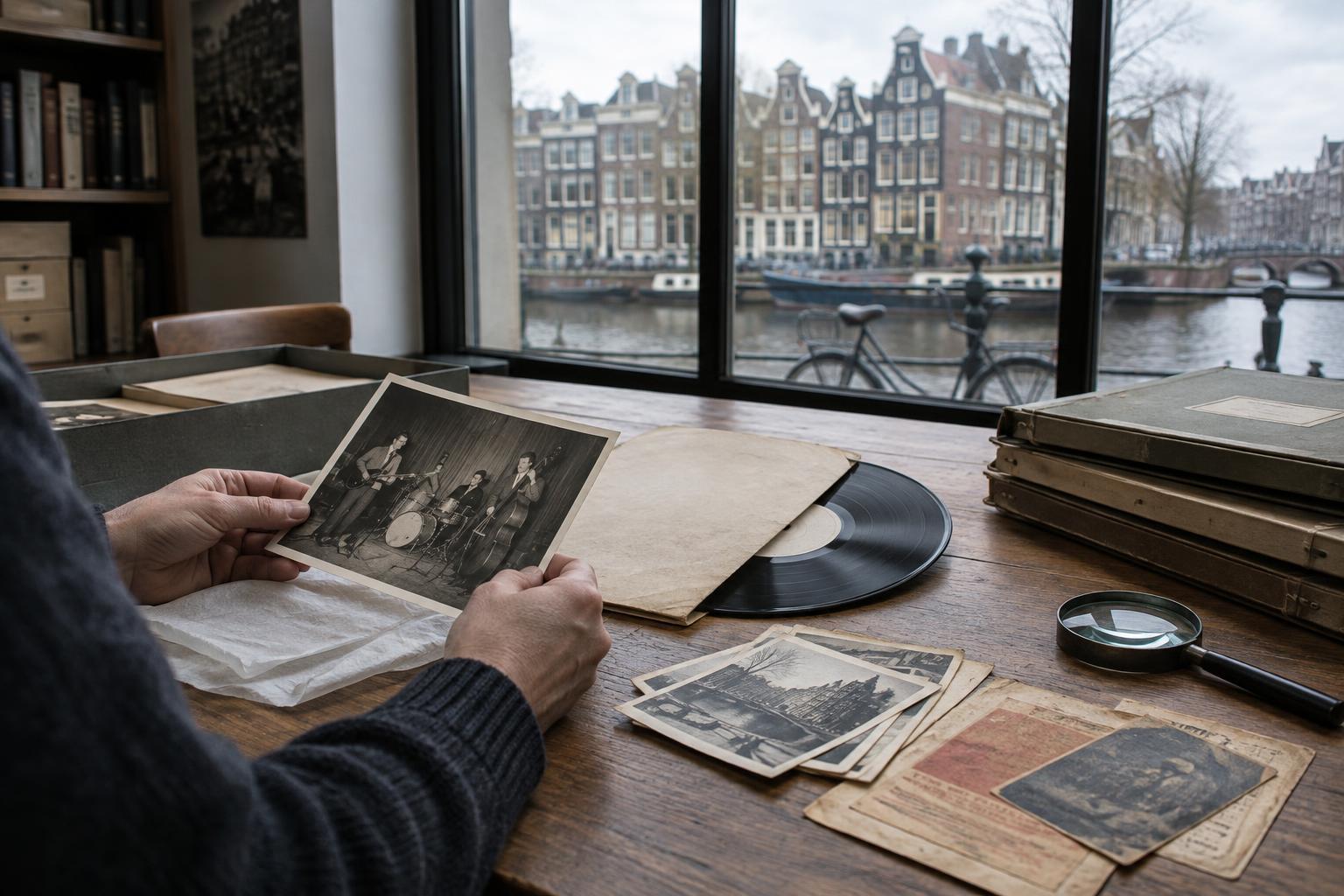
How to Edit a Record Collection Without Regretting What You Let Go
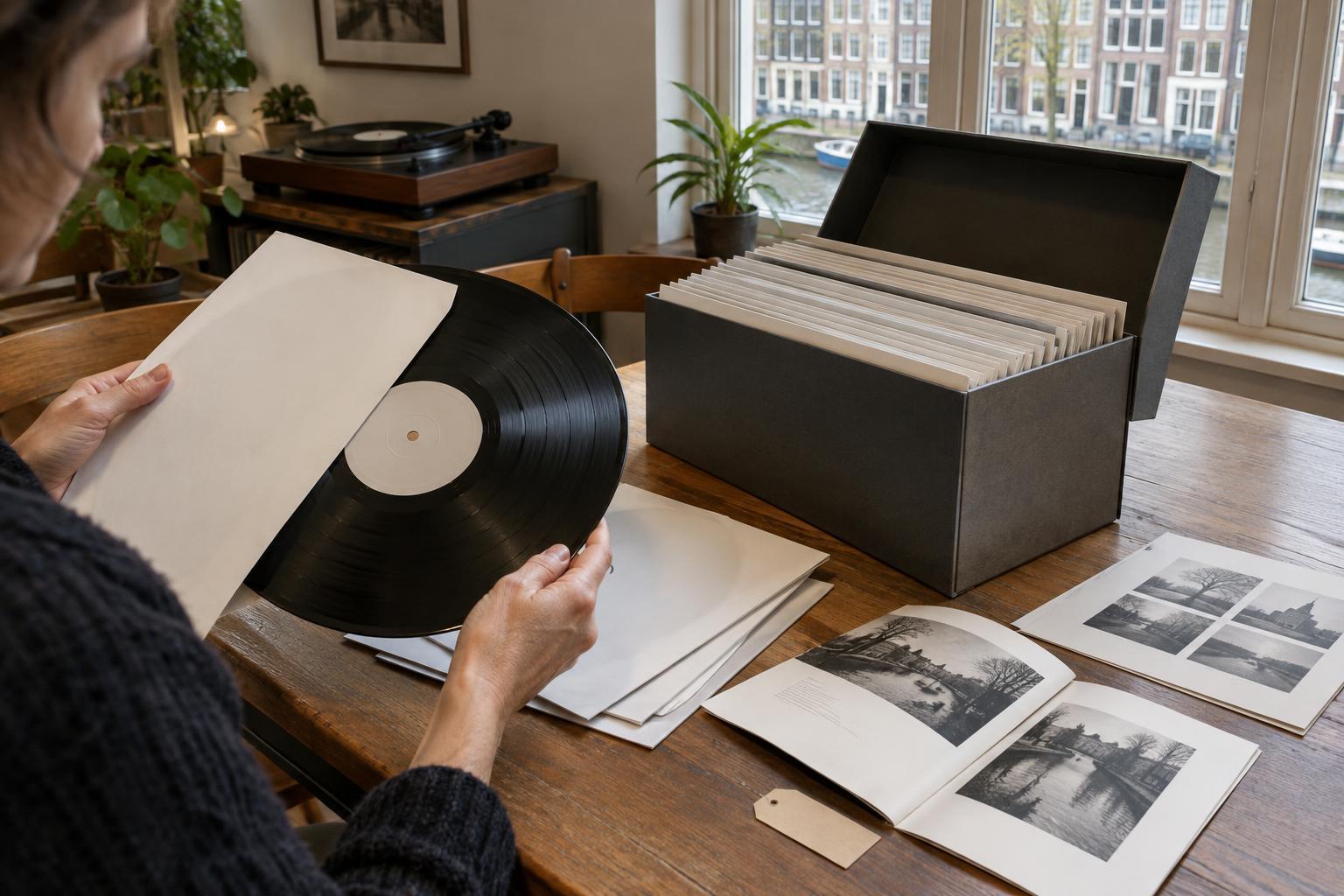
A collection can outgrow its shelves without becoming more enjoyable. Here is a practical way to decide which records to keep, revisit, sell or give away.
Read article · 4 min↗Record Collecting
More to discover ↗A secondhand record can offer clues about musicians, venues, labels and listeners connected to Amsterdam. Learn how to read those clues without treating a sleeve as the whole story.
Read article ↗
Amsterdam Music Culture
A collection can outgrow its shelves without becoming more enjoyable. Here is a practical way to decide which records to keep, revisit, sell or give away.
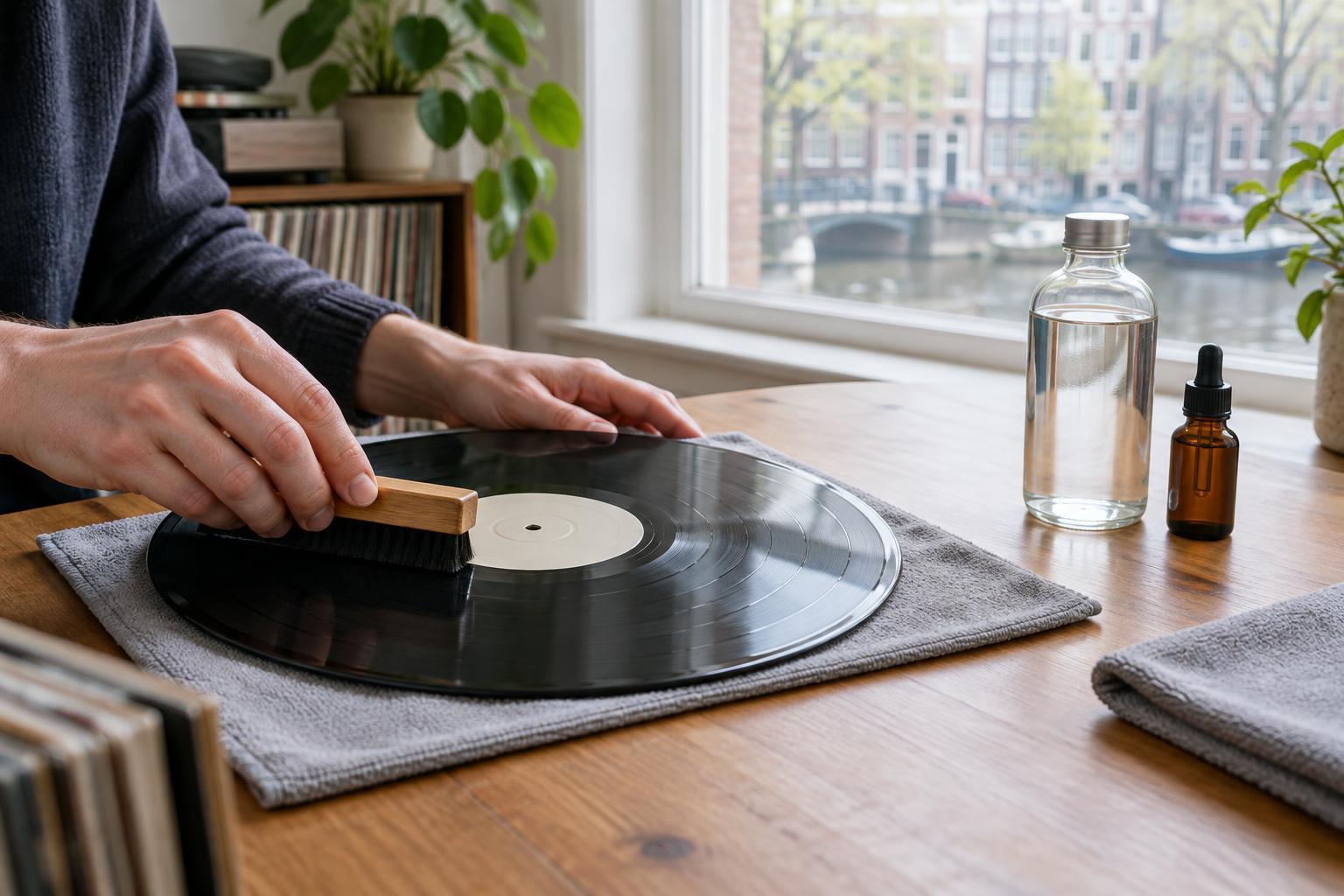
Read article · 4 min↗Records do not need a deep clean on a fixed schedule. Learn when a light dusting is enough, which signs call for a wet clean, and how sleeves, storage and handling help keep records ready to play.
Read article · 4 min↗A split jacket seam does not have to get worse every time you play a record. Learn why seams fail, how to store jackets with less strain, and when a careful paper repair makes sense.
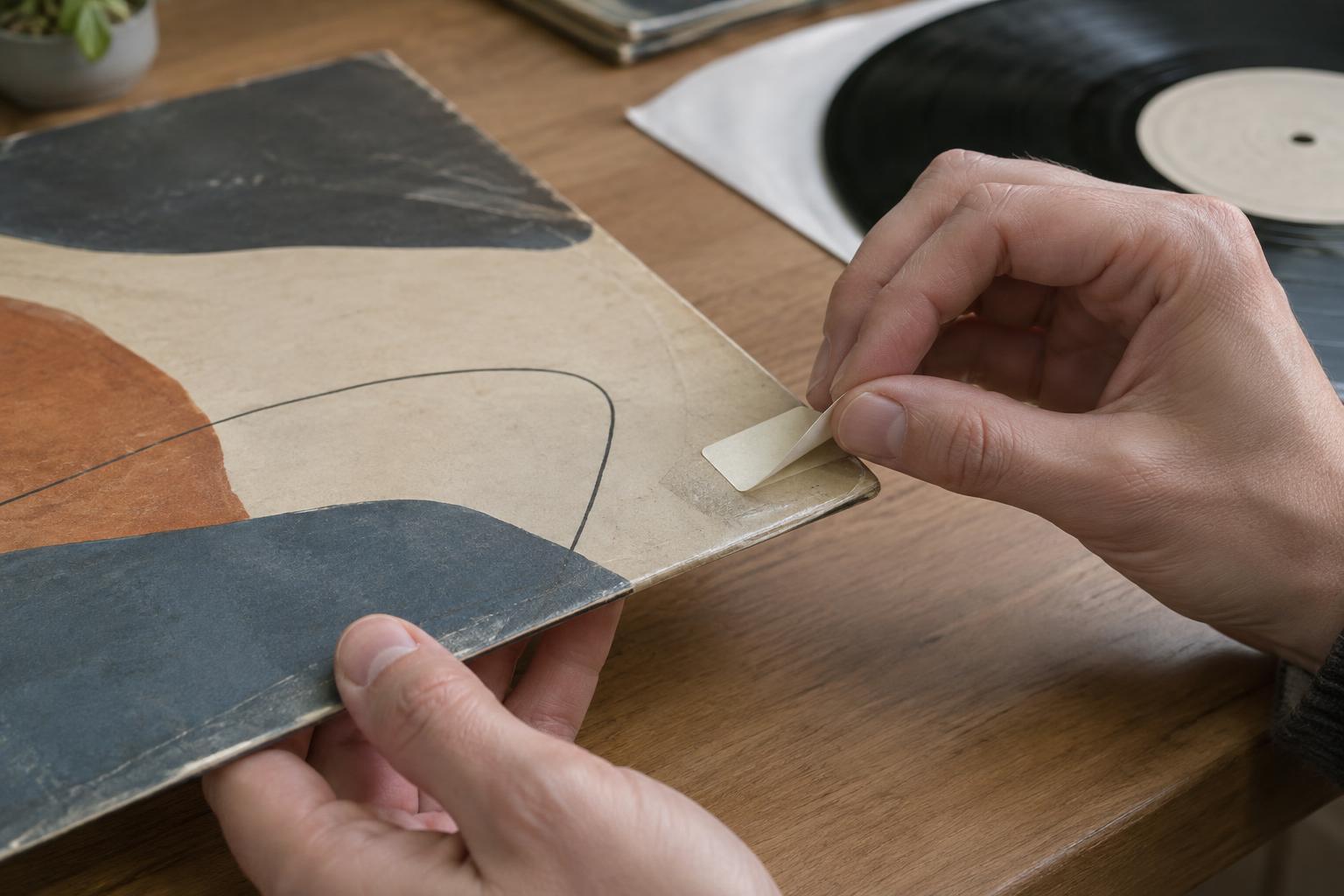
Read article · 4 min↗A slow, dry approach gives you the best chance of lifting a price sticker cleanly. Learn how to assess the jacket, peel with control and know when leaving the sticker in place is the safer choice.
Read article · 4 min↗Moving a record collection takes more than finding a large box. Learn how to sort, sleeve, pack and transport vinyl so records and jackets arrive in good condition.
Read article · 4 min↗A mark on a record does not always mean damaged sound. Learn how to tell surface scuffs from groove scratches, when cleaning may help, and when it is better to leave the vinyl alone.
Read article · 4 min↗A crackle does not always mean a record is worn out. Learn how to listen for clues, inspect a noisy record and choose a sensible next step without making the problem worse.
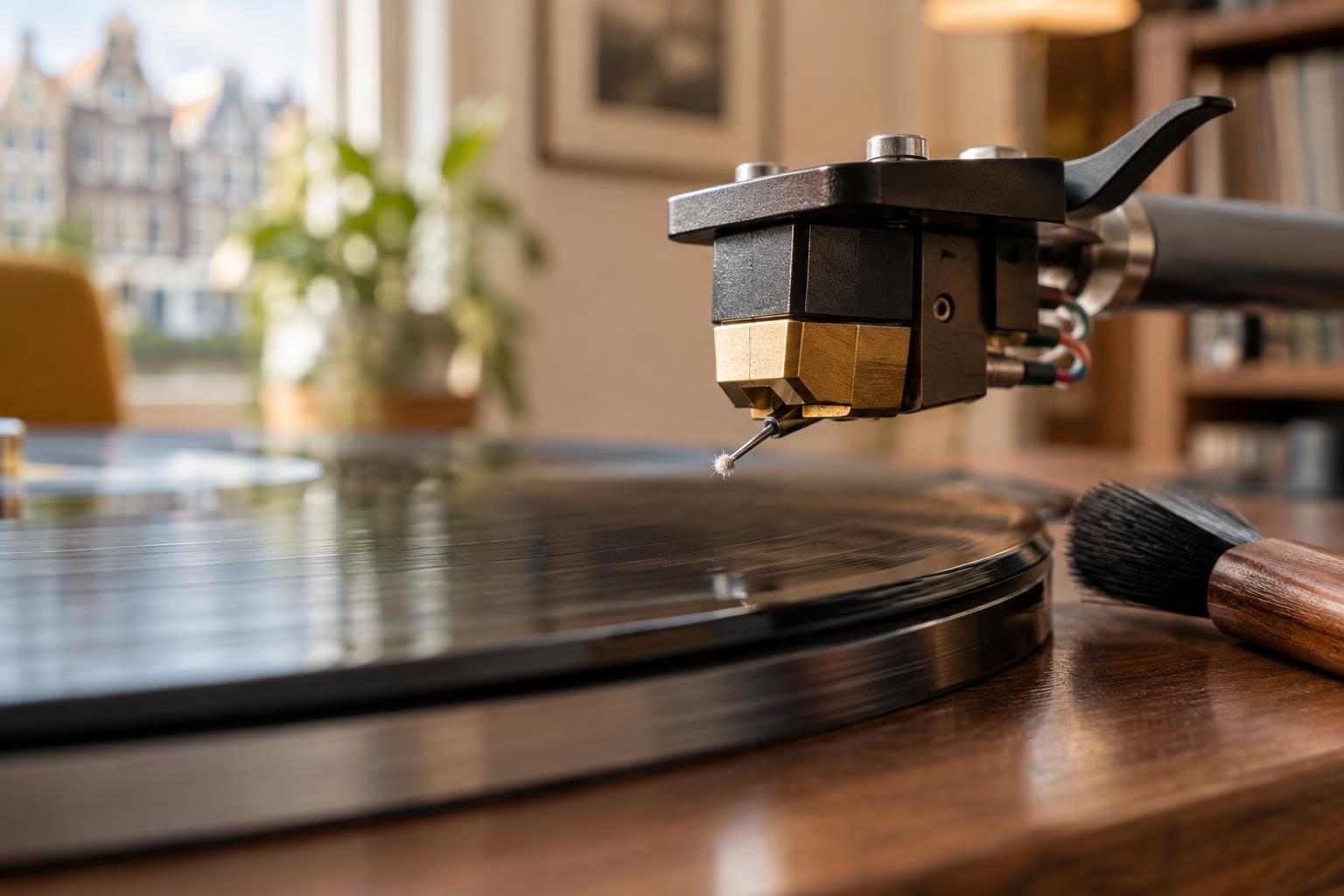
Read article · 4 min↗A little dust on a stylus can affect playback, but the delicate tip and cantilever need a gentle touch. Learn what to look for, how to use a stylus brush, and when cleaning is not the answer.
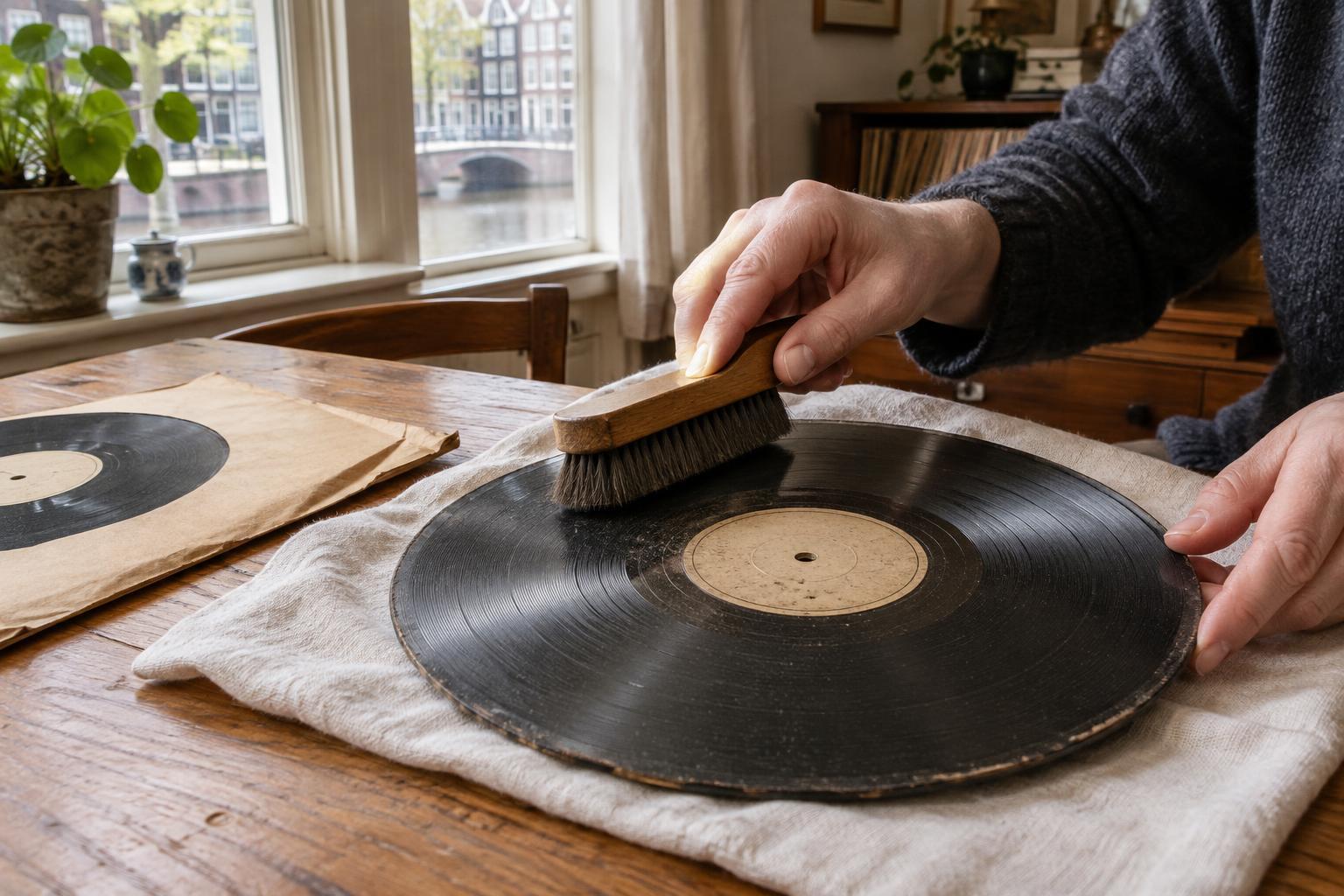
Read article · 3 min↗A shellac 78 may look like an oversized vinyl record, but its material, fragile edges and often vulnerable label call for a different approach. Learn how to identify what you have, remove loose dust and decide when to leave deeper cleaning to someone experienced.
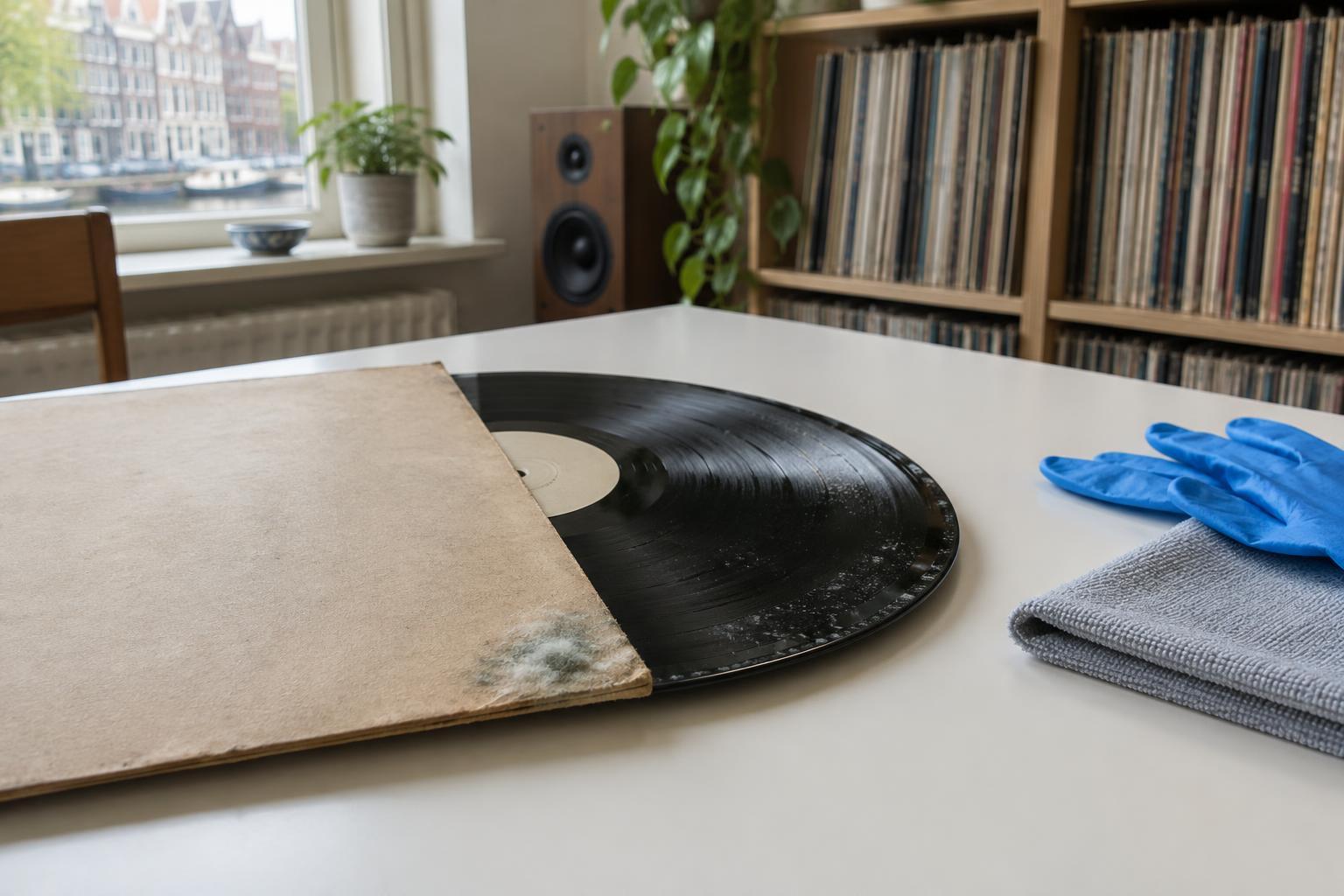
Read article · 4 min↗Mold on a record calls for a pause, not an immediate spin. Learn how to isolate the find, assess the sleeve and disc, clean a standard vinyl record cautiously, and decide when replacement or specialist help makes more sense.
Read article · 4 min↗Static can make a record cling to its sleeve and attract dust just when you are ready to play it. Learn a gentle routine for handling, brushing, cleaning and storing vinyl without turning a small nuisance into a damaged groove.
Read article · 4 min↗Vinyl records do best in a stable, comfortable indoor environment. Learn how heat, sunlight, dampness and sudden changes can affect a collection, and how to choose a practical storage spot at home.
Read article · 3 min↗A good record shelf keeps sleeves easy to browse and discs comfortably upright. Learn how to choose sturdy storage, use dividers, leave the right amount of room and spot problems before jackets bend.
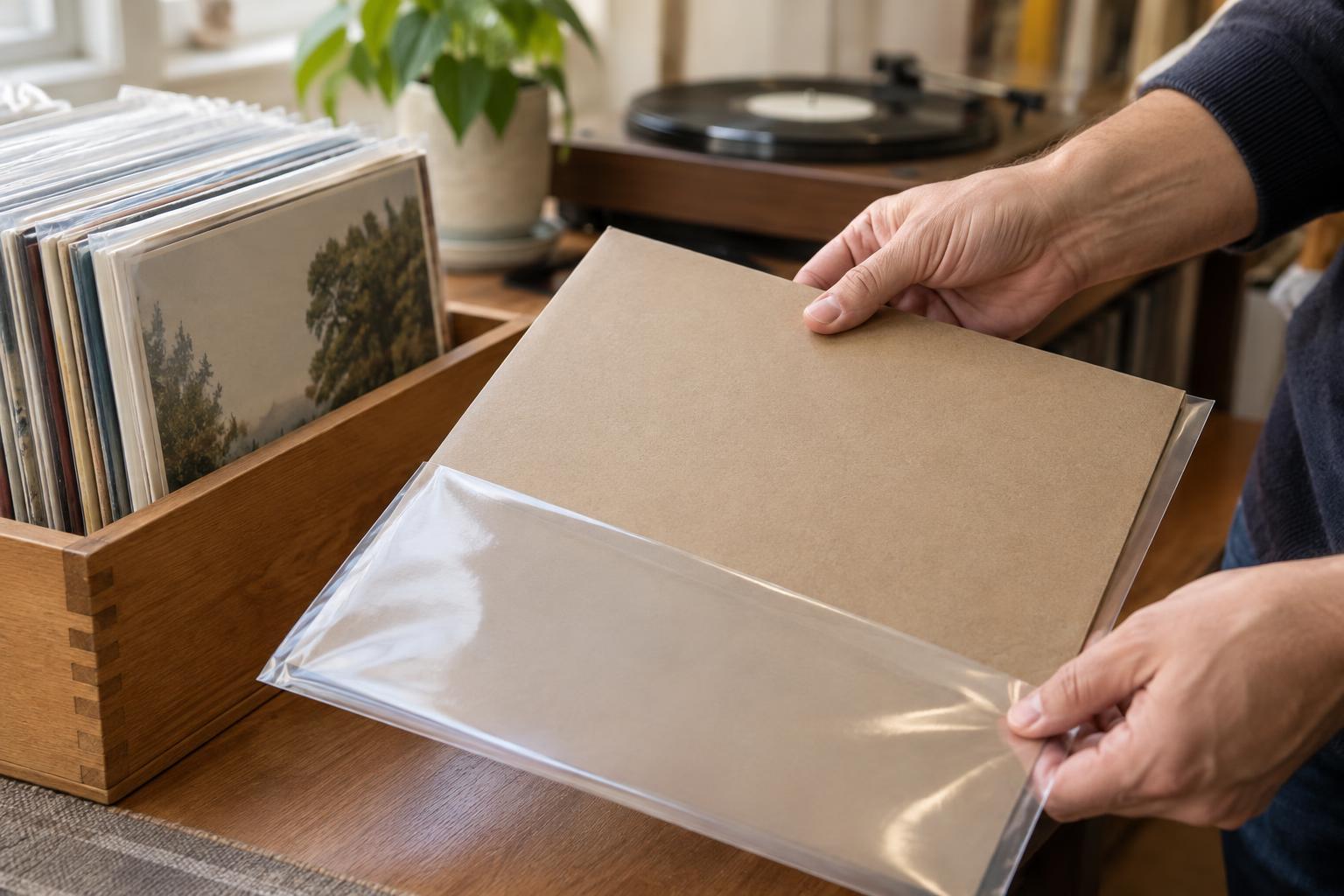
Read article · 3 min↗Outer sleeves help keep record jackets free from shelf scuffs, fingerprints and dust. Learn how to choose a comfortable fit, slide a jacket in without catching its corners, and store sleeved records so they remain easy to handle.
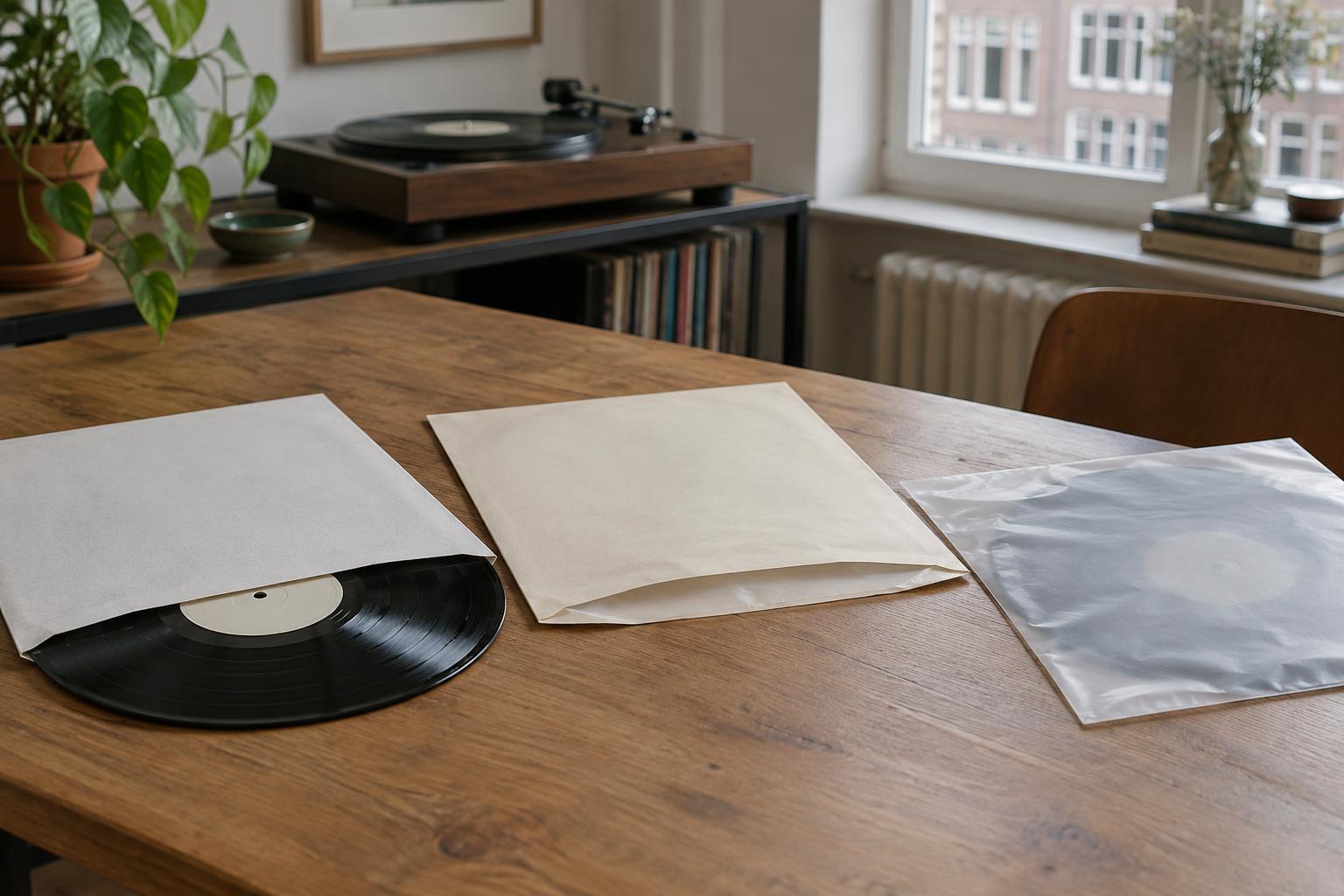
Read article · 4 min↗Inner sleeves protect records between listens, but different materials handle dust, static and everyday use differently. Here is a practical guide to choosing between paper, lined paper and polyethylene sleeves, and knowing when an old sleeve needs replacing.
Read article · 4 min↗A careful dry is the final step in wet-cleaning a record. Learn how to handle the disc, choose between air drying and a record-cleaning vacuum, and check that the grooves are dry before returning it to its sleeve.
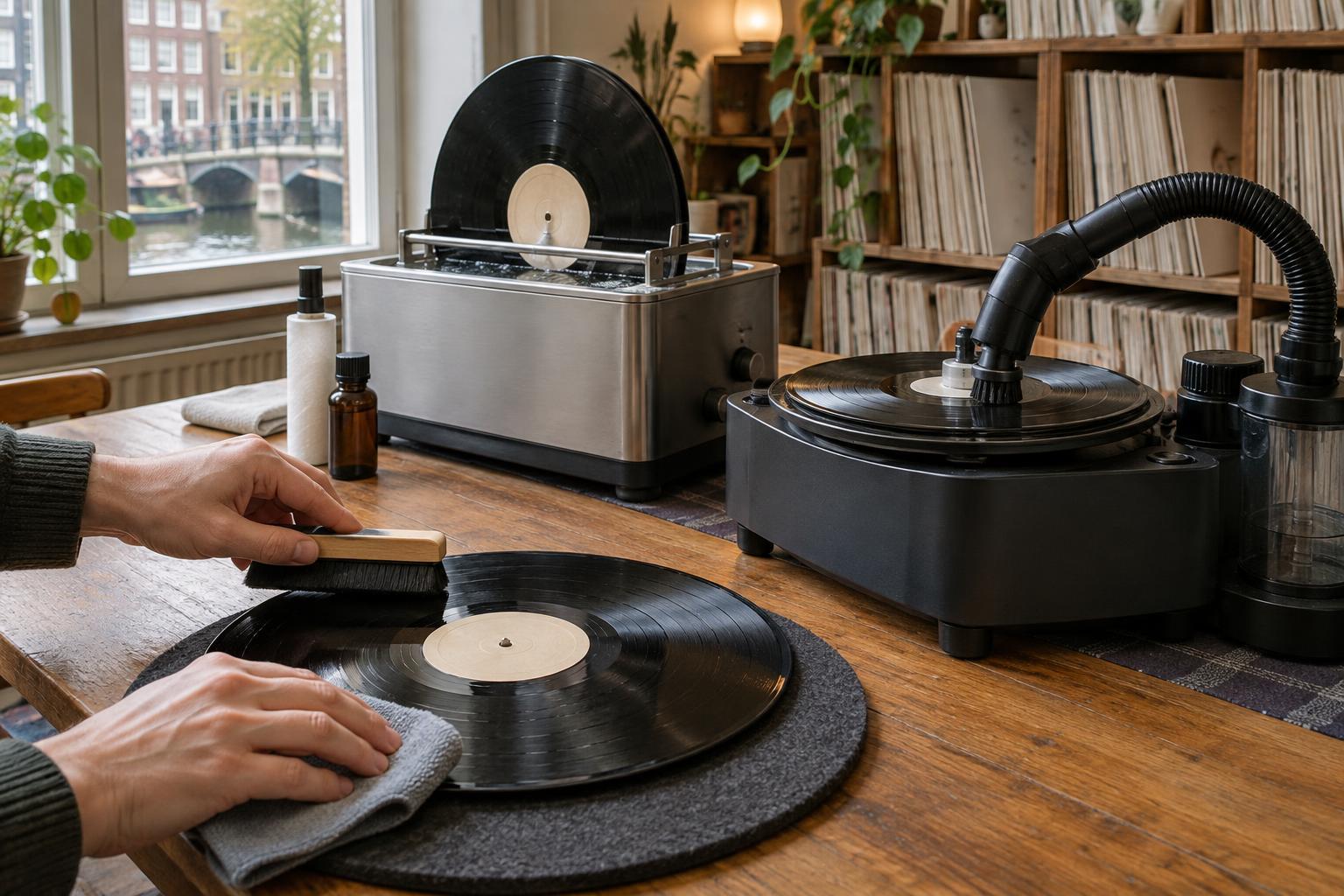
Read article · 4 min↗A clean record can be more enjoyable to handle and play, but the best cleaning method depends on your collection, budget and patience. Here is how manual, vacuum and ultrasonic cleaning compare, plus a practical way to choose.
Read article · 4 min↗A good record-cleaning solution loosens dirt without leaving a new problem in the grooves. Learn when distilled water is enough, what additives can do, and which household ingredients are best kept away from records.
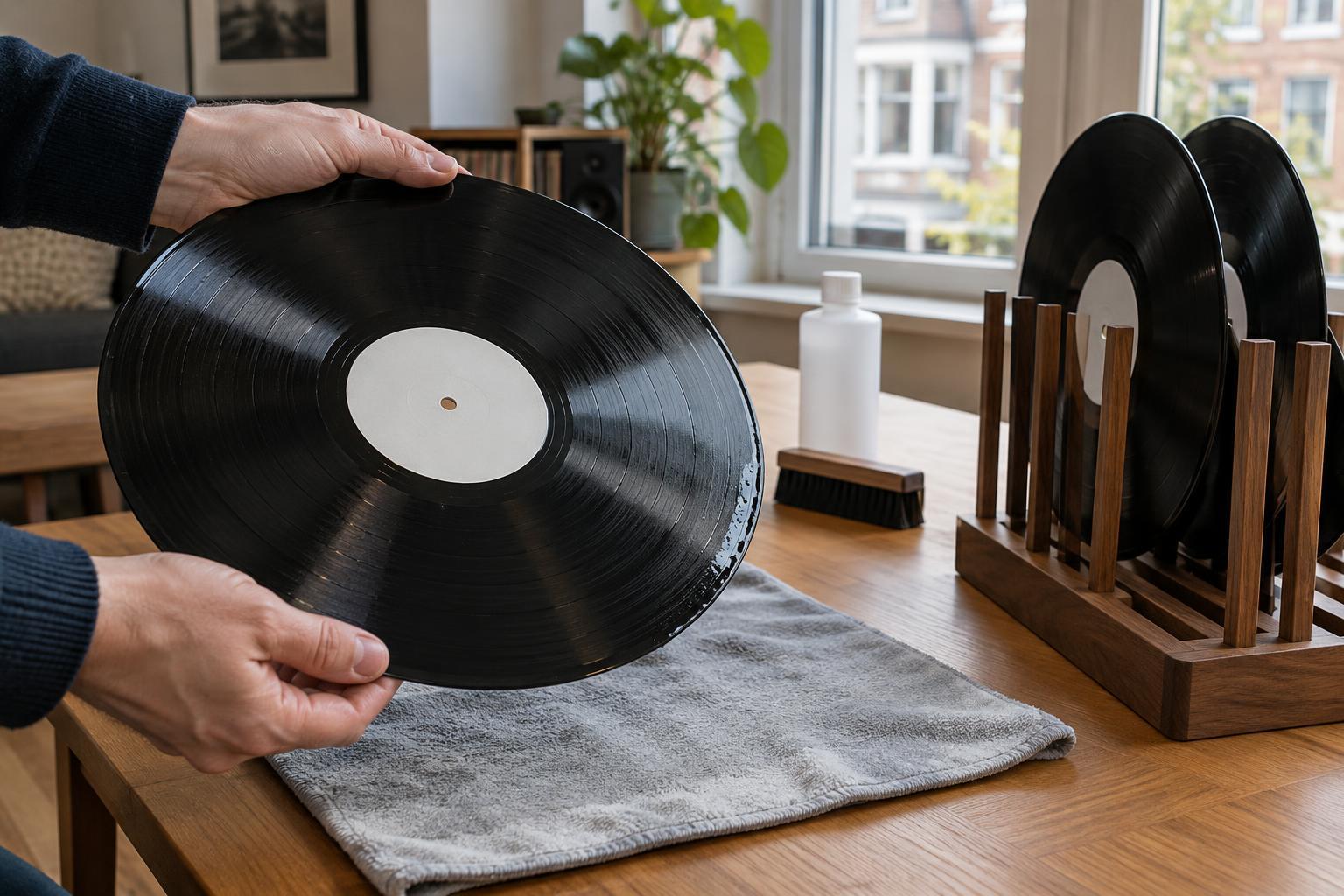
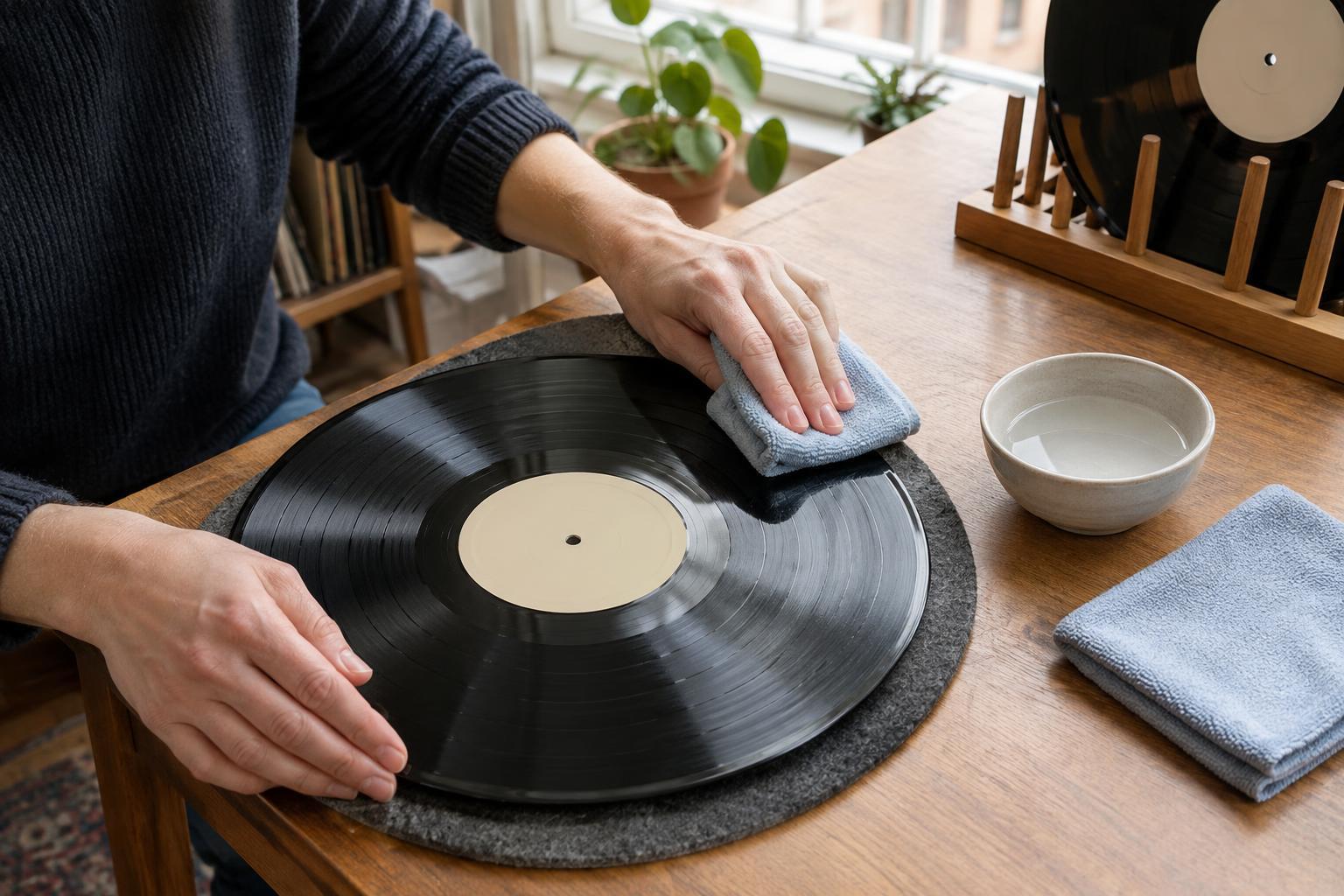
Read article · 3 min↗A careful hand wash can lift dust and grime that a dry brush leaves behind. Here is a practical way to clean a vinyl record without soaking its label, grinding debris into the grooves or putting it away damp.
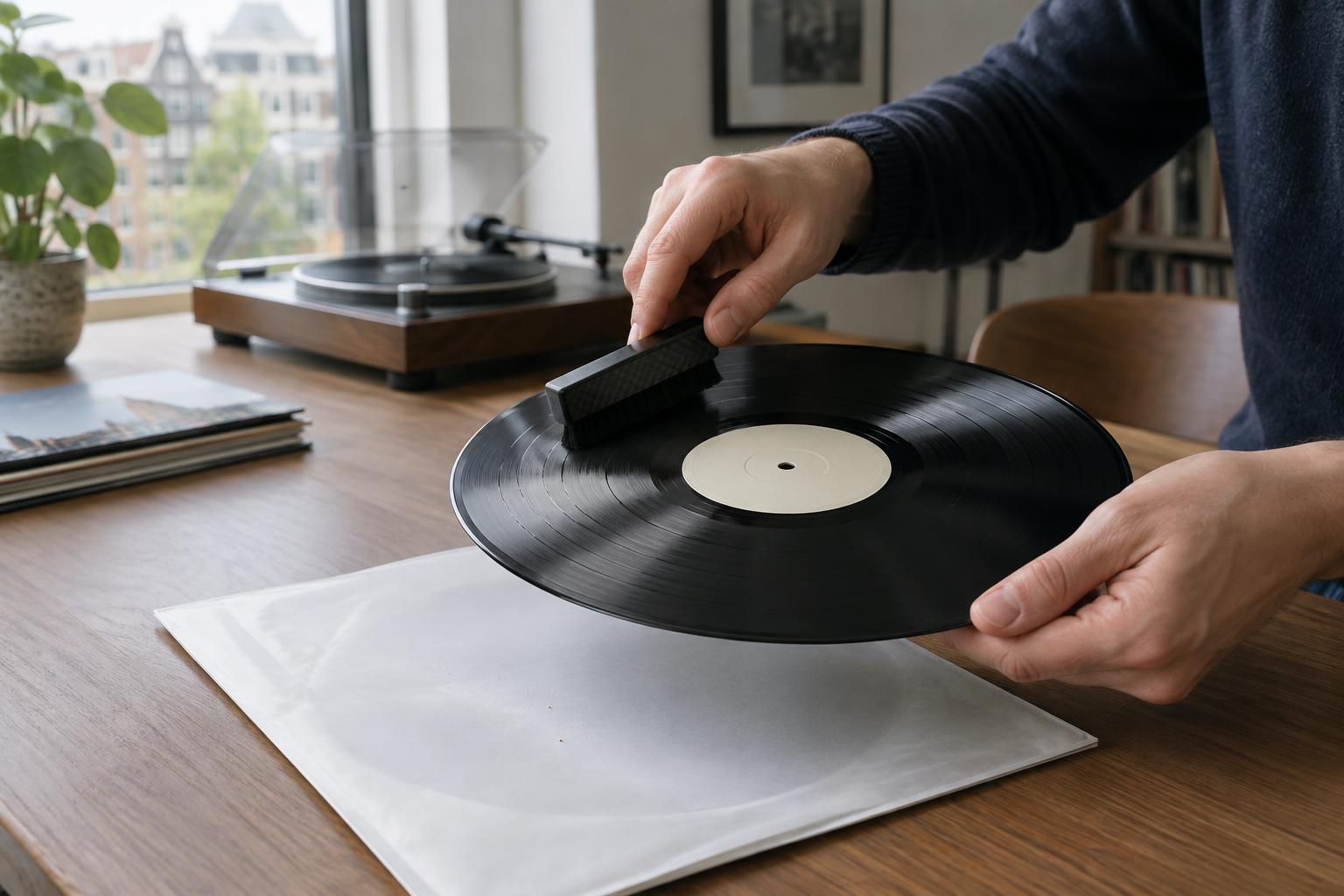
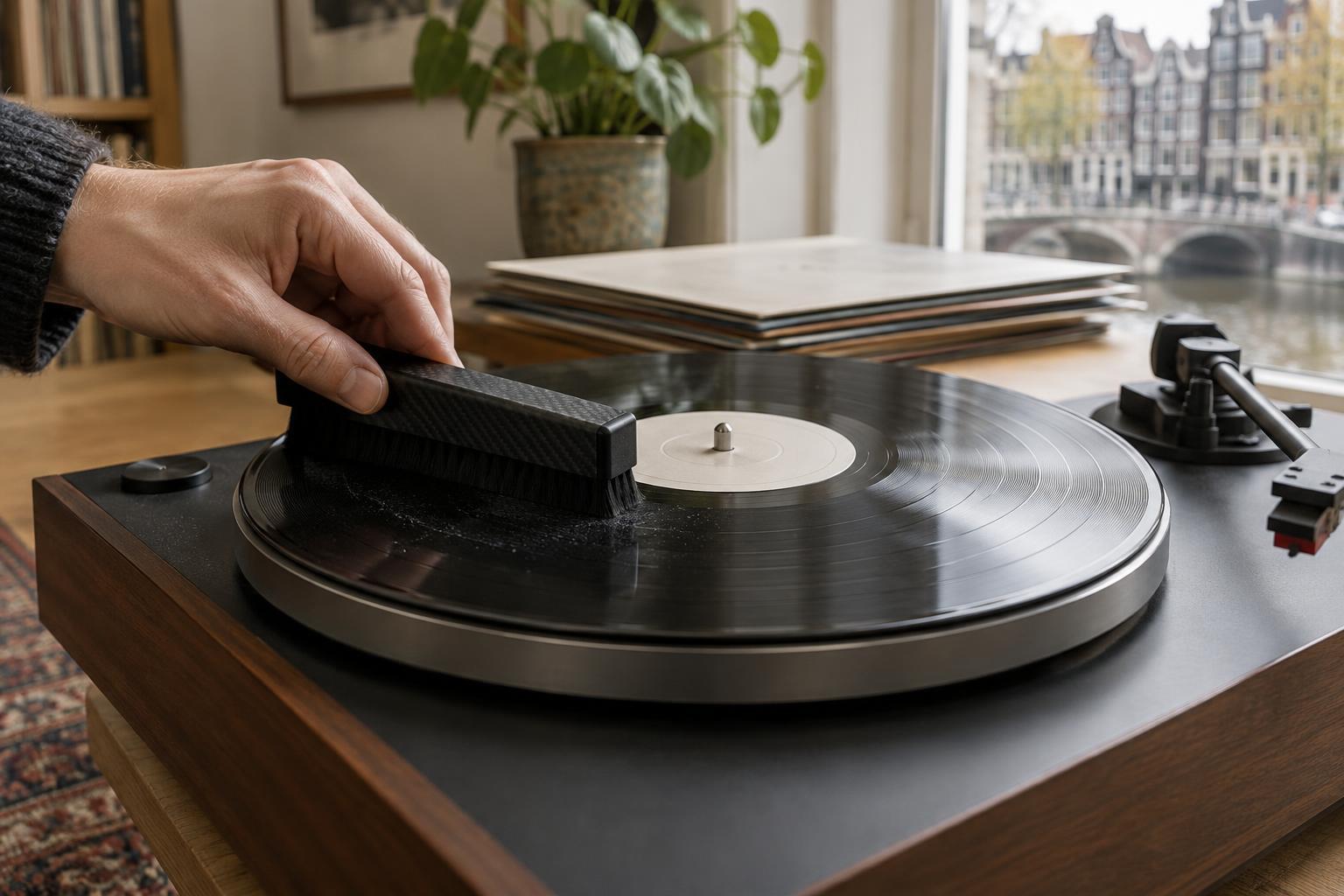
Read article · 4 min↗A light pass with a clean record brush can remove loose surface dust before listening. Learn when to brush again after playback, how to avoid dragging debris across the grooves, and when dry brushing is not enough.
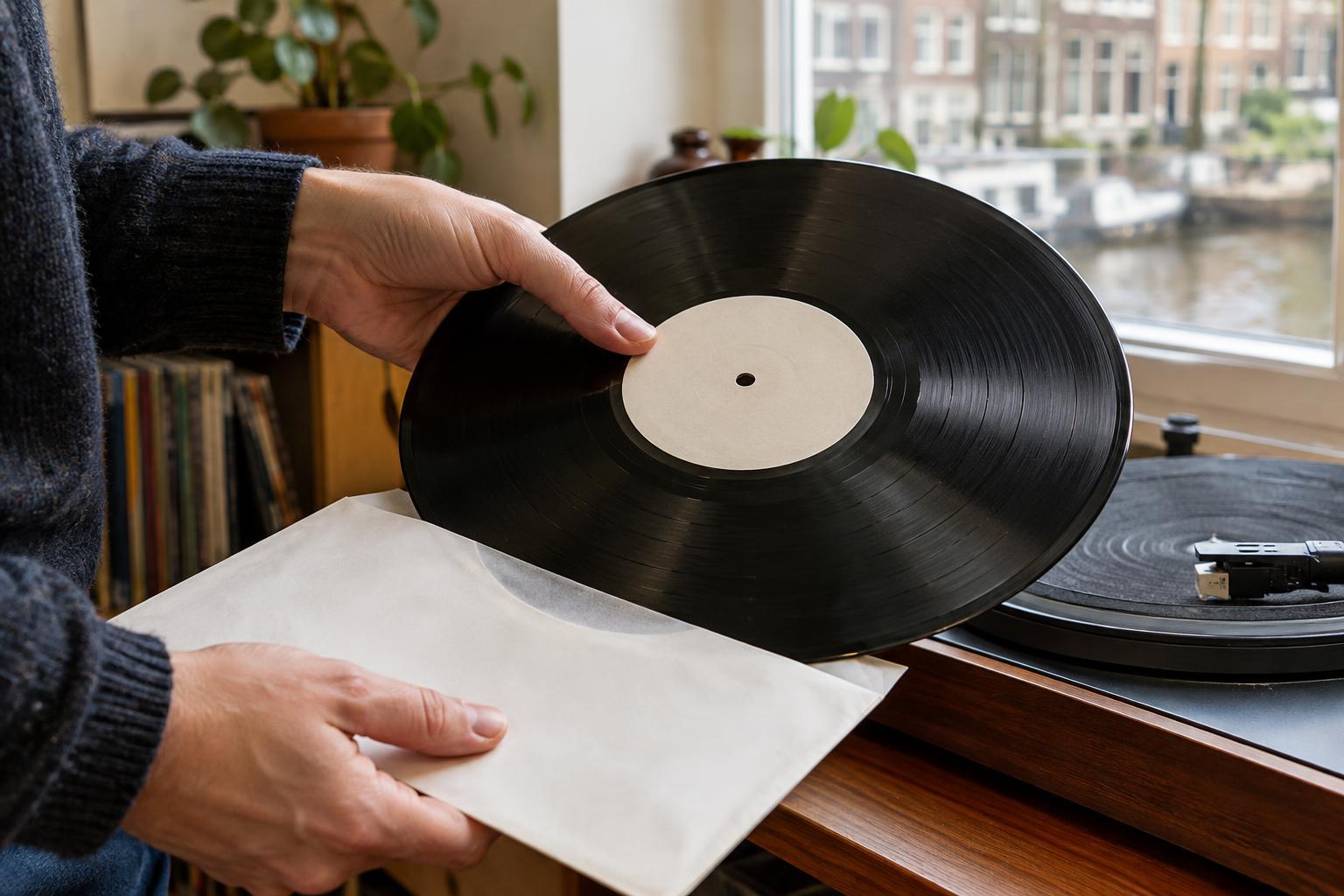
Read article · 4 min↗A simple handling routine can help keep fingerprints and dust off your records. Learn where to place your fingers when removing an LP from its sleeve, setting it on a turntable and putting it away.
Read article · 3 min↗A louder system, different speakers or a worn record can make one turntable seem better for the wrong reason. Here is a practical way to make listening comparisons more useful.
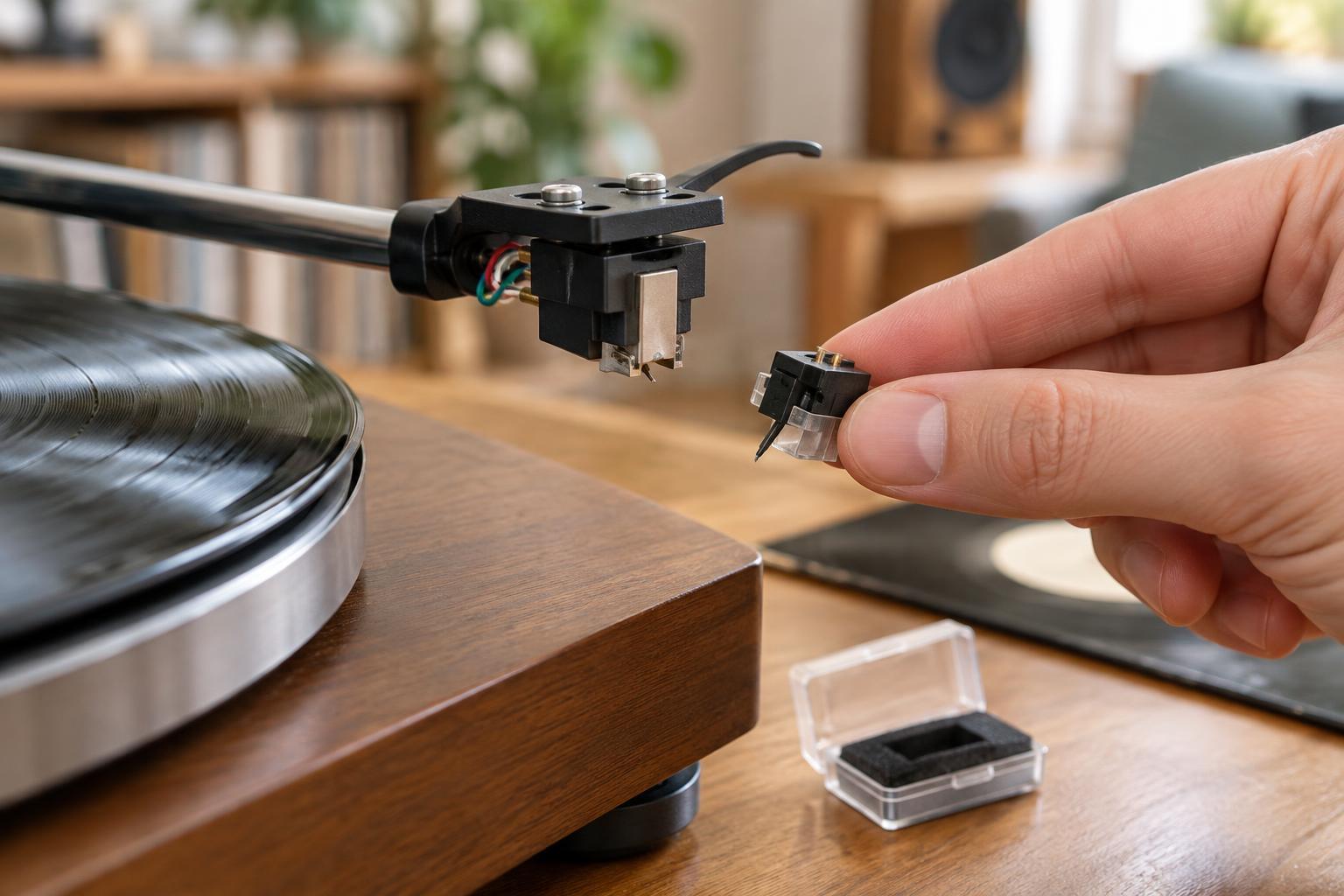
Read article · 4 min↗A replacement stylus has to match the cartridge it fits into, not just the turntable it plays on. Learn how to identify your cartridge, check compatibility claims, choose a suitable tip, and install the new stylus carefully.
Read article · 4 min↗You usually do not need a dedicated mono cartridge to enjoy a mono LP. Learn how stereo playback works, when a mono switch can help, and what to check before playing older records.
Read article · 4 min↗Headphones can make a record feel close and detailed; speakers let the music fill a room. Both can be rewarding, but they need different connections and reveal different parts of a recording. Here is how to choose a setup that suits your space, listening habits and equipment.
Read article · 4 min↗Distortion can come from a dirty record, a worn stylus, incorrect tracking force or a problem elsewhere in the audio chain. Use this listening-first guide to narrow down the cause, make safe adjustments and know when to stop playing a record.
Read article · 4 min↗A quiet background makes records easier to enjoy. Learn how to identify where turntable hum enters your system, check common connection and placement problems, and know when to stop troubleshooting and seek help.
Read article · 4 min↗A calm cueing routine protects your stylus and records while making listening more enjoyable. Learn how to use the cueing lever, position the tonearm and lower the needle gently onto a spinning record.
Read article · 3 min↗Record size offers a clue to playback speed, but it is not a guarantee. Learn how to identify the right setting for LPs, singles and older 78s, and why some records need more than a speed switch.
Read article · 4 min↗Both powered and passive speakers can make a satisfying vinyl system. The right choice depends on the equipment you already own, the space you have and how much flexibility you want later. Start by checking where your turntable’s phono signal is converted and amplified.
Read article · 4 min↗A small room can make vinyl listening feel intimate, but speaker placement matters. Start with a balanced listening triangle, leave room around the speakers, keep vibration away from the turntable and make small changes using records you know well.
Read article · 3 min↗A turntable can pick up movement from the floor, furniture and speakers. Learn how to identify the source of a rumble or low-frequency howl, then improve placement and isolation without losing sight of basic turntable setup.
Read article · 4 min↗A level turntable gives the platter and tonearm a stable starting point. Learn how to check your setup, make small adjustments, and tell the difference between a leveling problem and a warped record.
Read article · 4 min↗Anti-skate helps a tonearm resist its tendency to move toward the centre of a spinning record. Here is a practical way to set it, understand what its dial can and cannot tell you, and recognise when a playback problem has another cause.
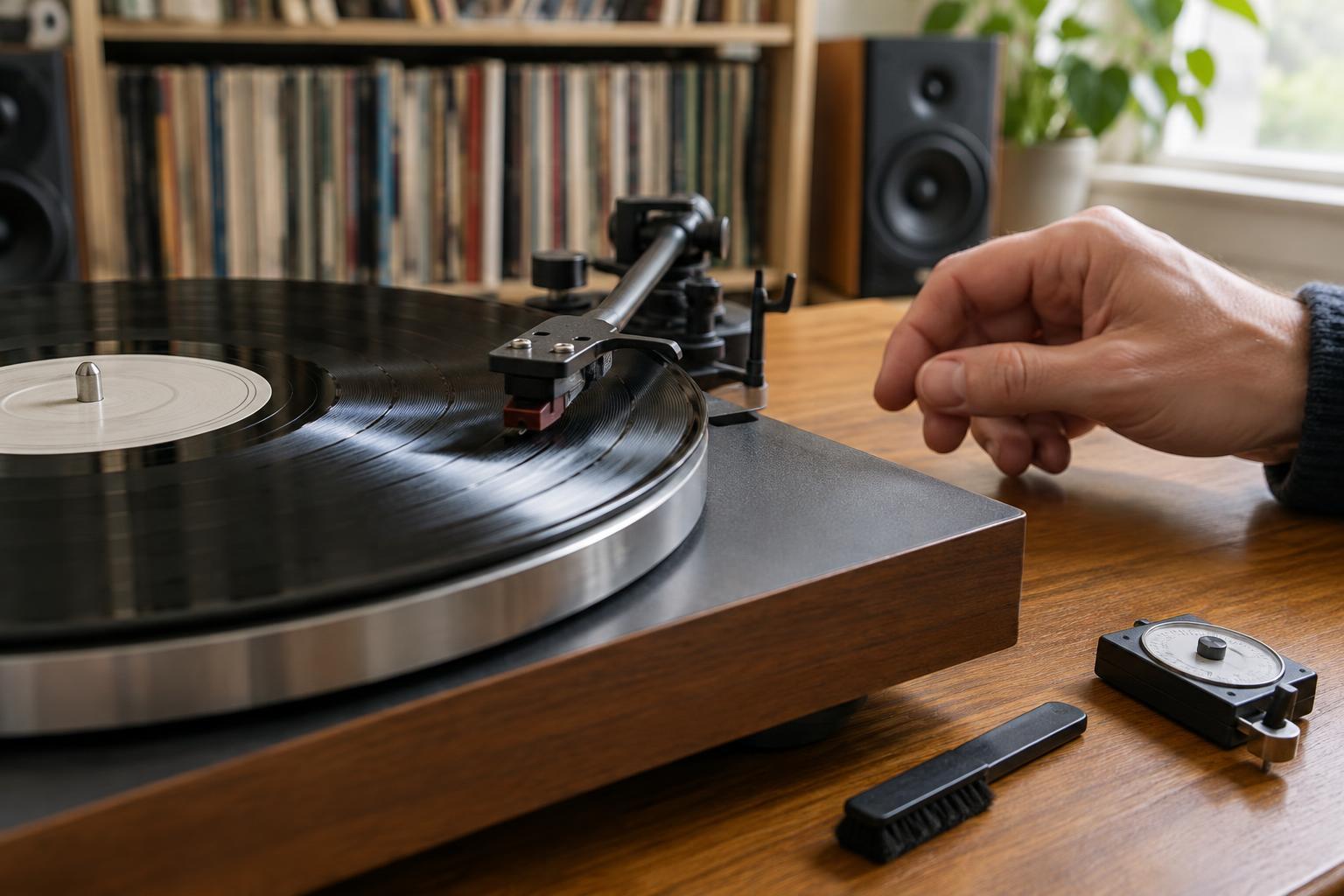
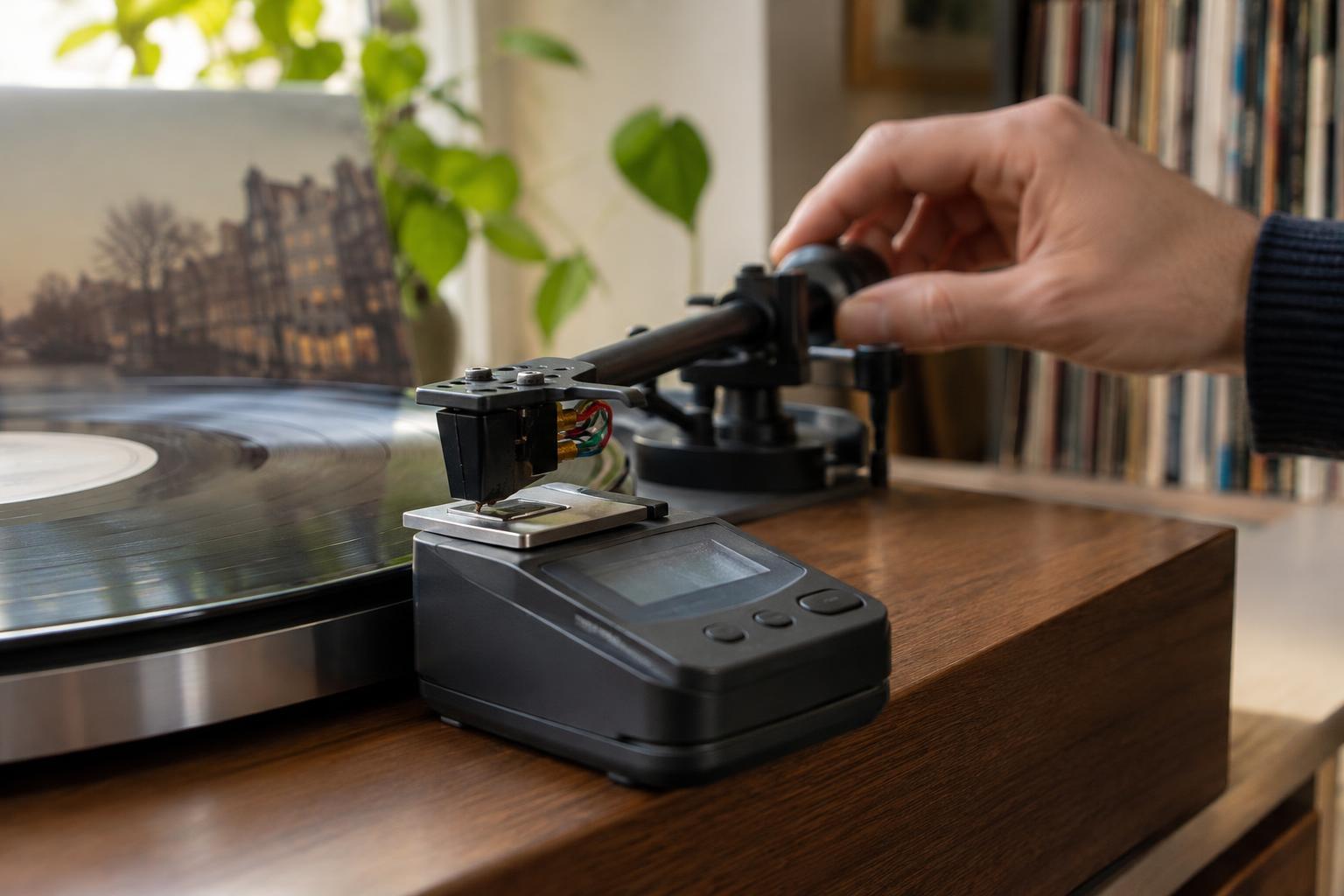
Read article · 3 min↗Tracking force determines how firmly a stylus sits in a record groove. Learn how to find your cartridge’s recommended range, use a stylus-force gauge, and check your setup without relying on the counterweight markings alone.
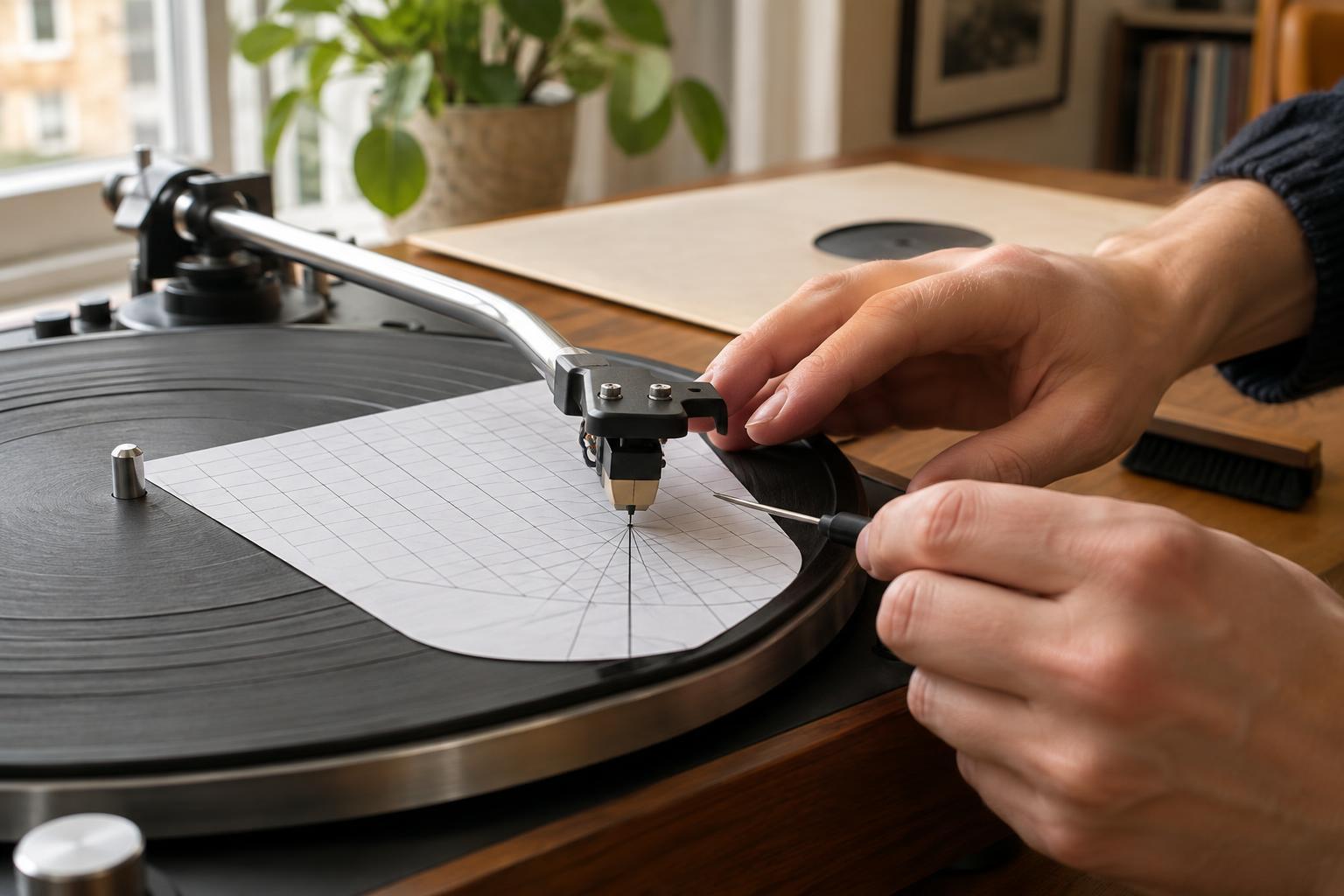
Read article · 4 min↗Cartridge alignment can look fiddly, but the basic process is straightforward: place the stylus on the protractor’s marked points, check the cantilever against the grid, and make small adjustments until both points agree. Here’s a careful, beginner-friendly way to do it.
Read article · 4 min↗A turntable cartridge turns the movement of a stylus in a record groove into an electrical signal. Moving-magnet and moving-coil designs do that in different ways, with practical consequences for phono-stage compatibility, cost and maintenance. Here’s what to check before choosing.
Read article · 4 min↗A phono preamp is essential to vinyl playback, but it does not always need its own box. Learn how built-in and external options differ, how to connect them correctly, and which changes might actually improve your listening setup.
Read article · 4 min↗Manual and automatic turntables ask different things of the listener, but neither is inherently the better way to hear a record. Here is how to compare the everyday experience, from cueing a stylus to what happens at the end of a side.
Read article · 4 min↗Belt-drive and direct-drive turntables spin records in different ways, but neither design guarantees better sound. Here is how to weigh speed stability, noise, maintenance and everyday use when choosing a deck for home listening.
Read article · 3 min↗A turntable is only one part of a vinyl listening system. Follow the signal from stylus to speakers, learn what a phono stage does, and see how to connect common setups without missing a component.
Read article · 4 min↗An unfamiliar sleeve can be an invitation, but it cannot tell you everything about the music inside. Use credits, labels, listening notes and a simple budget to explore new sounds while keeping the pleasure of surprise.
Read article · 4 min↗Limited-edition records can be rewarding to own, but the rush to secure one can lead to expensive mistakes. Learn how to assess a release, check its condition and keep collecting enjoyable.
Read article · 4 min↗A good record trade leaves both collectors happy to play what they brought home. Learn how to describe condition honestly, compare value without treating prices as fixed, and agree on the details before exchanging sleeves.
Read article · 4 min↗A record fair can be rewarding without becoming a race through every crate. Set a budget, inspect records carefully, give other browsers room and make offers that respect the seller’s work. This guide covers a practical approach from planning your visit to carrying your finds home.
Read article · 4 min↗A record box set can be a rewarding way to explore an artist, but its size and presentation do not guarantee a good purchase. Compare the music, mastering, condition, extras and total cost before giving it shelf space.
Read article · 4 min↗A record can look convincing without being the pressing its sleeve claims it is. Learn how to check labels, runout markings, packaging and seller descriptions—and how to handle uncertainty before you buy.
Read article · 4 min↗A plain-language guide to three record terms that are often confused. Learn why promo copies, white labels and test pressings exist, how to identify them, and what to check before buying.
Read article · 4 min↗A compilation can open the door to a scene, while an original album can reveal an artist’s full intent. Here’s how to decide which record belongs in your collection, and when both are worth keeping.
Read article · 4 min↗Collecting every record by a favorite artist can be rewarding, but it helps to decide what “complete” means to you. A clear scope, a listening-first wish list and a few buying rules can make the search more enjoyable.
Read article · 4 min↗A useful record catalog does more than count albums. Learn which details to capture, how to choose between a spreadsheet and an app, and how to keep the system manageable as your collection grows.
Read article · 4 min↗A useful record wantlist does more than name albums you like. It helps you recognize the right copy, decide what to spend and keep your priorities clear when you are browsing a shop, fair or online listing.
Read article · 4 min↗Searching through record bins is part of the pleasure of collecting vinyl. A few simple habits—handling records carefully, sharing space and asking clear questions—make the experience better for you, other diggers and sellers.
Read article · 4 min↗A record can look promising in a listing and still turn out to be the wrong pressing or a disappointing copy. Learn how to check identification details, condition notes, photos, seller terms and shipping plans before you buy.
Read article · 4 min↗A used record can look promising in the rack and still disappoint at home. This practical checklist covers sleeve condition, vinyl surfaces, warps, labels, listening tests and how to make a fair decision at the counter.
Read article · 4 min↗An asking price tells you what a seller hopes to get. A completed sale offers a better clue to what a buyer was willing to pay. Learn how to find useful comparisons, match the right pressing and condition, and turn scattered sale prices into a sensible buying range.
Read article · 4 min↗Catalog numbers and runout markings can help you identify a record, compare pressings and make sense of mismatched sleeves. Here is a practical way to read the clues without treating any one inscription as definitive.
Read article · 4 min↗A first pressing can be a satisfying piece of music history, but a well-made reissue may be the better record to play. Here is how to weigh sound, condition, price and personal priorities before buying.
Read article · 4 min↗A used record’s grade is a useful starting point, not a promise of perfect playback. Learn what common condition labels mean, why the sleeve needs its own assessment, and how to check a copy before buying.
Read article · 4 min↗Record size, playing speed and release type are related, but they are not the same thing. Learn how to recognize LPs, EPs, 12-inch singles and 7-inch singles, check how to play them, and choose the right copy while crate-digging.
Read article · 3 min↗A satisfying record collection does not have to grow quickly or cost a fortune. Start with music you will play, set a spending limit that includes equipment and supplies, learn to assess condition, and leave room for unexpected discoveries.
Read article · 4 min↗Minimalist classical music often asks you to notice small changes inside repeating patterns. This guide introduces its different approaches to pulse, phasing and sustained sound, with a few pieces to try and practical ways to hear them on vinyl.
Read article · 4 min↗Flamenco can feel difficult to follow until you hear how its different forms organize mood and rhythm. This beginner’s guide explains palos and compás, with practical ways to listen more closely.
Read article · 4 min↗Doom and thrash metal can both sound heavy, but they create that weight in different ways. Listen past the distorted guitars to hear how each style uses tempo, riffs, drums, vocals and space.
Read article · 4 min↗Bluegrass and country share songs, stories and musical roots, but they often arrange those materials differently. Listen for the acoustic string-band lineup, instrumental breaks and close vocal harmonies of bluegrass, then notice how widely country music can vary in sound and structure.
Read article · 4 min↗Cumbia travels easily, but its rhythmic pull remains recognizable. Learn what to listen for in the percussion and bass, then explore how Colombian, Mexican, Peruvian and Argentine styles reshape the sound.
Read article · 4 min↗Highlife is a lively, varied family of West African popular music. Learn how to hear its interlocking guitars, bright horns and rolling dance rhythms, then find a welcoming place to start listening.
Read article · 4 min↗Afrobeat and Afrobeats differ by more than one letter. Learn how to hear the distinction, where the traditions overlap, and how to use the terms when exploring records.
Read article · 4 min↗Clave can be easy to miss, even when it shapes everything you hear. Learn to feel its two-bar pattern, recognize 3–2 and 2–3 son clave, and use the percussion, piano and horns to find your place in a salsa recording.
Read article · 4 min↗Bossa nova and samba share Brazilian roots, but they can feel strikingly different on a record. Learn to follow the pulse, hear where the accents fall and recognize how a guitar can suggest a whole percussion section.
Read article · 4 min↗UK garage is often described through its swing, but the placement of the kick drum changes how a track feels. Learn to hear the difference between four-on-the-floor and 2-step, and why many records move between them.
Read article · 4 min↗Trip-hop is easier to hear than to define. Learn how its unhurried beats, layered samples, deep bass and spacious production work together, then use a simple listening approach to explore it on vinyl.
Read article · 4 min↗Jungle and drum and bass share fast rhythms and deep low end, but their differences are easier to hear when you listen beyond the tempo. This guide compares their breakbeats, basslines and arrangements, with a practical approach for exploring both on vinyl.
Read article · 4 min↗Ambient and new age records can share soft textures and unhurried pacing, but their labels do not always tell you how a record will sound or feel. Here is a practical way to listen for structure, mood and intention without letting genre names make the decision for you.
Read article · 4 min↗Shoegaze can sound like a wall of guitars at first, but its details reward close listening. This beginner’s guide explains the genre’s layered guitar sounds, blended vocals and shifting textures, with a simple way to explore it on records.
Read article · 4 min↗Progressive rock and art rock share an appetite for experimentation, but the labels point to different things. One often describes how music is built; the other often describes how a song or performance is presented. Here is a practical way to hear the distinction without treating either genre as a rigid box.
Read article · 4 min↗Psychedelic rock is less a fixed sound than a way of making familiar instruments feel strange, expansive or dreamlike. Learn how effects, arrangements, rhythm and album presentation can help you recognize it on a record.
Read article · 4 min↗Bebop and cool jazz can share tunes, instruments and improvising musicians, yet they often create different listening experiences. Learn how to hear their approaches to tempo, phrasing and ensemble sound without treating either style as a rigid formula.
Read article · 4 min↗The 12-bar blues is a useful map for hearing chord changes, repeated verses and turnarounds. Learn its basic pattern, then listen for the ways blues musicians reshape or leave it behind.
Read article · 4 min↗Northern soul and classic soul overlap, but they are not interchangeable labels. Learn how a British dancefloor scene shaped the meaning of northern soul, what listeners often mean by classic soul, and how to hear the difference without treating either as a rigid genre.
Read article · 4 min↗Funk and disco often share a dance floor, a bass-forward sound and even the same musicians. The clearest way to tell them apart is to listen for how the groove is built: where the kick drum lands, what the bass does between beats, and how the instruments move around the rhythm.
Read article · 4 min↗A good night out can do more than fill an itinerary. From buying a ticket directly to respecting the room and looking beyond the busiest streets, here are practical ways to enjoy Amsterdam’s independent music culture while supporting the people who make it possible.
Read article · 4 min↗Amsterdam’s music culture is easier to appreciate when you look beyond a single headline venue or genre. From planning a night out to browsing records and sharing the room with local listeners, these common mistakes—and simple alternatives—can help visitors explore with more curiosity and care.
Read article · 3 min↗A good music night in Amsterdam does not need a packed itinerary. Choose one live performance or listening experience as your anchor, keep travel simple, and leave room for a record browse, a conversation or an unexpected sound.
Read article · 3 min↗Amsterdam’s music culture is heard in rooms of many sizes. This guide compares clubs, cafés and concert halls by atmosphere, sound and listening style, with practical tips for choosing a night out.
Read article · 4 min↗A practical guide to tracing Amsterdam’s music history through photographs, posters, recordings, catalogues and personal collections, whether you are researching from home or planning a visit.
Read article · 4 min↗Amsterdam’s street organs turn an ordinary walk into an encounter with mechanical music. Learn how they work, what they play and how to listen for them without relying on a fixed performance schedule.
Read article · 4 min↗Reggae and dub in Amsterdam are more than genres to find in a record bin. They are shared listening cultures shaped by selectors, sound systems, dancers and the spaces that bring them together. Here is a thoughtful way to explore the sounds, find gatherings and take part respectfully.
Read article · 4 min↗From early Dutch-language rap to playful pop crossovers and independent collectives, Amsterdam offers many ways into Dutch hip-hop. This guide suggests a starting route, explains what to listen for and offers a few ideas for exploring the music through records.
Read article · 4 min↗From intimate bars to dance floors, Amsterdam’s queer nightlife has given people room to gather, experiment and hear music differently. This guide explores its musical legacy and offers a thoughtful way to experience it today.
Read article · 4 min↗Amsterdam Dance Event can feel like several music trips happening at once. A first-timer’s guide to choosing talks, pacing club nights and making room for quieter listening around the city.
Read article · 4 min↗Amsterdam’s house and techno culture is best understood as a conversation between imported sounds and local spaces. Explore the musical differences, the role of clubs and record shops, and ways to listen with curiosity rather than fixed expectations.
Read article · 4 min↗Amsterdam’s punk history is about more than loud records and crowded rooms. Explore how squatted spaces, independent venues and shared work helped shape a music culture rooted in participation.

Read article · 3 min↗On Amsterdam’s waterfront, the Muziekgebouw offers a setting for listening beyond familiar song structures. Here is how to approach its adventurous programming, prepare for a first visit and carry the experience back to your record collection.
Read article · 4 min↗The Concertgebouw is a welcoming place to begin exploring Amsterdam’s classical music culture. Learn the difference between the hall and its resident orchestra, what to listen for in its two main performance spaces, and how to choose and enjoy a first concert.
Read article · 4 min↗Amsterdam’s jazz story is not confined to one venue, but the Bimhuis offers a useful way to hear it. Explore how the city’s improvising culture, visiting musicians and attentive audiences meet onstage—and how a record collection can deepen the connection.
Read article · 4 min↗Amsterdam’s links with Indonesian music run through a complicated shared history and many different listening traditions. This guide offers starting points for hearing gamelan, kroncong, Indo-rock, dangdut and contemporary sounds with curiosity and care.
Read article · 4 min↗Surinamese music is part of Amsterdam’s everyday listening culture, from family celebrations and dance floors to record collections. Explore the many traditions behind that connection and how to listen with curiosity and context.
Read article · 4 min↗Songs associated with Amsterdam’s Jordaan turn ordinary lives into memorable stories of love, hardship, pride and belonging. Here is a listener’s guide to the levenslied tradition, its neighbourhood ties and what to notice when exploring old recordings.
Read article · 4 min↗Paradiso and Melkweg are more than places to see a show. Their repurposed buildings, wide-ranging programmes and place in the city’s listening habits help explain why generations of music fans know their names.
Read article · 4 min↗Amsterdam’s music culture extends beyond its best-known dance floors. This guide offers a way to explore the city’s genres, listening spaces and musical traditions with curiosity and respect.
Read article · 4 min↗Recommended

A good accessory can change the feel of an outfit without asking you to change everything else. That is the appeal of exploring UniqueYou through the lens of an independent magazine interested in personal style as much as listening culture: the jacket worn to a record fair, the coat pulled on for a walk across Amsterdam, or the simple dress chosen for an evening out can each take on a different character with a scarf. This guide looks at the brand, its scarf and wrap categories, and practical ways to choose one for yourself or as a gift.
UniqueYou began in 2014 with scarves and clothing. Its story includes a pause and a later return after the domain was recovered; it would be misleading to describe that history as uninterrupted trading. The original brown wordmark, horse motif and “Since 2014” detail connect the present identity to that starting point. A neutral taupe palette gives the brand a quiet visual setting for accessories that may be patterned, colourful or understated.
The useful starting point is not a claim that one scarf will transform every outfit. It is the more modest idea that an elegant, accessible accessory can be chosen around clothes a woman already owns. UniqueYou’s range includes women’s scarves, shawls, wraps and square scarves, with silk, cashmere and wool categories. Those are categories to explore, not a promise that every item has the same composition or feel. The individual product details matter when material is central to a decision.
Before choosing a colour or print, look at the outerwear that gets worn most often. A charcoal coat leaves room for a rust, cream or patterned scarf; a camel coat can look particularly coherent with brown, burgundy or softly contrasting blue. A busy checked coat may already supply the visual rhythm, in which case a plain scarf can give the eye somewhere to rest. These are possibilities rather than rules: the best choice is the one its wearer will reach for on an ordinary morning.
Shape matters too. A broad wrap can sit over the shoulders when a coat is open, while a narrow scarf tucks more easily inside a collar. A small square scarf can add colour without the volume of a long winter layer. Think about what the person actually carries: a large tote, headphones, a crossbody bag or a backpack can affect how comfortable loose ends feel. For an afternoon spent moving between cafés and record stalls, a secure, uncomplicated tie may be more appealing than an elaborate drape.
Material names are useful signposts, but they do not replace the information attached to a particular item. Silk is often considered when someone wants fluid drape or a light accent near the face; wool is a natural category to investigate for a scarf intended for cooler days; cashmere suggests a different hand feel and a softer-looking wrap. Within any category, thickness, weave, blend and dimensions can change how an accessory behaves. Check the stated composition and care guidance rather than assuming a category name tells the whole story.
Consider the season and the setting as well as the fibre. A substantial scarf can feel welcome beside an open-air market or on a windy platform, but excessive bulk may be awkward indoors. A lighter square can stay on through a gallery visit or dinner without taking over the outfit. If a recipient is sensitive to texture, material preference is especially personal: notice which scarves they already wear comfortably, then compare those habits with the details of the piece under consideration.
A scarf can repeat a colour already present in an outfit, introduce a controlled contrast, or bridge two pieces that otherwise feel separate. Someone who wears navy coats and tan shoes might like a scarf containing both warm and cool tones. Someone whose wardrobe is largely black may prefer a single vivid accent, or may enjoy staying within black and varying texture instead. Neither approach needs to be declared the more sophisticated one; what matters is whether the accessory feels at home with the wearer’s own clothes.
Print scale deserves the same attention. Fine stripes or a small motif may read almost like texture from a distance, whereas broad checks can become the focal point. Look at the whole outfit rather than judging a scarf against a blank background. In the spirit of arranging a listening space, leave room for the main event: if a jacket has a striking cut or a dress has a strong print, the scarf can support it quietly. If the clothes are simple, the accessory can carry more of the visual melody.
For a long scarf, a single loose loop keeps the ends visible and lets a coat’s lapels frame the colour. Folding it once and passing the ends through the opening makes a tidier arrangement when you expect to walk outdoors. A broad shawl can rest across the shoulders over an evening outfit, with enough movement to feel relaxed rather than formal. Each method changes how much of the scarf’s pattern appears, so try it with the actual coat or dress instead of assessing the accessory on its own.
A square scarf offers smaller gestures. Fold it into a narrow band for a neck tie, use a looser triangle when you want more of the design on show, or tie it to a bag handle when wearing it near the face is not the goal. Pay attention to comfort and security, particularly around headphones, bicycle straps or a bag worn across the body. A styling idea is useful only if it survives the day it is meant for.
A scarf is a tempting gift because size is usually less restrictive than it is for fitted clothing, but that does not make every scarf universally suitable. Start with observation: which coats does the recipient wear repeatedly, do they favour small details or generous layers, and are their existing accessories mostly plain or patterned? A colour they wear often is a safer clue than a colour you simply admire. If you are unsure about a bold print, a quieter option that echoes their wardrobe may get more use.
Think about the moment in which the gift might be worn. A light square scarf can be an outfit accent; a longer wool-category scarf may fit someone who likes a practical outer layer; a wrap may appeal to a person who often dresses for evenings out. Read the dimensions, composition and care information for the particular choice. If any of those details would be important to the recipient, do not guess from a photograph or a category heading. A thoughtful gift respects their habits rather than assigning them a new style.
Lay out two or three outfits that already work, then ask what is missing. Perhaps a neutral coat and plain knit need a little colour near the face. Perhaps several patterned shirts would benefit from one calm scarf. Perhaps an existing silk-like accent works in spring but there is no larger shape for colder weather. This exercise helps distinguish a genuine wardrobe gap from the appeal of a lovely image viewed in isolation.
Next, picture the accessory with the shoes, bag and outerwear used most often. It does not have to match each item exactly. Repeating a tone, relating two colours or balancing a texture can be enough. For a magazine rooted in vinyl listening and Amsterdam’s music culture, the analogy is familiar: a good addition need not sound exactly like everything already in the collection, but it should make sense alongside what is played most. Personal style, like a record shelf, becomes more interesting through considered choices.
UniqueYou’s regional selection offers several ways to begin: by a broad scarf or shawl category, by a material category, or by a specific shape or colour. Those paths are useful for comparison, not proof that a particular item will suit everyone. When a style catches your eye, return to the practical questions: How wide and long is it? What composition is stated? How is it cared for? Will the colour work in daylight with the coat it is meant to accompany?
The regional guide below identifies 20 regional domains and 21 regional-language versions in 16 distinct languages. Countries can share a language: German serves both Germany and Austria here, while Dutch serves Belgium and the Netherlands. The United Arab Emirates accounts for two versions on one domain, with Arabic at the root and English at /en. Choose the destination language you want before following a regional term; a familiar-looking category name elsewhere may lead to a different local selection.
Each entry names the country and destination language first. The local terms below are presented as navigation cues, with a brief English explanation of what you are looking for. Material and product details should still be checked on the individual item.
For the Polish-language starting point, use UniqueYou. If a warm, versatile colour is the priority, the local term for brown scarves leads to that collection — szaliki brązowe UniqueYou.
For a broader look at shawls on the Polish destination, use UniqueYou. Compare their dimensions with the coats and dresses you already wear rather than choosing on colour alone.
The German-language brand destination starts at UniqueYou. For a compact neckerchief style, the local search phrase is linked here — modisches Nickituch UniqueYou. A smaller shape can add pattern without asking you to carry the volume of a winter scarf.
To consider the silk neck-scarf category on the same German destination, use UniqueYou. Check each piece’s description for the composition and dimensions that matter to you.
For the Czech-language destination, begin at UniqueYou. If you are thinking of a scarf worn on the head or in the hair, the relevant local phrase leads here — šátek na hlavu dámský UniqueYou. It is a different styling question from choosing a layer for warmth around the neck.
The wool-shawl category is another route on the Czech destination — UniqueYou. Consider how the shape would sit over your usual outerwear.
The Spanish-language starting point is UniqueYou. For the wool-scarf category, follow the local phrase — lana para bufandas UniqueYou. Think about when and where you would wear the scarf, then check the individual item rather than relying on a material category alone.
For scarves intended to be explored alongside dresses or wedding outfits, the Spanish destination also offers UniqueYou. The right drape depends on the dress and the occasion.
Begin with the French-language destination at UniqueYou. If a black scarf is the useful gap in your wardrobe, the local phrase leads to that colour category — écharpe noire femme UniqueYou. Black can be quiet against a dark coat or provide contrast with lighter outerwear.
For a different shape and material category, explore cashmere stoles through UniqueYou. Compare the proportions with the outfit you have in mind.
The Hungarian-language destination begins at UniqueYou. If you are looking for black scarves, the local category phrase leads here — fekete sálak UniqueYou. A dark scarf need not be visually flat: its width, surface and the way it is tied all affect the result.
Try imagining the choice beside the coat you wear most. The useful question is whether it adds something to that outfit, not whether it looks complete in a product image.
For the Italian-language destination, start with UniqueYou. To explore the silk-stole category, use the local phrase — stole di seta UniqueYou. A stole can be considered for a dress or a simple jacket, depending on its scale and the way it falls.
When browsing, compare a stole’s dimensions with the occasions on which you expect to wear it. A generous shoulder drape and a compact neck accent solve different styling problems.
Begin at the Romanian-language destination with UniqueYou. For the general women’s-scarf category, follow the local phrase — esarfa femei UniqueYou. Starting broadly can help you decide whether colour, shape or material should narrow the search.
If black is already the colour you want to investigate, the Romanian black-scarf collection is UniqueYou. Consider how much contrast you want between scarf and coat.
The Slovak-language destination starts at UniqueYou. To look at the scarf category through a local style phrase, use štýlová šatka UniqueYou. It is a sensible place to compare shapes before settling on a particular pattern.
Picture one candidate with an everyday outfit and another with something you wear less often. If only the second pairing works, consider whether that is enough for the way you plan to use it.
For the Finnish-language destination, begin at UniqueYou. The local phrase for women’s merino-wool scarves takes you to that category — naisten merinovillaiset kaulaliinat UniqueYou. As with any material heading, read the particular item’s composition and care guidance before making it a deciding factor.
Think about the scarf’s intended role: an outdoor layer that needs comfortable volume, or an accent you would also keep on indoors. The same colour can work quite differently in those two shapes.
Start at the Swedish-language destination with UniqueYou. If checks would suit a mostly plain coat, the local phrase for checked scarves leads here — rutiga halsdukar UniqueYou. Notice the scale of the check as well as its colours.
For a broader wool-scarf category on the Swedish destination, use UniqueYou. Comparing a patterned option with a quieter one may clarify what your wardrobe actually needs.
The Danish-language destination begins at UniqueYou. To explore larger scarves, follow the local category phrase — store tørklæder UniqueYou. A generous scarf can make a simple coat feel more layered, though its dimensions also determine how easily it fits beneath a collar.
Consider the bag and outerwear you use on a typical day. A large scarf is most enjoyable when its drape suits the way you move, not merely the way it looks laid flat.
For Belgium’s Dutch-language destination, begin at UniqueYou. If you want to investigate a small silk-scarf style, the local phrase leads here — zijde sjaaltje UniqueYou. A small square can be an approachable way to introduce print to a plain neckline.
Belgium and the Netherlands share Dutch as a destination language in this guide, but each has its own regional destination. Choose the one relevant to you before comparing individual pieces.
The Austrian German-language destination starts at UniqueYou. For women’s stoles, the local phrase leads to that category — Stola für Damen UniqueYou. A stole is worth considering when you want a wider drape rather than a narrow line at the neck.
Austria shares German with Germany in this guide, but the regional destinations are distinct. Focus on the shape and the individual item’s details once you have reached the destination you intend to use.
For the Netherlands’ Dutch-language destination, start at UniqueYou. If a stripe would add structure to a plain outfit, the local phrase for women’s striped scarves leads here — sjaal met strepen voor dames UniqueYou. Look at whether the stripes repeat or contrast with colours already in your coat and bag.
For a more direct colour-led search, explore the red-scarf category through UniqueYou. An Amsterdam afternoon can include several layers; choose the accent that still works when the coat comes off.
The United States English-language destination begins at UniqueYou. For a winter-scarf starting point, follow the category phrase — winter scarves UniqueYou. Treat that phrase as a way into the selection, then compare the listed materials, dimensions and care of any piece that interests you.
A scarf bought for colder days should still make sense with the coat that gets worn most. If the coat has a strong pattern, consider whether a quieter accessory will be easier to use.
For the United Arab Emirates destination in Arabic, use the root starting point UniqueYou. This is the Arabic-language version; it is separate from the English-language path on the same regional domain.

A square scarf can be considered as a compact outfit accent, but check the particular shape and material before deciding how you would wear it. The language choice is the first step, not a substitute for product details.
For the United Arab Emirates destination in English, use the English-language /en path — square scarf shop UniqueYou. The linked phrase is a shop entry point associated with square scarves, not a promise about a particular square scarf’s composition or availability.
This English version shares a regional domain with the Arabic version at the root. Select the language you prefer, then assess an individual accessory against the clothes you already own.

The Ireland English-language destination begins at UniqueYou. For the women’s wool-scarf category, follow womens wool scarf UniqueYou. A familiar coat colour is a useful reference when choosing between a quiet neutral and a stronger accent.

To consider the cashmere-scarf category instead, use UniqueYou. These are different browsing paths; the individual descriptions, rather than the category names alone, should guide a material-sensitive choice.
For the United Kingdom English-language destination, start at UniqueYou. If you prefer a compact neck accent, the small-scarf category is small scarves UniqueYou. Such a shape can work with a simple shirt or sit inside a coat without creating much bulk.
For a broader shoulder layer, explore cashmere wraps through UniqueYou. Compare the wrap’s proportions with the clothes and occasions you have in mind.
The Portuguese-language destination begins at UniqueYou. If a light-coloured scarf would fill a gap in your wardrobe, the local phrase for white scarves leads here — cachecóis brancos UniqueYou. White can create a clear contrast against darker outerwear, though the desired effect depends on the whole outfit.
Before deciding, picture the accessory beside your usual coat, shoes and bag. That everyday combination is often a better guide than an outfit assembled only for an occasion.
The most rewarding scarf is not necessarily the boldest or the most neutral. It is the one whose shape, colour and stated material suit a real wardrobe and a real day—chosen with the same attention you would give to a record you expect to play again.