What is highlife?
Highlife is a family of popular music closely associated with Ghana and also shaped by musicians and audiences elsewhere in West Africa, especially Nigeria. It grew through exchanges between local musical traditions and styles heard in coastal towns and cities. Rather than one fixed sound, the name covers different ensembles, eras and approaches to making music for social gatherings and dancing.
That variety is worth keeping in mind when you pick up a record. One highlife band may put a crisp guitar at the centre; another may favour a large horn section. Some performances feel unhurried, while others press forward with busy percussion. A useful first question is not “Does this match the highlife sound?” but “Which instruments are carrying the rhythm, and how do they make space for one another?”
Follow the guitars
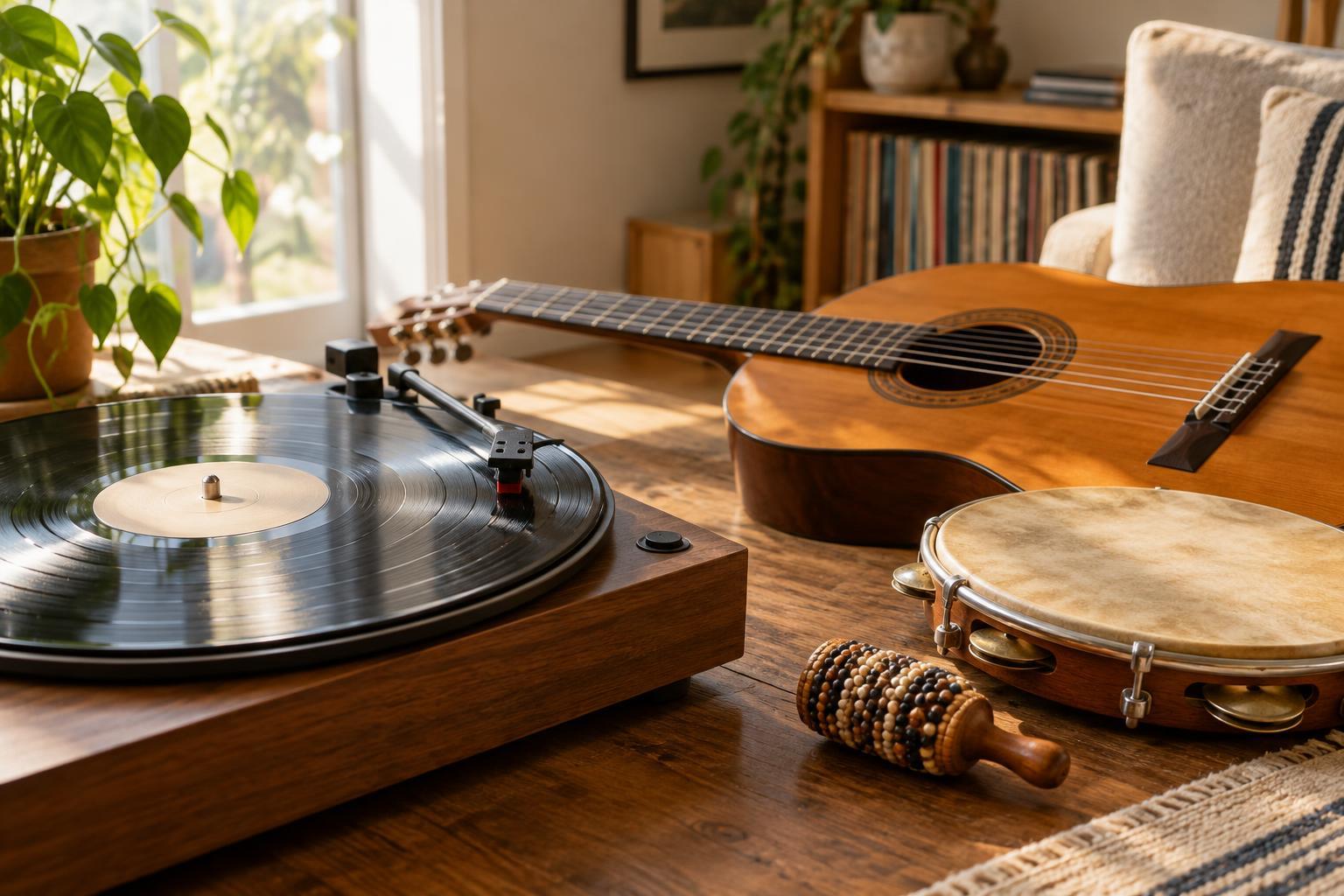
In guitar-led highlife, the appeal often lies in short phrases that fit together like moving parts. One guitar may outline a repeating figure while another answers it with a higher, lighter line. The notes do not have to land on every strong beat. Their accents can fall between beats, giving the music its buoyant, forward-leaning feel.
Try listening to one guitar for a full verse rather than following the singer. Notice where its phrase begins and whether it changes when a vocal line ends. Then listen again for the second guitar, bass or percussion part beneath it. What first sounds like a single sparkling pattern may turn out to be a conversation. On a turntable, the small effort of replaying a side can make those relationships easier to hear.
Hear what the horns add
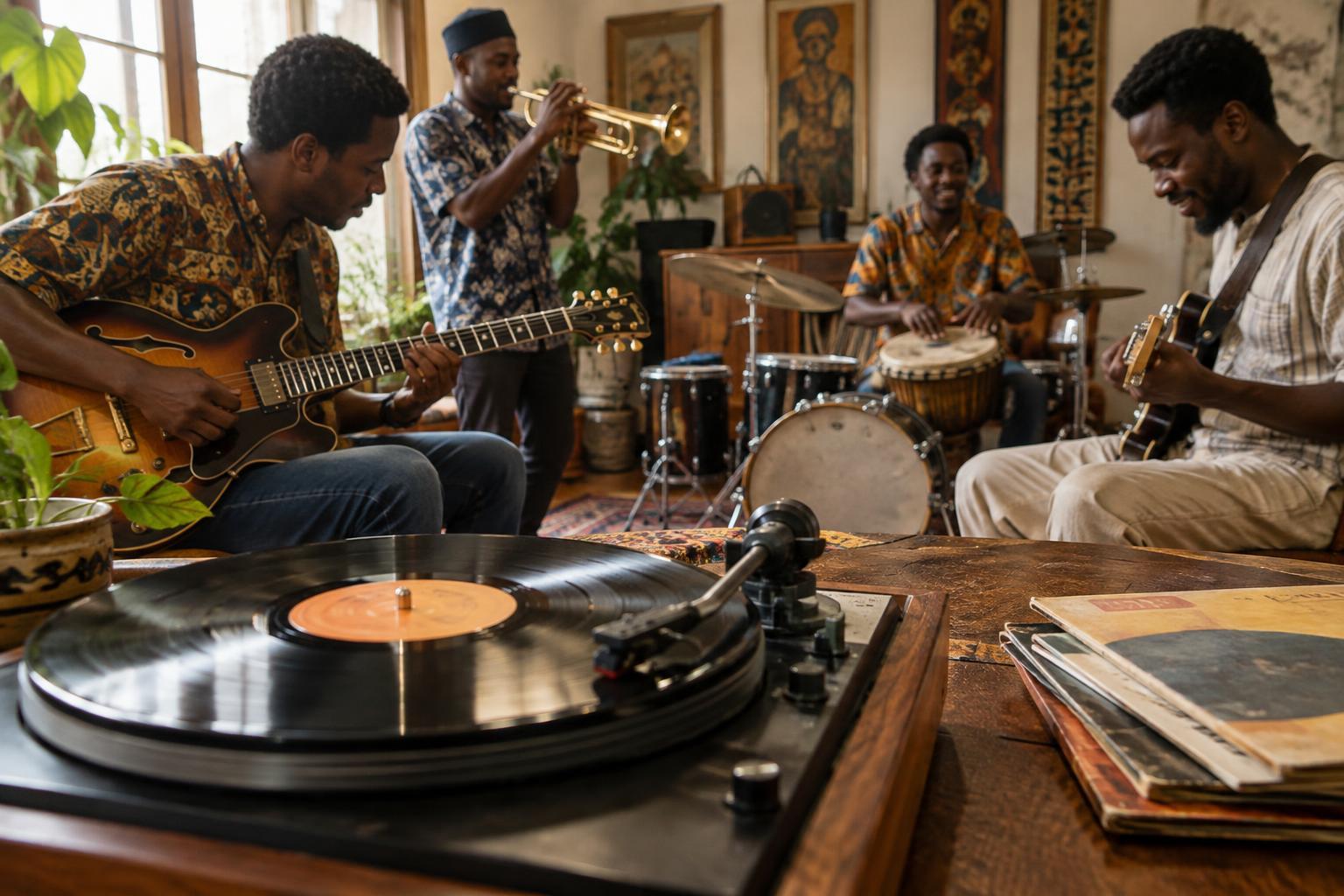
Horns give many highlife recordings a different kind of lift. Trumpets, saxophones and other brass or reed instruments can announce a melody together, punctuate a sung phrase or trade brief responses with the voice. A horn arrangement may sound bold, but it can also leave generous gaps for the rhythm section to keep moving.
To hear the arrangement at work, pay attention to what happens after a repeated chorus. Do the horns restate the tune, answer it or introduce a new phrase? Also listen for the contrast between a tightly played ensemble passage and a looser solo. Horns are an important part of highlife’s story, but they are not a requirement: a guitar-led recording without them can offer just as rich an introduction.
Find the dance rhythm without counting every beat
Highlife rhythms can feel easy to move to and surprisingly intricate when you listen closely. Bass, drums, hand percussion and guitars may each repeat a modest pattern, with the pulse emerging from how those patterns overlap. Instead of searching for one instrument that explains the groove, start by tapping your foot to its steady foundation. Then notice which sounds seem to skip around it.
This approach helps when a recording seems relaxed despite all the activity inside it. A bass line may hold the music together while guitars add offbeat accents and percussion fills the spaces. Singers and instrumentalists can stretch phrases across that framework without stopping the dance. There is no need to identify every rhythmic figure on a first listen; the pleasure often comes from feeling the whole ensemble settle into motion.
A welcoming way to explore on record
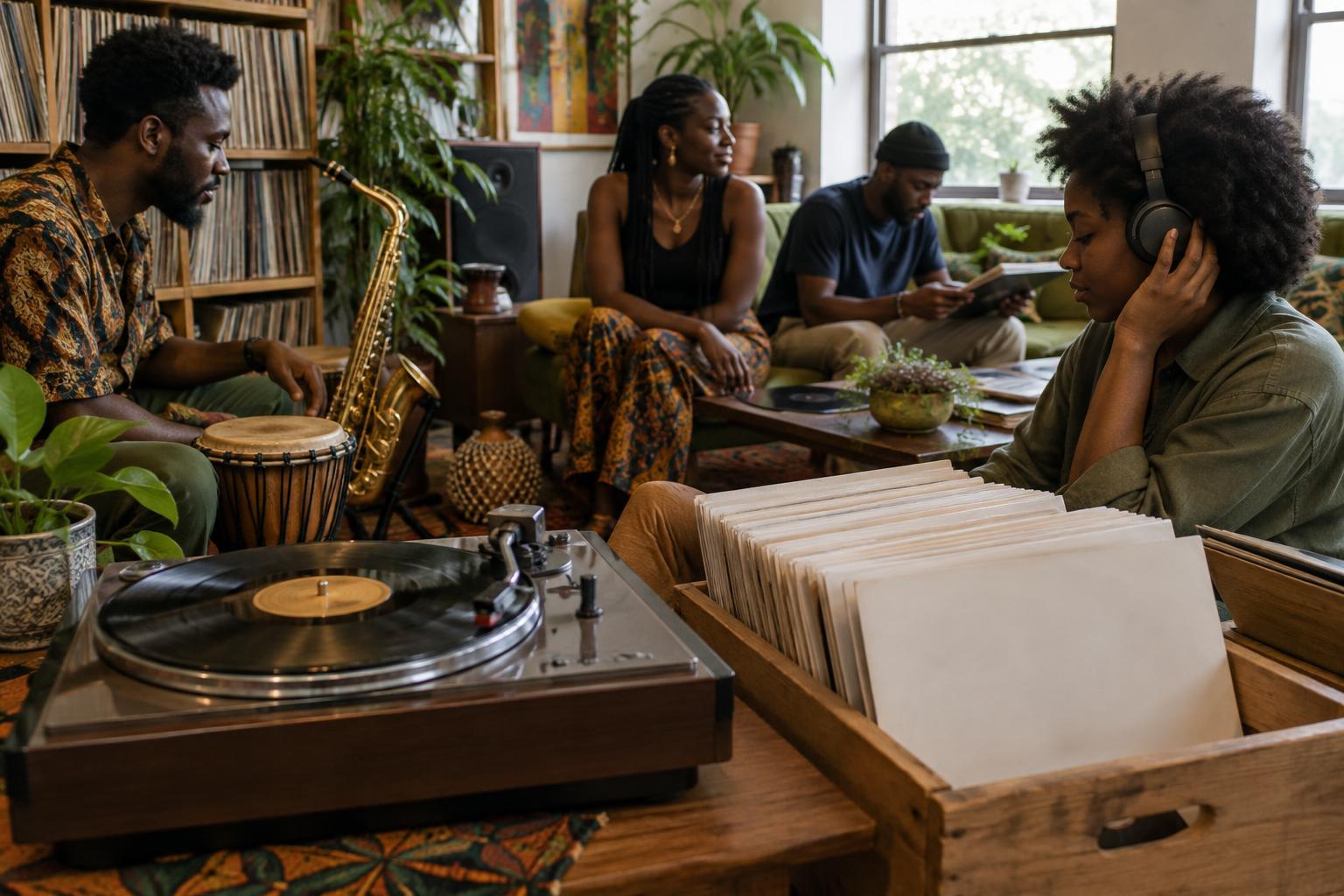
If you are browsing highlife records, use the sleeve as a starting point rather than a promise of a particular sound. Look for clues about the ensemble: guitars, horns, a named bandleader or a smaller group. Compilations can offer a broad introduction, while an album by one group lets you hear how its players develop an approach across a side. Recording quality and presentation vary, so judge the music as well as the condition of the copy.
At home, play a track once for enjoyment and again with one instrument in mind. On another listen, follow the voice and notice how the band responds. You may find that the guitar hook catches you first, then a horn phrase or bass line becomes the part you wait for. Highlife rewards that kind of patient, curious listening: its energy is immediate, but its details keep opening up.