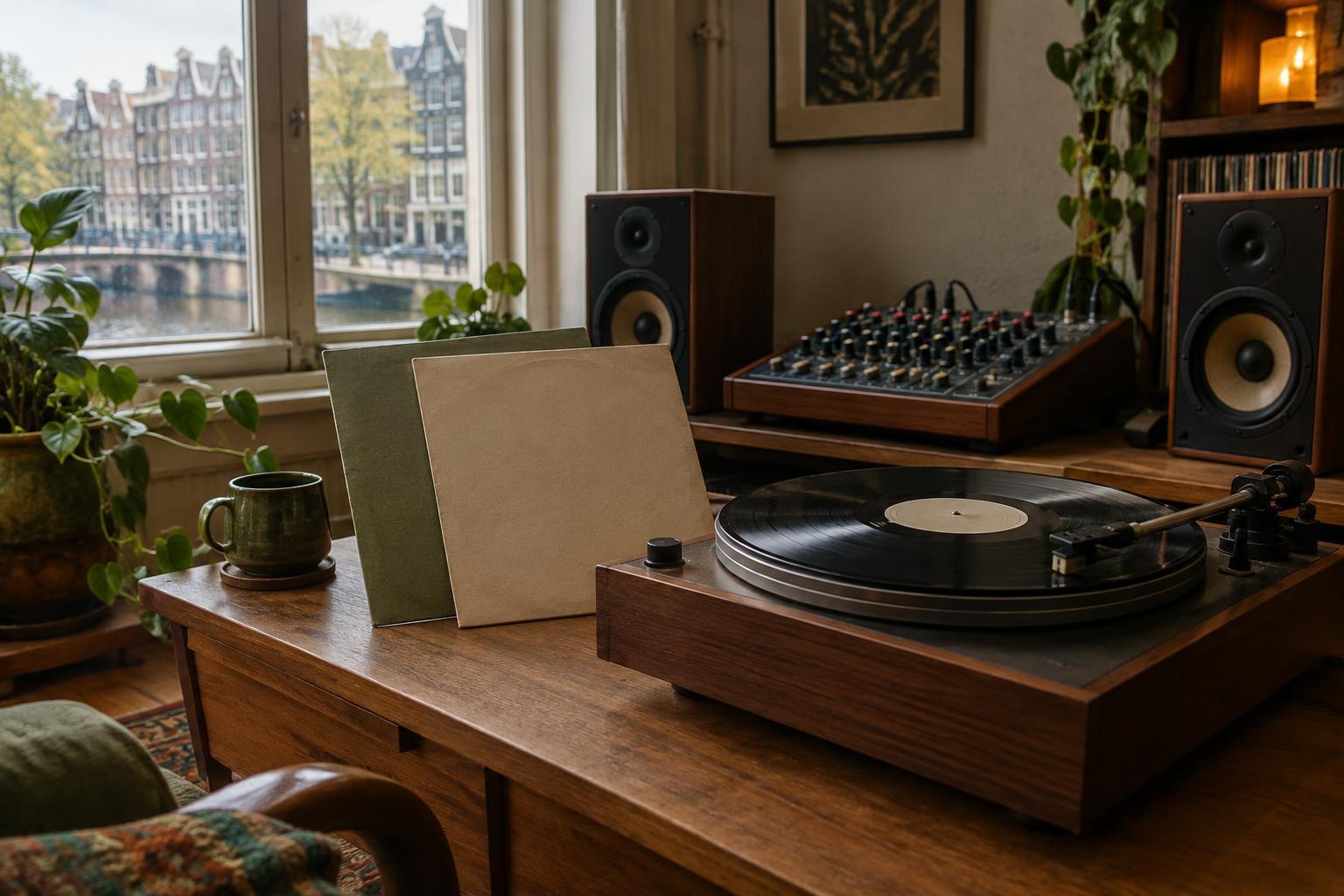
Start with a clue, not a conclusion
A record found in Amsterdam does not necessarily have an Amsterdam story. It may have been pressed elsewhere, brought home by a traveller or passed through several collections. Still, a sleeve can be a useful starting point for exploring the city’s music culture. Names, addresses, photographs and liner notes may point toward the people and places involved in making, presenting or listening to the music.
The useful question is not “What does this record prove about Amsterdam?” but “What might I investigate next?” That distinction matters in a city where musical connections can cross neighbourhoods, languages and borders. A sleeve captures choices made for one release; it cannot describe an entire scene or everyone who took part in it.
Separate where music was made from where it was released
Begin with the small print. Look for recording locations, musician credits, producers, publishers, labels and pressing information. These details describe different stages of a record’s life. A label address does not tell you where the musicians lived, and a pressing location does not tell you where the music found its audience. If a place name appears, note exactly what the sleeve associates it with before drawing a wider connection.
Dates deserve the same care. The date on a reissue may refer to that edition rather than the original recording. A compilation can bring together performances made at different times and in different places. Comparing the front cover, back cover and centre label can help you spot those distinctions. If the information remains unclear, leaving a question unanswered is better than filling the gap with a neat story.
Notice the people beyond the headline artist
The artist’s name is only one part of a record’s social map. Session players, arrangers, engineers, sleeve designers and photographers may each connect a release to other work. Repeated names across records can suggest a creative network worth following, although shared credits alone do not tell you how closely people worked together. Write down the role beside each name so that a designer does not become, by accident, a performer in your notes.
Language can open another line of listening. Lyrics, translations and liner notes may help you hear how an artist addresses an audience or describes a place. Avoid assuming that the language of a song identifies every listener or neatly defines a community. In Amsterdam, as elsewhere, music moves between homes, stages, radio, clubs and private collections in ways a single printed text cannot capture.
Treat artwork and wear as context, not evidence of a whole scene
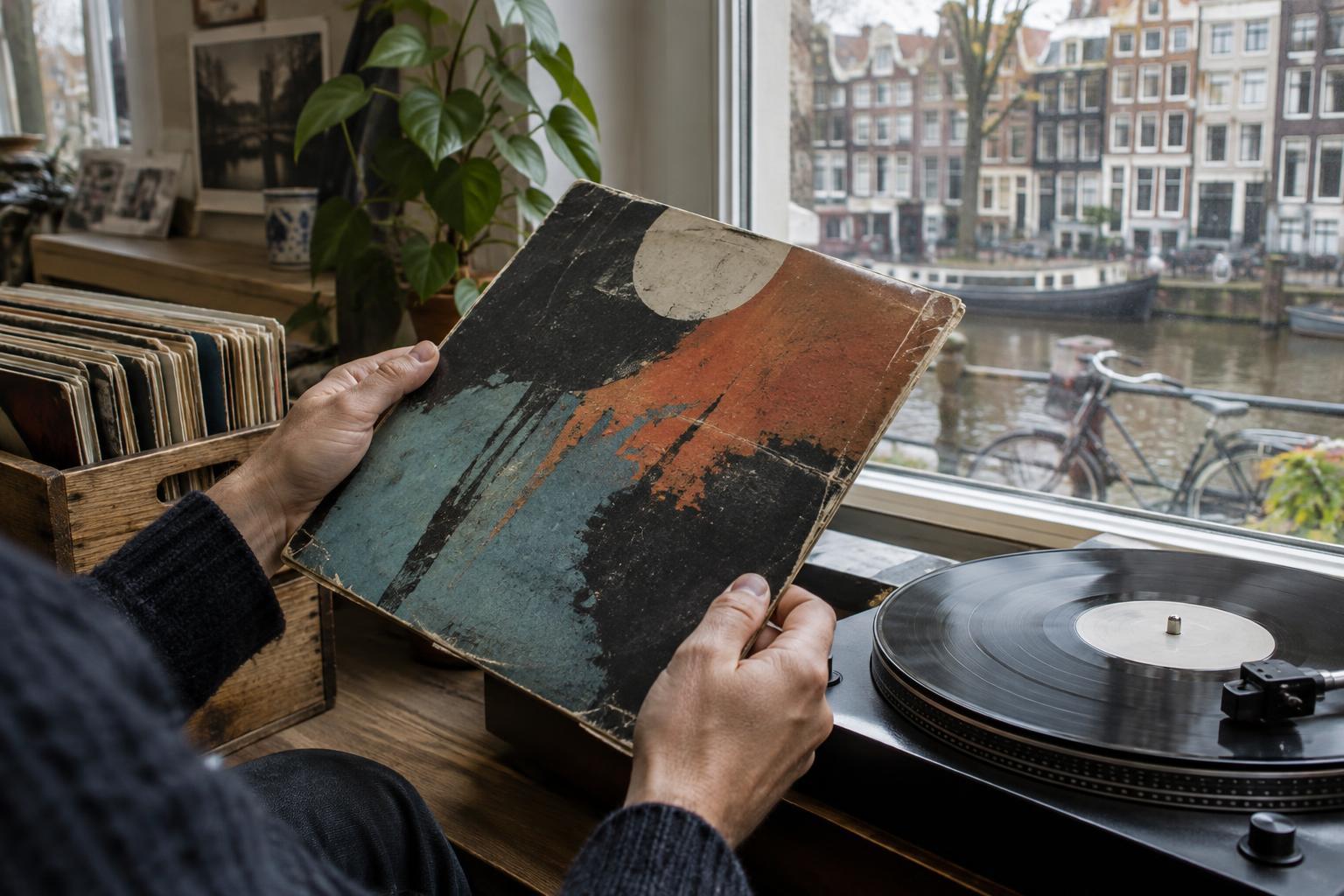
A cover might show a street, a venue, a portrait or an abstract design. Ask what the image actually identifies. A recognisable Amsterdam setting may have been chosen for visual effect; an unmarked photograph may need more context before you can place it. Typography and design can also tell you how a release presents itself, but they are not reliable shortcuts to the music’s sound or its reception.
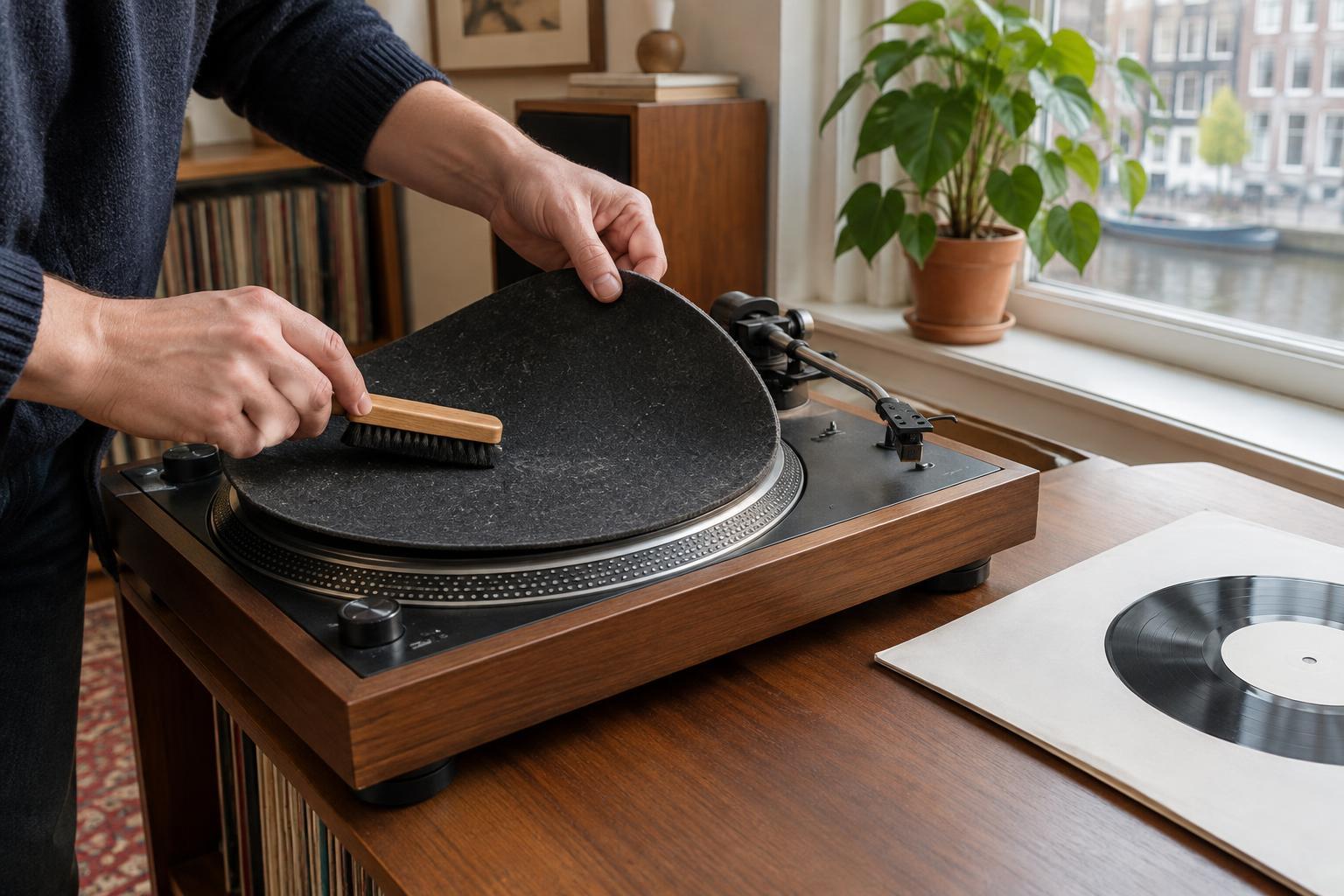
Secondhand copies sometimes carry price stickers, handwritten names or notes tucked inside. These traces make an individual copy interesting, yet they rarely establish a complete chain of ownership. Handle any inserts carefully, and keep personal details in perspective. An old annotation can invite curiosity about how someone used the record without turning an unknown listener’s life into a story you cannot verify.
Build a listening route from what you find
Choose one lead from a sleeve rather than trying to follow everything at once. You might listen to another record featuring the same musician, compare two releases from a label or look for recordings associated with a named venue. Keep separate notes for what is printed, what you hear and what you still want to check. That simple habit makes it easier to revise an impression when a later record adds context.
When browsing in Amsterdam, give yourself time to read as well as search for familiar titles. Ask before playing a record, respect a shop’s handling rules and leave room for other people at the bins. A sleeve-led approach does not promise a definitive map of the city’s music. It offers something more personal and manageable: a way to follow specific connections, listen closely and let the next question lead you onward.