Why the final “s” matters
Afrobeat and Afrobeats are easy to confuse, especially when both appear on a record sleeve, in a playlist or in a conversation about dance music. They are related names, but they do not describe the same thing. Afrobeat, singular, usually refers to a musical tradition developed in Nigeria around the late 1960s and 1970s, closely associated with Fela Kuti and drummer Tony Allen. Afrobeats, plural, is a broad label for contemporary popular music with roots in West Africa, particularly Nigeria and Ghana.
Neither term names every kind of music made on the African continent. Treating them as interchangeable can flatten distinct histories and sounds. The distinction is a useful starting point for listening, not a rule that can classify every track without exception. Musicians borrow across styles, and genre labels often describe a scene as much as a precise set of musical features.
Afrobeat: a band built around the groove
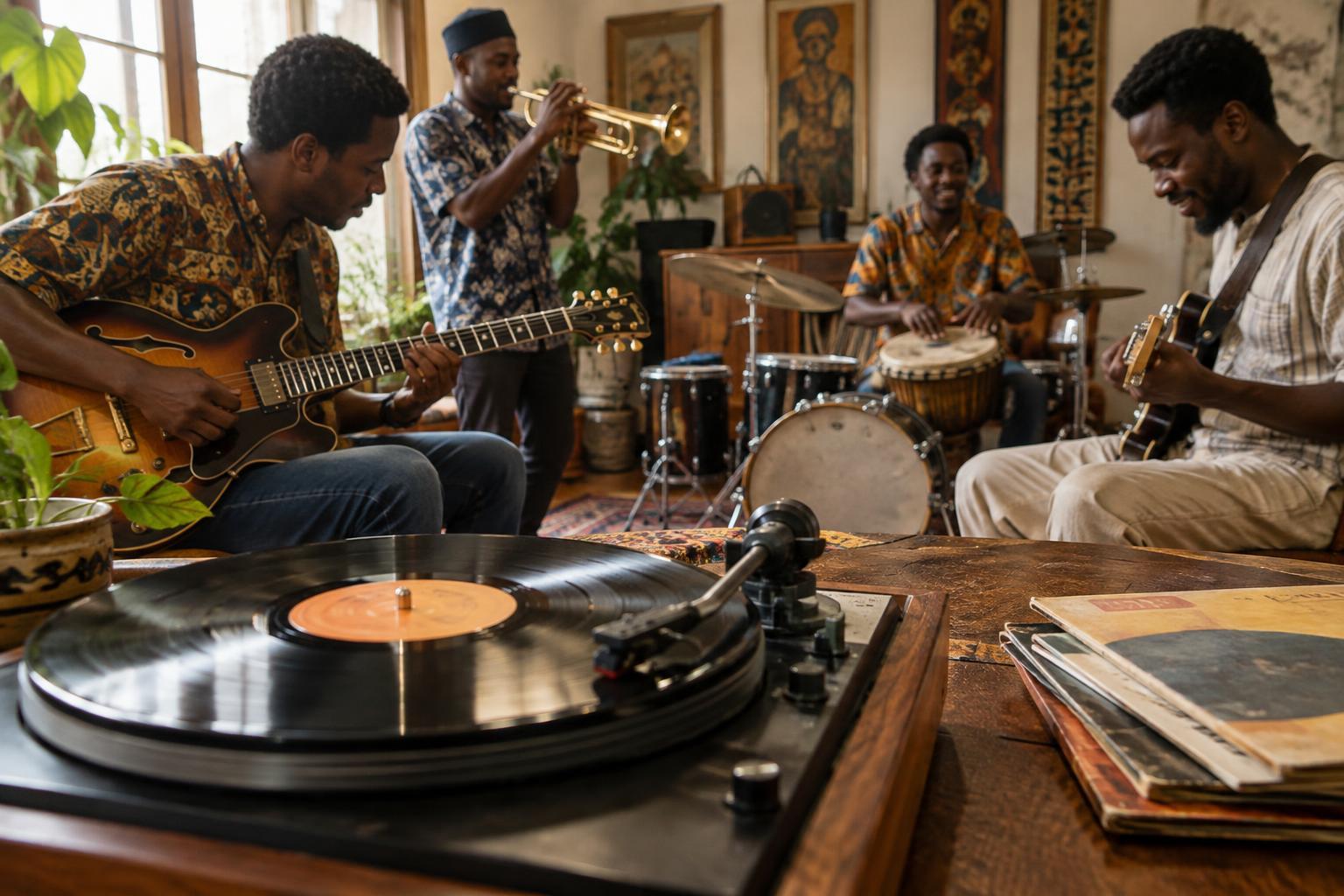
Classic Afrobeat brings together elements of West African highlife, jazz, funk and other musical traditions in extended, tightly arranged performances. A track might begin with a repeating guitar figure or bass line, then add layered percussion, horns and vocals. Rather than rushing toward a chorus, the band often lets a groove develop over many minutes. Tony Allen’s drumming is central to the sound: listen for how the parts interlock without every instrument marking the beat in the same way.
Fela Kuti’s recordings are also inseparable from their social and political voice. His lyrics frequently challenged authority and addressed life in Nigeria. That does not mean every later Afrobeat artist sounds exactly like Fela or pursues the same themes. It does mean that reducing Afrobeat to a generic rhythm misses an important part of its history. When browsing records, look beyond a genre sticker and check the artist, personnel and track lengths for clues about what you are holding.
Afrobeats: an umbrella for contemporary pop
Afrobeats generally refers to a shifting collection of popular styles rather than one fixed band format or rhythm. Producers and singers may draw on highlife, hip-hop, R&B, dancehall and other sounds, combining programmed beats with melodic hooks and varied vocal approaches. Nigerian and Ghanaian scenes have been especially influential in how the term is used, but artists do not all identify with the label in the same way.
A shorter, hook-led song with electronic production may sound far removed from an extended Afrobeat ensemble recording. Yet the plural term does not imply a single recipe: one Afrobeats track may lean toward Ghanaian hiplife, while another may have a distinctly different pop or dancehall feel. You may also encounter “Afropop” as a description. It is often worth noting the artist’s own wording, where available, instead of assuming that a broad retail category tells the whole story.
How to hear the difference without forcing it
Start with the arrangement. In a classic Afrobeat recording, follow one instrument for a minute, then shift your attention to another. Notice how a repeating bass part, a guitar pattern, a horn phrase and several percussion parts create motion together. The length of the track gives those relationships room to change. On a contemporary Afrobeats recording, listen for the production choices: how the beat is shaped, where the vocal hook lands and which sounds carry the melody.
These are listening prompts, not tests. A modern artist can use live horns; an Afrobeat-influenced group can make concise songs; and a singer associated with Afrobeats can work in several styles. If a record surprises you, follow what you hear before settling on a label. Comparing two tracks side by side can reveal more than trying to decide whether either one fits a rigid definition.
A better way to browse and talk about the music
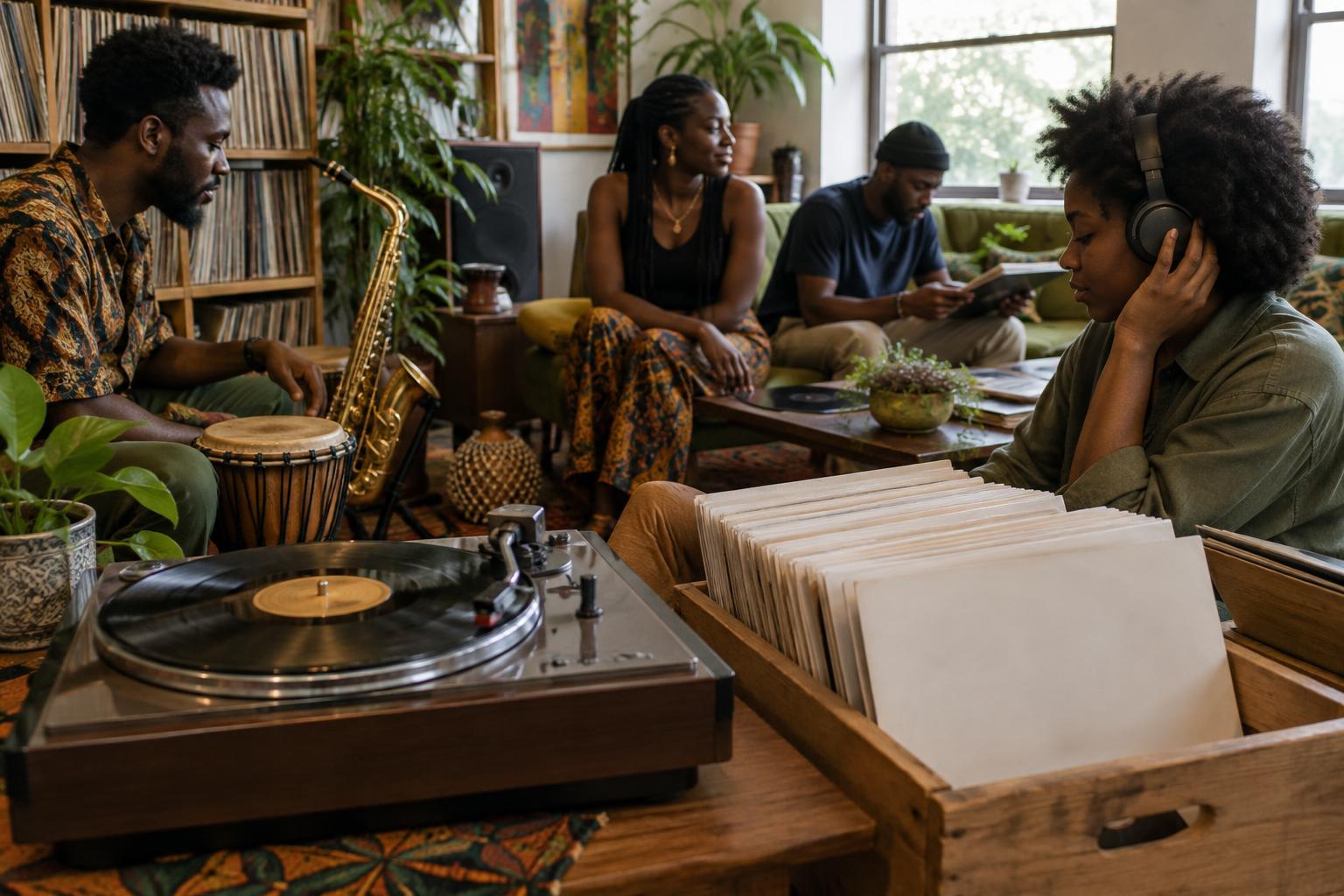
For a record collector, the distinction is most useful as a way to ask better questions. If you want the spacious interplay of an Afrobeat band, seek out recordings associated with Fela Kuti, Tony Allen and musicians working in that tradition. If you want to explore Afrobeats, begin with an artist or song you enjoy and follow the producers, collaborators and styles connected to it. A broad genre bin can be a doorway, but it should not be the end of the search.
The same approach helps in conversation. Use “Afrobeat” when you mean the particular tradition, and “Afrobeats” when you mean the broad contemporary umbrella. If you know a more specific style or the artist’s preferred description, use that instead. Keeping the names distinct is not about policing someone’s taste. It leaves more room to hear the musicians, places and ideas behind the records.