Why punk and squatting became connected
Amsterdam’s punk and squat scenes are often discussed together, but they were never the same thing. Punk offered a way to make music without waiting for permission, polished technique or industry support. Squatting was bound up with questions of housing and access to unused buildings. Where the two overlapped, people found room to rehearse, organize concerts, print flyers and meet others outside conventional cultural institutions.
That overlap mattered because a music scene needs more than bands. It needs affordable places to gather, people willing to share equipment and an audience curious enough to turn up for an unfamiliar act. A temporary room could host a show one night and a planning meeting the next. Such spaces could be fragile, noisy and difficult to maintain, but they gave participants a degree of control over how their culture was made.
The venue was part of the music
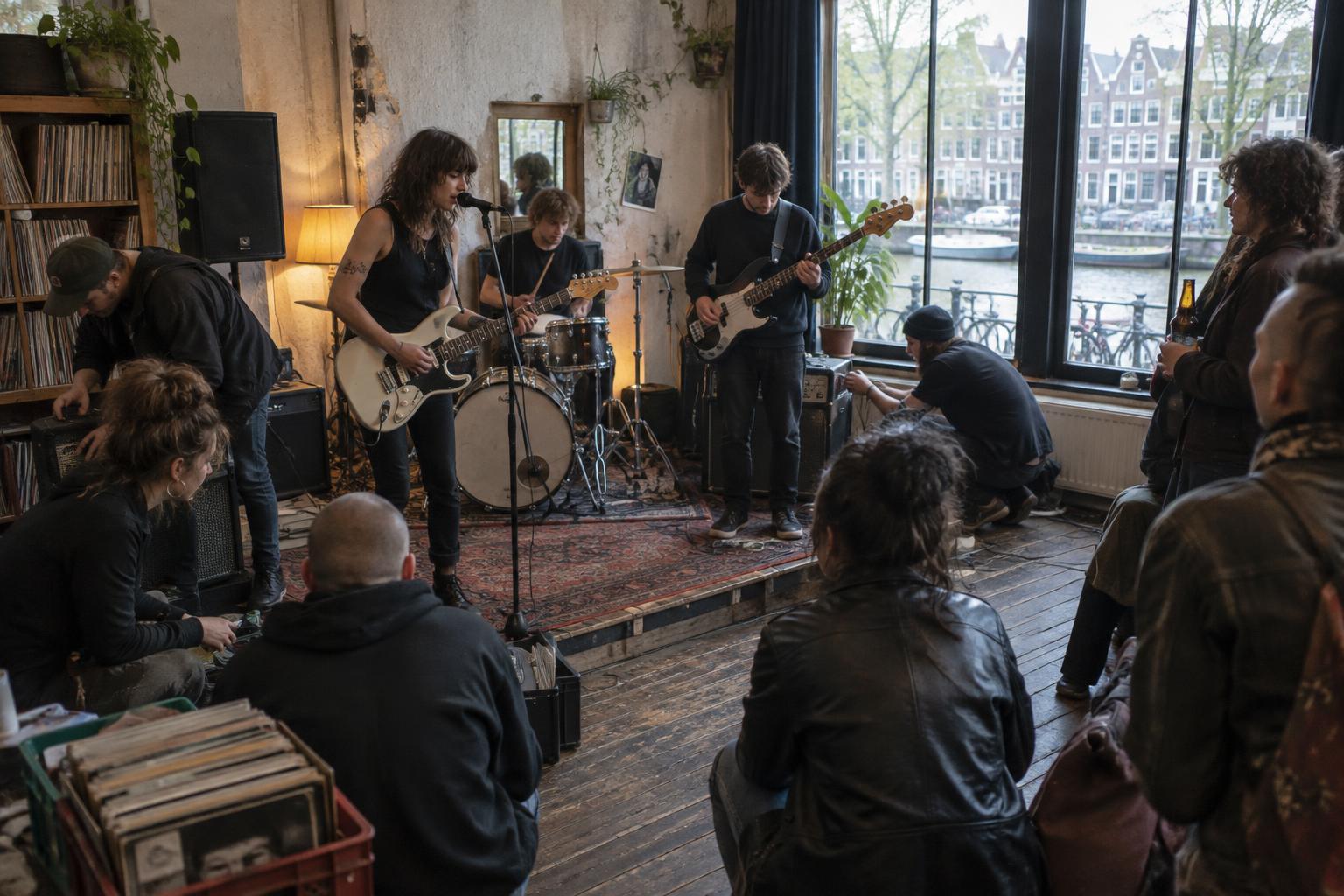
In a self-organized show, the room shapes the experience. A low stage or no stage at all narrows the distance between performers and listeners. Someone who bought a ticket might also help carry an amplifier, work the door or clear up afterward. Flyers, handmade signs and improvised sound systems can tell you as much about a scene as the bands on the bill.
Amsterdam’s wider network of alternative cultural spaces also gave experimental music places to be heard. Venues such as OCCII and Vrankrijk are useful starting points for learning about the city’s independent culture, though each has its own history and programming. Larger venues including Paradiso and Melkweg belong to the story of Amsterdam’s live music, too, but they should not be treated as interchangeable with small, volunteer-run rooms. Scale changes what an audience can hear, who can take a chance on performing and how people get to know one another.
A community built through shared work
The familiar image of punk focuses on the band: fast songs, sharp graphics and a confrontational attitude. The less visible work is just as important. People book touring acts, lend rehearsal space, make posters, cook food, repair cables and tell newcomers where a show is happening. Those jobs create relationships that can outlast a band or a particular venue.
Amsterdam’s scenes have also drawn people with different musical tastes and political priorities. Punk could sit alongside post-punk, experimental noise, hardcore and other sounds that did not fit neatly on a record-store divider. Nor should every squat be imagined as a concert venue, or every participant as a punk. Thinking of the scene as a network, rather than a single look or sound, makes its cultural influence easier to understand.
There is a harder side to this history as well. Keeping a space open takes labor, and disagreements over access, noise and decision-making are real. Housing insecurity is not a picturesque backdrop for music. Recognizing those pressures gives a fuller picture of why people valued independent spaces and why they could be difficult to sustain.
How to listen for the history
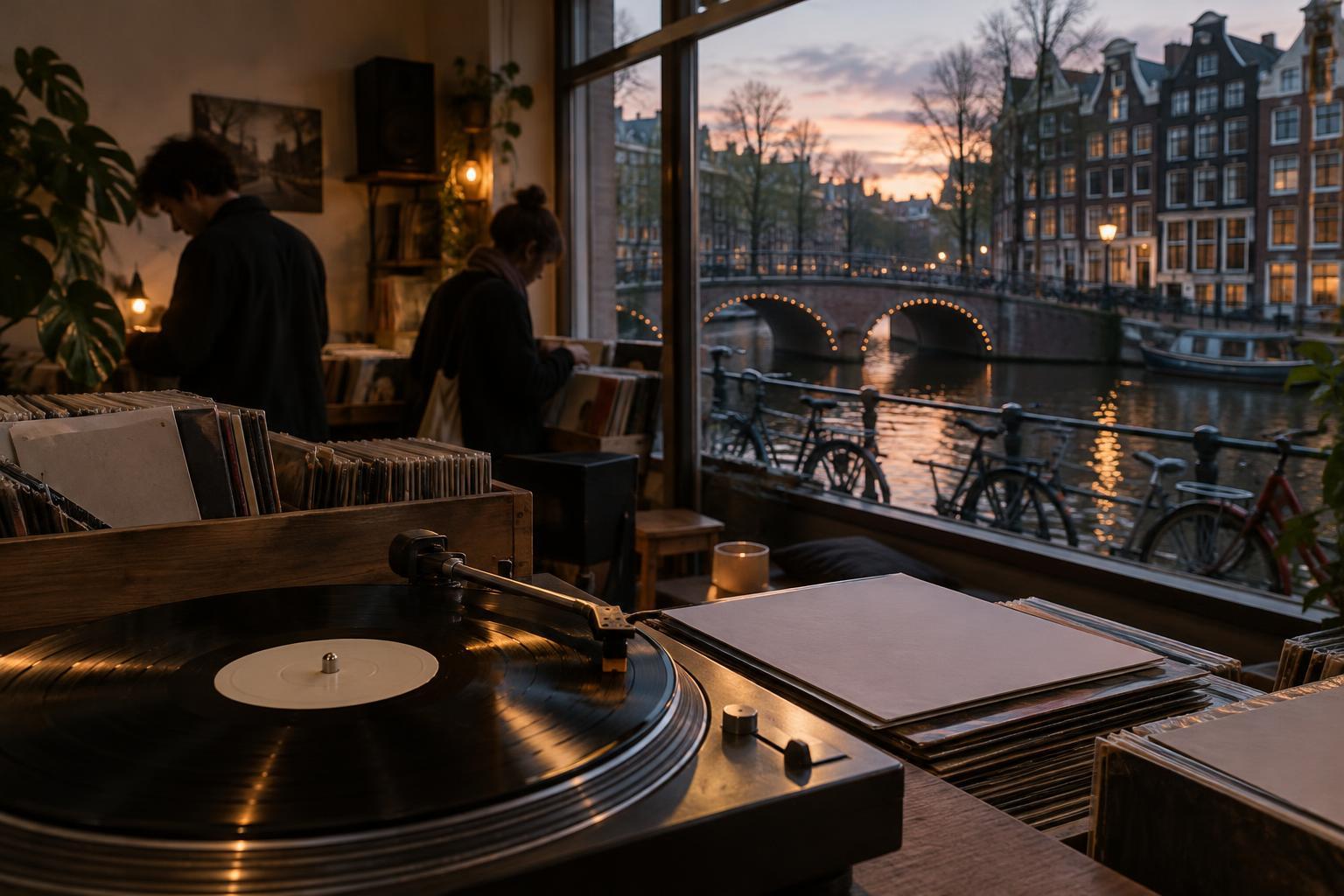
A record can offer a way into this story, especially when you pay attention to its context. Look at sleeve notes, label credits, inserts and gig flyers tucked inside second-hand copies. They may point to small labels, shared bills or people who handled the practical work behind a release. A recording can capture a band’s sound, but its packaging may reveal the network that helped the music circulate.
When exploring Amsterdam’s punk heritage, resist the urge to reduce it to a checklist of famous addresses. Venues change purpose, buildings disappear and memories differ. Start with the music, then follow the connections between performers, spaces and audiences. If you visit a current independent venue, check its own event information, respect the people running it and treat the space as a living community rather than a relic. That approach keeps the focus where it belongs: on people making room for music together.