More than a map of clubs
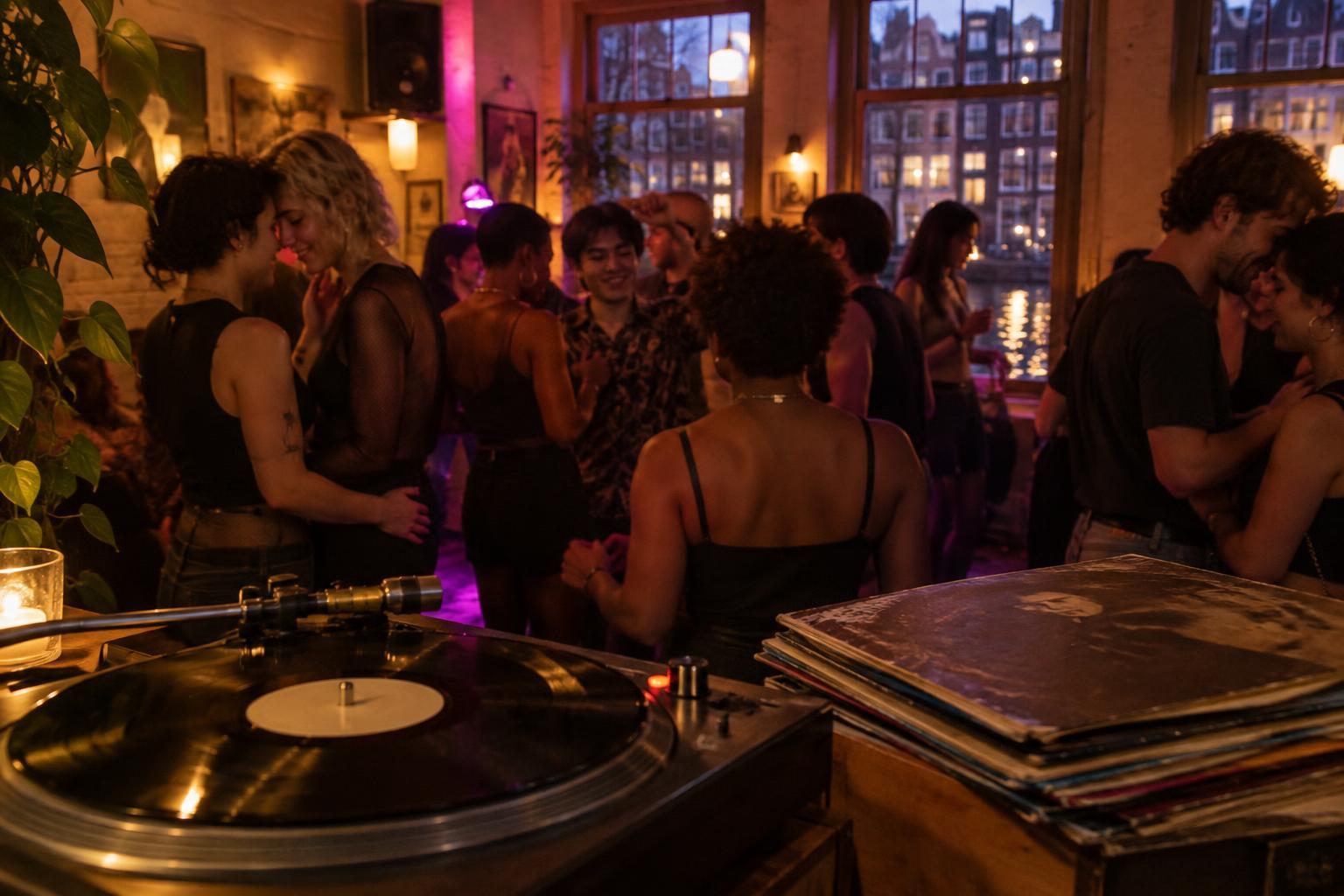
Amsterdam’s queer nightlife is often described through its venues, but its musical legacy is also a story about people: DJs who took chances on unfamiliar records, dancers who made room for one another, and organisers who built nights around a sense of belonging. A bar, party or club can change its name or disappear; a way of hearing and sharing music can travel much further.
The city has long had visible queer meeting places, including streets such as Reguliersdwarsstraat. Visibility, however, is not the whole story. Smaller parties and informal gatherings have served different communities and offered different degrees of freedom. No single venue or genre represents everyone’s experience. The most useful way into this history is to ask not only where people danced, but who shaped the room, what they played and who felt welcome there.
The sounds that crossed the dance floor
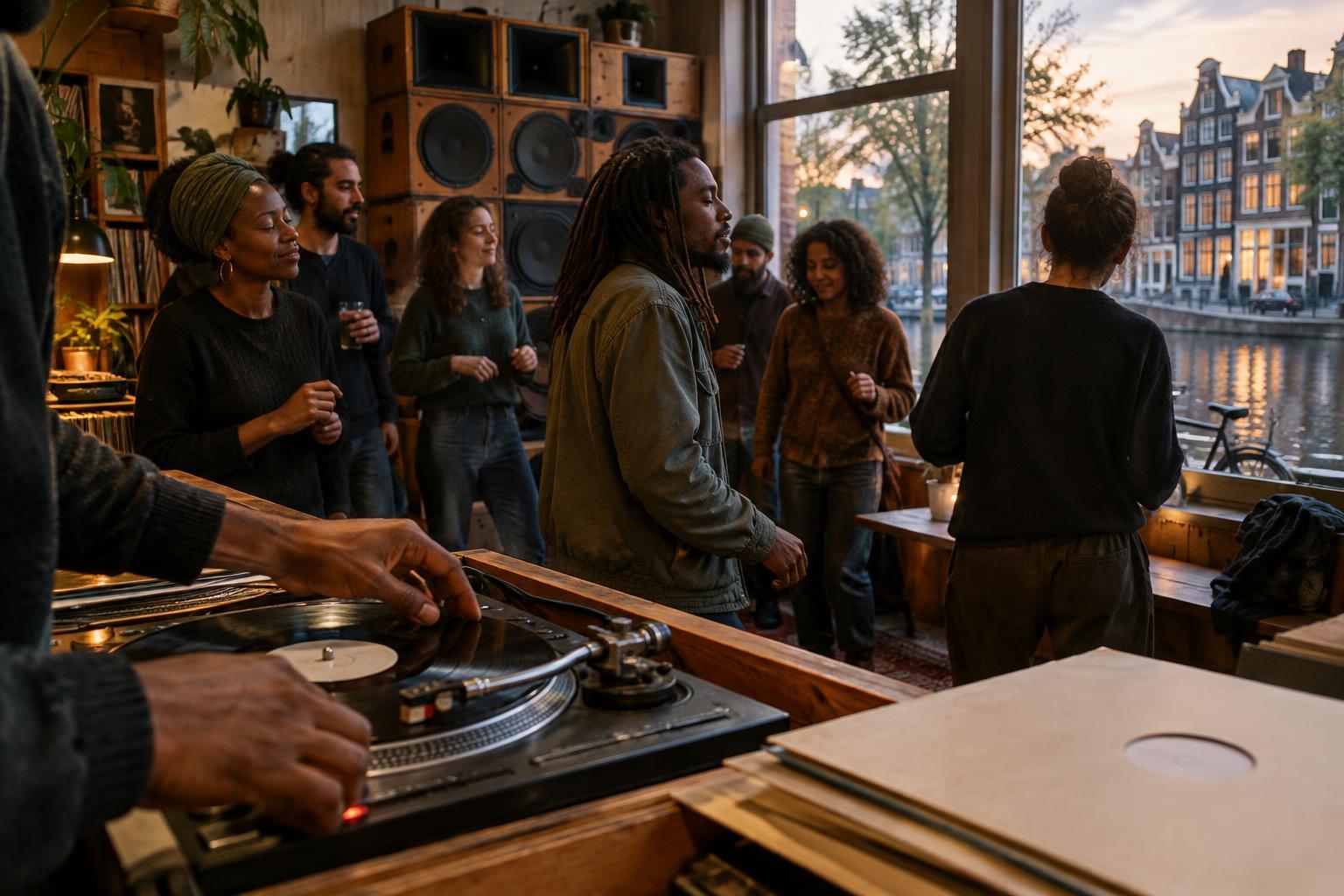
Disco offers one thread through queer nightlife’s musical story. Its extended grooves give a DJ time to build a mood, while its songs can turn private feelings into something shared. House took some of that dance-floor language in new directions through drum machines, repetition and mixes designed to keep people moving. Amsterdam’s DJs and crowds have also made space for techno, electro, pop, soul and sounds that resist a tidy genre label.
These styles did not originate in one city, and their histories should not be folded into an Amsterdam-only tale. Disco and house, in particular, owe much to Black, Latin and queer communities elsewhere. In Amsterdam, their legacy lies partly in how selectors and dancers brought records into conversation with local tastes and each other. A familiar vocal beside an unexpected rhythm can change the energy of a room—and change how someone hears that record the next day.
Queer musical culture is not limited to an uninterrupted beat. Sing-alongs, theatrical performances and moments of stillness can matter just as much. What connects many nights is the freedom to use music for self-expression, recognition and play, rather than treating the dance floor as a test of genre knowledge.
What a record collection can—and cannot—preserve
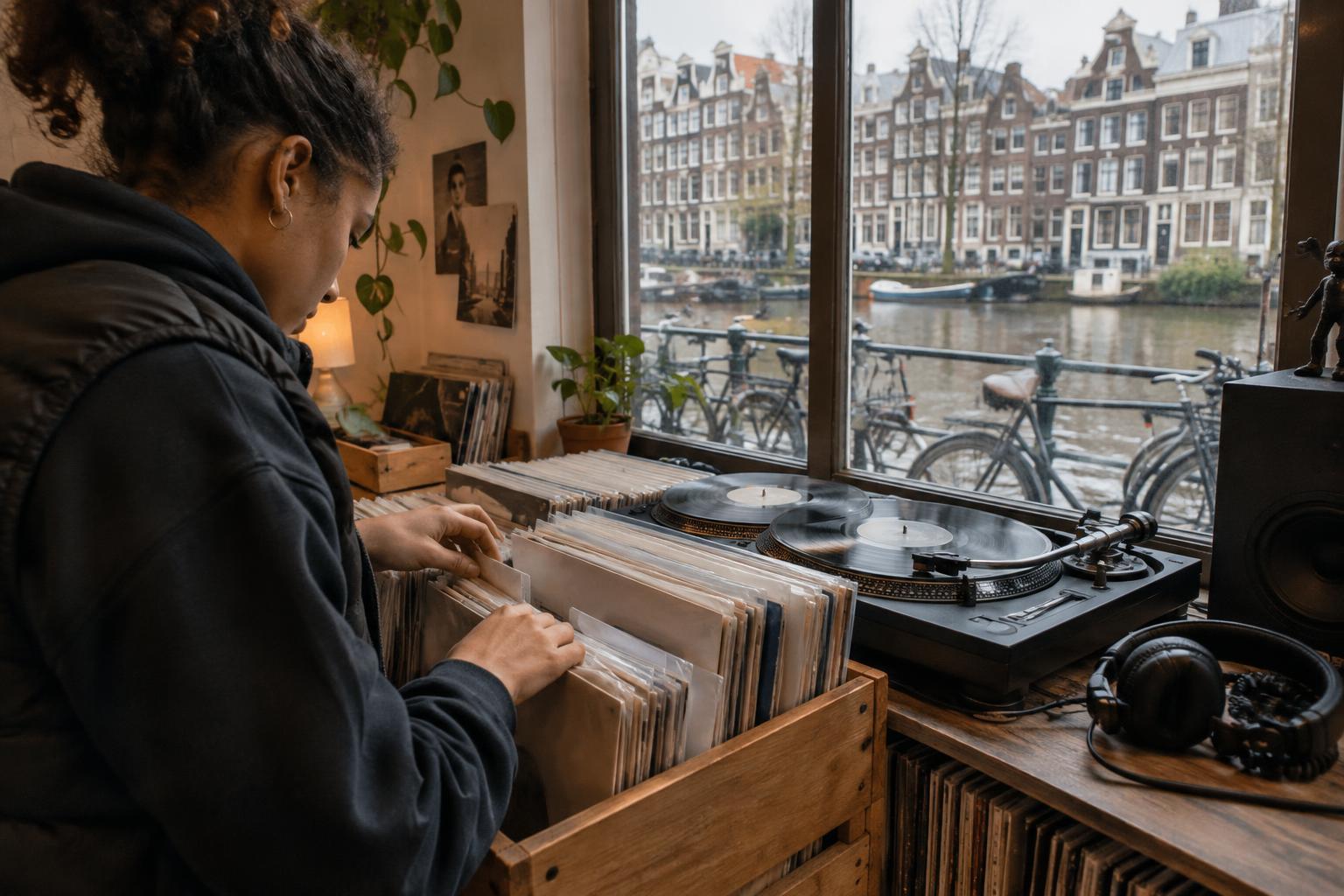
For a record collector, this history can be heard in long versions built for mixing, B-sides that found a second life with DJs, and sleeves worn from repeated use. Records offer clues about what circulated through a city’s parties. Flyers, photographs, radio recordings and personal memories can add context: who played a track, why it resonated and how a night felt to the people in it.
A record alone cannot tell the whole story. An anthem for one crowd may have meant little to another, and a widely available pressing does not prove it was played at a particular venue. When exploring Amsterdam’s nightlife heritage, treat personal accounts as perspectives rather than a single definitive timeline. Credit the artists, DJs and communities whose work you encounter; resist turning a living culture into a list of collectible objects.
At home, listening across a whole side of a dance record can reveal details that short clips miss: the patient opening, the shift in percussion, the passage that lets a DJ move toward the next track. It is a small way to appreciate music made not just to be owned, but to be played for other people.
How to explore the city with care
If you want to experience Amsterdam’s queer nightlife, start with the night rather than the address. Parties vary in music, atmosphere and intended audience, and venues and policies can change. Read an organiser’s description before you go. A relaxed bar, a community-focused party and a late-night club may each call for a different approach, even if all appear under the same broad nightlife label.
On the floor, make space for others, ask before photographing anyone and respect a no when it comes to conversation or dancing. Support the people making the night possible by paying for entry when required and following the venue’s guidance. If you are visiting as a guest, curiosity is welcome; treating other people’s gathering as a spectacle is not.
The musical legacy of Amsterdam’s queer nightlife remains open-ended. It lives in records and memories, but also in the choices made at each new party: what gets played, whose work is acknowledged and how people care for the space they share. Listening closely is a good place to begin.