Start with the sound, not the label
Bebop and cool jazz are useful names for approaches to jazz, but they are not sealed-off categories. Musicians moved between settings, and recordings do not always fit a single description. A better way to compare the styles is to ask what each performance does with the same basic materials: a melody, a pulse, an ensemble and room for improvisation.
Bebop often draws attention to the soloist’s quick turns of thought. A line may leap across the beat, run through a chord change and end somewhere unexpected. Cool jazz is frequently associated with a more restrained surface: a lighter touch, wider spaces in the melody or an arrangement that gives several instruments distinct roles. Restrained does not mean simple, and energetic does not mean careless. Both approaches can reward close listening.
Tempo: listen to the pulse beneath the pace
Fast tempos are a familiar bebop sound. At speed, a drummer may keep the pulse moving while the soloist plays phrases that seem to race ahead or hang back. The excitement comes partly from that relationship between a steady foundation and a flexible line. Bebop can also work at medium or slow tempos, where the details of its harmony and rhythmic placement may be easier to hear.
Cool jazz is often described as relaxed, but volume and tempo are different things. A cool-jazz performance can move briskly while maintaining an even, unhurried feel. Listen for how heavily the musicians mark each beat. A softer attack, less crowded drumming or a melody that leaves space can make a quick performance feel lighter than its tempo suggests. When comparing records, tap a comfortable pulse first; then notice how the music behaves around it.
Phrasing: where the notes begin and end
In bebop, phrases commonly twist through rapid runs, accents and abrupt changes of direction. A soloist might begin before an expected beat, stretch a line over a bar and resolve it only after the harmony has moved on. Try listening to a short phrase rather than an entire solo. Does it feel like a complete sentence, or does its ending push you into the next one? That forward pull is one source of bebop’s intensity.
Cool-jazz phrasing may give individual notes and silences more apparent space. A player can shape a line through a gentle attack, a sustained tone or a pause that lets another instrument answer. None of these devices belongs to cool jazz alone. The distinction is in their balance: one performance may pack several ideas into a small space, while another allows a single idea to linger. Pay attention to the end of each phrase, where a player’s sense of time becomes especially clear.
Ensemble sound: conversation or arranged texture?
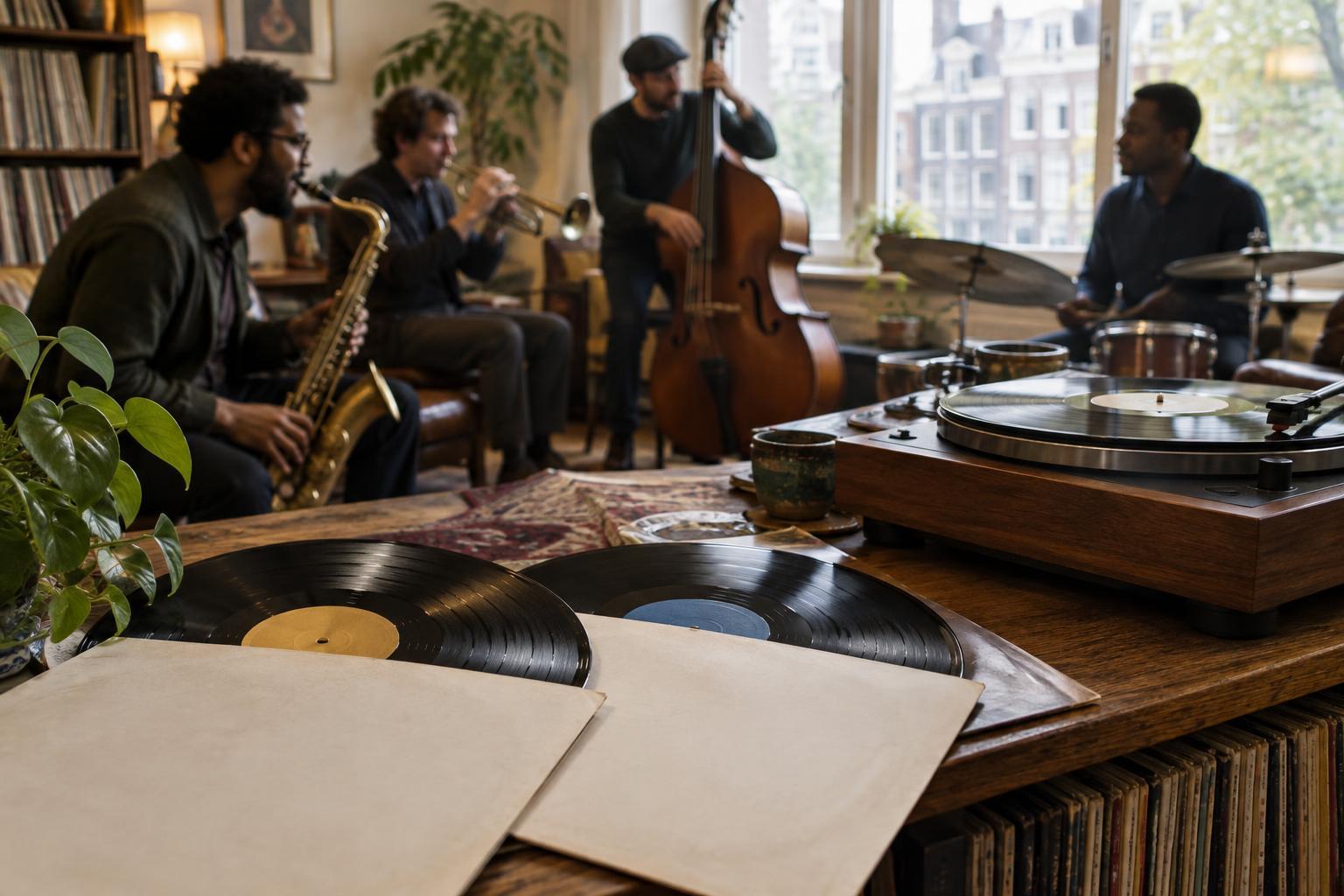
A small bebop group often places the melody and solos in the foreground, supported by bass, drums and a chord-playing instrument. The supporting players are active participants, not a static backdrop: rhythmic accents and short responses can sharpen a soloist’s next idea. In a head arrangement, the group plays a melody together before and after improvisations, giving listeners a recognizable point of return.
Cool-jazz recordings can make more conspicuous use of arranged parts, blended horn colors or counterlines that continue beneath a solo. Some use larger ensembles; others achieve a spacious sound with only a few players. Rather than counting instruments, listen for their relationship. Do the horns state a compact tune and step aside, or do their lines overlap and change the color of the whole group? These are tendencies, not tests that every record must pass.
A simple way to compare records
For a useful listening session, choose one bebop-leaning track and one cool-jazz-leaning track, then play each at a similar comfortable volume. On the first pass, follow the bass or cymbal to locate the pulse. On the second, focus on one soloist: notice the density of notes, the placement of accents and the length of pauses. On the third, listen to what the other musicians do while that soloist plays.
If you collect vinyl, sleeve notes and personnel credits can help you identify instruments and arrangements, but let your ears lead before reading a style label. You might discover a hard-driving moment on a supposedly cool record or an unusually spacious passage in bebop. Those exceptions are part of the pleasure. The goal is not to sort every album into two boxes; it is to hear more clearly how musicians create momentum, breathing room and a shared ensemble voice.