Two ways to turn the platter
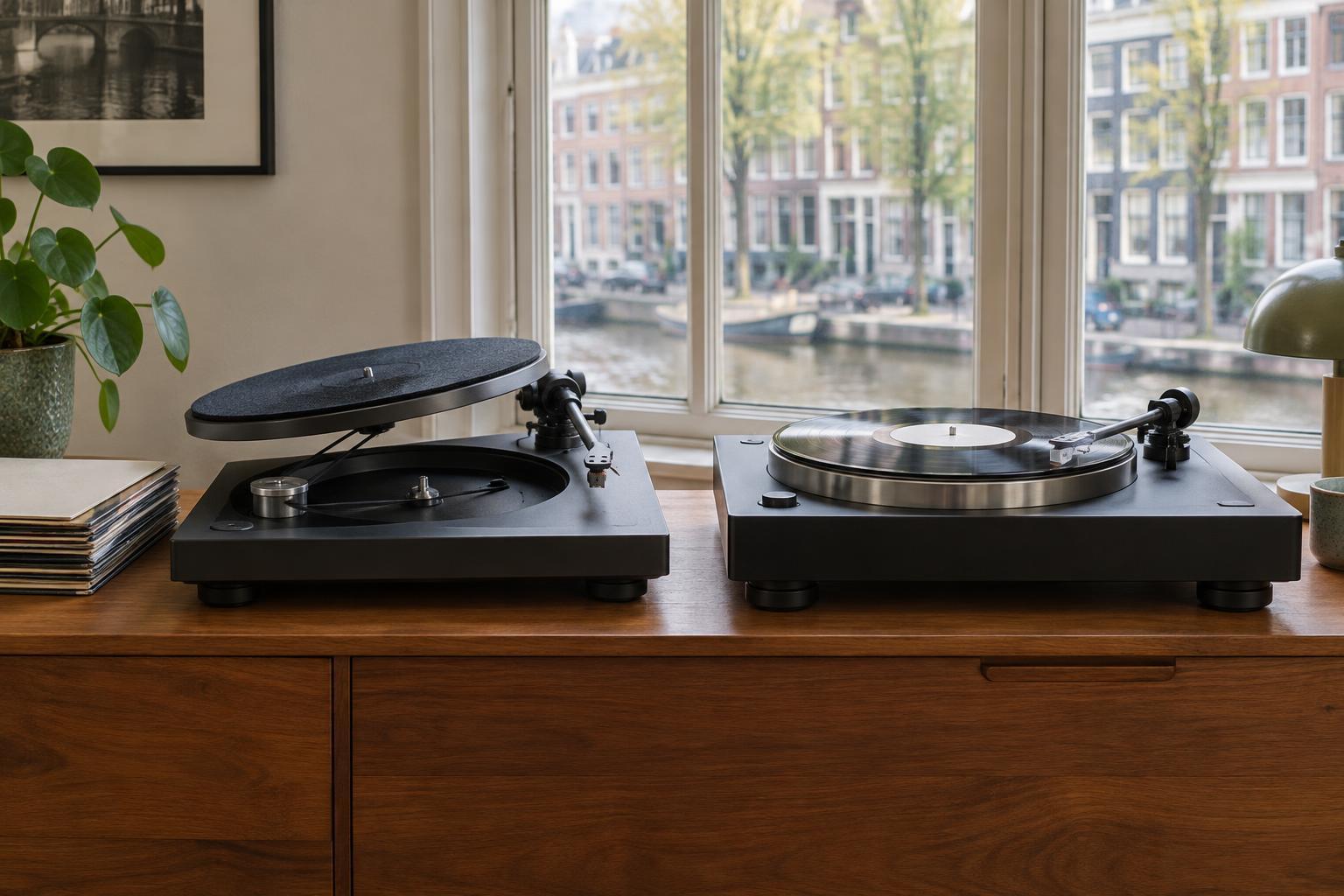
A turntable needs to rotate a record at a steady speed while its stylus follows the groove. On a belt-drive model, a motor turns a flexible belt connected to the platter or a smaller pulley beneath it. On a direct-drive model, the motor drives the platter directly. Both approaches can work well for home listening; the drive system is only one part of the turntable.
The belt acts as a physical link between motor and platter and can help limit the transfer of some motor vibration. Direct drive avoids that belt and commonly offers quicker starts and convenient speed control. Neither description tells you how a particular turntable will sound. Motor design, platter construction, bearings, tonearm, cartridge and setup all matter.
Speed stability and what you may hear
Small changes in rotational speed can make sustained notes, such as piano chords or held synthesizer tones, seem to waver. You may see specifications for wow and flutter when comparing turntables, but a single number does not describe every aspect of performance. Condition and setup also count: a worn belt can slip, while a direct-drive deck with a fault can struggle to hold speed.
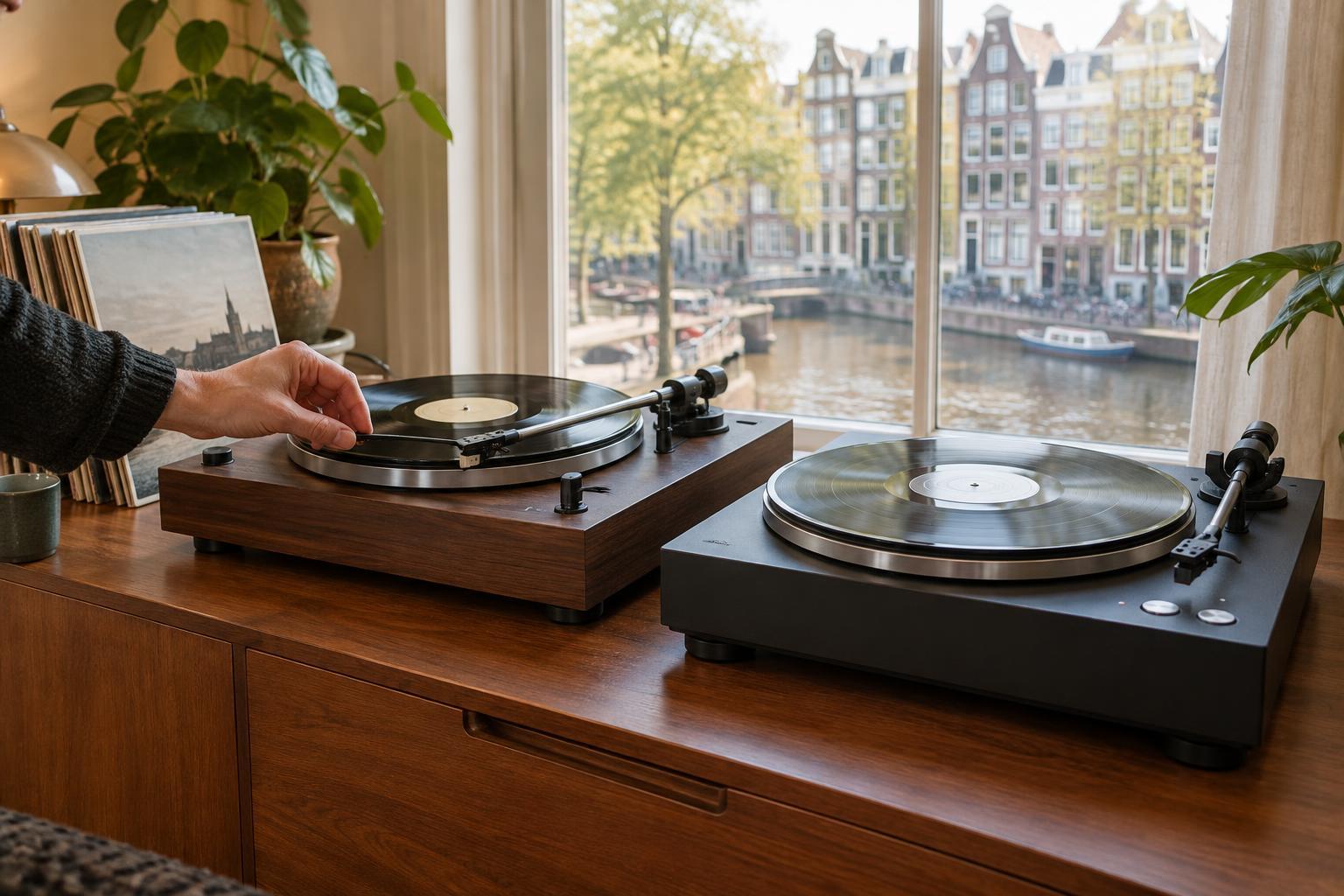
Direct-drive models are often chosen when fast startup, pitch adjustment or hands-on cueing are important. Those features can be useful at home, especially if you enjoy mixing records, but they are not requirements for attentive listening. A well-designed belt-drive turntable can maintain steady speed too. If possible, listen to familiar music on the actual deck you are considering rather than treating its drive type as a verdict.
Noise, vibration and the listening room
Motor vibration can reach the stylus through a turntable’s structure, which is one reason belt-drive designs appeal to some listeners. Yet a belt is not a guarantee of silence, and direct drive is not inherently noisy. Good engineering can make either approach quiet enough that other sounds in a room become more noticeable.
Placement is often more consequential than the drive mechanism. Put the turntable on a level, sturdy surface away from speakers if you can. A shelf that shakes with footsteps or bass may cause skips or low-frequency feedback, regardless of what turns the platter. In a compact listening space, finding a stable spot and keeping speakers from vibrating the same furniture as the deck are sensible first steps.
Maintenance and daily use
A belt is a replaceable part. Over time it may stretch, harden or lose grip, making speed less reliable. Replacement is usually straightforward if the correct belt is available, though the method varies by model. Some belt-drive turntables also require you to move the belt to another pulley position to change between 33⅓ and 45 rpm; others switch electronically. Check which arrangement suits how often you play singles.
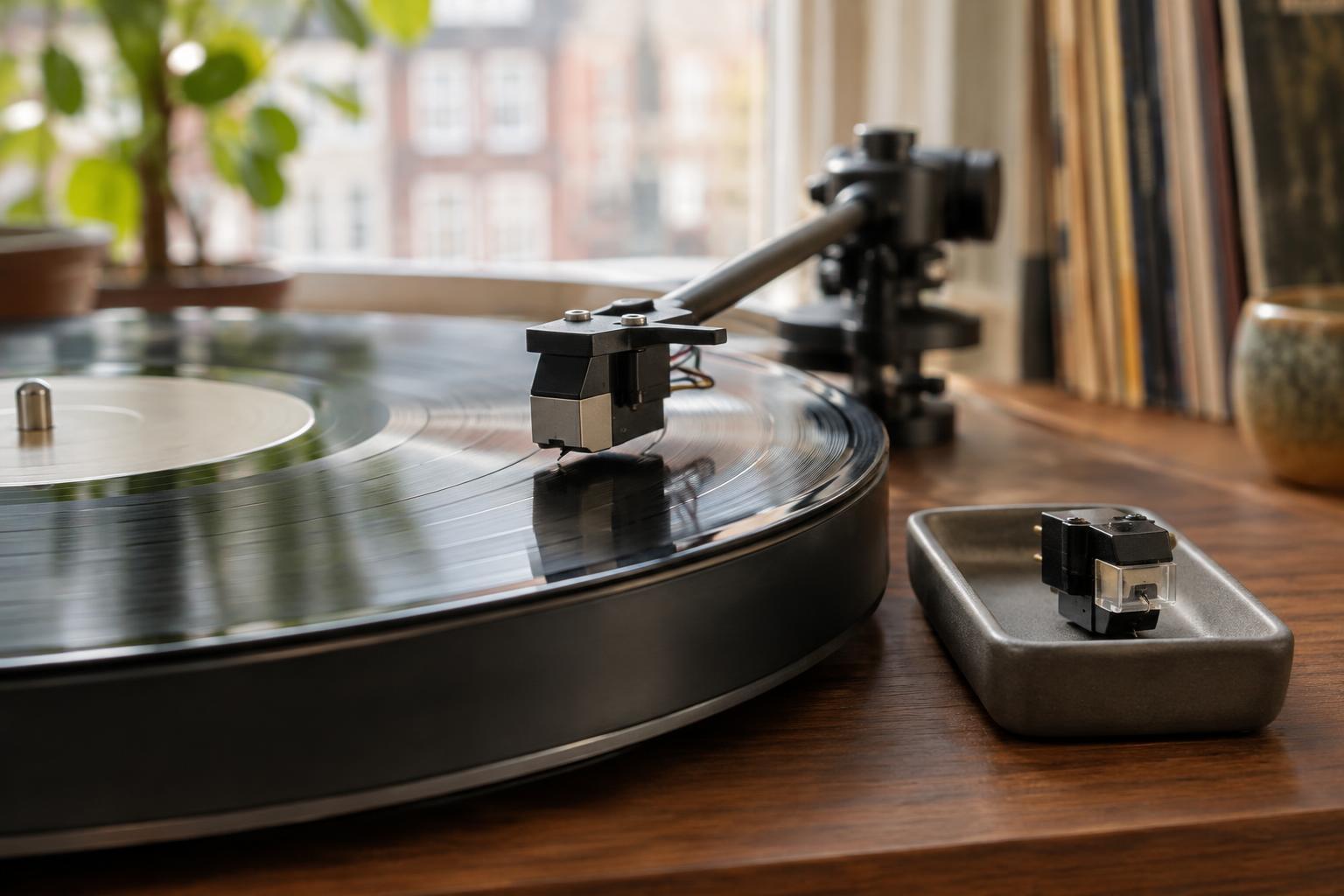
Direct-drive turntables do not need belt replacements, but they are not maintenance-free. Controls, switches and other components can wear or develop faults, especially on used equipment. When buying second-hand, confirm that the platter starts, reaches speed and runs without obvious fluctuations. For either type, also check that the tonearm moves freely and that a suitable replacement stylus is available for the fitted cartridge.
Choosing a turntable as a whole
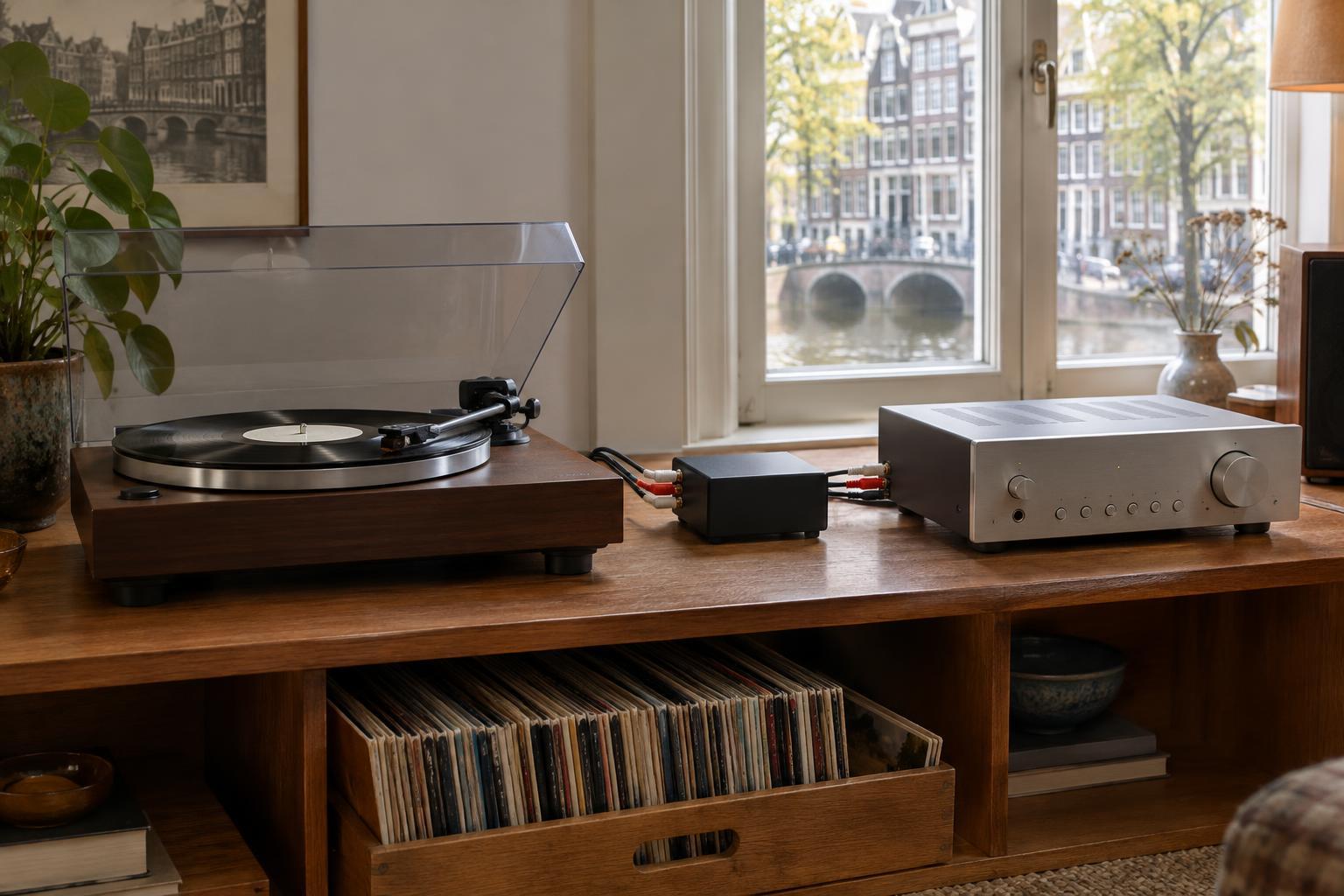
If your main goal is to put on an album and listen, start with practical questions: Is the turntable easy to set up? Does it offer the speeds you need? Can you obtain a replacement stylus and, if applicable, a belt? Is its built-in phono preamp suitable for your system, or will you need a separate one? These details may affect daily enjoyment more than the drive label.
Also allow time to set up the deck properly. Follow the manufacturer’s guidance for leveling, tracking force and any adjustable anti-skate control, and keep records and the stylus reasonably clean. A poorly adjusted cartridge can undermine either drive system. Choose belt drive if its simplicity and operating style appeal to you, or direct drive if quick starts and hands-on control matter. For home listening, the better choice is the turntable that fits your records, space and habits.