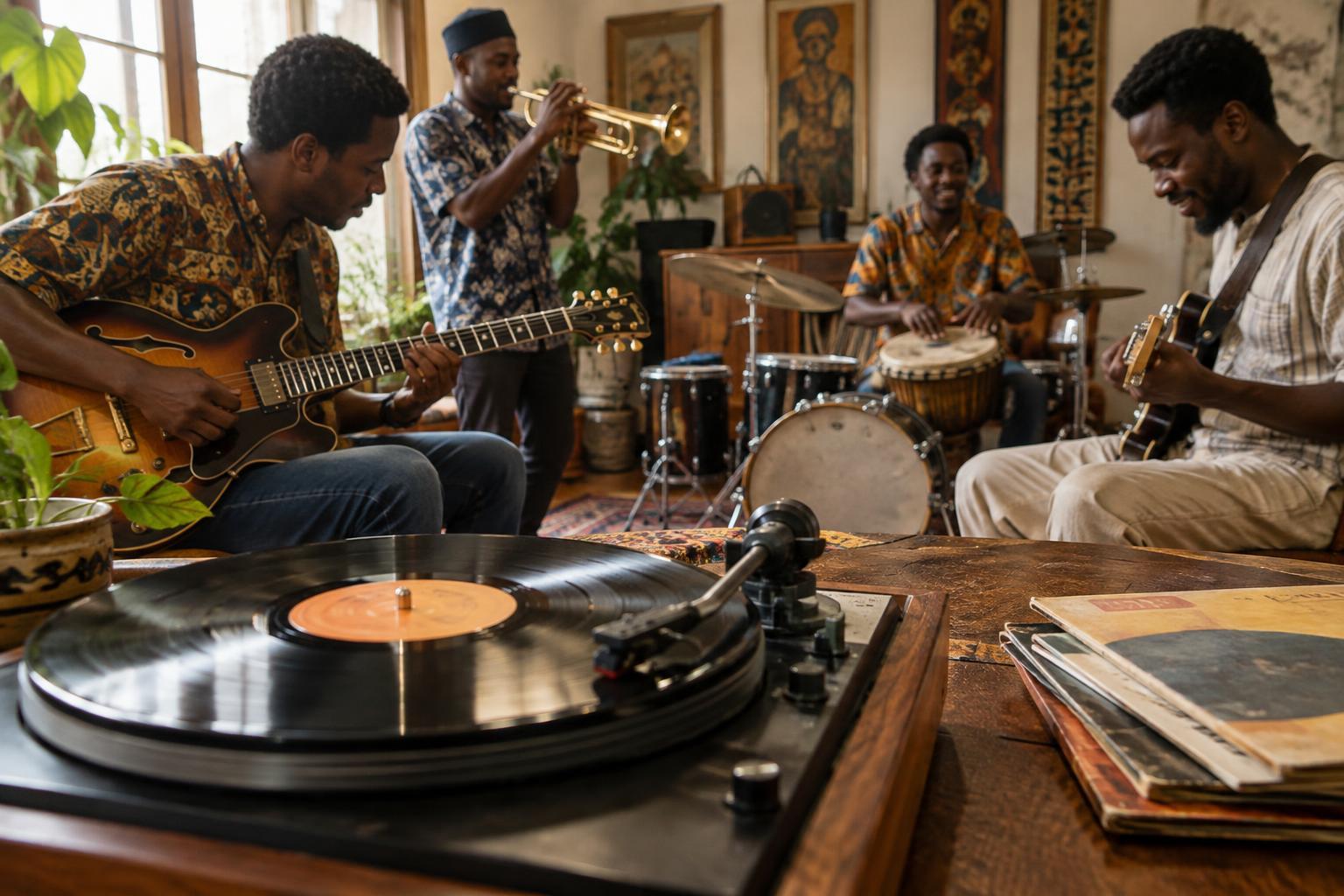
Start with the family resemblance
Bossa nova did not appear in isolation from samba. It emerged in Brazil with samba’s rhythmic language as a foundation, while giving that language a different setting and touch. That relationship is more useful to a new listener than treating the two as opposites. A bossa nova performance can contain a recognizable samba pulse; a samba performance can be quiet and restrained.
Samba also names a broad family of musical practices, not one fixed drum pattern. Depending on the recording, you may hear a large percussion ensemble, a small group or little percussion at all. Bossa nova is usually easier to identify by the way its parts work together: a steady low pulse, gently displaced accents and space around the voice or melody. These are listening clues, not rules that classify every record.
Find the pulse before chasing the syncopation
When a rhythm feels elusive, tap along to its most dependable low sound. In many samba performances, a low drum or bass part marks a recurring pulse while higher percussion adds patterns around it. Samba is often felt in two beats per bar, even when the surface is busy. Try counting “one, two” evenly and notice how claps, shakers or drum strikes seem to lean across your count.
Syncopation means an accent arrives somewhere other than the beat you were expecting. It does not mean the underlying pulse has disappeared. In samba, several interlocking parts may create that effect at once: one keeps time, another marks a repeating accent, and another fills the spaces between. Resist the urge to hear every strike as a new beat. Let one part anchor your count, then listen to how the other parts move against it.
Hear how bossa nova makes the rhythm smaller
In a classic bossa nova setting, the guitar often does work that a larger samba ensemble might divide among instruments. The player’s thumb can provide a regular bass note while fingers place chords in a syncopated pattern above it. If you focus only on the chords, the rhythm may seem to float. Follow the bass notes first, and the chords begin to sound like carefully timed departures from a steady floor.
The touch is part of the effect. A soft guitar attack, light percussion and an intimate vocal can make bossa nova sound relaxed, but relaxed does not mean rhythmically vague. The small delays and offbeat chord placements matter precisely because the pulse remains clear. Some recordings use drums or other instruments; the guitar pattern is a helpful entry point, not a requirement.
Tempo is an unreliable shortcut. Bossa nova is often associated with an unhurried feel, and samba with greater drive, but either can vary. A better question is where the rhythmic activity sits. Is it distributed among audible percussion parts, or suggested by a compact guitar-and-bass conversation? Then ask whether the accents push outward or leave more room between them.
Try a two-pass listening exercise
Choose one samba recording and one bossa nova recording, preferably performances with clear, uncluttered sound. On the first pass, ignore the singer and melody. Tap a comfortable pulse through each track without trying to copy the percussion or guitar. If you lose your place, return to the low drum, bass instrument or guitar bass notes.
On the second pass, keep tapping but pay attention to the sounds that do not land with your tap. In the samba recording, listen for repeating accents and lighter subdivisions that weave through the pulse. In the bossa nova recording, notice whether the guitar chords answer the bass notes rather than simply striking alongside them. You do not need to write out the rhythm to hear its shape.
Finally, listen to the vocal phrasing. A singer may enter just before or after a beat, stretch a line across it, or leave a gap that lets the accompaniment speak. Both styles can make expressive use of that freedom. Listening for the relationship between voice and pulse is more revealing than deciding that one genre is always energetic and the other always calm.
Use the distinction as a doorway, not a label test
Record sleeves and playlists may offer genre names, but the most rewarding comparison happens in the sound itself. Start with the shared pulse, then hear how each arrangement presents it. Samba can make interlocking rhythmic parts vivid; bossa nova can compress a related rhythmic feel into an understated exchange between bass and chords.
As you browse records, expect boundaries to blur. Musicians borrow approaches, and performances can combine a samba-based rhythm with the spare textures associated with bossa nova. Rather than asking whether a track passes a strict genre test, ask what holds its beat together and what gives it motion. That habit will help you hear more in both styles.