First, find the phono preamp in your system
A turntable cartridge produces a much quieter signal than a typical line-level source, such as a streamer. Records are also made with a particular equalization curve that must be reversed during playback. A phono preamp, sometimes called a phono stage, provides the needed gain and equalization before the signal reaches a standard amplifier or powered speakers. Without one, a turntable connected to a regular line input will usually sound very quiet and thin.
That phono stage may already be inside your turntable, amplifier, receiver or powered speakers. An input marked PHONO generally indicates a built-in phono stage; inputs marked AUX or LINE generally do not. Some turntables offer a PHONO/LINE switch: PHONO sends the cartridge signal out for another phono stage to handle, while LINE uses the turntable’s built-in stage. Check the labels or manual before buying another box. You need one working phono stage in the signal path, not two.
What a built-in stage does well
A built-in phono preamp makes a first system easier to assemble. A turntable with a LINE output can connect directly to an amplifier’s line input or to powered speakers with suitable analog inputs. An amplifier with a PHONO input lets you use a turntable without its own active phono stage. Either arrangement can be a sensible, compact setup for everyday listening.
Integration is not automatically a compromise. The quality of a built-in stage varies from one product to another, just as it does with separate units. If your records play at a usable volume, the sound is balanced, and there is no distracting hum, you may have no pressing reason to change anything. Moving speakers, adjusting their placement and checking turntable setup can make a more obvious difference than replacing a phono stage that is already doing its job well.
When an external unit is worth considering
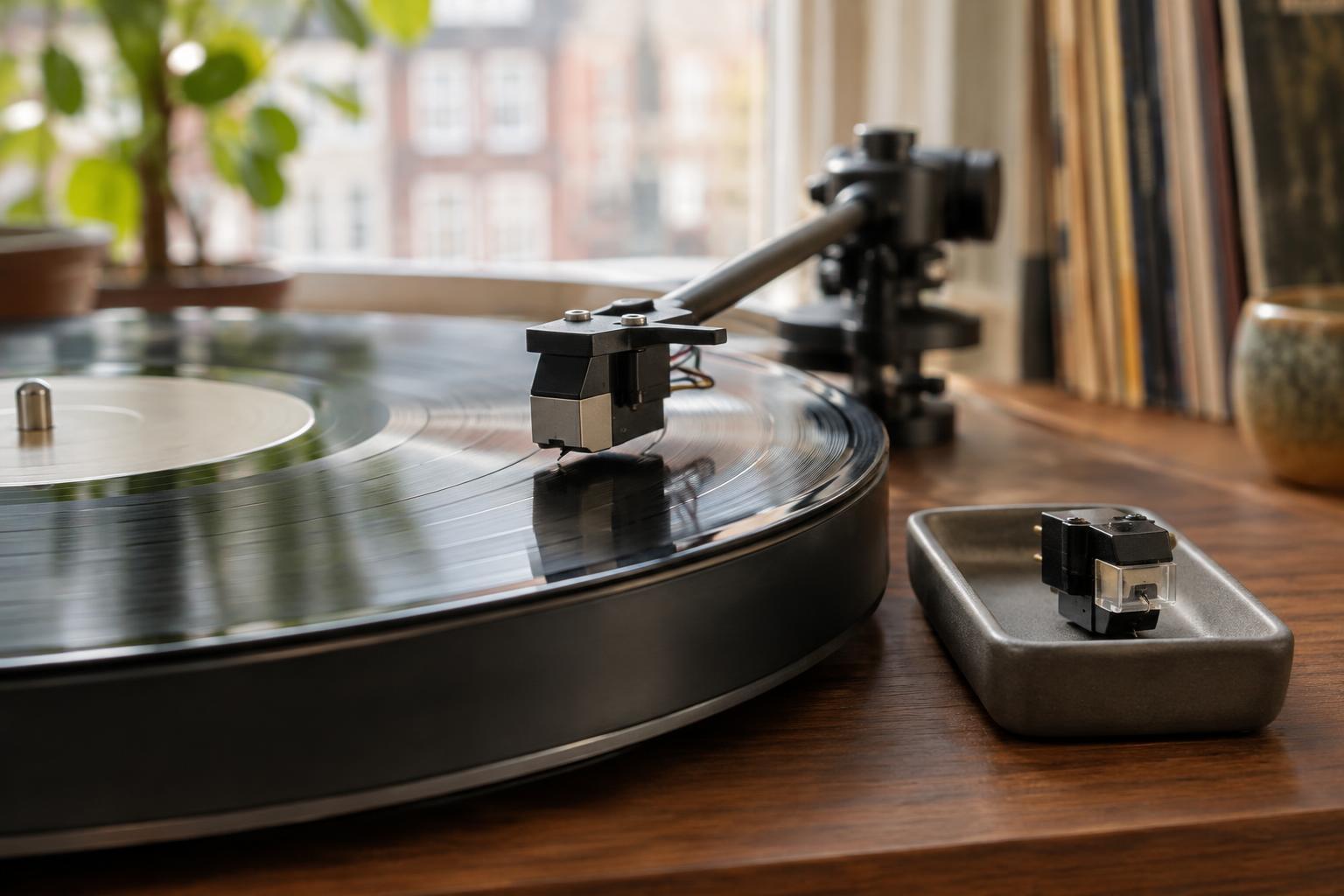
A separate phono preamp makes the most sense when it solves a specific problem or opens up a choice you need. Perhaps your amplifier has no PHONO input and your turntable has no built-in stage. Perhaps you are changing cartridges and need settings your current stage cannot provide. Many built-in stages are intended for common moving-magnet cartridges; a moving-coil cartridge may need different gain and loading. Check both the cartridge’s requirements and the preamp’s specifications rather than assuming every combination will work.
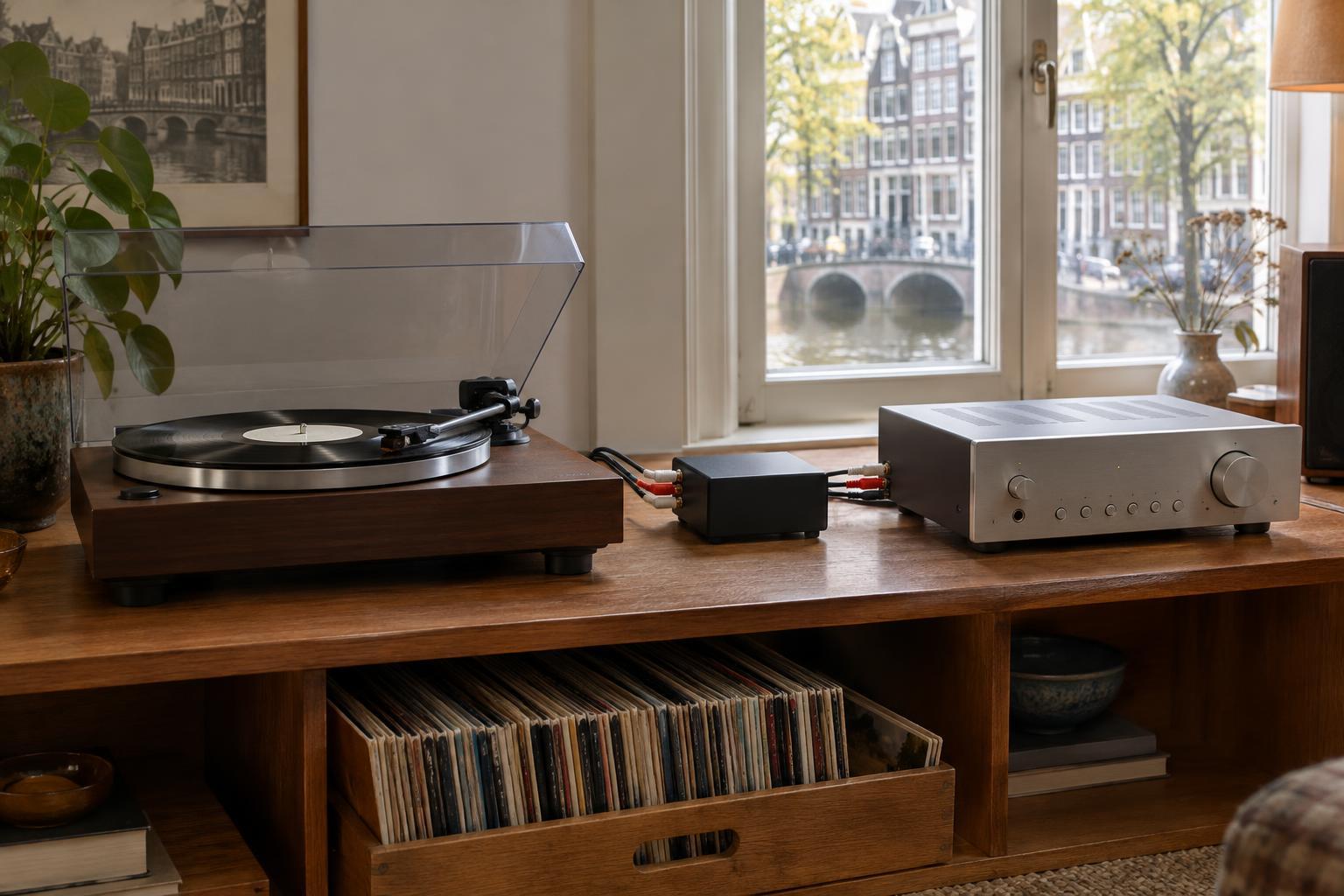
An external unit may also offer adjustable gain or loading, making it easier to match a cartridge and manage listening levels. If a current stage sounds noisy or distorts despite a correctly set up turntable, a suitable replacement is worth investigating. Keep expectations proportionate, though: a separate box is not inherently quieter or more musical. It introduces another power supply and more connections, and its benefit depends on the rest of the system and the issue you are trying to address.
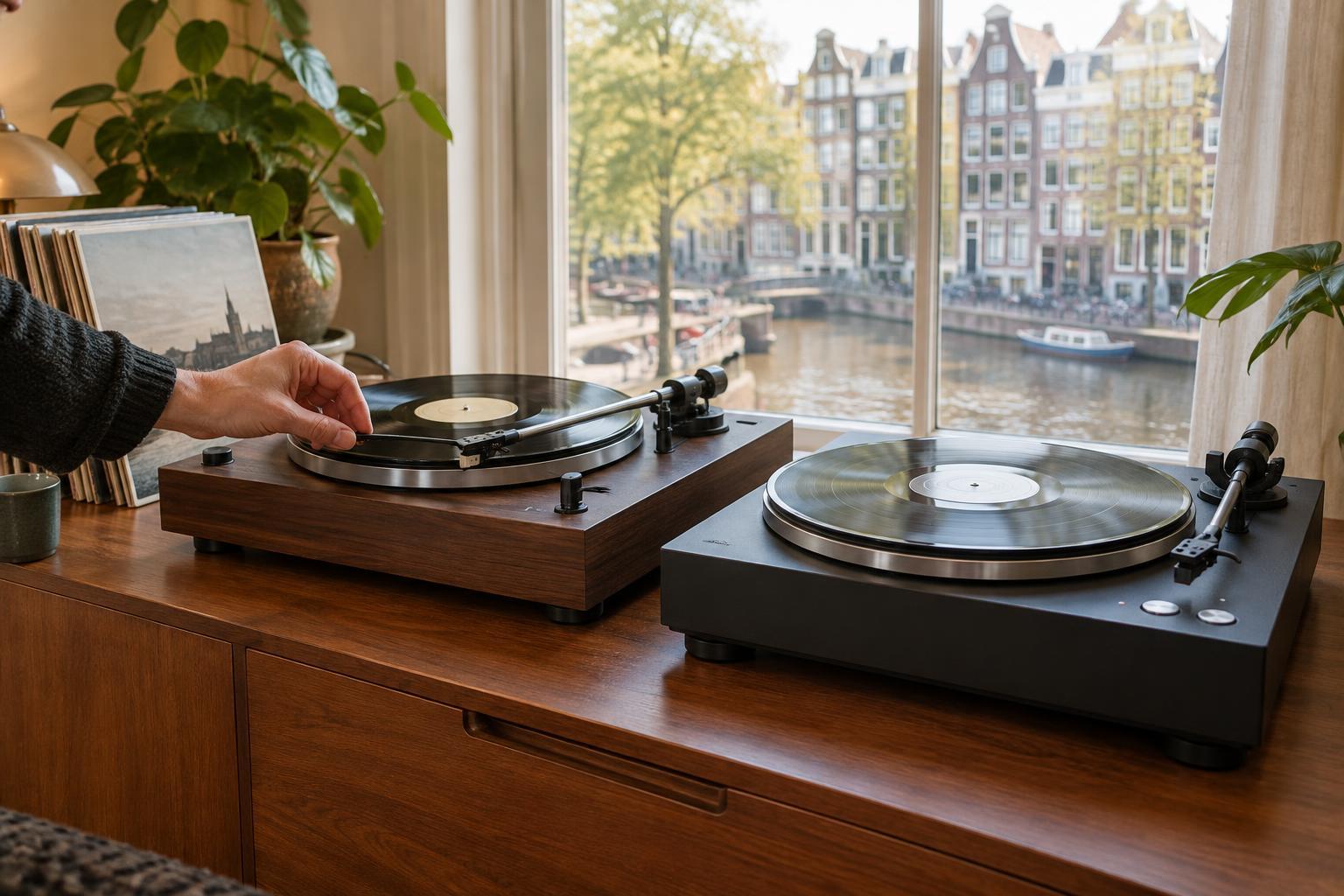
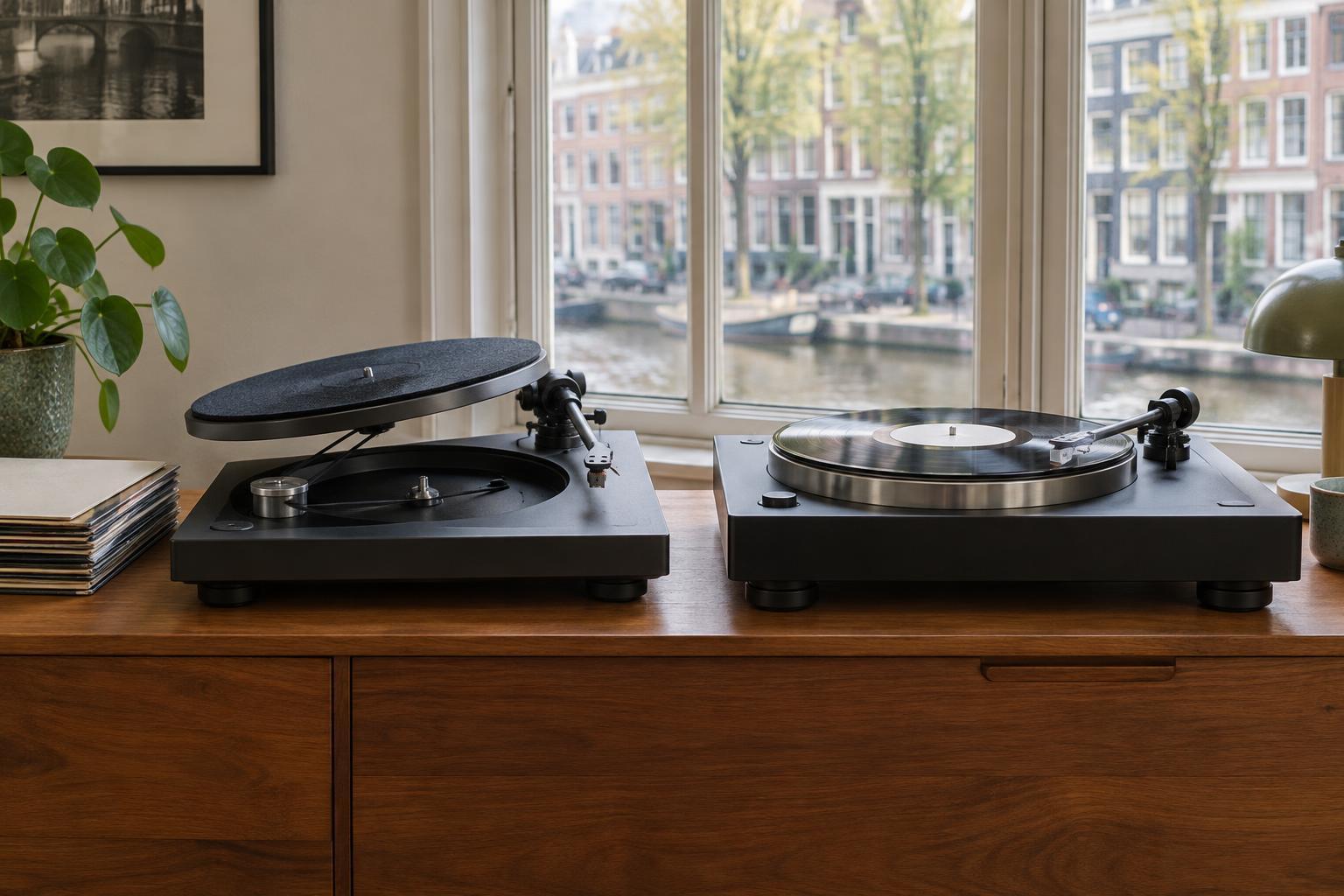
For a turntable with a switchable built-in stage, an external unit also gives you a straightforward way to compare. Connect the turntable in PHONO mode to the external stage, then connect that stage to a LINE or AUX input. Compare it with the turntable’s LINE output through the same amplifier and speakers, taking care to match playback volume as closely as you can. A louder option can seem more impressive even when it is not the one you prefer over a full record side.
Connect it correctly before judging the sound
The basic paths are simple: a turntable’s PHONO output goes to a PHONO input or to an external phono preamp; the external preamp’s output then goes to a LINE input. A turntable’s LINE output goes to a LINE input. Sending a LINE output into a PHONO input can produce loud, distorted sound because the signal is being processed twice. Sending an untreated PHONO output into a LINE input produces the opposite problem: sound that is too quiet and lacks bass.
If you hear hum, check that plugs are seated firmly and that any ground wire is connected where the equipment provides a ground terminal. Keep the cable carrying the cartridge-level signal reasonably short and away from power cords where practical. Turn equipment off or lower the volume before changing connections. These small checks can save you from buying a new component to fix what was actually a wiring issue.
The best choice is the stage that suits your cartridge, connects cleanly to your system and lets you enjoy records without fuss. Start by identifying what you already own. Upgrade to an external unit when you can name the capability you are missing—not simply because a separate box looks like the next step.