Prepare a short list and a firm budget
Before you go, write down a few records you genuinely want, including the artist, title and any details that matter to you, such as a particular mix or pressing. Keep the list short enough to remember while browsing. Leave space for surprises: an unfamiliar album at a comfortable price can be more satisfying than an expensive copy bought just to complete a list.
Decide what you can spend in total and what you would pay for a single record. Prices can vary with condition, edition and demand, so treat your limits as decisions for yourself rather than assumptions about what a seller should charge. Bring a payment method you can rely on, and consider a sturdy tote or record bag that keeps sleeves upright. If you plan to look closely at small print, having good reading glasses may help.
Browse with room for everyone
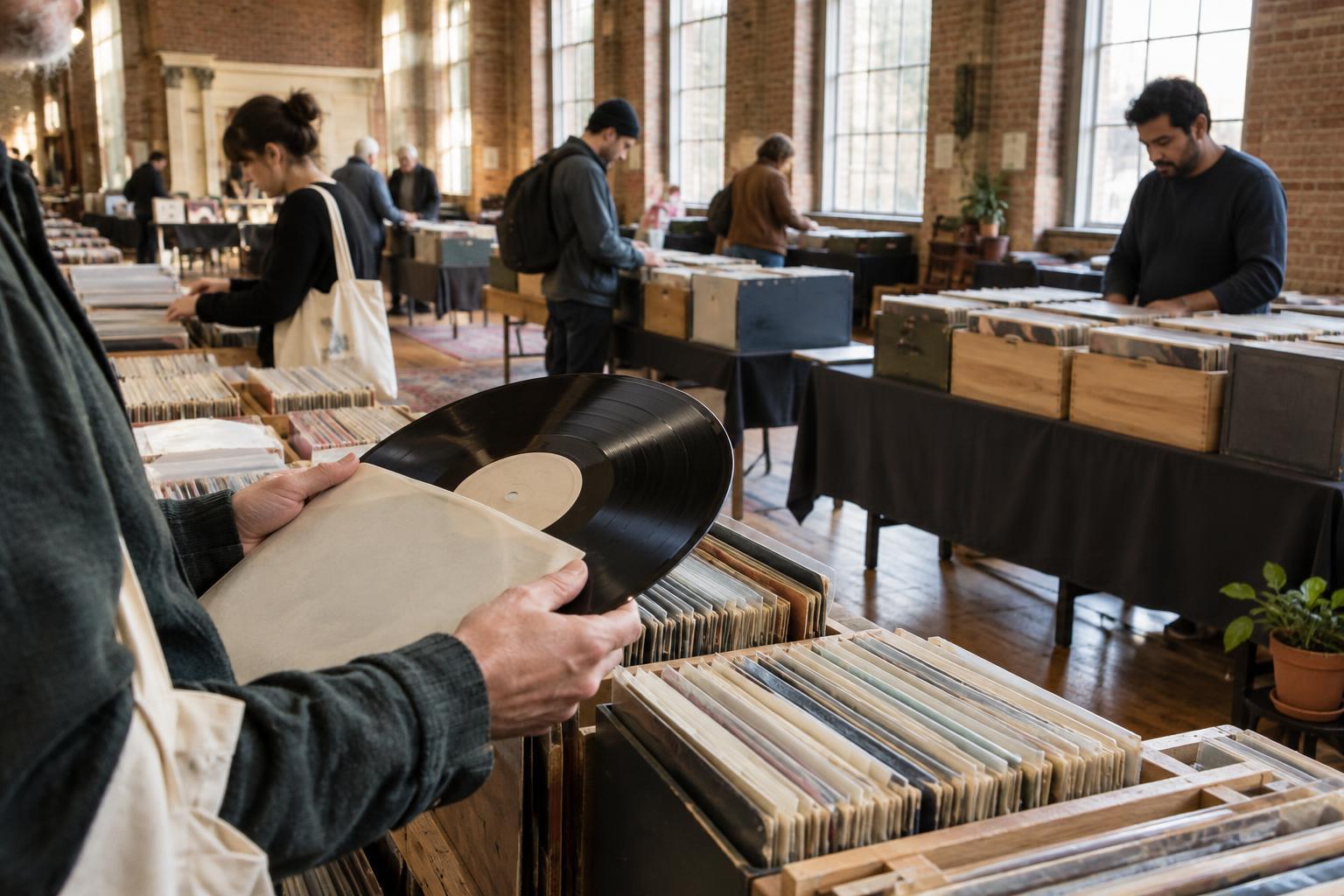
At a busy table, take your place and move through a crate steadily. Avoid pulling out a large stack to claim it while other people wait. If you want to inspect several records, ask the seller where you may set them down. Return anything you pass on to its proper section, facing the same way you found it. These small habits protect the stock and make the fair easier for everyone to enjoy.
Check for labels or signs before asking for a price; some sellers group records by price, while others mark each sleeve. Questions are welcome, but give the seller a moment if they are helping someone else. It is fine to ask whether they have a genre or artist you cannot find. It is less useful to ask them to search an entire stall for a vague description while a queue forms behind you.
Inspect the record, sleeve and details
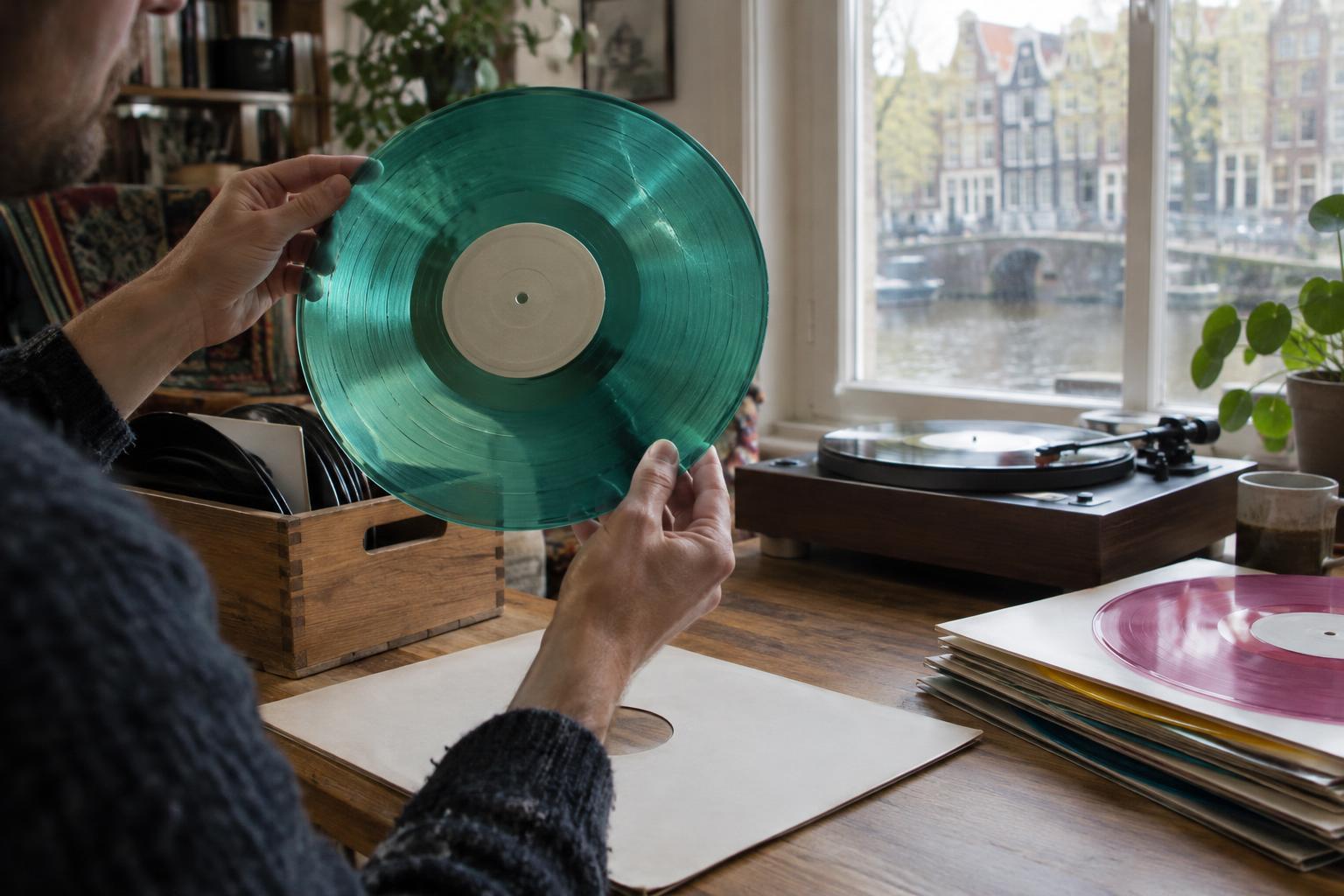
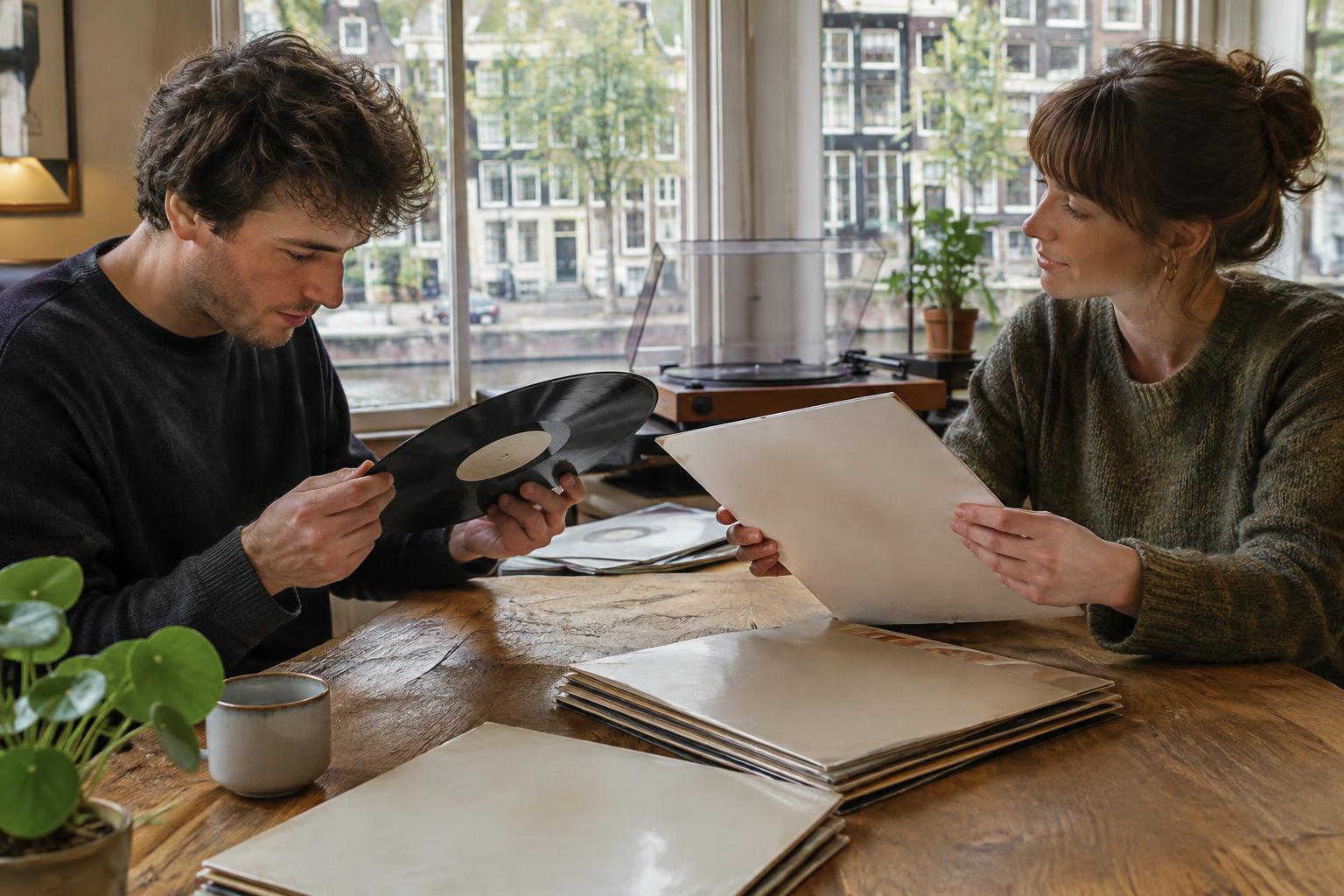
Condition matters as much as the title on the cover. With the seller’s permission, remove the inner sleeve carefully and hold the disc by its edges and label. Tilt it under available light to look for marks, warping or a dull, heavily worn surface. A visual check cannot tell you exactly how a record will sound: some marks are harmless, while others may produce repeated noise. If the seller offers a listening station, follow their rules and listen to the passages that concern you.
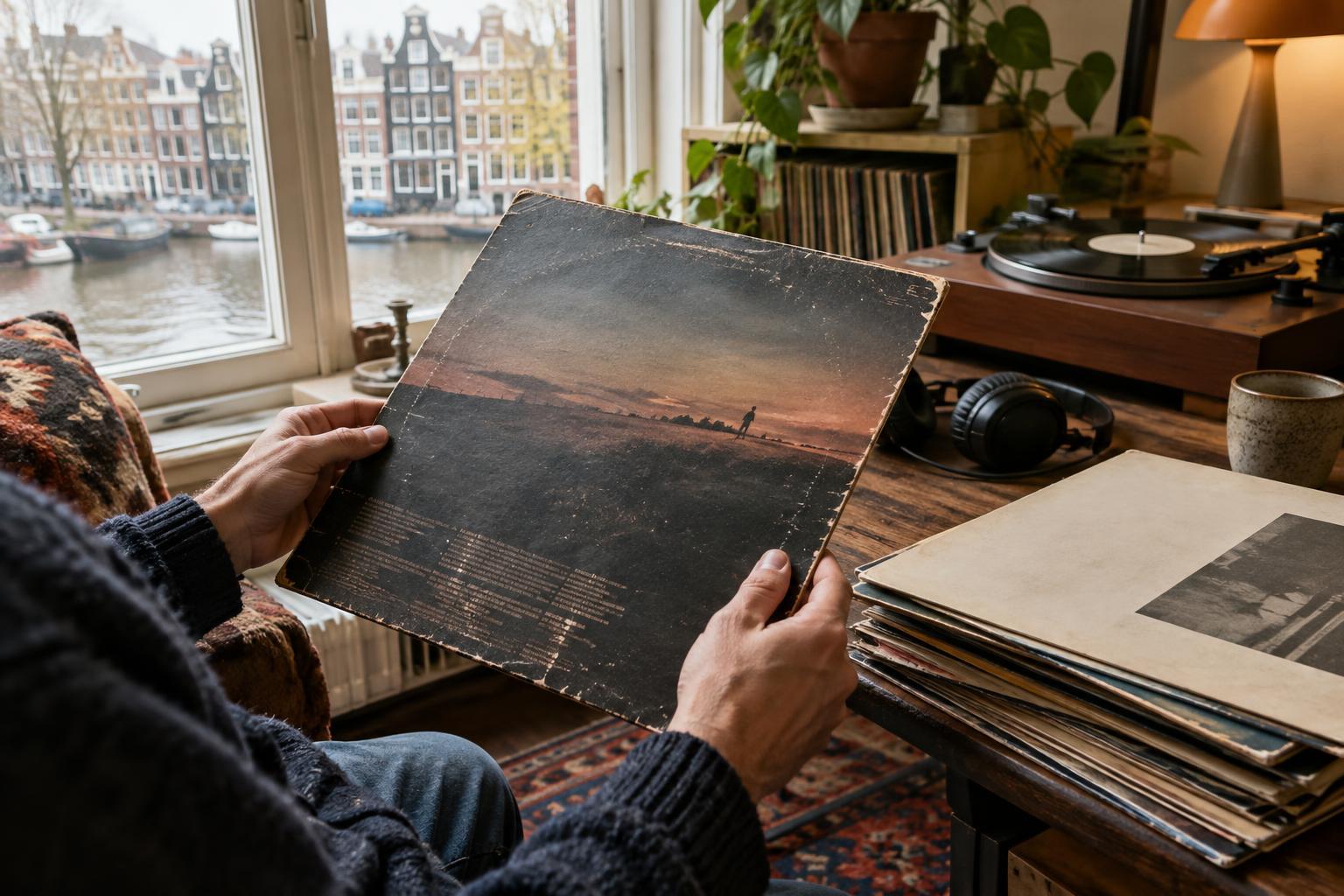
Look at the sleeve too. Check its edges, spine and corners, and notice any writing, stains or missing inserts that matter to you. If you are seeking a specific edition, compare the label and printed details rather than relying only on the front cover. You do not need to become an expert on every pressing before buying; you do need enough information to decide whether this copy suits your collection and your budget.
Handle any protective outer sleeve and price sticker as part of the item. Do not peel stickers, clean the disc or swap sleeves at the table. If you spot a problem the seller may have missed, point it out calmly and ask about the price or return policy before paying.
Make an offer without making it a contest
A marked price is a reasonable starting point, not an invitation to argue. If you want to negotiate, choose a record you are prepared to buy and make a clear, courteous offer: “Would you take a little less for this one?” or “Is there a price for these three together?” A bundle can give the seller an easy way to consider a discount, but it does not obligate them to give one.
Base your offer on something relevant, such as an obvious sleeve defect or the total for several records, rather than declaring the seller’s price wrong. Leave room for a simple no. Some stalls may have little flexibility, especially on sought-after items; others may prefer not to negotiate at all. Thanking the seller and either paying the asking price or moving on keeps the exchange pleasant. Avoid bargaining over an item another customer is holding or asking a seller to undercut a neighbouring stall.
Choose carefully, then get your records home
Before paying, check the discs and sleeves in your final stack once more. It is easier to resolve a mix-up at the table than after you leave. Ask for a bag if you need one, but bring your own if possible. Carry records upright, keep them away from drinks and heavy objects, and do not leave them in a hot car while you continue exploring.
When you get home, give new purchases a closer look and clean them using a method appropriate to your setup before playing them. Note any condition details you learned at the fair. A good visit is not measured by the number of records you carry out: it is one where you enjoyed the search, respected the people sharing the crates and brought home music you are keen to hear.