Start with the record, not the bottle
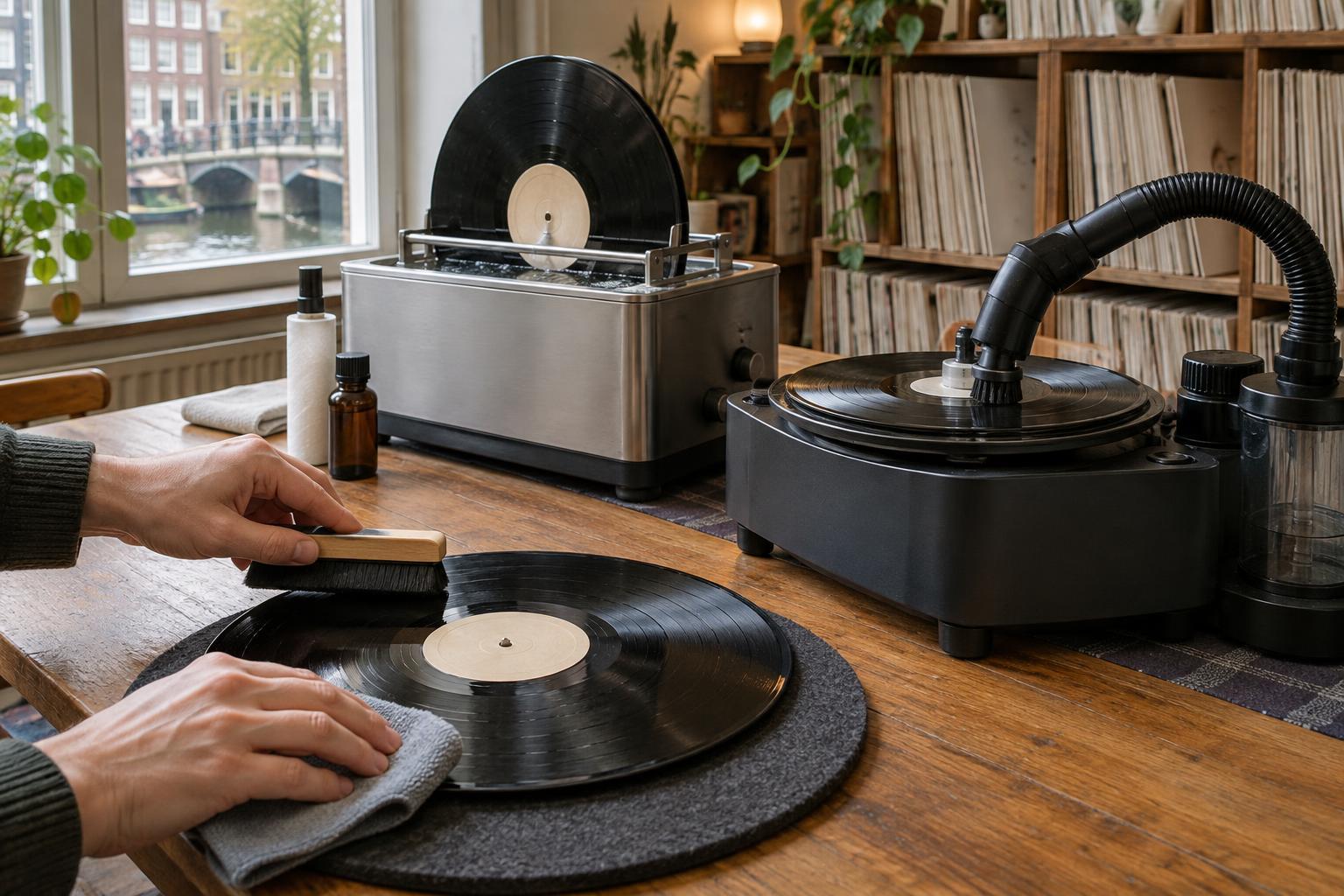
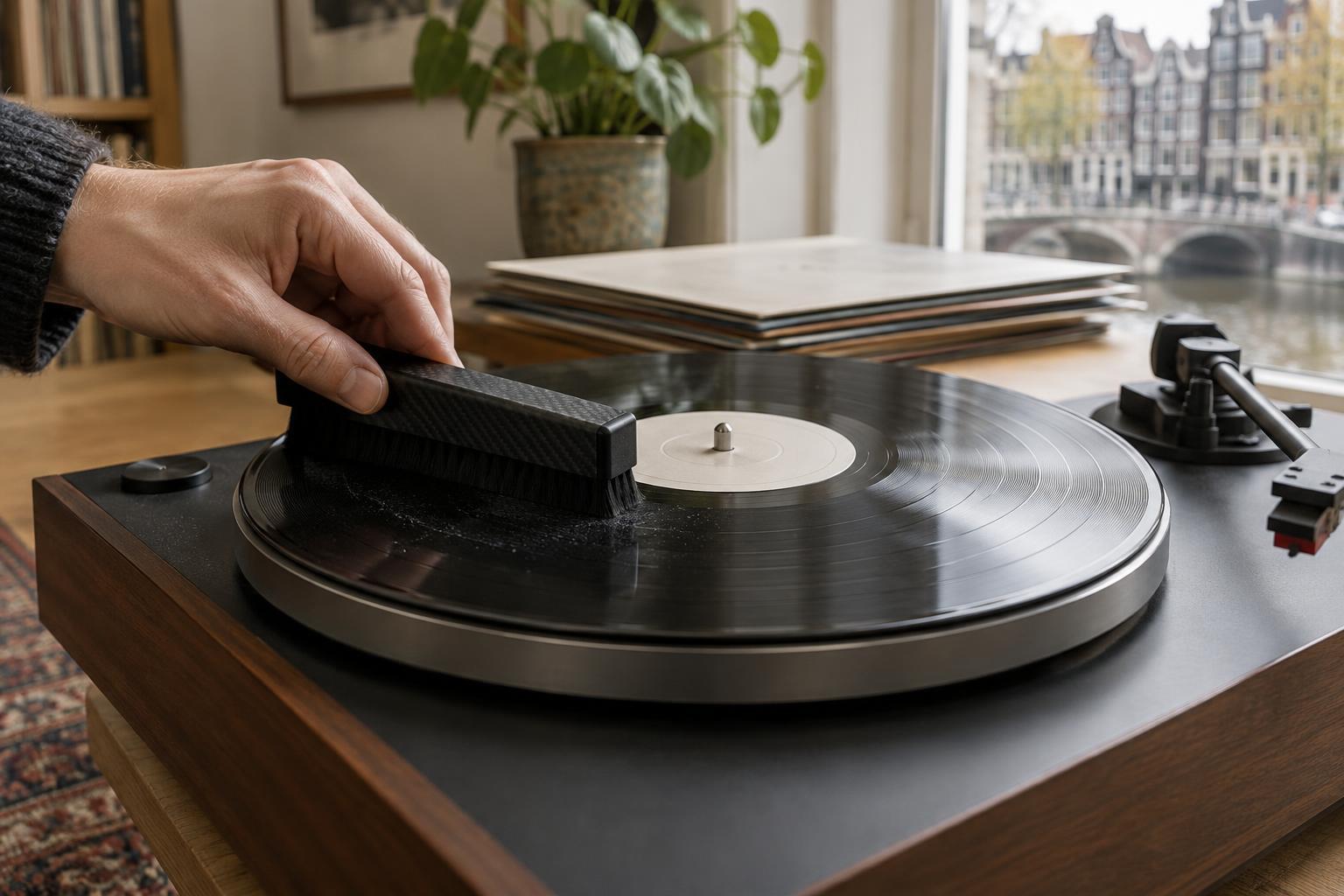
A used record can carry loose dust, fingerprints, dried-on grime or residue from an earlier cleaning attempt. Those problems do not all need the same treatment. A dry, clean record may need only a gentle brush before playback; a visibly dirty one may benefit from wet cleaning. The aim is to lift contamination from the groove and remove it from the record, rather than spread it around and let it dry in place.
Before choosing a fluid, check what you are cleaning. Most modern LPs are vinyl, but older collections can include shellac discs and other materials. A solution marketed for vinyl is not automatically suitable for every record. Check the cleaner’s label and any instructions for your cleaning machine, especially if you collect older formats.
What distilled water can and cannot do
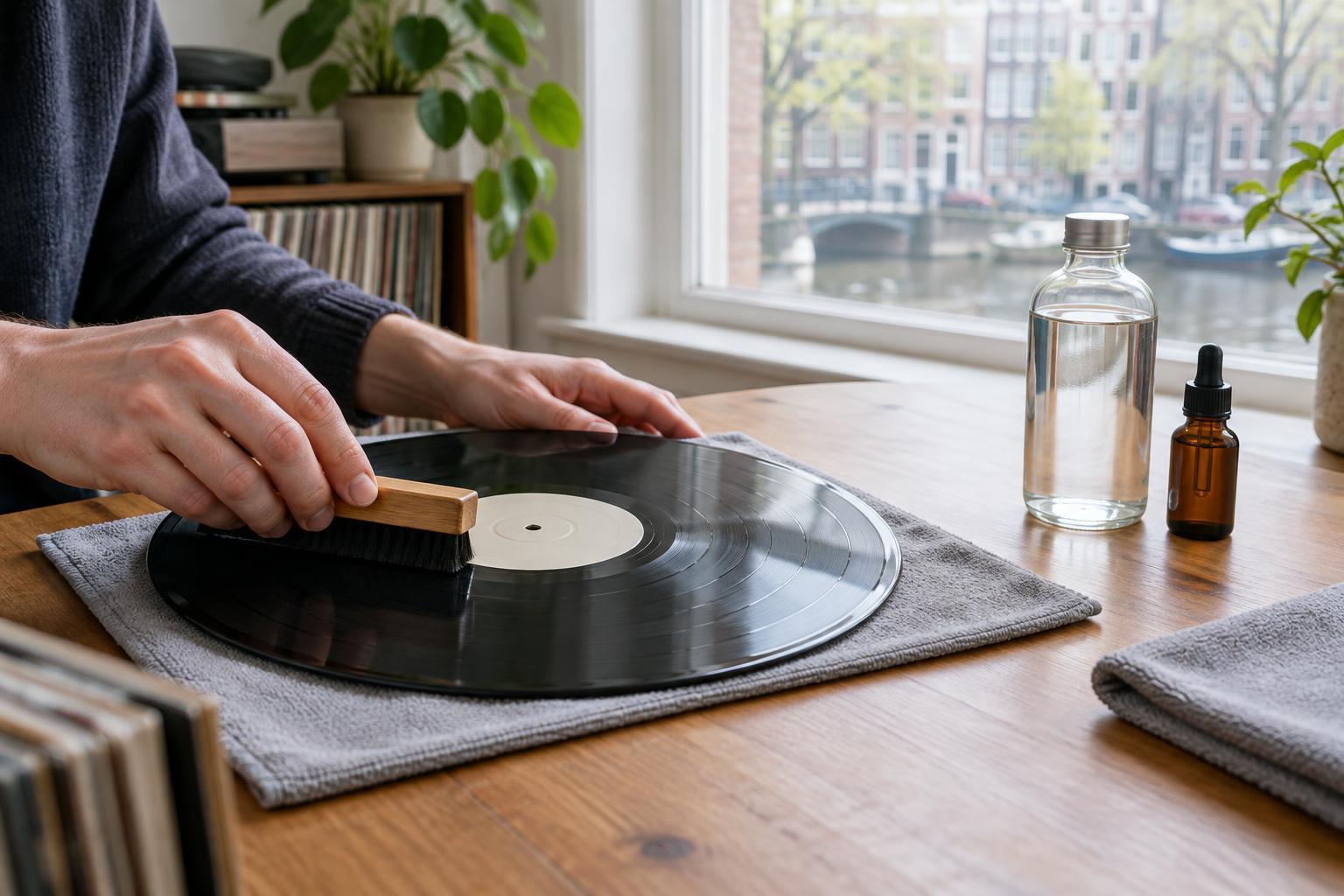
Distilled water is a sensible starting point for wet cleaning because it contains far fewer dissolved minerals than ordinary tap water. That makes it less likely to leave mineral deposits as it dries. It can also serve as a rinse after a compatible cleaning solution, helping remove loosened dirt and traces of cleaner.
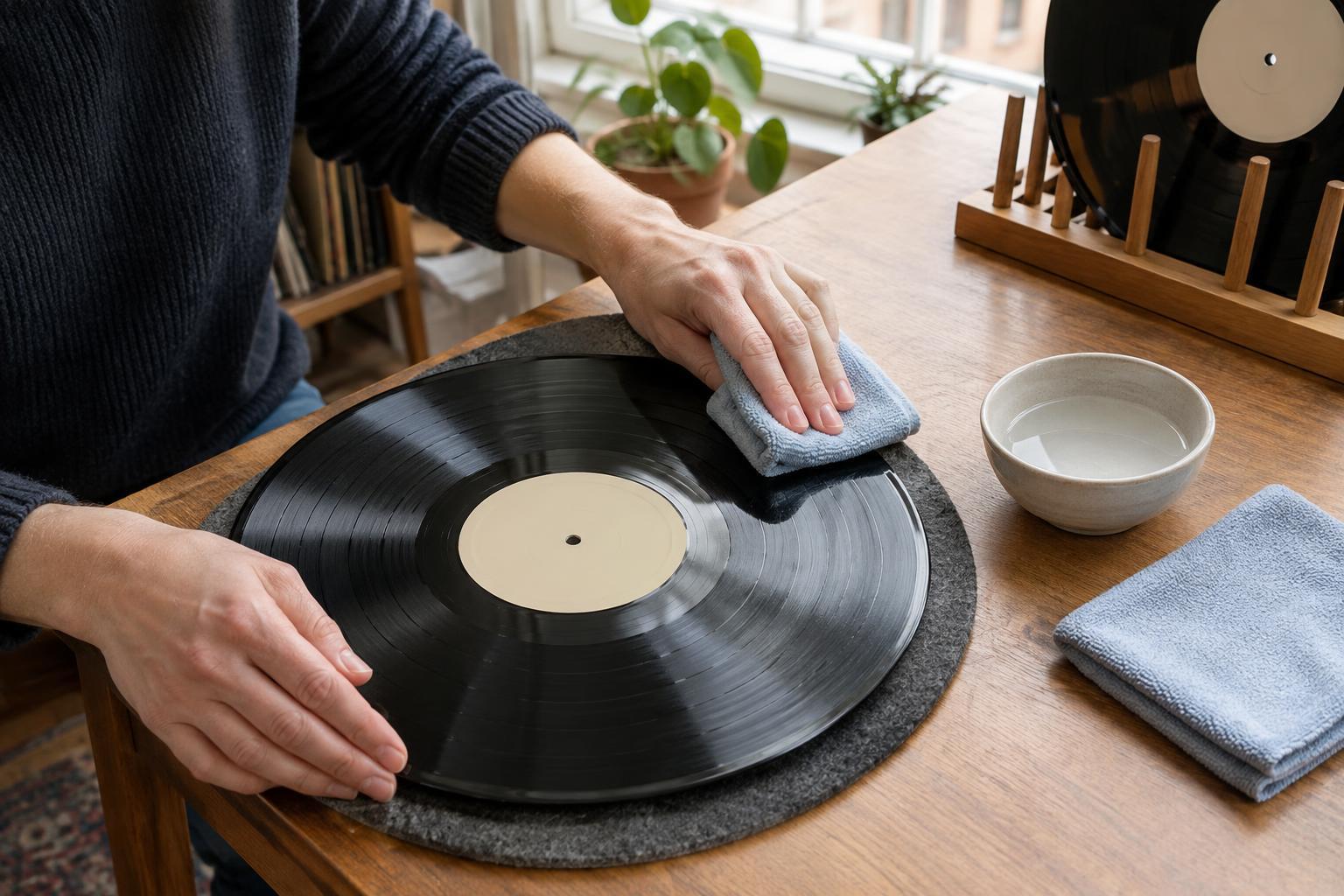
Water alone has limits. It may not wet a groove evenly, and it is less effective against oily fingerprints or stubborn deposits. A record can look clean while still carrying residue if dirty water is allowed to dry on its surface. Whether you use distilled water by itself or as a rinse, work with clean tools and remove the liquid promptly using a suitable vacuum machine or clean, lint-free materials recommended for record care. Keep the centre label as dry as possible.
Understand what additives are meant to do
Many record-cleaning fluids add a small amount of surfactant. A surfactant helps liquid spread across the record and can help lift oily soil so it can be carried away. The useful question is not whether a cleaner makes suds, but whether it is intended for your record material, can be used with your cleaning method, and can be removed without leaving an audible or visible film.
Some commercial formulas include alcohol. That does not make every such product suitable for every collection: alcohol is generally avoided on shellac records, and compatibility can also depend on the formula, concentration and how it is used. If the ingredients or instructions are unclear, a purpose-made, clearly labelled alternative is the simpler choice. Follow any guidance on dilution and rinsing rather than assuming that a stronger mix cleans better.
Be cautious with homemade recipes. They can be difficult to mix consistently, and common additives may leave residue even when the record appears dry. If you do use a compatible cleaning fluid, test it on a less-valued record first and pay attention to how easily it rinses away.
Ingredients and habits worth avoiding
Keep general household cleaners away from records unless their maker explicitly recommends that use. Dish soap, glass cleaner and all-purpose spray can contain fragrance, dyes, moisturisers or other ingredients chosen for surfaces other than grooves. Avoid bleach, ammonia and abrasive cleaners; vinegar is not a useful substitute for a record-specific solution. Tap water can also leave deposits, particularly where it is mineral-rich.
More fluid is not necessarily better. Do not soak the label, reuse visibly dirty cleaning liquid or put a wet record straight into its sleeve. Use a brush or cleaning pad appropriate for the method, and keep it clean so yesterday’s grit does not become today’s cleaning tool. After wet cleaning, allow the record to dry fully before playback or storage. A clean inner sleeve can help prevent the freshly cleaned surface from picking up old dust again.
For a practical routine, start with the gentlest method that addresses the dirt you can see or hear. Choose a fluid with clear material and equipment guidance, use it as directed, rinse if recommended, and remove the liquid rather than letting it evaporate in the grooves. The best solution is one you can use consistently and remove thoroughly—not the one with the longest ingredient list.