What an inner sleeve actually does
An inner sleeve gives a record a clean place to rest inside its jacket. It helps keep loose dust and grit away from the playing surface and reduces direct contact with the cardboard cover. It also makes a record easier to remove without touching the grooves. A sleeve cannot clean a dirty record or prevent every scratch, but a sound, well-fitting one is a useful part of ordinary record care.
The best choice depends on how often you play the record, how you handle it and whether its original sleeve matters to you. A plain paper sleeve may be adequate for a record you rarely remove; a smooth, lined sleeve can make repeated listening more comfortable. Before buying replacements for an entire collection, try a small pack and check how they fit your records and jackets.
Plain paper: simple, useful and sometimes worth keeping
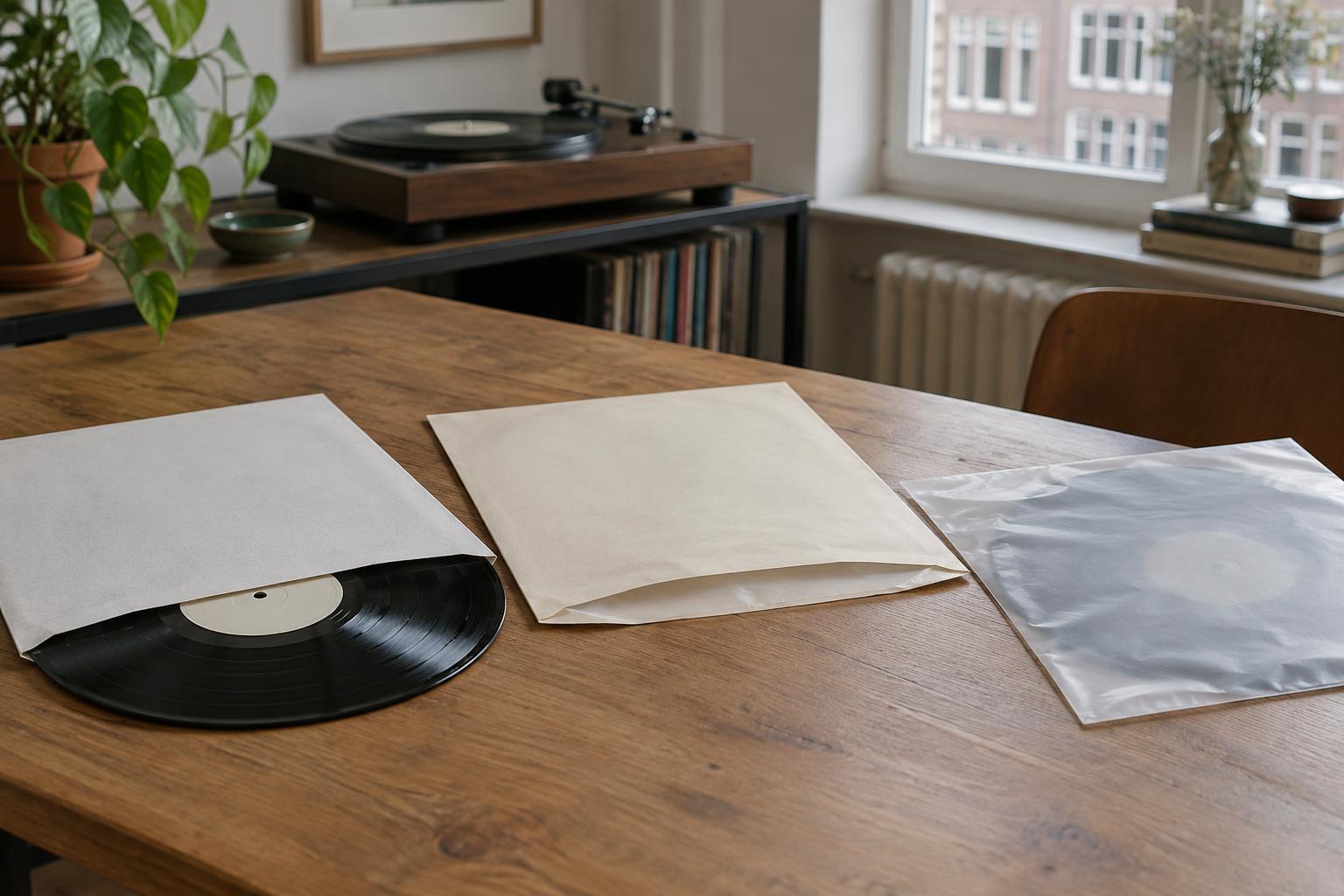
Paper sleeves are common because they are inexpensive, easy to write on and usually slim enough for crowded jackets. A clean paper sleeve in good condition can serve its purpose. The drawbacks become more noticeable with use: paper can shed fibres, collect grit and drag against a record as it slides in or out. A torn seam or rough opening is a good reason to retire a sleeve from active use.
Not every paper sleeve is disposable, though. Original printed sleeves may include artwork, credits or other details that belong with the record. If you want a smoother sleeve for listening, keep the original alongside it where space allows. Check that the jacket closes comfortably; overstuffing it to preserve every insert can put pressure on the cover and make removal awkward.
Lined paper: a practical middle ground
Lined paper sleeves combine a paper exterior with a smooth plastic lining that faces the record. They retain some of paper’s structure while allowing the disc to slide against the lining rather than bare fibres. Many listeners choose them for records played regularly, particularly when a flexible plastic sleeve feels too fiddly to handle.
Construction matters more than the label on the packet. Look for a sleeve whose lining reaches the areas the record touches, with neat seams and an opening that does not catch the edge of the disc. A stiff or poorly finished sleeve can still be awkward to use. Some lined sleeves are thicker than plain paper, so test the fit in a tight jacket before replacing a whole stack.
Polyethylene: smooth and flexible, but check the material
Polyethylene sleeves are made from flexible plastic and are often chosen for their smooth contact with the record. They generally do not shed paper fibres, and their thin profile can be helpful in a snug jacket. They may also make it easier to see the label. Because they are flexible, however, the opening can fold or cling while you guide a record in; take your time rather than pushing against a creased edge.
Packaging may identify polyethylene by type, such as high-density or low-density polyethylene. Both can be used for inner sleeves, though they may differ in feel and stiffness. Do not assume that every clear plastic sleeve is polyethylene: materials and construction vary. If a sleeve is unidentified, sticky, strongly odorous or deteriorating, replacing it with a clearly identified product is a sensible precaution.
How to choose and when to replace a sleeve
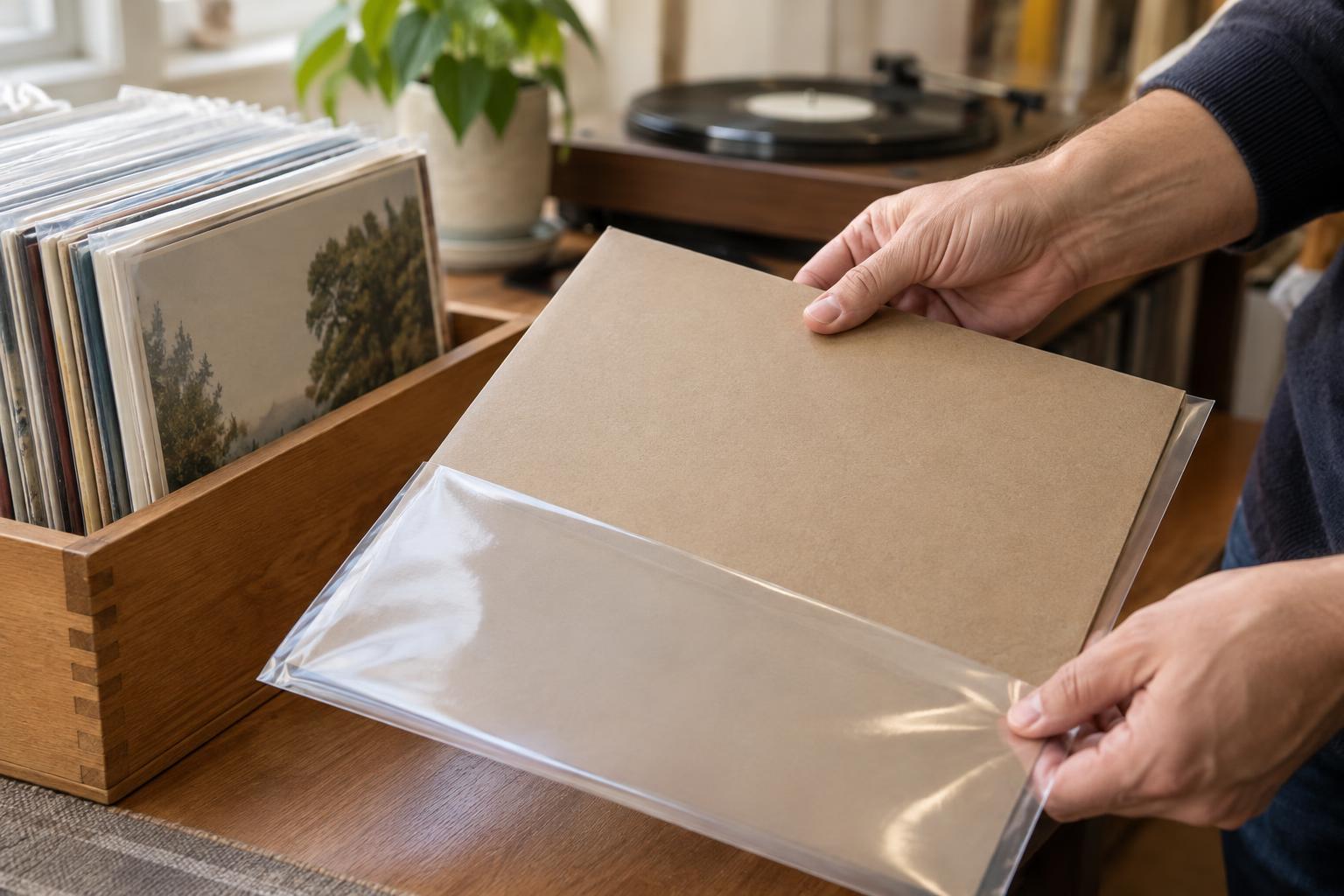
Start with condition rather than a rule that every record needs the same sleeve. Replace an inner sleeve if it is torn, visibly dirty, gritty or shedding material. Clean the record before placing it in a fresh sleeve; otherwise, the new sleeve simply holds the existing dirt against the surface. When removing a disc, open the sleeve slightly and support the record by its edge and label area. Avoid rubbing the playing surface against the opening.
Fit is the final test. The record should enter without force, and the sleeved record should sit comfortably inside the jacket. Store records upright, without packing them so tightly that sleeves crease or jackets bow. Plain paper, lined paper and polyethylene can all have a place in a collection: choose a clean, well-made sleeve that suits the record, then handle it carefully. That routine matters more than treating one material as a universal solution.