Decide what you are actually comparing
A turntable does not make sound on its own. The cartridge, stylus, phono stage, amplifier, speakers and room all contribute to what reaches your ears. If several of those change at once, you can still decide which complete system you enjoy more, but you cannot confidently say which turntable caused the difference.
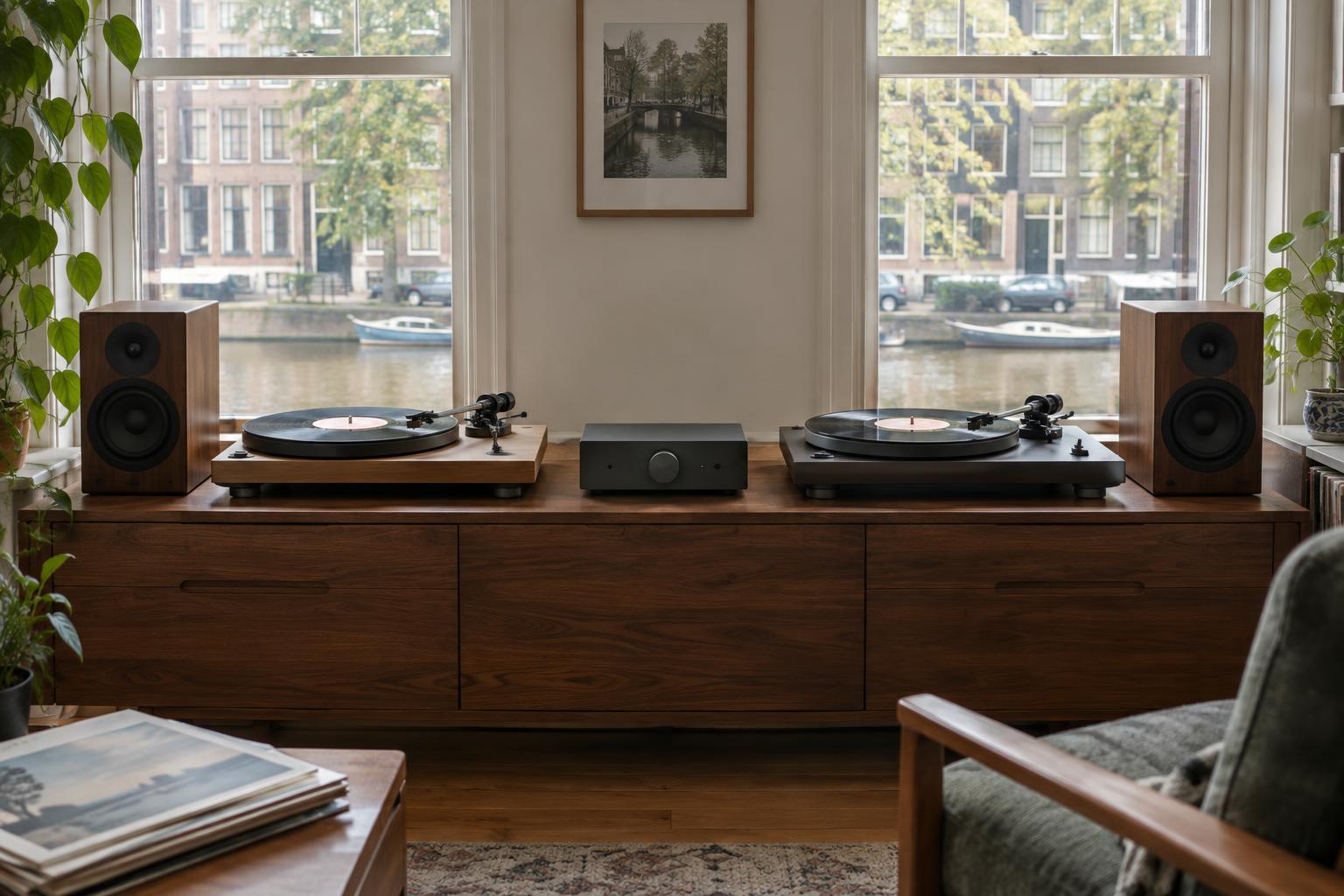
Before listening, choose the question you want to answer. Are you comparing two complete setups as you would use them at home? Or are you trying to hear what changes when you replace one deck? For the second question, keep as much else as possible the same: speakers, listening position, amplifier settings and, where compatible, the cartridge and phono stage. Note any parts you cannot match. This keeps the comparison honest without turning an enjoyable listening session into a laboratory exercise.
Do not mistake louder for better
One of the easiest mistakes is letting one setup play slightly louder. Extra level can make bass feel fuller, details more apparent and the whole presentation more exciting. A comparison that begins with “this one has more energy” may really be a comparison of volume settings.
Check the level at your listening position before judging. You can use a familiar passage and adjust the amplifier carefully, or use a basic sound-level meter as a rough aid. Exact matching can be difficult with music, so aim to get close rather than trusting the position of the volume knob; different cartridges and phono stages can produce different output levels at the same setting. Avoid changing the volume midway through a passage, and take a short break if repeated switching starts to make everything sound alike.
If one setup needs a different amplifier setting, that is not a fault by itself. Mark the two settings so you can return to them consistently. Then listen at a comfortable level you could actually live with, not only at the level that makes a quick demonstration impressive.
Keep the speakers and room out of the contest
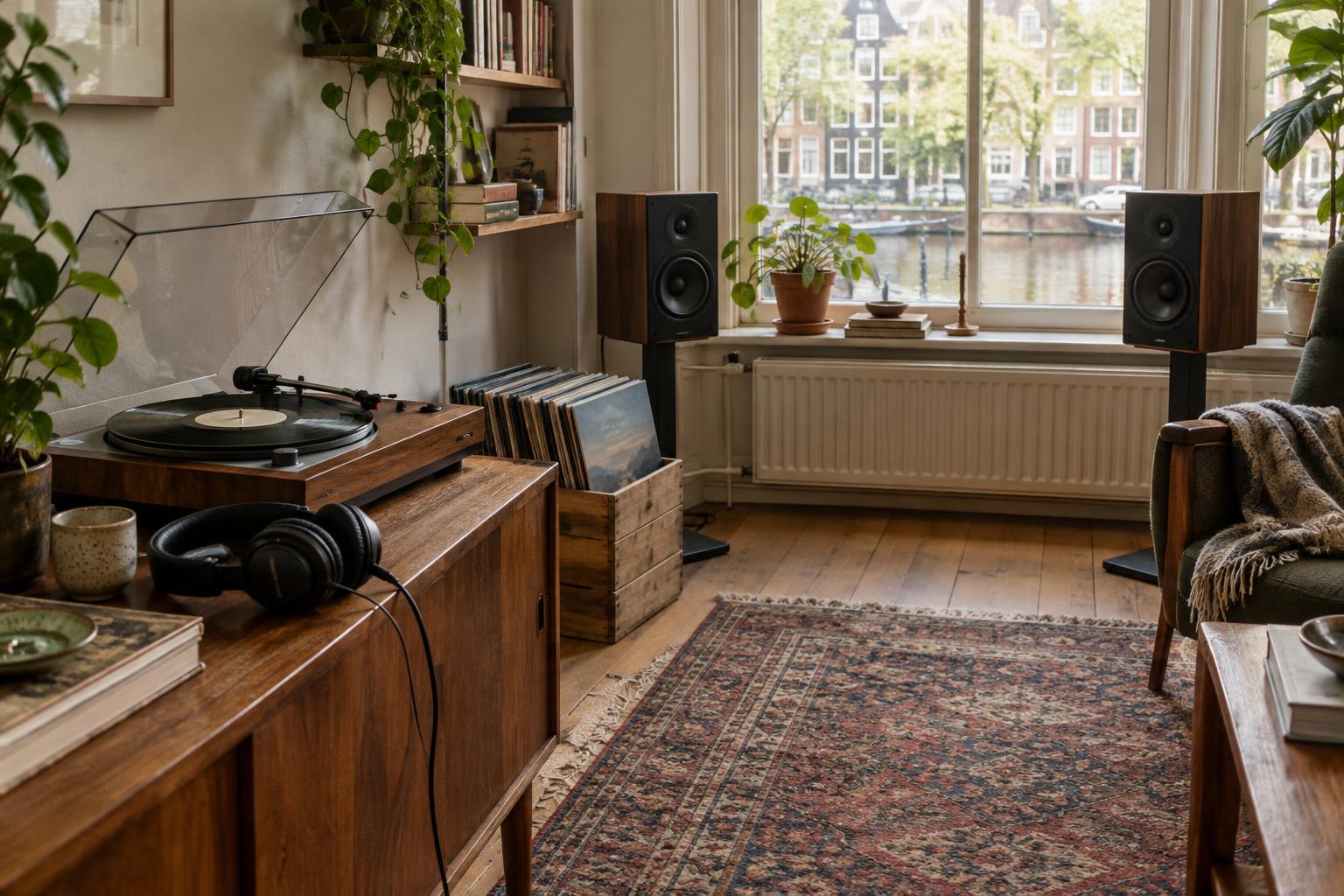
Comparing turntable A through one pair of speakers and turntable B through another tells you a great deal about the systems, but little about the decks alone. Speakers can differ substantially in tonal balance and presentation. Their placement matters too: moving a speaker nearer a wall, shifting your chair or listening from a different room can change what you notice about bass and stereo image.
For a focused comparison, use the same speakers in the same positions and sit in the same spot. Leave tone controls and other sound-shaping settings unchanged. If you are listening in a shop or at a friend’s place, where you cannot control those details, treat what you hear as an introduction rather than a verdict on what either turntable will sound like at home.
Background noise is another quiet influence. A busy room can mask faint surface noise or subtle passages, while a very quiet room can make them stand out. Neither setting is inherently wrong, but try to hear both options under similar conditions before drawing conclusions.
Use records that can answer the question
A familiar record is helpful because you know where to listen, but its condition matters. Dirt, scratches, groove wear and a warped edge can dominate a short test. Two copies of the same album may also differ in wear or pressing, so playing one copy on each deck is not necessarily a fair comparison. When practical, use the same clean record on both setups and replay the same short passages.
Choose more than one passage. A sustained vocal note may reveal one kind of problem, while a dense section or a quiet introduction may reveal another. Do not let a single dramatic pop, skip or noisy track decide the result: inspect the record and try another passage before blaming the equipment. Handle discs by their edges, and return them to their sleeves when you are done.
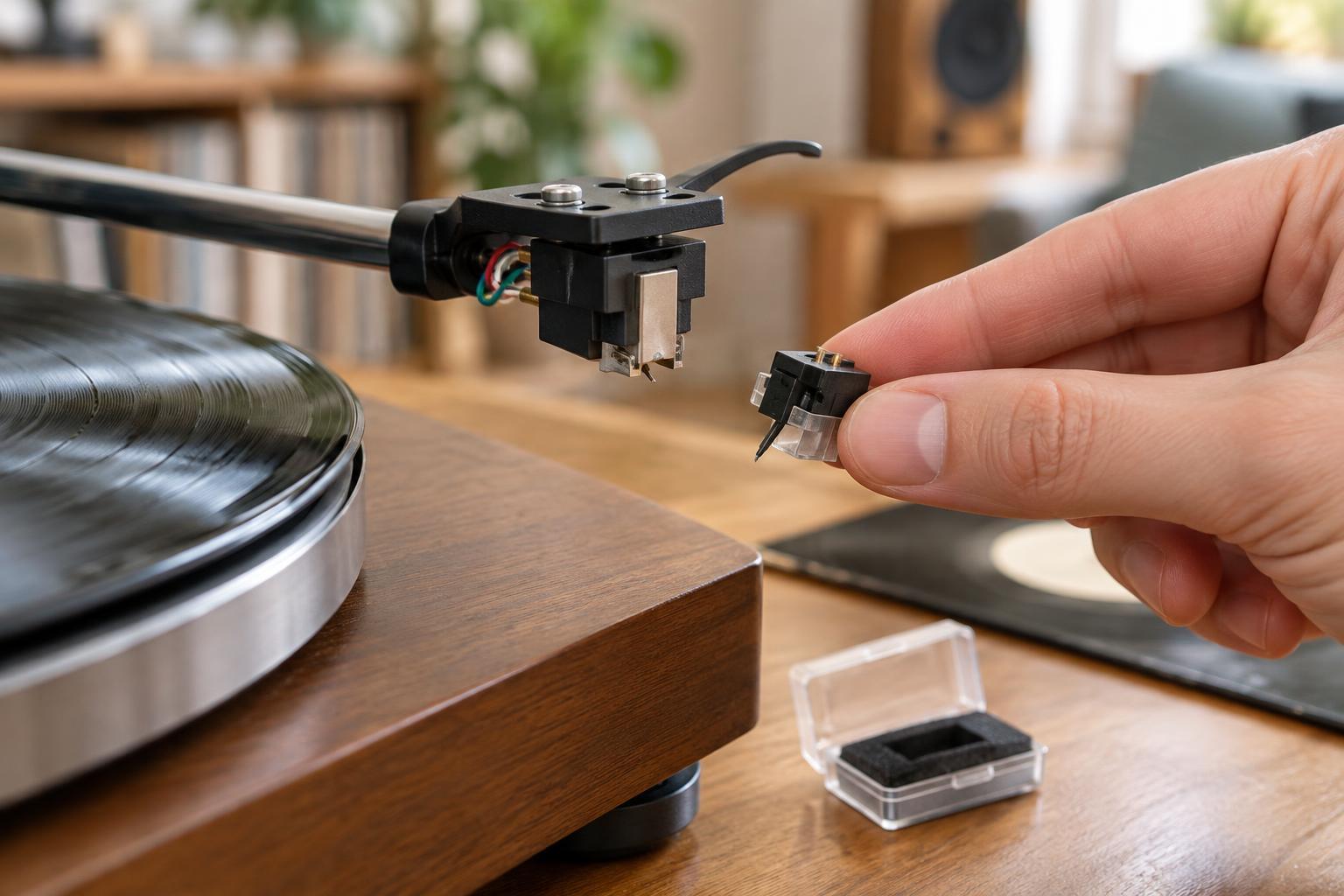
Setup deserves similar care. A worn or dirty stylus, an incorrectly fitted cartridge, an unlevel turntable or unsuitable tracking force can make an otherwise capable deck sound poor and may risk the record. Follow the equipment’s instructions for setup and avoid using a damaged stylus for a listening test.
Make the comparison repeatable, then trust your priorities
Play a short passage on one setup, switch, and play the same passage on the other at a matched level. Repeat the order so the first or most recently heard option does not always get the advantage. Brief notes can help: describe what you heard, such as an easier-to-follow bass line or a vocal that seemed less congested, rather than writing only “better.” If the distinction disappears when you repeat the test, it may not be a useful basis for a purchase or upgrade.
Finally, remember that listening is part of living with records. Ease of use, stable playback, maintenance needs and how confidently you can cue a favourite LP may matter as much as a subtle difference heard during one session. A careful comparison will not produce a universal winner; it will help you choose the setup that works for your records, room and listening habits.