Start with the kind of listening you want
A good record collection does not need a single rule about “proper” releases. Compilations and original albums do different jobs. A compilation gathers tracks around an artist, period, label, genre or idea. An original album presents a particular release as a whole, often with its own pacing, artwork and relationship between songs. Neither format is automatically the more rewarding one; the better choice depends on what you hope to hear.
If you have discovered one track and want to find out what surrounds it, ask two questions. Are you curious about the artist who made it, or about the wider sound it belongs to? An album is often the natural next step for the first question. A thoughtfully selected compilation can answer the second by placing several artists or recordings side by side.
Use compilations as maps, not shortcuts
A compilation is especially useful when you are exploring a scene with unfamiliar names. Instead of choosing a record on the strength of one sleeve or genre tag, you can hear several approaches in one sitting. Pay attention to which tracks make you want to turn the record over, and which names you want to remember. That response gives you a direction for future digging.
The selection itself is part of what you are buying. Some compilations tell a focused story; others offer a broad introduction or simply collect popular tracks. Check the track list, the span of recordings and any notes on the sleeve. If a set claims to represent a sound, notice what it includes and what it leaves out. Treat it as one perspective rather than a complete history.
Compilations can also suit a listening session where variety is the point. If you want to move between related styles without changing records repeatedly, that range may be more valuable to you than owning every source release. There is no need to regard a useful introduction as a temporary purchase: a sequence you enjoy can remain worth playing even after you know its individual artists.
Choose original albums for context and continuity
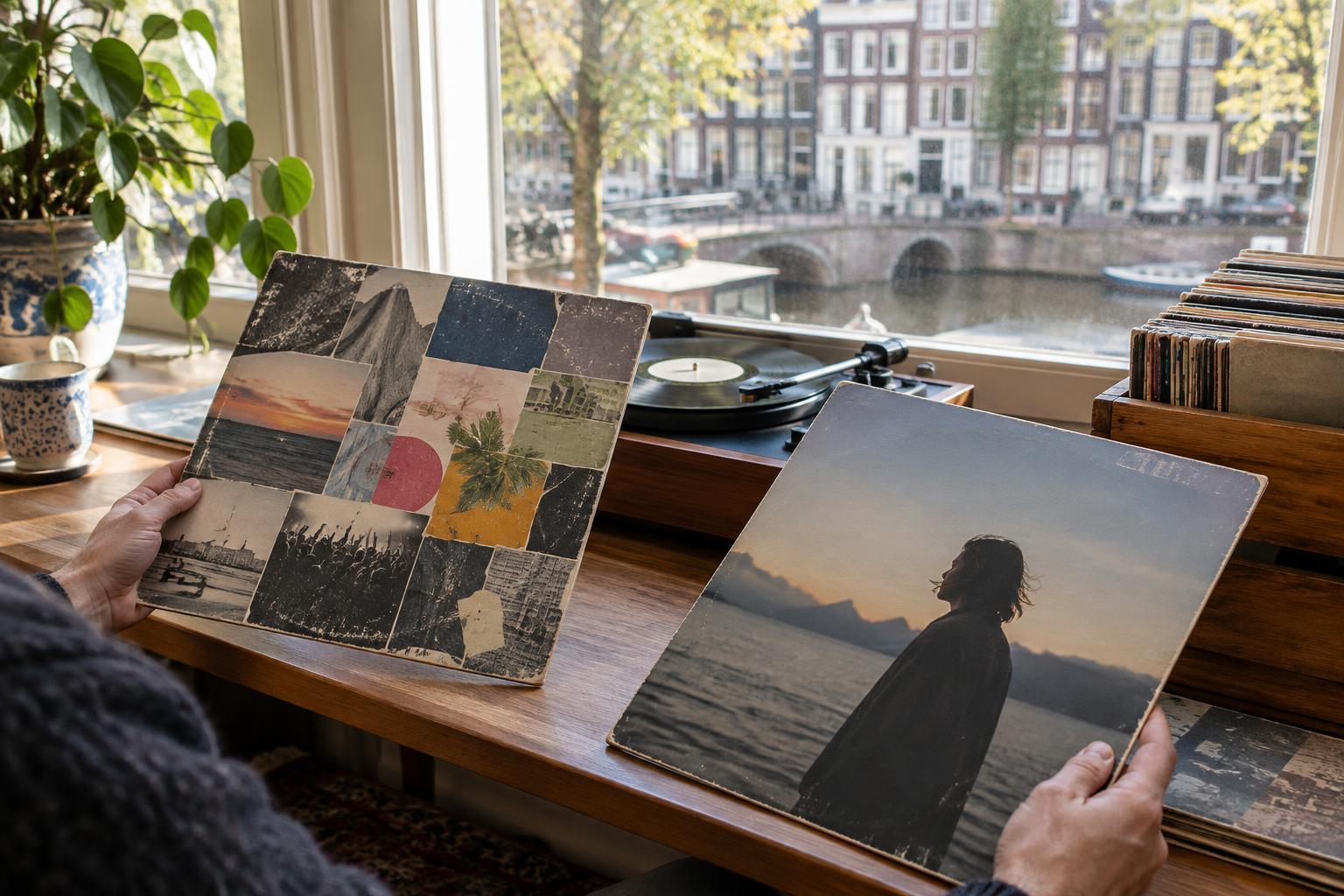
An original album rewards a different kind of attention. Songs heard together can change one another: a quieter track may make sense after an energetic opener, while a side ending can create a pause that a playlist would remove. The sleeve, credits and sequencing can also help you understand how the release presents itself. If you repeatedly return to one artist on a compilation, their album may offer the fuller experience you are looking for.
That does not mean you must seek an expensive first pressing. A later pressing or reissue can provide the album sequence at a price and in a condition that better suit your collection. Decide which aspects matter most to you: the music, particular artwork, packaging, a specific version or the experience of owning a copy from its original release period. Those are different collecting goals, and it helps to name yours before paying a premium.
Compare the copies, not just the formats
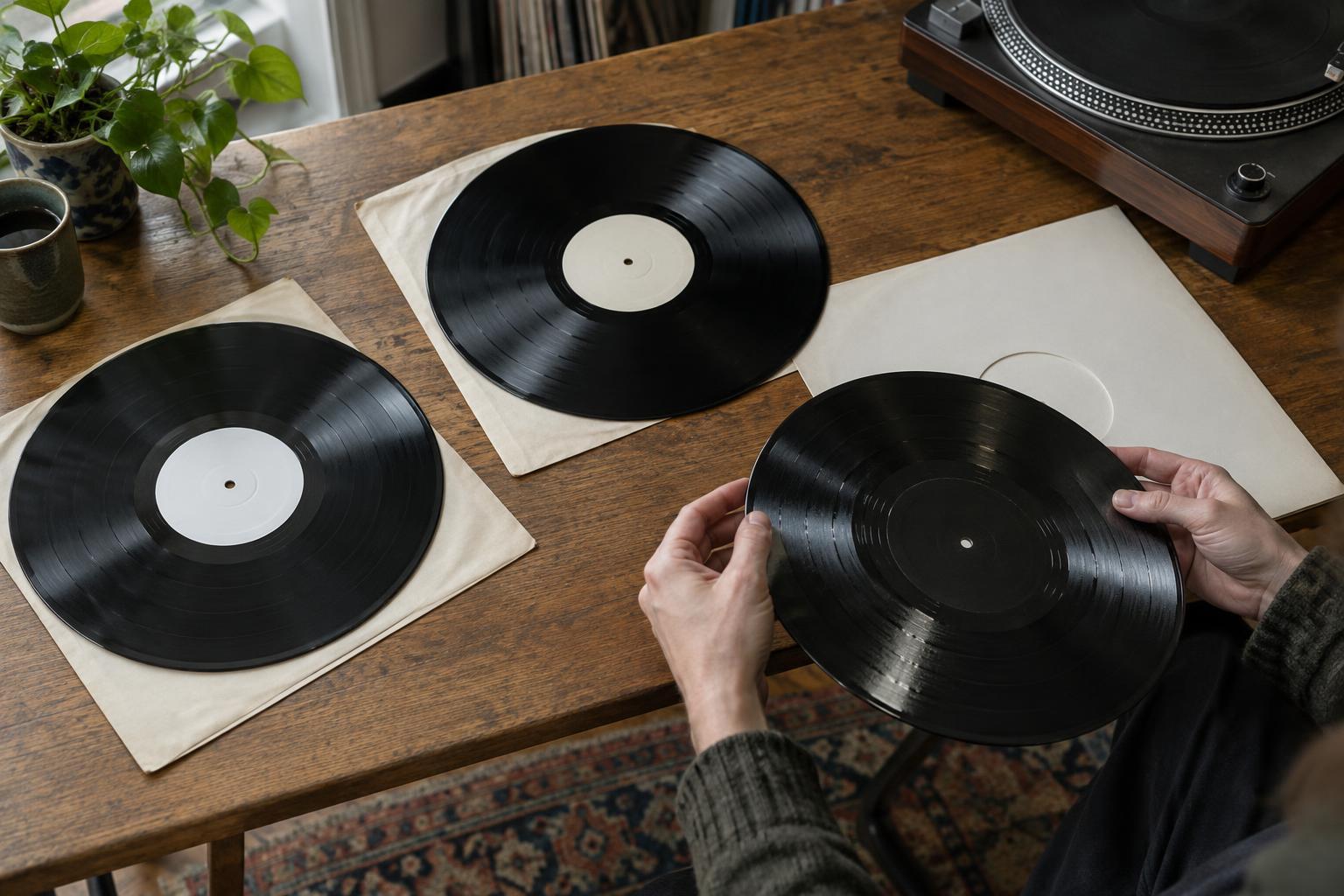
Sound quality cannot be settled by calling one record a compilation and another an original album. Two editions of the same recording may differ in mastering, pressing quality, wear or the source used to make them. A well-kept compilation may be a more enjoyable everyday listen than a damaged album; an album with a sound you love may be worth choosing over a compilation whose track list looks perfect on paper.
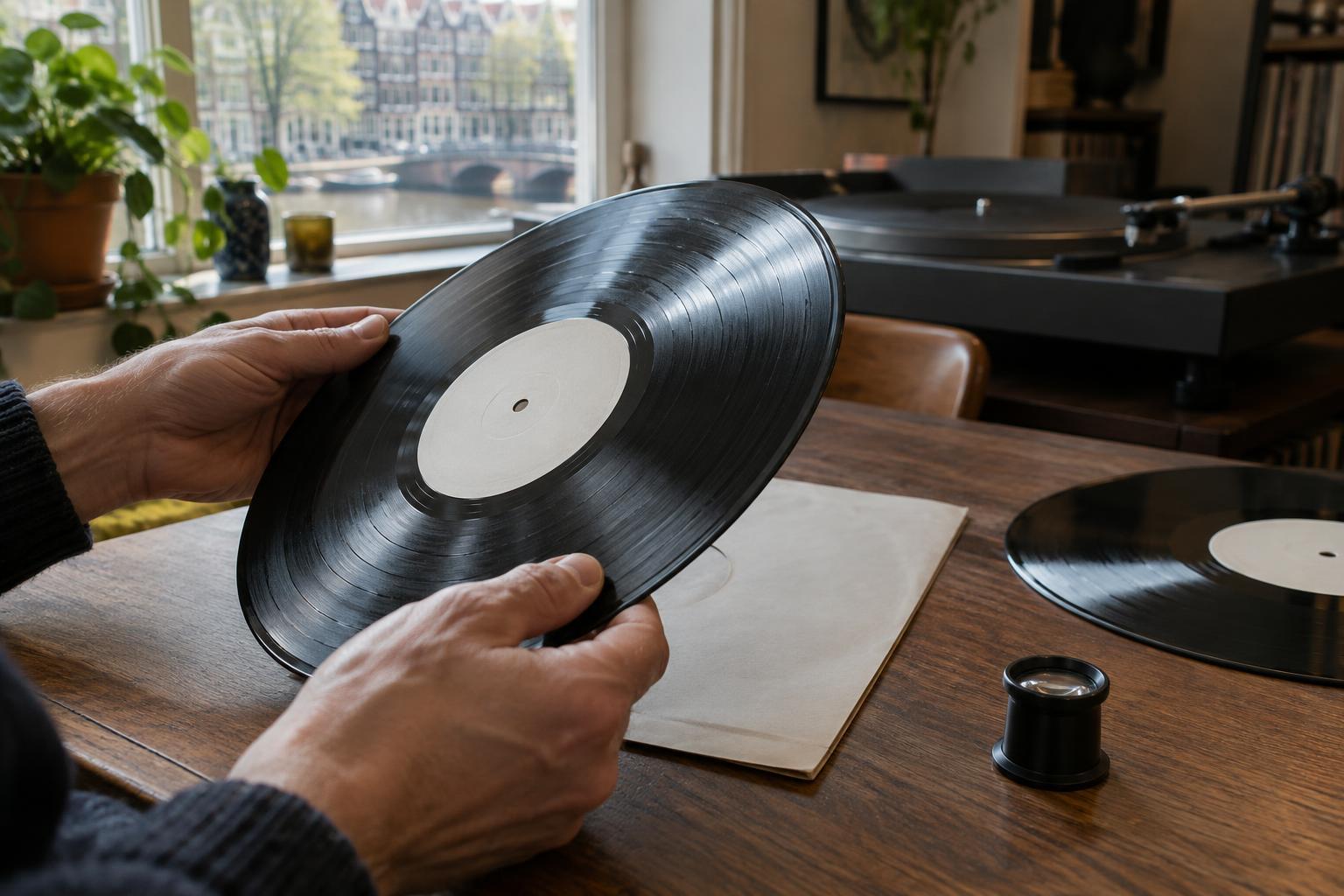
When browsing, check what you can verify. Read the sleeve and label for the exact tracks and versions, since a familiar title does not guarantee the recording you expect. Look at the disc under good light and assess the sleeve separately from the vinyl. If listening is possible, a short audition can reveal more about noise and playback than appearance alone. When it is not, make room in your budget for the uncertainty that comes with a used copy.
Build outward from the records you play
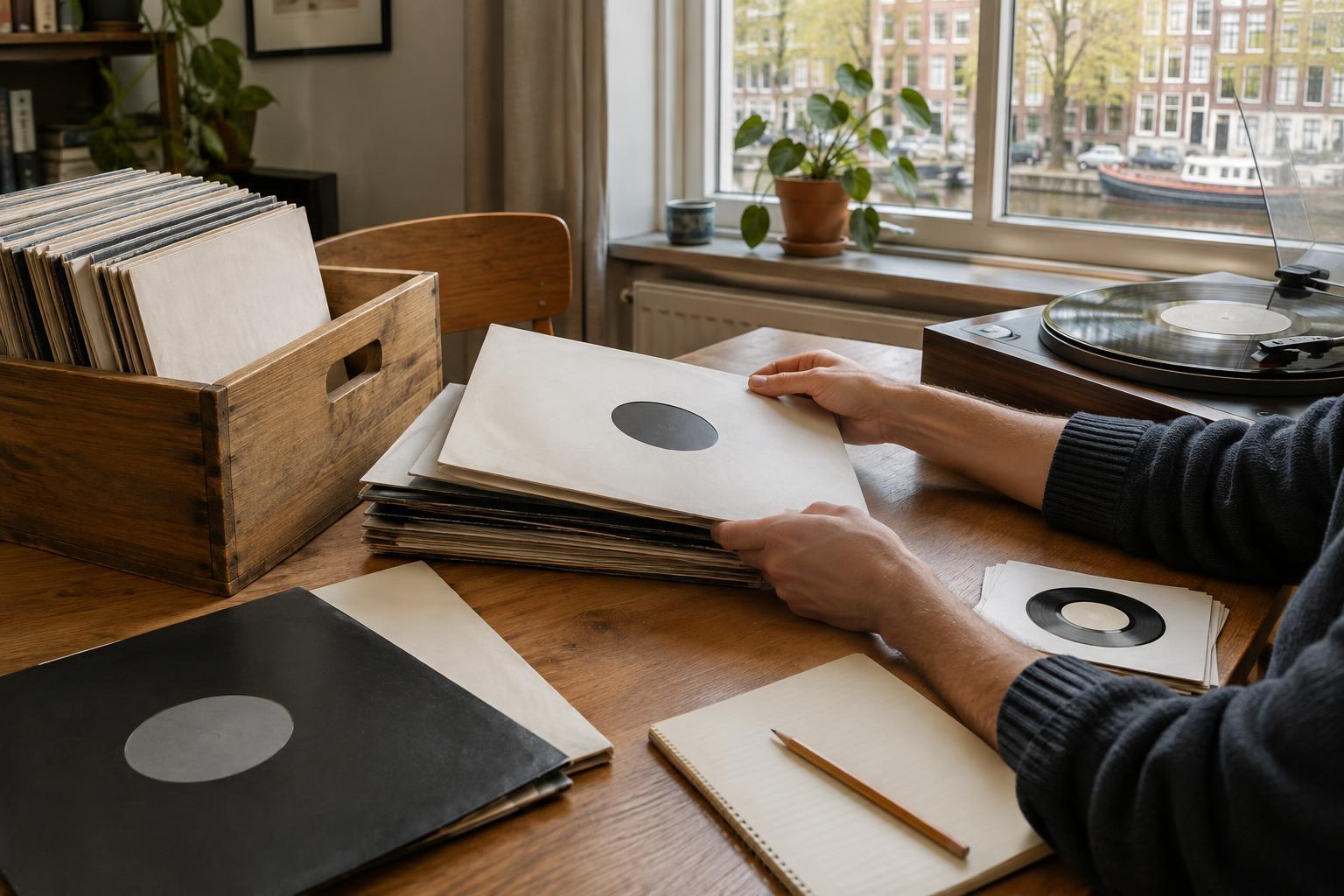
A simple collecting path is to begin with one compilation, note the tracks you replay, then seek an album by an artist who holds your attention. The reverse works too: start with an album you love and use a compilation to hear its wider musical neighbourhood. In either direction, you are following a listening question rather than trying to complete a checklist.
That approach is useful when crate-digging in Amsterdam or anywhere else. Make space for unexpected finds, but keep a few names and tracks in mind so an appealing sleeve does not make every decision for you. Be considerate while browsing shared bins, and give other listeners room to look. Over time, a collection built from both compilations and albums can show not just what a sound is, but how you found your way into it.