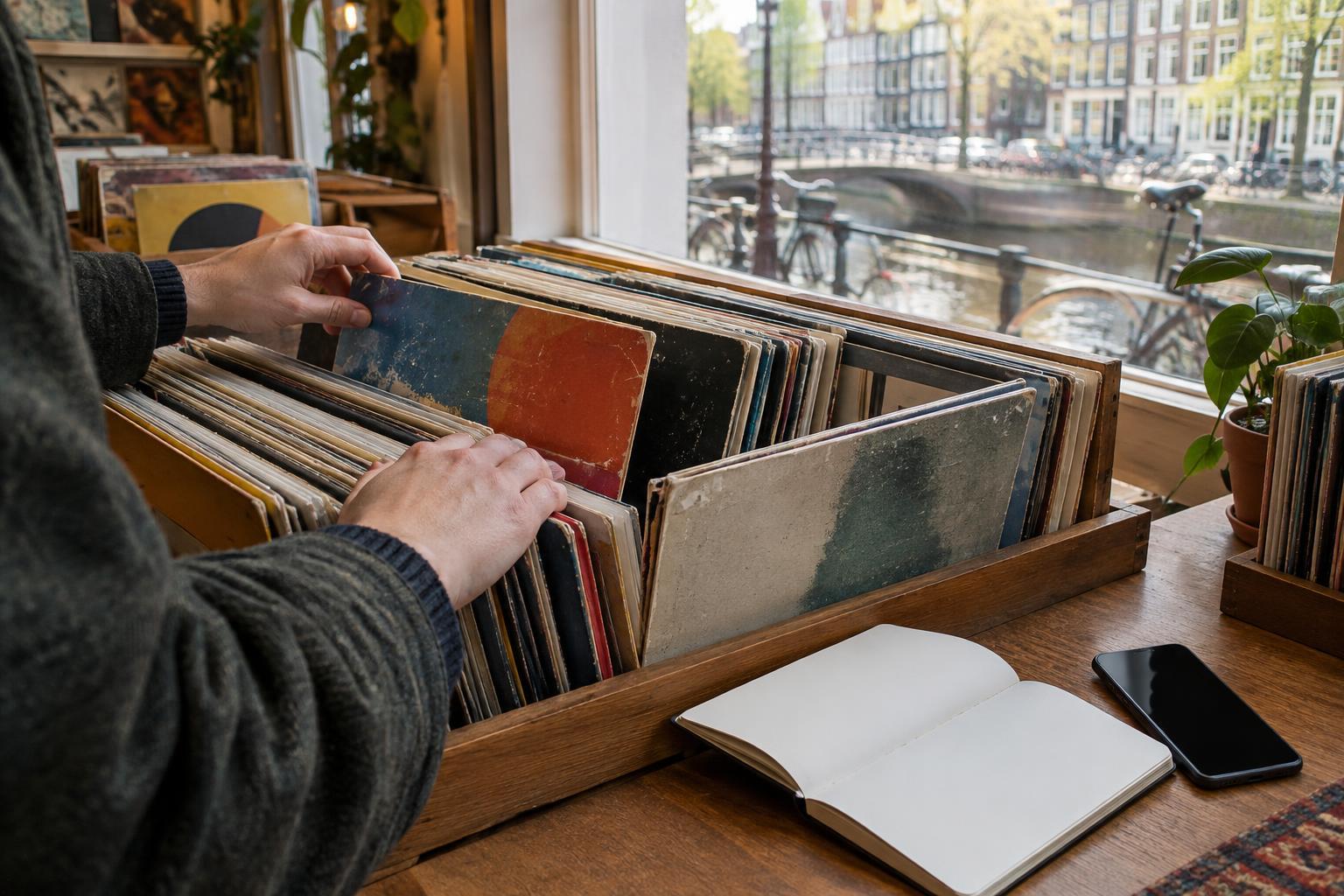
Start by reading the room
A record shop, a market stall and a crowded fair can each have a different rhythm. Before diving into a crate, take a moment to see how the space works. Look for signs about listening stations, reserved stock or where to leave records you do not want. If you are unsure whether a box is available to browse, ask. That small pause is especially useful when sellers are still setting up.
Keep bags close to your body rather than swinging them over bins or other people’s finds. If the space is narrow, make room for someone trying to pass. Crate-digging can be absorbing, but a shared aisle is not a private listening room. In a busy Amsterdam shop or at a weekend market, being aware of your surroundings lets everyone browse without feeling rushed or crowded out.
Browse without wearing out the records
Use both hands when lifting a record from a tightly packed bin, and avoid bending sleeves to read the titles behind them. Move through the records a few at a time instead of forcing a large stack forward. When you put an album back, return it to roughly the same place and orientation. An organised bin helps the next person find what they came for and saves the seller from repeated sorting.
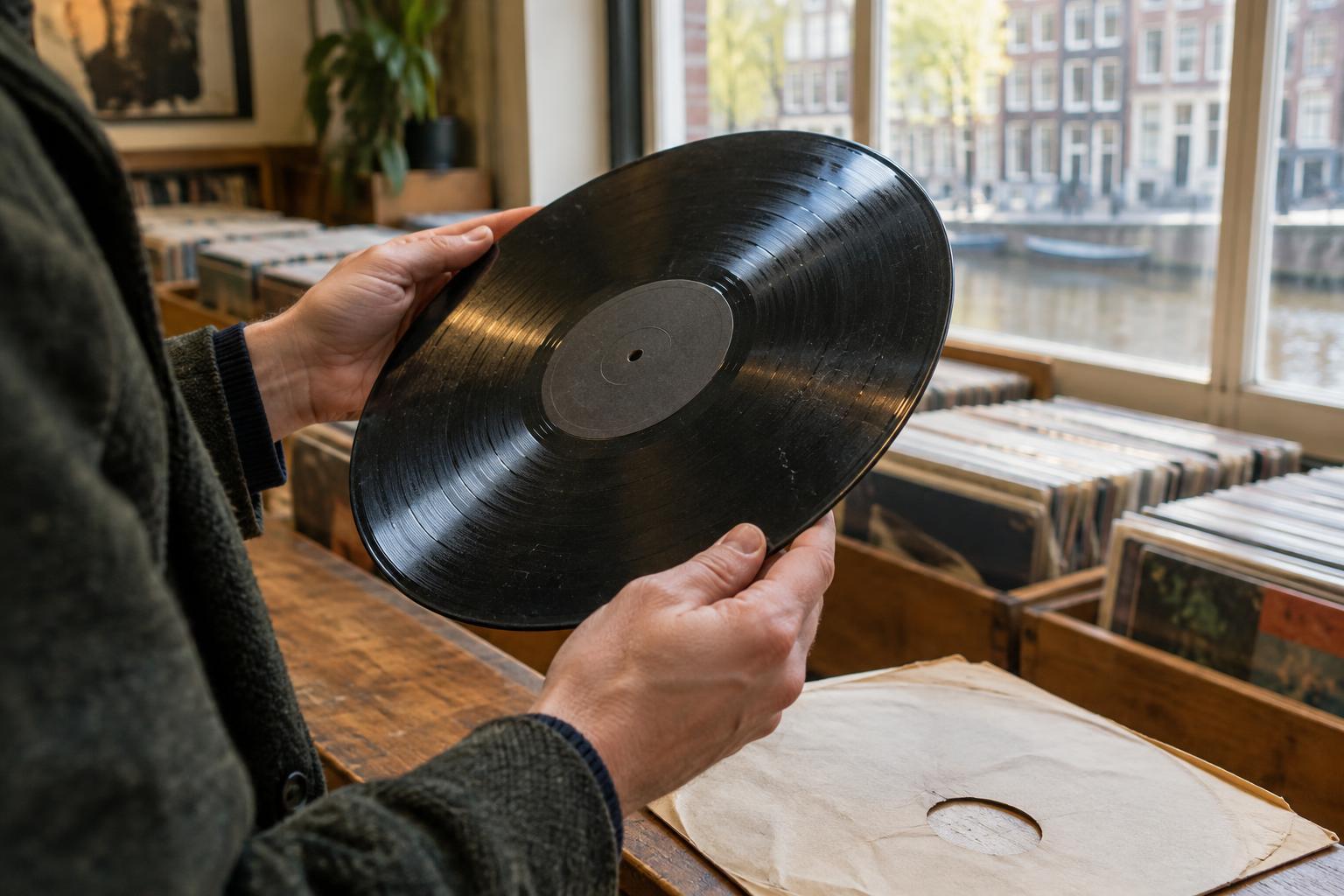
If you want to inspect a disc, slide it out gently while supporting the sleeve. Hold the vinyl by its edges and label area, keeping fingers away from the grooves. Look at it in available light without placing it on a rough counter or another exposed record. Visible marks can be useful clues, but appearance alone may not tell you how a record plays. Handle each copy as something its next owner might cherish.
Share the finds and the space
It is fine to take your time, but try not to block several crates while deciding on one record. If another person is waiting for a section, step aside with the album you are considering, provided the seller allows you to hold it. A small selection is easier to manage than an unstable pile. Do not remove records from somebody else’s stack, even if they appear to have set it down only briefly.
When two people are browsing the same bin, a quick “Are you finished with this section?” is usually enough to avoid confusion. There is no need to race through the sleeves or reach across someone to grab a cover. The pleasure of digging often lies in the unexpected discovery; giving other hunters room to make theirs is part of the experience.
Ask useful questions and respect the answer
Sellers may know about a pressing, a record’s condition or how the stock is arranged, but they may also be helping several people at once. Specific questions are easier to answer than a request to identify every promising album in a crate. Try asking whether a copy has been play-tested, whether an inner sleeve is included or where a particular genre is filed. If the seller does not know, accept that uncertainty.
Ask before using a listening station or a portable player, and follow any time limits. If listening is not available, decide what level of uncertainty you are comfortable with before buying. The same courtesy applies to prices: it is reasonable to ask politely whether there is flexibility, particularly when buying several records, but a stated price is not an invitation to argue. A respectful exchange matters more than winning a negotiation.
Make your choice, then leave things tidy
Check the sleeve, disc, label and any inserts before paying, while keeping the components together. If something concerns you, mention it calmly and give the seller a chance to clarify. Return records you pass on to the proper bin or ask where they should go. Leaving a mixed stack on the counter can make it harder for staff or stallholders to keep track of their stock.
You do not need an encyclopedic knowledge of pressings to be a considerate record hunter. Curiosity, care and a willingness to share the space will take you further than pretending to know every detail. Whether you leave with a long-sought album or nothing at all, good crate-digging etiquette makes it easier to enjoy the search—and to come back for another look.