What dry brushing can do
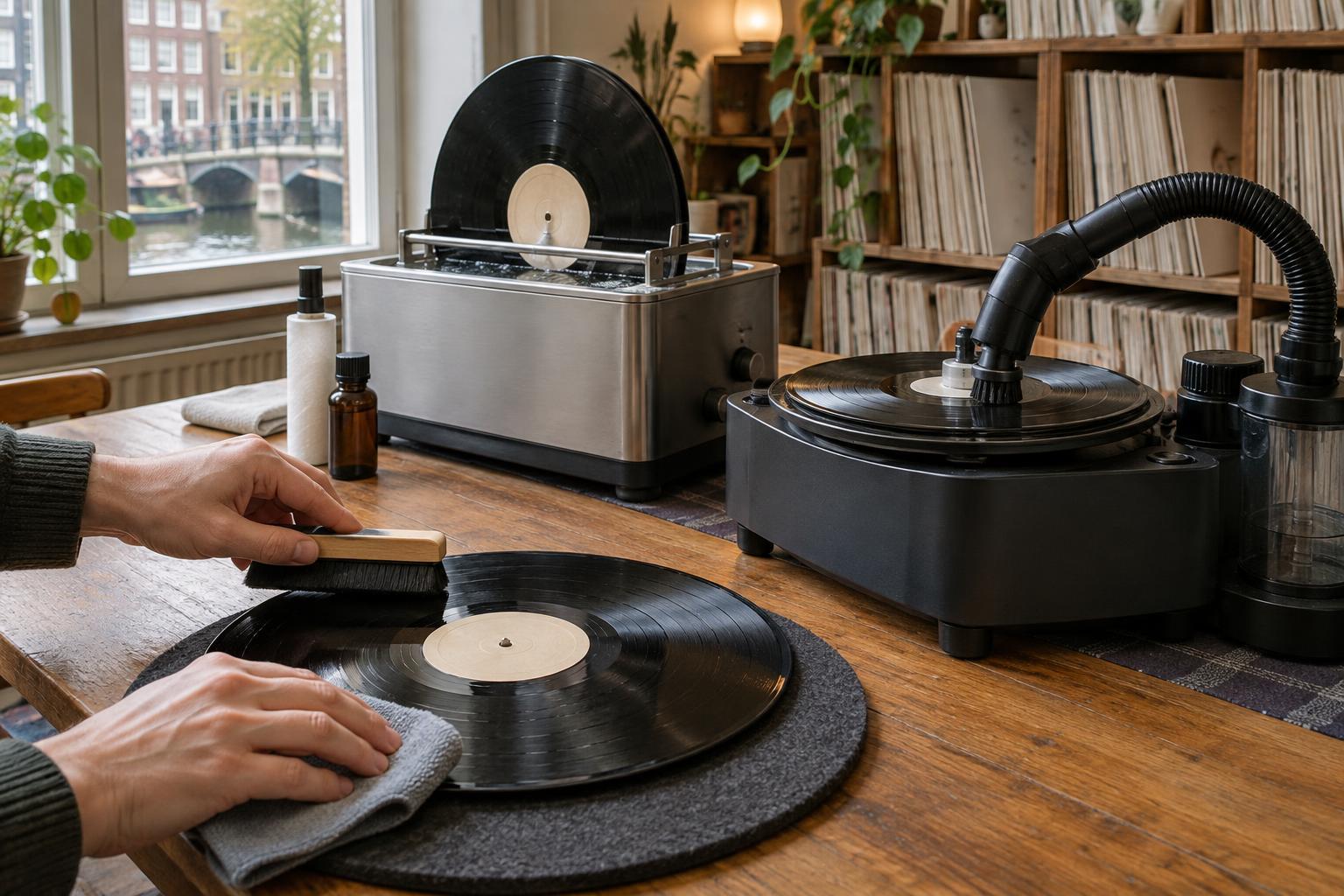
A record can pick up loose dust while it sits in a sleeve, waits on a turntable or moves through a listening session. A dry record brush is meant to lift or gather that surface dust before the stylus reaches it. It is a quick maintenance step, not a deep clean: fingerprints, dried residue and debris lodged in a groove may need a more thorough cleaning method.
The goal is modest but worthwhile. Removing visible loose particles can help keep them off the stylus and out of the sleeve when the record is put away. Brushing should be gentle enough that the bristles do the work. If you find yourself pressing hard or repeatedly scrubbing one spot, stop and consider whether the record needs cleaning rather than another dry pass.
Choose a brush and keep it clean
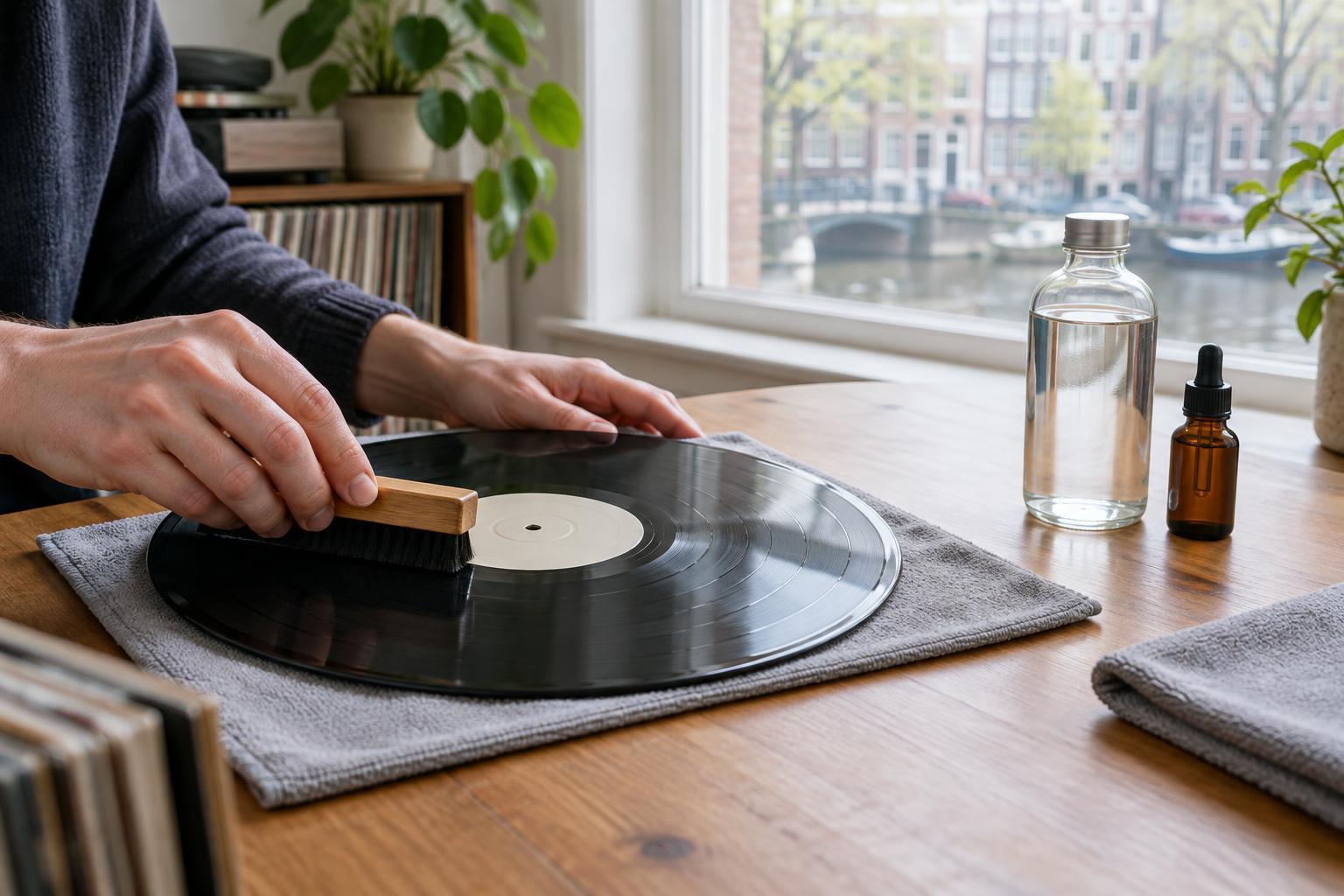
Use a brush made for records, with soft, clean bristles. Carbon-fiber brushes are a common choice for a quick pass; other record brushes may also work if their maker recommends them for dry use. A brush can collect dust only while it has somewhere for that dust to go. Remove buildup from the bristles according to the brush’s instructions, and keep the brush in a clean place between sessions.
Avoid touching the working bristles with your fingers, which can transfer skin oils. Do not put household cleaner on a dry brush or use a general-purpose duster on a record. If a brush looks dirty or feels rough, clean or replace it before using it on vinyl. A dusty brush can simply move debris from one side of a record to the other.
Brush before lowering the stylus
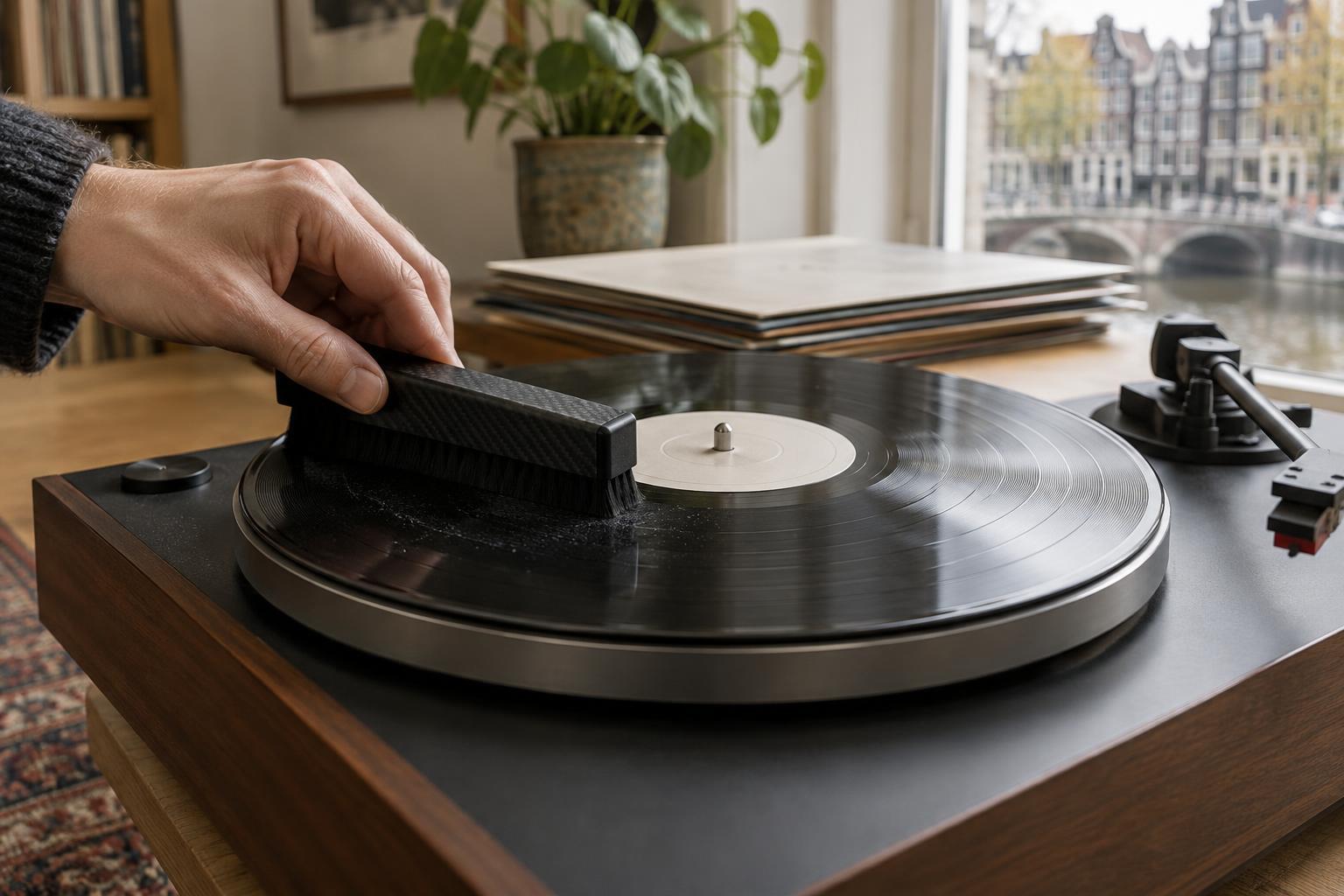
Handle the record by its edges and label, then set it on the platter. With the stylus safely raised, start the platter if your turntable allows it. Rest the brush lightly across the playing surface so its bristles follow the grooves as the record turns. After a rotation or two, guide the gathered dust toward the outer edge and lift the brush away. Avoid pushing it toward the label or bearing down on the record.
You may need to adjust that motion to suit your brush and turntable. The useful test is whether the brush gathers loose dust without leaving a visible trail or requiring force. If dust remains, clean the brush before another pass. Never try to brush a record while the stylus is playing it: the brush could bump the tonearm, and the added movement makes it harder to control.
Should you brush after playback?
Brushing before play is the more useful habit because it clears loose dust ahead of the stylus. A second pass afterward is optional. It can make sense if the record has attracted fresh dust while it was out of its sleeve, or if you can see particles you do not want to store with it. If the surface looks clean, there is little reason to brush simply because a side has finished.
To brush again, lift and secure the tonearm first. Use the same light touch, then let the platter stop before picking up the record by its edges and returning it to a clean inner sleeve. Check the stylus separately from time to time and clean it only with a method intended for stylus care. A record brush is not a safe tool for cleaning the stylus.
Know when to do more than brush
If a record has persistent crackle, visible grime, fingerprints or marks that do not move with a light pass, dry brushing is unlikely to solve the problem. Repeated brushing may just spread oily residue. Set the record aside for an appropriate deeper clean rather than trying to scrape a stubborn spot away. Likewise, a record that quickly gathers dust again may benefit from a clean inner sleeve and a check of the surfaces around the turntable.
Some records seem to attract dust readily, especially in dry conditions. A brush may help with loose particles, but it will not necessarily eliminate static; results can vary with the brush and surroundings. Treat dry brushing as one small part of record care: handle the disc carefully, keep the stylus and sleeves clean, and put the record away promptly once you have finished listening.