Start with a city, not a single sound
There is no one sound that neatly defines Amsterdam hip-hop. The city’s music reflects different neighbourhoods, generations and creative circles, while artists and audiences move freely between them. Some records lean toward hard-edged rap; others favour humour, danceable production or experimentation. A useful beginner’s approach is to listen for those differences rather than search for one definitive Amsterdam style.
Dutch may be the first language you notice, but it is not the only language in the mix. English, slang and words drawn from the city’s many communities can all shape a verse. If you do not speak Dutch, you can still follow the rhythm of a voice: where the rapper pauses, how a rhyme lands against the beat and whether the delivery sounds conversational, theatrical or confrontational. Translation can help with context later, but it need not be a condition for enjoying the music.
Build a short listening route
Begin with Osdorp Posse, a key early name in Dutch-language hip-hop with strong Amsterdam ties. Their work offers a point of comparison for later artists: pay attention to direct vocal delivery and the decision to rap in Dutch. Early recordings can sound quite different from the polished productions a newcomer might associate with contemporary rap, which makes them useful for hearing how the music developed.
Next, try De Jeugd van Tegenwoordig. Their breakout track “Watskeburt?!” is an approachable example of Dutch rap’s capacity for wordplay, absurdity and crossover appeal. Listen to how the voices interact and how much of the track’s character comes from phrasing, even when a joke goes past you. It is one doorway into the music, not a template for everything the city produces.
For a different direction, explore Zwart Licht, an Amsterdam hip-hop group whose recordings offer a useful contrast in energy and tone. Then look into SMIB, a creative collective associated with Amsterdam-Zuidoost. Rather than treating either name as a single-track recommendation, sample a few releases and follow the credits. Producers, guest artists and related projects often lead to more rewarding discoveries than an automatically generated list of similar songs.
Listen for the places behind the music
Place matters in hip-hop, but a neighbourhood should not be reduced to a musical stereotype. Amsterdam-Zuidoost, Noord and Nieuw-West, for example, each contain many communities and scenes, not one shared sound. When an artist names a street or district, consider what the reference does within the song. Is it a memory, a claim of belonging, a joke or a description of everyday life?
It also helps to look beyond the rapper. DJs, producers, dancers, visual artists, small venues and informal gatherings are part of hip-hop culture. Cover art, videos and event flyers can reveal connections that the audio alone does not. Follow those clues with care: an artist may work in Amsterdam without being from the city, and a record can speak to Amsterdam life without representing every person who lives there.
Explore records without making collecting a test
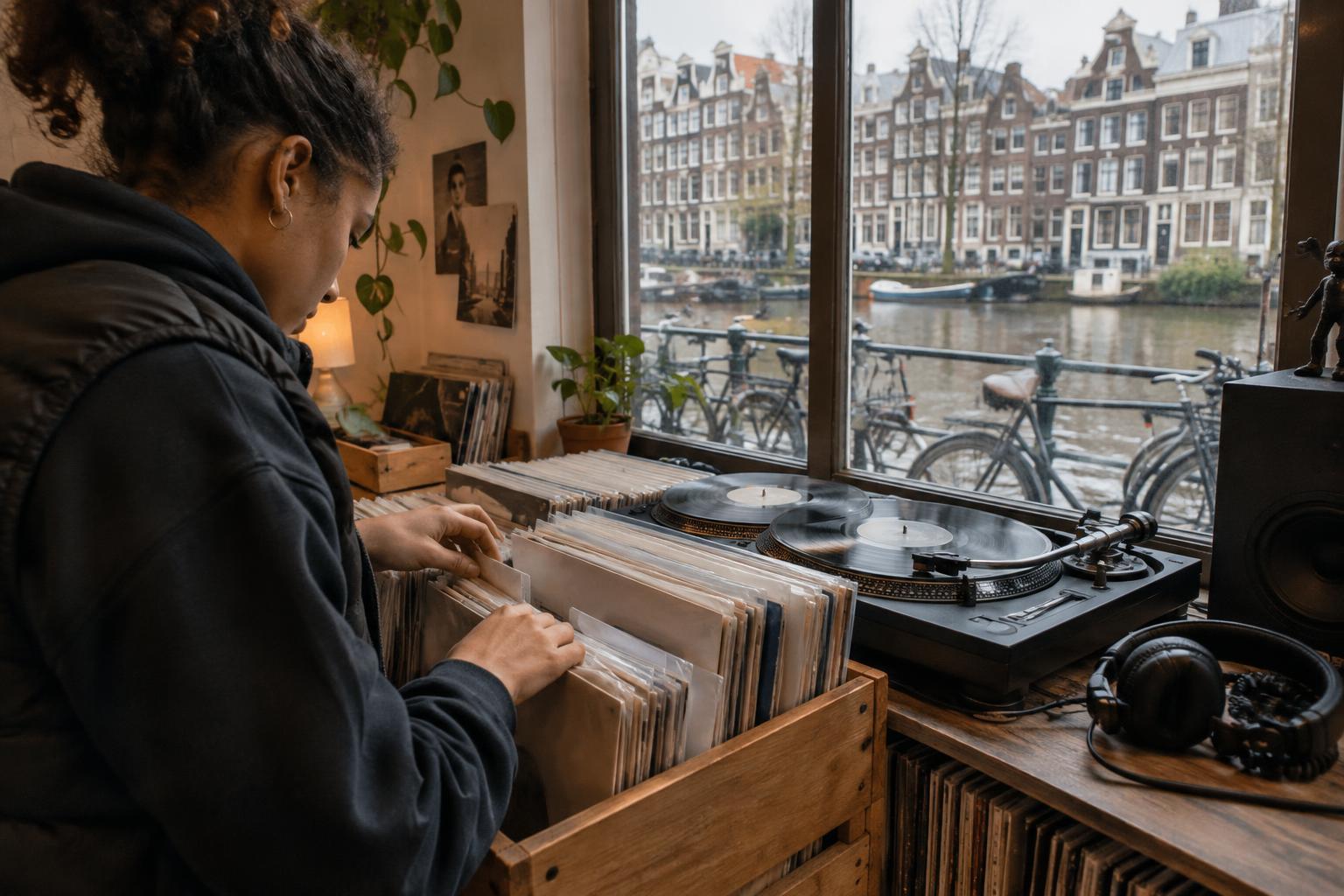
You do not need a rare pressing to begin listening. Start with music you can access, note the tracks you return to and look for physical editions only if you want to spend more time with them. A record sleeve can reward close attention: check the track list, production credits and artwork, then listen to a side without skipping around. That slower pace may make changes in mood or sequencing easier to notice.
When crate-digging in Amsterdam, remember that Dutch hip-hop will not always sit in one obvious bin. Depending on the shop, it may appear under local releases, rap, electronic music or a particular label. Browse gently, put records back where you found them and ask staff for help when it is convenient. If a title is unfamiliar, check the edition and condition before buying rather than assuming every copy tells the same story.
Finally, keep your listening route open. Return to an early record after hearing a newer one; compare how different producers leave space for a voice; follow an artist’s collaborators into another genre. A beginner’s guide is most useful as a set of starting points. The pleasure lies in noticing how many distinct voices can belong to the same city.