Start with the record you want to own
The choice between a first pressing and a reissue is not a test of whether you are a serious collector. It is a question of what you want from a particular album. Do you want a copy to play often, an object connected to its original release, or a little of both? Answering that first makes the price tag easier to judge.
A first pressing generally means a copy from an album’s earliest manufacturing run in a particular market, but the label is not always straightforward. Releases can have different early editions in different countries, and small details may separate one run from another. A reissue is a later release of the same music. Neither description, on its own, tells you how a copy will sound or how pleasant it will be to live with.
Condition matters more than the label
An early copy has had more time to gather wear. A clean-looking sleeve may hold a record with scratches, groove wear or persistent surface noise; a worn sleeve may contain a disc that plays beautifully. Reissues can have defects too, including warps or pressing noise. For a new collector who mainly wants to listen, a well-kept reissue will often be a more satisfying purchase than a heavily worn original.
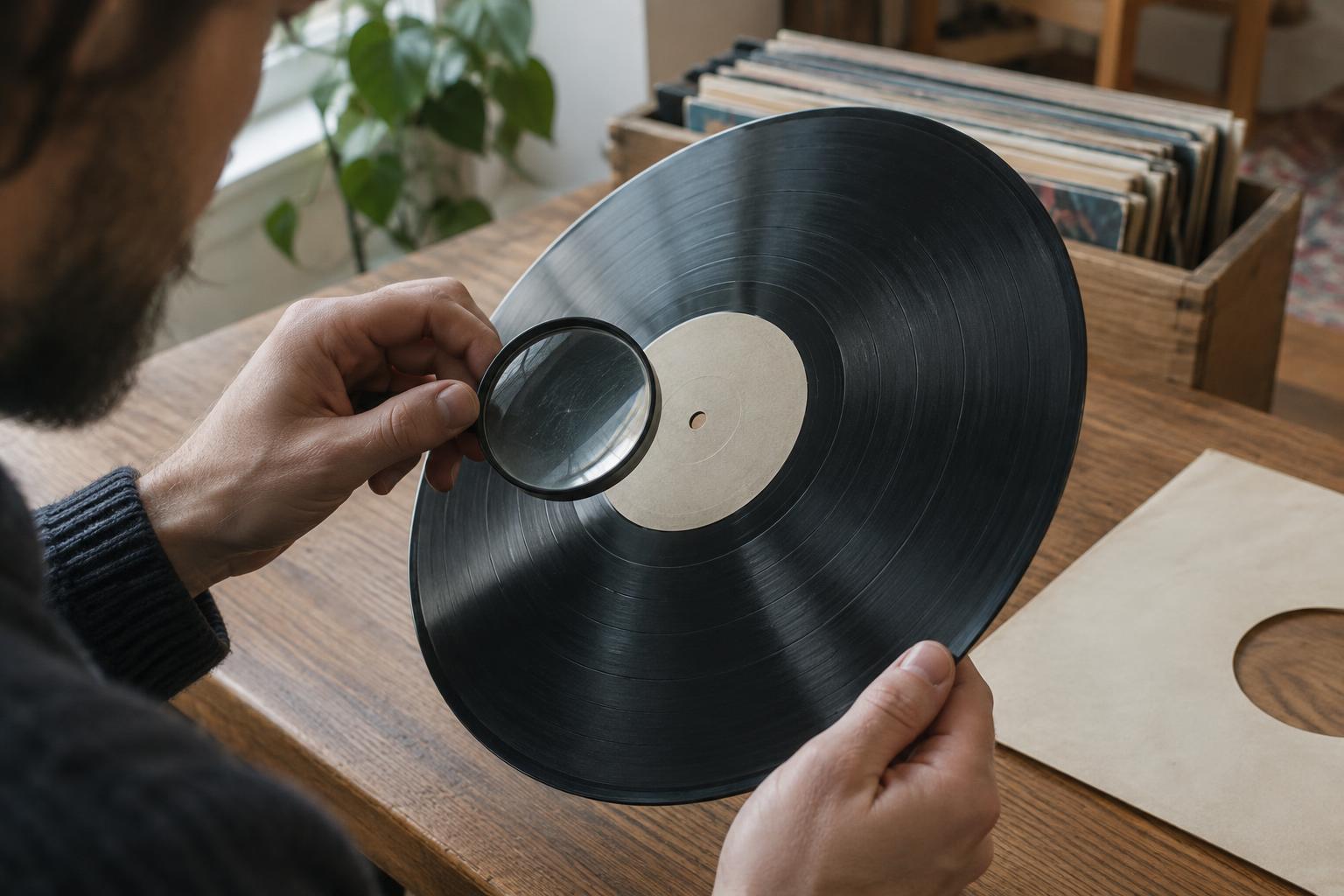
When shopping in person, look at the disc under good light and check whether the price reflects its condition. Ask whether the shop can play a short section if you have concerns, and handle the record by its edges and label. When buying online, read the seller’s description closely: does the grading describe both the disc and the sleeve, and are particular faults mentioned? A grade is useful, but it cannot replace a description of how the record plays.
Sound depends on more than pressing age
Collectors sometimes talk as if the earliest copy must be the best-sounding one. It might be a version you love, but pressing age alone cannot guarantee that. Mastering choices, the materials used to make a release, manufacturing quality, playback equipment and the condition of the individual copy can all affect what you hear. Two editions of the same album may sound different without one being the right choice for everyone.
If sound is your main concern, look for information about the specific edition rather than relying on words such as “original” or “audiophile.” Compare copies by listening when possible, at similar volume and on equipment you know. If you cannot audition them, treat confident claims about sound with caution. Your own priorities count: some listeners prefer a quieter record, while others value the character of a particular earlier edition despite a little noise.
Decide what the extra cost buys you
A first pressing may appeal because of its sleeve design, label details or connection to the moment an album appeared. Those are good reasons to want one. They are less persuasive if paying for it leaves you afraid to play it. Before stretching your budget, ask what difference you would actually notice and enjoy. The answer may vary from record to record.
A reissue can be a sensible way to explore an artist or genre without committing a large part of your collecting budget to one album. It may also offer a clean, readily playable copy of music you expect to put on often. On the other hand, if a particular early edition matters to you, waiting for one in acceptable condition may be better than buying a poor copy simply because it is available today.
Use a simple buying rule, then stay curious
For your first copy of an album, start with the best playable edition you can comfortably afford. Give condition and seller clarity more weight than prestige. If an early pressing costs substantially more, be clear about why you want that edition before paying the difference. You can always learn about variations and seek another copy later; your first purchase does not have to be your final verdict.
Crate digging is more enjoyable when it leaves room for discovery. In an Amsterdam record shop or anywhere else, take time to inspect what you find, respect other shoppers’ space and return records to their proper place. Keep a short note of the edition and condition of records you enjoy hearing. Over time, that listening history will tell you far more about your preferences than a blanket rule to buy originals or reissues ever could.