Pause before you play or brush it off
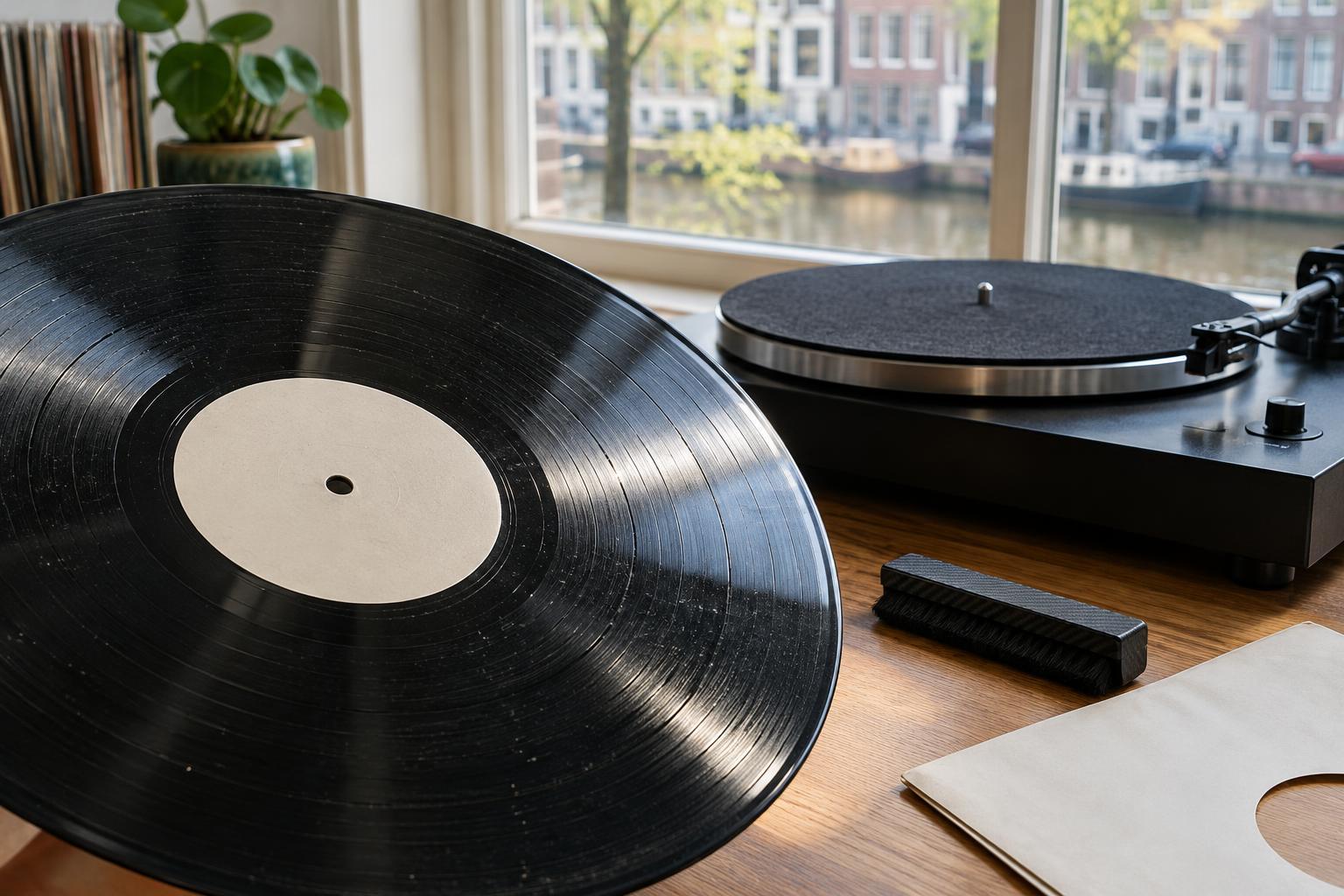
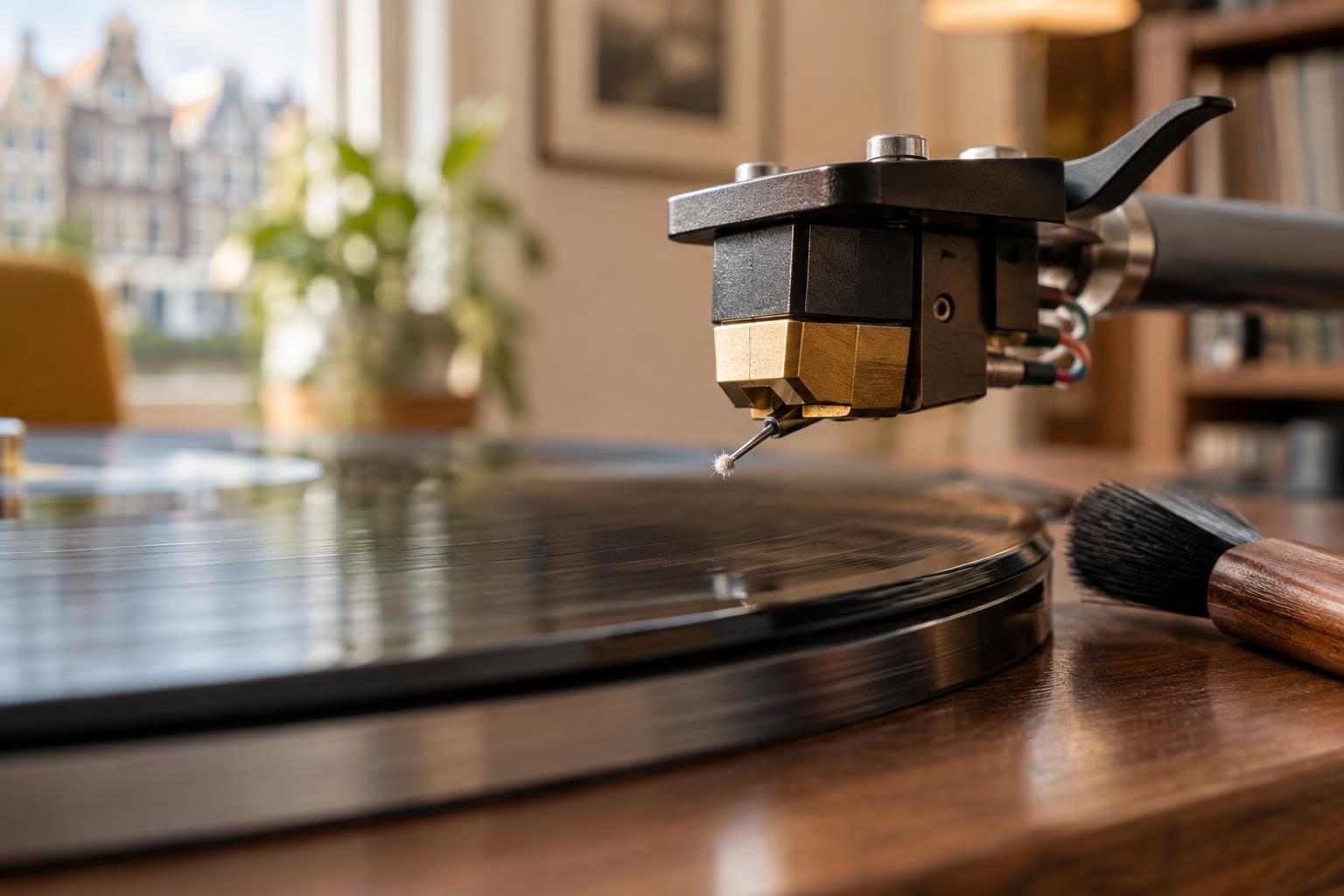
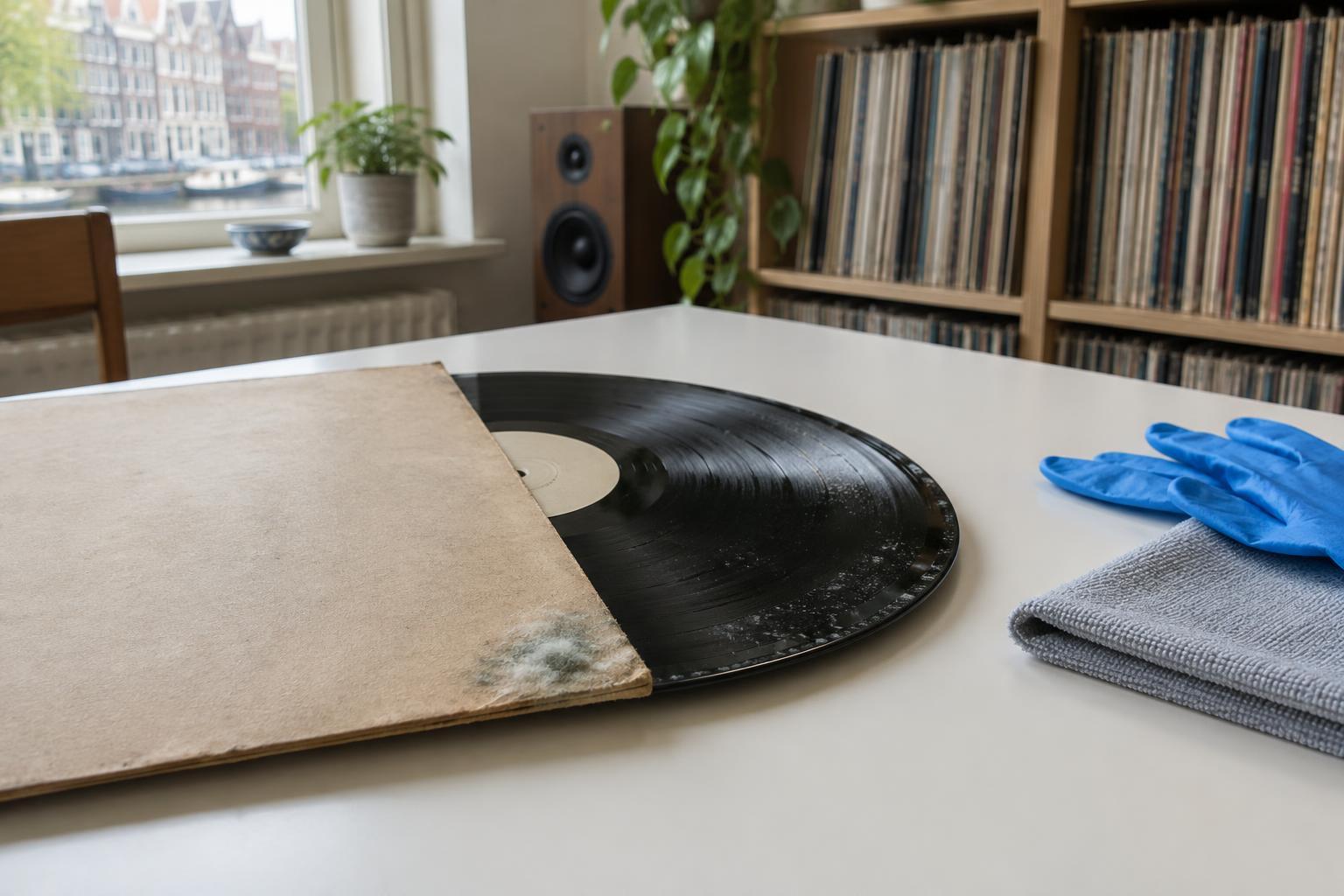
A musty smell or a patch of fuzzy growth is a reason to stop handling a record as you normally would. Do not put it on the turntable to see whether it plays. Debris on the disc may transfer to the stylus, while moving a suspect sleeve through your shelves can spread loose material to nearby records. Set the item apart from the collection, preferably in a clean, dry place where you can inspect it without disturbing other sleeves.
Handle the record by its edge and label area, and avoid shaking, blowing on or dry-brushing visible growth. If the contamination is extensive, wear gloves while handling it and wash your hands afterward. The aim is to disturb as little material as possible until you have decided what can be cleaned and what should be replaced. A strong odor, widespread growth or dampness affecting many records may call for more caution than a single small mark.
Separate the disc from its packaging
Check the disc, inner sleeve and outer jacket as separate items. A paper inner sleeve with visible mold is usually best replaced: its fibers are difficult to clean thoroughly without damaging the paper. Put it aside rather than sliding the record back inside. A clean, new inner sleeve gives the disc a safer home once the disc is dry.
An outer jacket can be harder to part with, especially if it carries artwork, notes or personal history. Porous cardboard may remain stained or musty even after surface cleaning. Avoid soaking or scrubbing it, which can warp the board and lift printing. If you want to keep a suspect jacket, store it separately from clean records while you assess it. Keep the disc in a new inner sleeve outside that jacket; do not seal a damp jacket in plastic.
Clean standard vinyl gently, and know when to stop
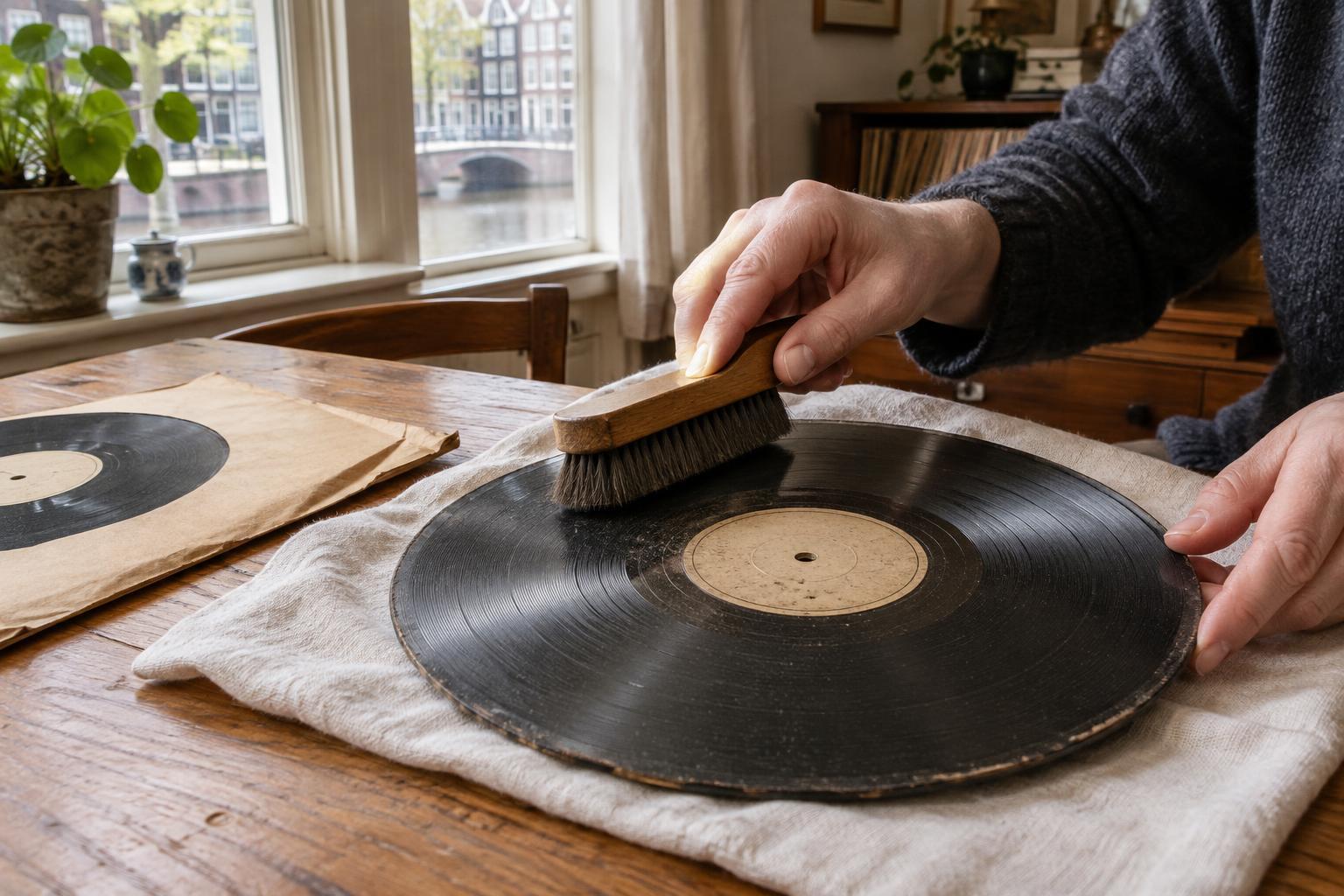
For a standard vinyl LP or single with light surface contamination, use a record-cleaning method intended for vinyl: a suitable cleaning fluid, a clean soft brush or pad, and a way to remove the fluid and loosened debris. Follow the equipment or fluid maker’s directions. Work gently along the grooves rather than across them, and keep liquid away from the paper label. If your method calls for a rinse, use distilled water and a separate clean tool so you do not put residue straight back onto the disc.
Avoid household bleach, abrasive sponges and improvised mixtures. They may damage the record or label, and a quick wipe is unlikely to address material lodged in the grooves. Do not assume that a disc is safe to play merely because visible marks have gone: inspect it in good light and let it dry completely before returning it to a fresh sleeve. Clean any brush, pad or machine parts according to their instructions before using them on another record.
Identify the format before applying a vinyl-cleaning routine. Older shellac discs and unusual record materials can respond differently to liquids and cleaning products. If you cannot identify the disc, the contamination appears embedded, or the record is particularly valuable to you, pause and seek help from someone experienced with that format rather than experimenting.
Check the shelf, not just the record
A moldy find can point to a storage problem. Look at the records beside it, the shelf surface and the wall behind the collection. Check for condensation, leaks, a damp floor or sleeves packed tightly against a cold wall. Move unaffected records away from any wet area and allow the space to dry. Do not return a cleaned disc to a damp shelf or its old inner sleeve.
Good storage is less about a perfect number on a meter than about avoiding persistent moisture and abrupt changes. Keep records upright in a dry, ventilated space, away from plumbing leaks and places where condensation collects. Give shelves enough room for air to circulate and make occasional checks part of your collecting routine. A record discovered early is easier to assess than a whole tightly packed row that has sat unnoticed in damp conditions.
Decide what is worth keeping
Cleaning can improve a disc’s condition, but it cannot promise to remove every trace of contamination or restore a stained jacket. After cleaning and complete drying, reassess the record, sleeve and storage area independently. Replace disposable packaging when needed, keep any questionable jacket apart from the main collection, and avoid playing a disc that still shows suspicious deposits or feels dirty in the grooves.
It is reasonable to let go of a badly affected, easily replaceable copy. For a rare or sentimental one, careful isolation gives you time to consider specialist cleaning or preservation without putting the rest of your collection at risk. The useful habit is simple: separate first, clean only with a method suited to the material, and return nothing to the shelf until both the item and its storage spot are dry.