Two words that open up flamenco
A first encounter with flamenco might draw your ear to a singer’s voice, a guitarist’s rapid notes or the sharp sound of clapping. Underneath those immediate impressions are two useful ideas: palo and compás. A palo is a flamenco form, with its own musical conventions and expressive character. Compás refers to the rhythmic framework that performers work within. Learning the terms will not explain every moment of a performance, but it gives you a way to begin hearing its shape.
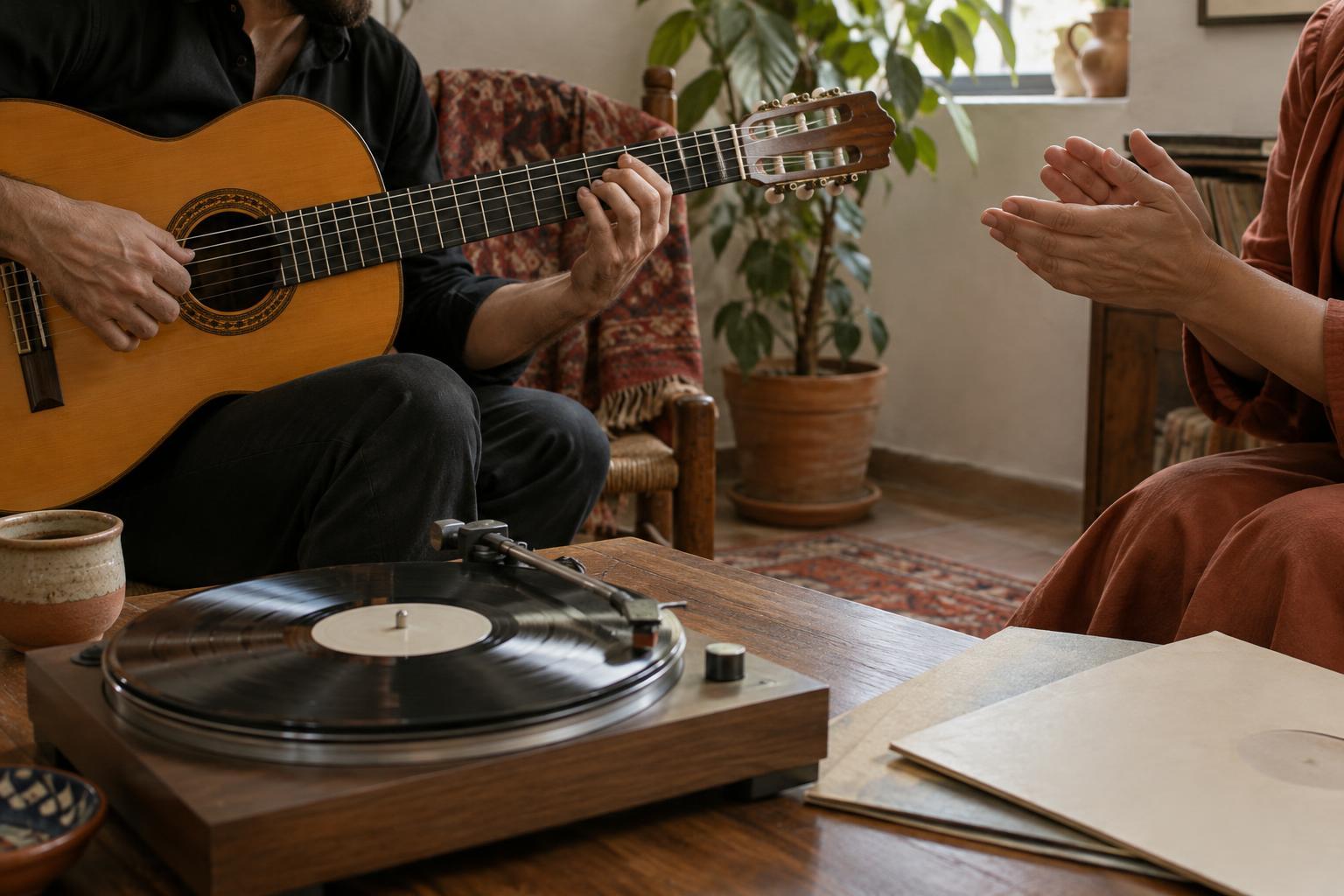
Flamenco is not one fixed sound. Singing, guitar, dance and handclaps can appear in different combinations, and performers make choices within the form they are playing. A recording may emphasize the voice; another may give the guitar room to develop an introduction or a solo. Rather than trying to identify every palo immediately, start by noticing whether the music feels measured or free, where phrases seem to settle, and how the performers answer one another.
What makes a palo more than a rhythm?
It is tempting to treat palos as a list of time signatures, but rhythm is only part of the picture. A palo can also carry recognizable melodic gestures, patterns of accompaniment and ways of shaping a sung verse. Two pieces may use a similar count yet feel quite different because of their phrasing and emphasis. Mood can help orient you, although labels such as solemn or festive are guides, not rules: performers can bring a wide range of feeling to any form.
Soleá is a useful early listening point. It often has a deliberate pace that leaves space around the singing and guitar. Tangos offers a contrasting entry: its four-beat pulse may be easier for a newcomer to follow. Bulerías can sound quick and playful, with accents and exchanges that make the pulse less obvious at first. You do not need to recognize these by name on a first listen. Comparing recordings of one palo, then switching to another, is more instructive than trying to memorize a long catalogue.
Hearing compás without getting trapped in numbers
In flamenco, compás is more than a beat you could tap evenly on a table. It includes recurring accents, the space between them and the performer’s sense of where a phrase lands. Some palos use a cycle commonly counted to twelve. In soleá, a beginner’s counting aid is to listen for emphasis around beats 3, 6, 8, 10 and 12. That pattern is a starting map rather than a promise that every accent will be played loudly, or even stated outright.
Try listening once without counting. Notice when a guitar phrase seems to come home, or when a singer leaves a gap that the guitarist fills. On the next pass, tap lightly through the cycle and listen for recurring points of emphasis. If you lose your place, let the music continue. Performers may stretch phrases, leave beats unstated or shift the weight of an accent. Hearing the cycle gradually matters more than keeping a perfect tally.
Why some flamenco resists a steady count
Not every flamenco performance gives you a regular pulse to follow. In some forms and passages, especially certain unaccompanied or sparsely accompanied singing, the performer phrases more freely. You may hear the guitarist respond to the singer’s line rather than establish a beat beneath it. Attempting to force a twelve-count onto everything can make this music seem more confusing than it is.
When a pulse is hard to find, change the question. Listen for the arc of a vocal line, a repeated melodic turn or the moment an answering guitar phrase arrives. Then return to a clearly measured recording and compare the experience. This contrast helps explain why compás is so important without reducing flamenco to counting: rhythmic structure can be strongly present, lightly suggested or temporarily left aside.
A practical first listening session
Choose a few recordings identified as soleá, tangos and bulerías, and play each more than once. On the first listen, pay attention to the overall character. On the second, focus on one element: the singer, guitar, handclaps or dance sounds, if present. On the third, listen for how that element relates to the others. If you are exploring records, sleeve notes and track labels can help you connect a palo’s name with the sound you have just heard; labels are a guide, not a substitute for listening.
Keep your observations simple. Does the pulse feel steady? Do the handclaps reveal an accent you missed? Does a phrase end where you expected? Returning to the same track after a short break can be more rewarding than moving through many unfamiliar recordings at once. With time, palos become less like terms to memorize and more like familiar settings in which you can hear each performer make something distinct.