Two ways to hear the same record
Speakers put sound into the room. Where you sit, where the speakers stand and how the room reflects sound all shape what you hear. At a comfortable listening position, a good speaker setup can give a recording a sense of scale: drums occupy space, voices seem to stand between the speakers, and bass can feel physical as well as audible.
Headphones take most of the room out of the equation. They often make quiet details easier to notice, including a soft backing part, a breath before a vocal line or surface noise in a worn groove. The stereo presentation can feel different, too. With speakers, each ear hears some sound from both channels; with conventional headphones, the left and right channels are more separate. Neither presentation is automatically more faithful or more enjoyable. They offer different perspectives on the record.
Follow the signal before buying anything
A turntable’s cartridge produces a signal that usually needs a phono preamp before it can feed a standard amplifier or powered speakers. The phono preamp boosts the signal and applies the playback equalization records require. Some turntables and amplifiers have one built in; others need a separate unit. Check the labels and manual for your equipment rather than assuming a pair of red-and-white plugs can connect straight to any input.
For speakers, a common path is turntable to phono preamp to amplifier to passive speakers. With powered speakers, the amplifier is inside the speakers, so the path is turntable to phono preamp to the speakers’ line input. If the turntable has a switchable built-in phono preamp, set it to match the input you are using. Sending a phono-level signal to a line input may sound very quiet; running two phono stages in series can sound distorted.
For headphones, the usual path is turntable to phono preamp to a headphone amplifier, or to an amplifier or receiver with a headphone jack. A phono preamp’s ordinary line output is not necessarily a headphone output. Before purchasing a separate headphone amp, see whether your existing amplifier already provides a suitable jack and volume control.
What headphones do well—and what they expose
Headphones are useful when you want to listen without filling a shared room with music. They also let you settle into a record without arranging furniture around two speakers. Open-back designs generally let more sound in and out, while closed-back designs tend to offer more isolation. If you share a small apartment or listen while someone else is working nearby, that distinction may matter more than a minor difference in sound character.
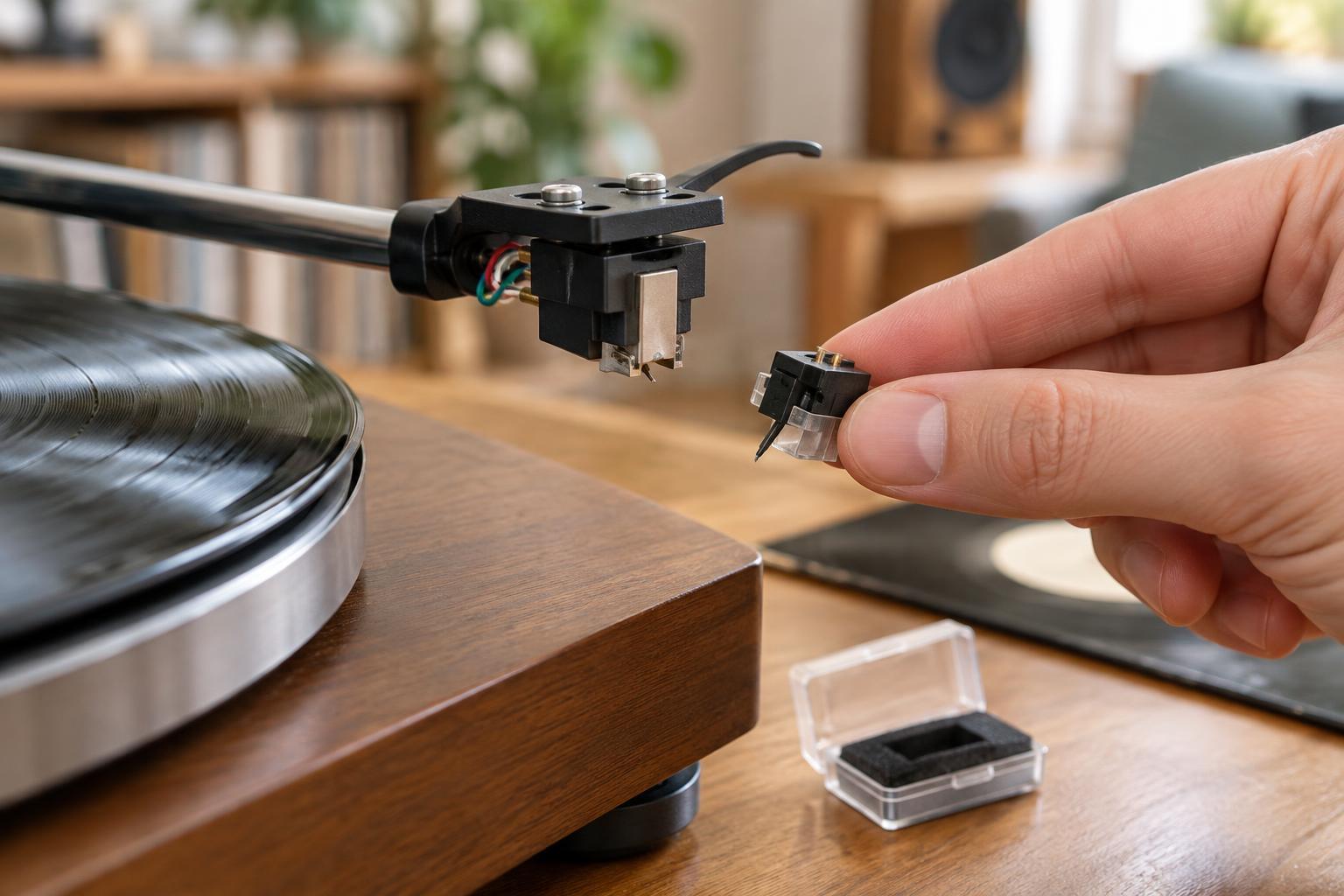
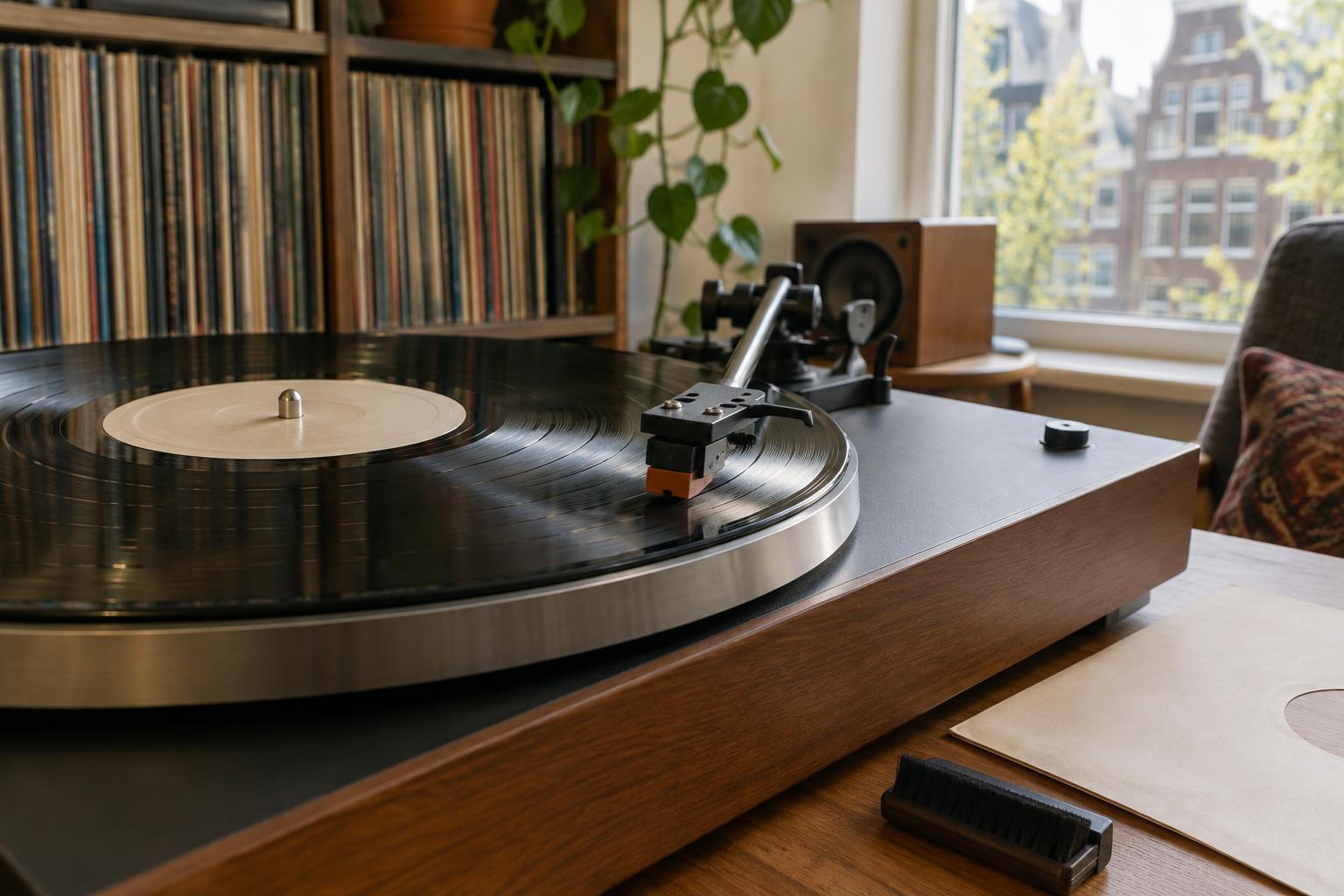
That close-up view can be unforgiving. Dust, scratches, groove wear, hum and poorly matched playback levels may seem more obvious through headphones. Not every tick calls for a new cartridge or a cleaning spree: some noise belongs to the condition of the record. Start with a clean stylus, a reasonably clean record and a correctly connected system before treating every sound as an equipment fault.
Headphone compatibility is worth checking, but it need not become a specification contest. Some headphones need more output from an amplifier than others to reach a comfortable level. If you are choosing new gear, confirm that the headphone output is intended to drive the pair you want to use. Begin playback with the volume low, then raise it gradually.
What speakers add—and what the room changes
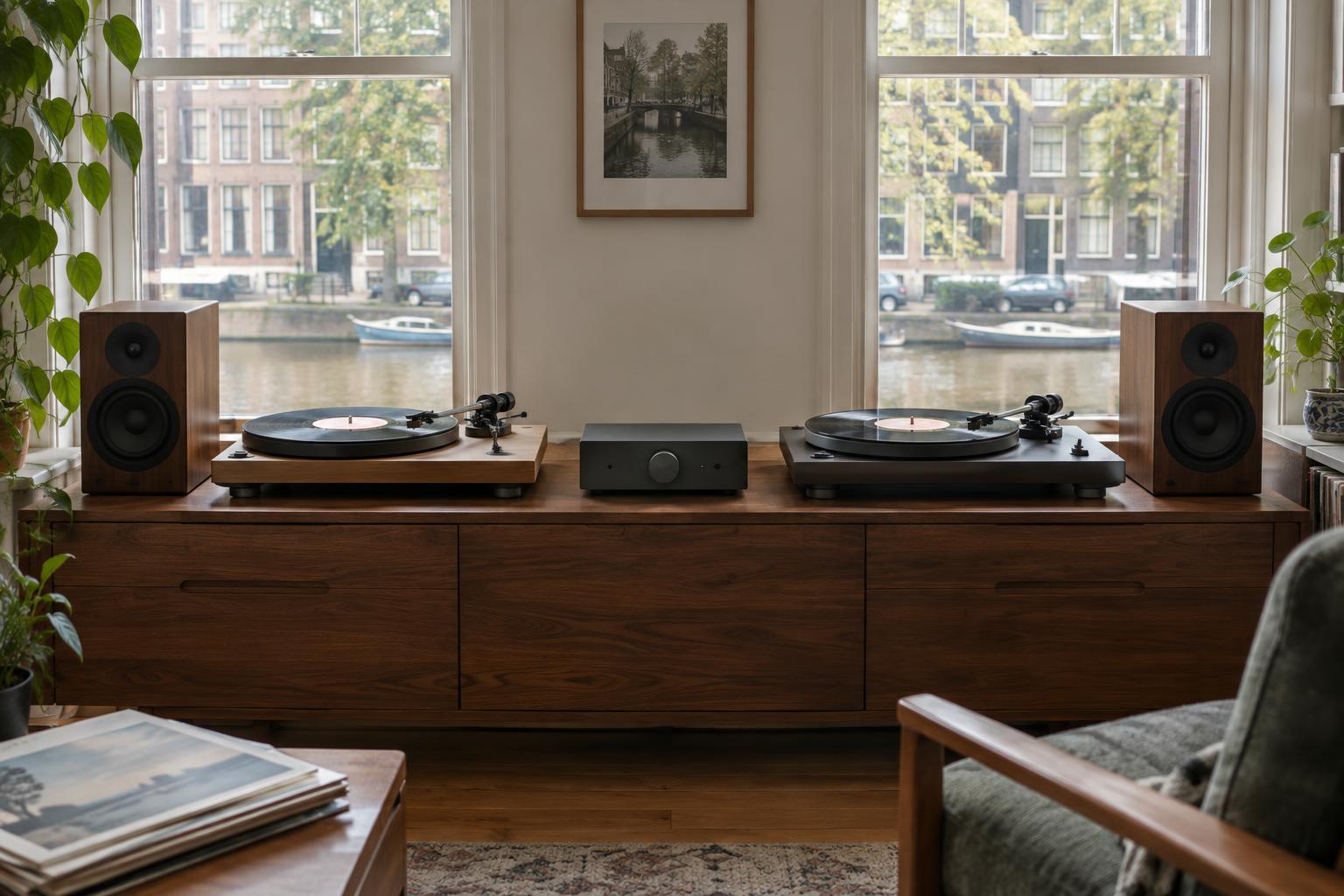
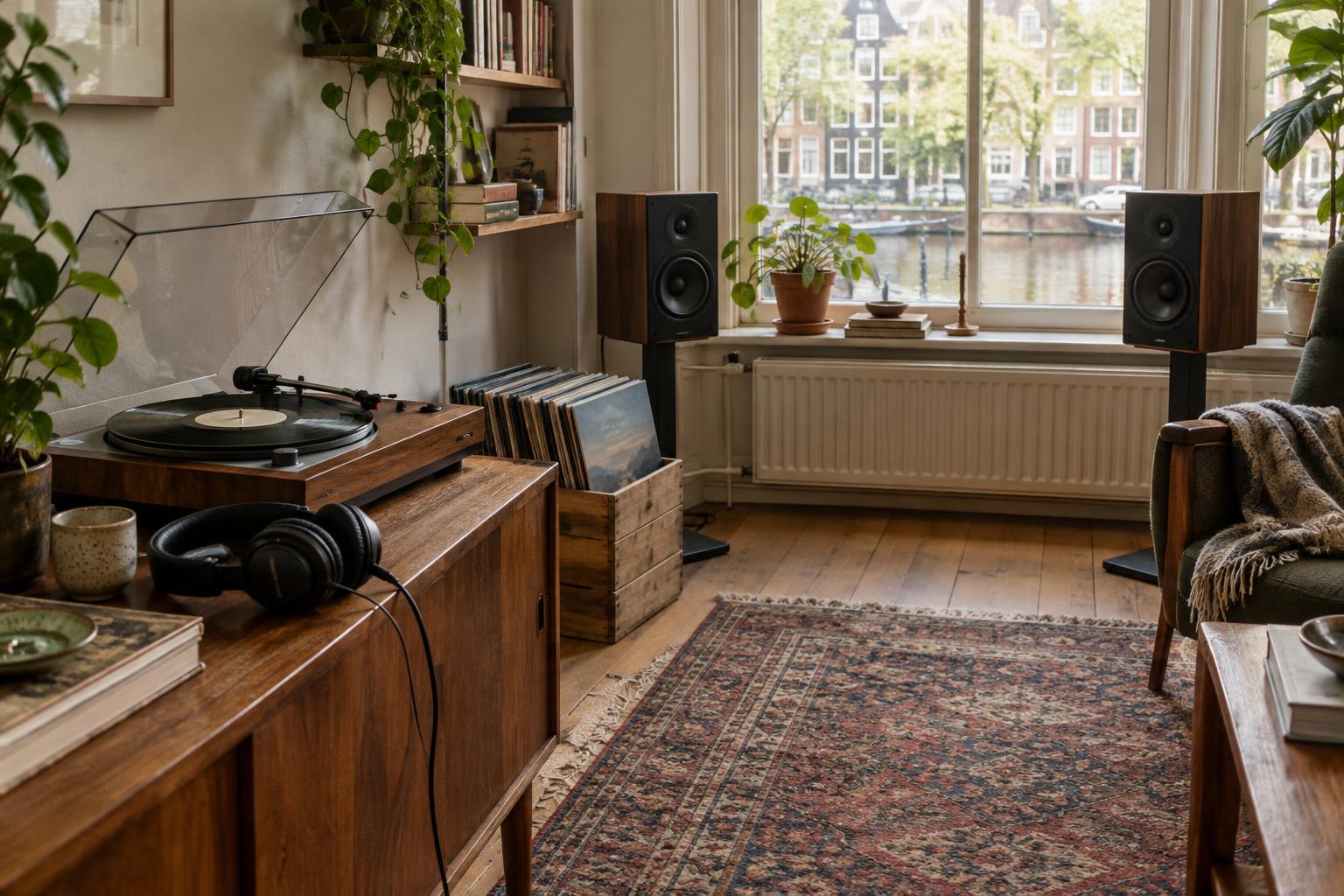
Speakers make vinyl listening a shared activity. You can move around, talk between tracks and hear the record as part of the space rather than as sound delivered directly to your ears. Their performance, however, depends heavily on placement. As a starting point, put the left and right speakers at similar distances from your usual seat and avoid hiding one behind a stack of books while the other stands in the open.
If possible, keep speakers off the same surface as the turntable, especially when bass makes that surface vibrate. Mechanical vibration can travel back to the stylus and cause problems at higher volumes. A stable turntable stand and sensible speaker placement are often more useful first steps than replacing components. In a compact room, you may also find that shifting speakers a little away from walls changes the bass more noticeably than expected.
Choose for the way you actually listen
If you mostly listen alone late in the day, headphones and a reliable headphone output may be the simplest place to start. If putting on a record means inviting someone to sit down and hear the whole side, speakers may suit you better. You do not have to declare one the winner: an amplifier with speaker connections and a headphone jack can make switching between the two straightforward, provided it has the inputs your turntable setup needs.
Before spending money, sketch your signal path from stylus to ears. Identify where phono amplification happens, where volume is controlled and what powers the speakers or headphones. Then consider the room, your neighbours and the records you enjoy. The right setup is the one that lets you play them often, at a comfortable level, without turning each listening session into a troubleshooting exercise.