Start with the signal path
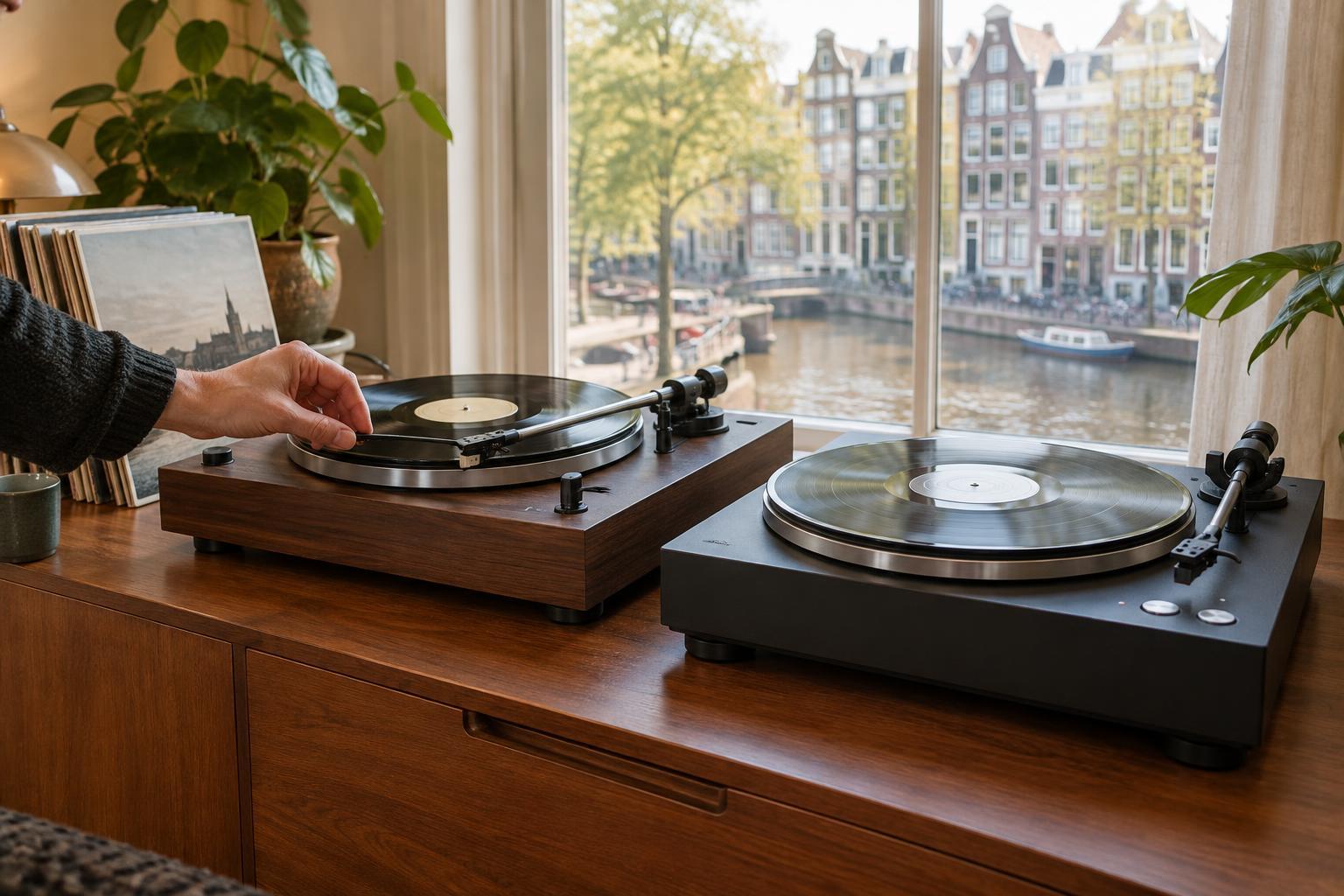
A basic vinyl system follows a simple route: record groove, stylus and cartridge, phono stage, amplifier, then speakers. The turntable spins the record at a steady speed and carries the stylus across its grooves. The cartridge attached to the tonearm converts the stylus’s movement into a small electrical signal. That signal is not usually ready to send straight to ordinary speakers.
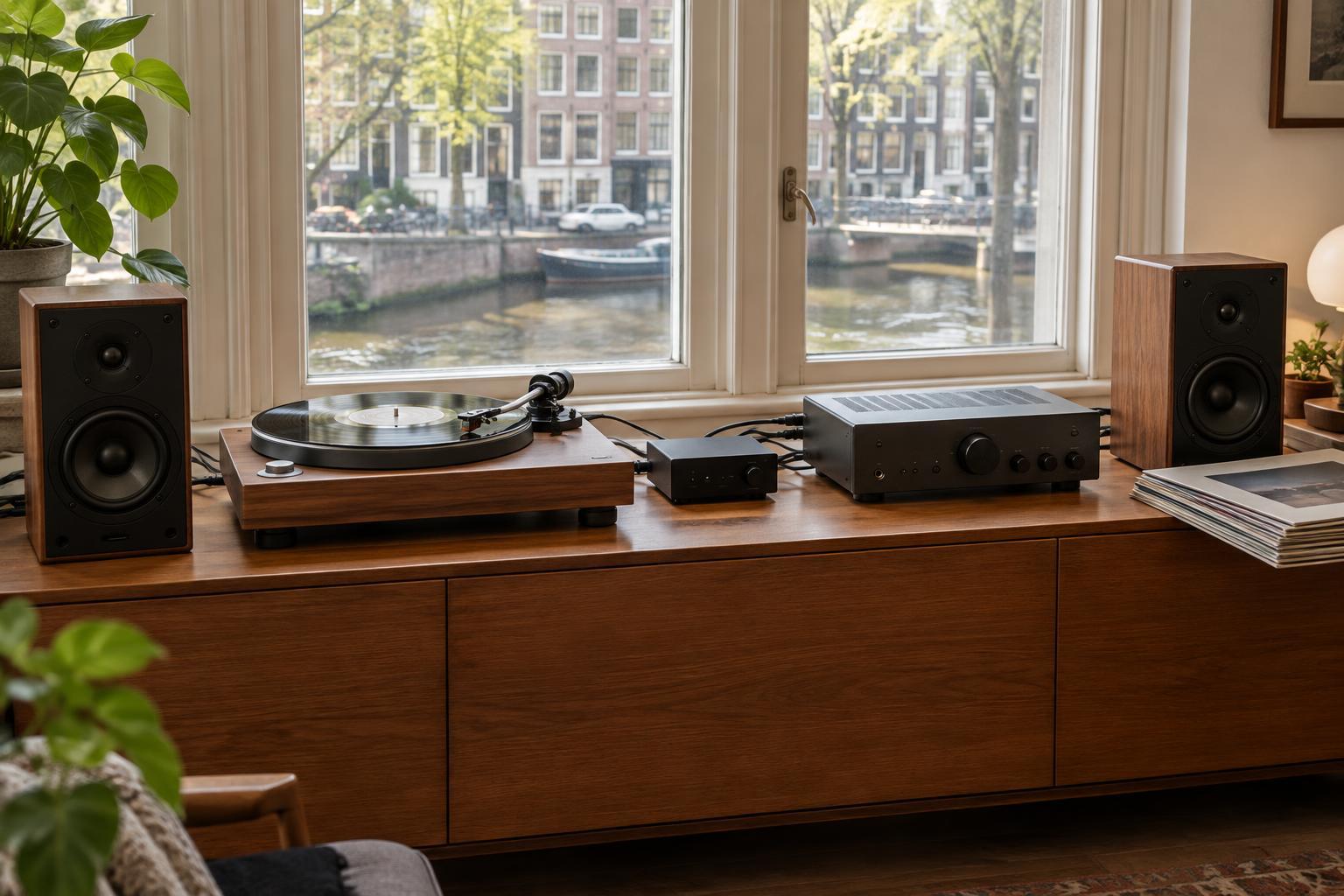
The rest of the system prepares that signal and makes it audible. A phono stage brings it up to a usable level and applies the correct playback equalization. An amplifier provides the power needed by passive speakers, or sends a volume-controlled signal to powered speakers, depending on the equipment. Once you know where each job happens, connecting a turntable becomes less about matching brand names and more about matching inputs and outputs.
The cartridge and the phono stage
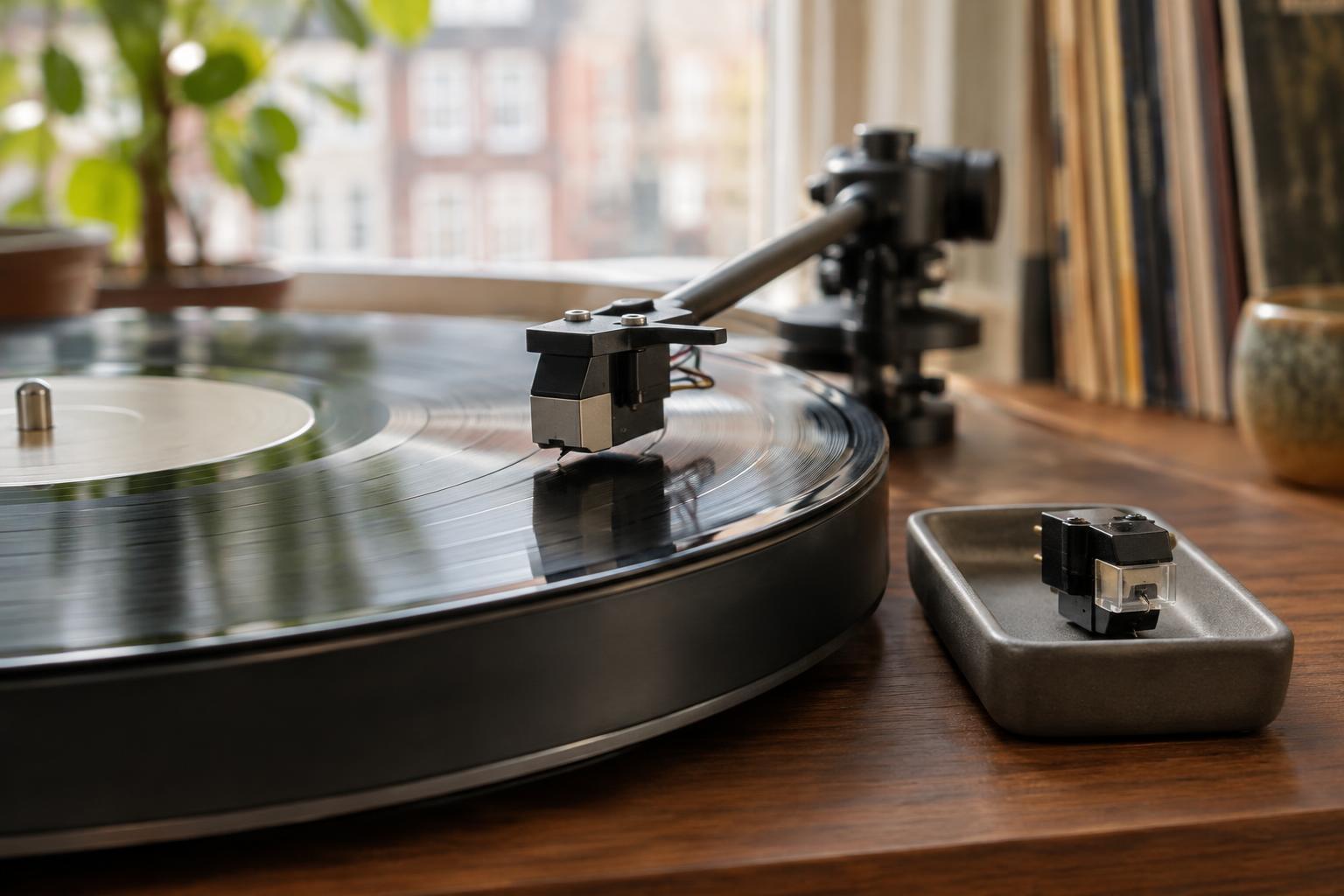
The stylus sits in the record groove; the cartridge turns its movement into an electrical signal. Many home turntables use a moving-magnet (MM) cartridge. Moving-coil (MC) cartridges also exist, but they may need a phono stage designed for their lower output and different loading requirements. If you are unsure which cartridge you have, check the turntable or cartridge documentation before choosing a phono input.
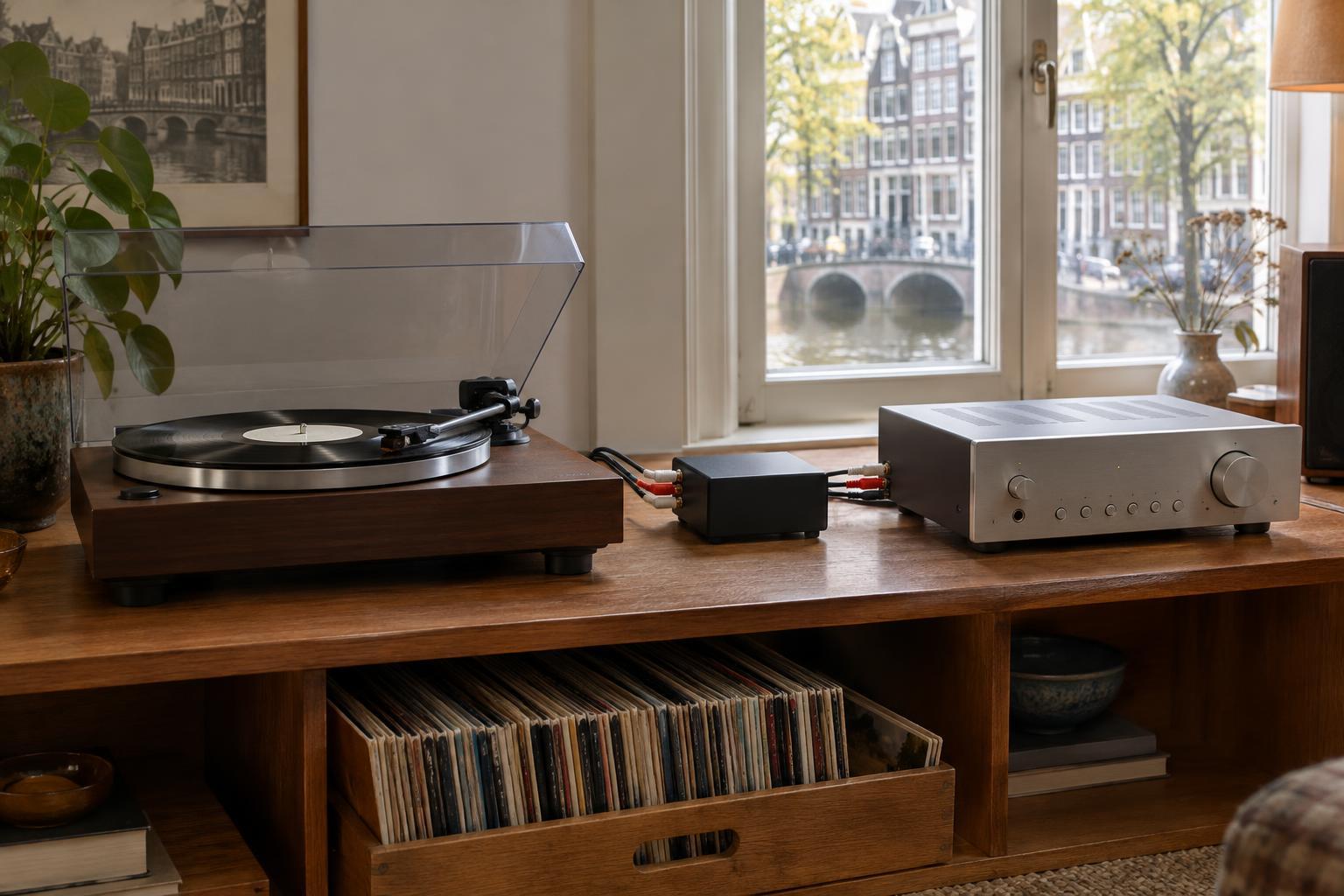
A phono stage is also called a phono preamp. Besides boosting the cartridge signal, it applies RIAA playback equalization, which restores the tonal balance of a record cut for vinyl playback. Without a phono stage, a turntable connected to a normal line-level input will typically sound quiet and thin. Some turntables have a built-in phono stage, while some integrated amplifiers and receivers have a PHONO input that contains one. A separate phono stage is another option. You generally need one active phono stage in the path, not two: sending the line output of a turntable’s built-in stage into another PHONO input can produce loud, distorted sound.
Choose the right route to your amplifier or speakers
With a traditional integrated amplifier and passive speakers, first check whether the amplifier has a PHONO input compatible with your cartridge. If it does, connect the turntable’s phono-level output there, then connect the amplifier’s speaker terminals to the passive speakers. If the amplifier has only line-level inputs labeled AUX, CD or LINE, place a separate phono stage between the turntable and one of those inputs. A turntable with a built-in phono stage can instead feed a line-level input directly, provided its output is set to LINE.
Powered speakers have their own amplifiers, so they do not need a separate power amplifier. They still need a suitable signal: use a turntable’s line output or put a phono stage between a phono-only turntable and the speakers’ line input. Check how you will control volume. Many powered speakers include a volume knob or remote, but if yours do not, you may need a compatible preamplifier or another way to adjust the line-level signal. Never connect an amplifier’s speaker-level outputs to a powered speaker’s line input.
Connect carefully and check for noise
Before plugging in cables, turn the system off and lower the volume. Connect the left and right audio channels to their matching inputs; on common RCA leads, red marks the right channel and white or black marks the left. If the turntable has a ground wire and the phono stage or amplifier offers a ground terminal, attach the wire there. This can help reduce mains hum. Keep phono cables reasonably short and avoid running them alongside power cables when practical, since the cartridge signal is small and more susceptible to interference.
If the system is silent, trace the route one component at a time. Confirm that the stylus is lowered onto a playing record, the correct input is selected, any PHONO/LINE switch is in the intended position, and powered components are switched on. Thin, quiet sound often points to a missing phono stage; unusually loud or distorted sound can mean the signal has passed through two. Hum may call for checking the ground connection and cable placement. Turn the volume down before changing connections or switches.
Make a simple system work well
You do not need an elaborate stack of equipment to enjoy a record. A turntable with a built-in phono stage and a pair of powered speakers can make a compact setup. A turntable, phono-equipped integrated amplifier and passive speakers offer another straightforward route. Either way, place the turntable on a stable, level surface away from strong speaker vibrations, and follow its instructions for tracking force and cartridge setup. Correct connections get the music playing; careful setup helps the stylus follow the groove as intended.