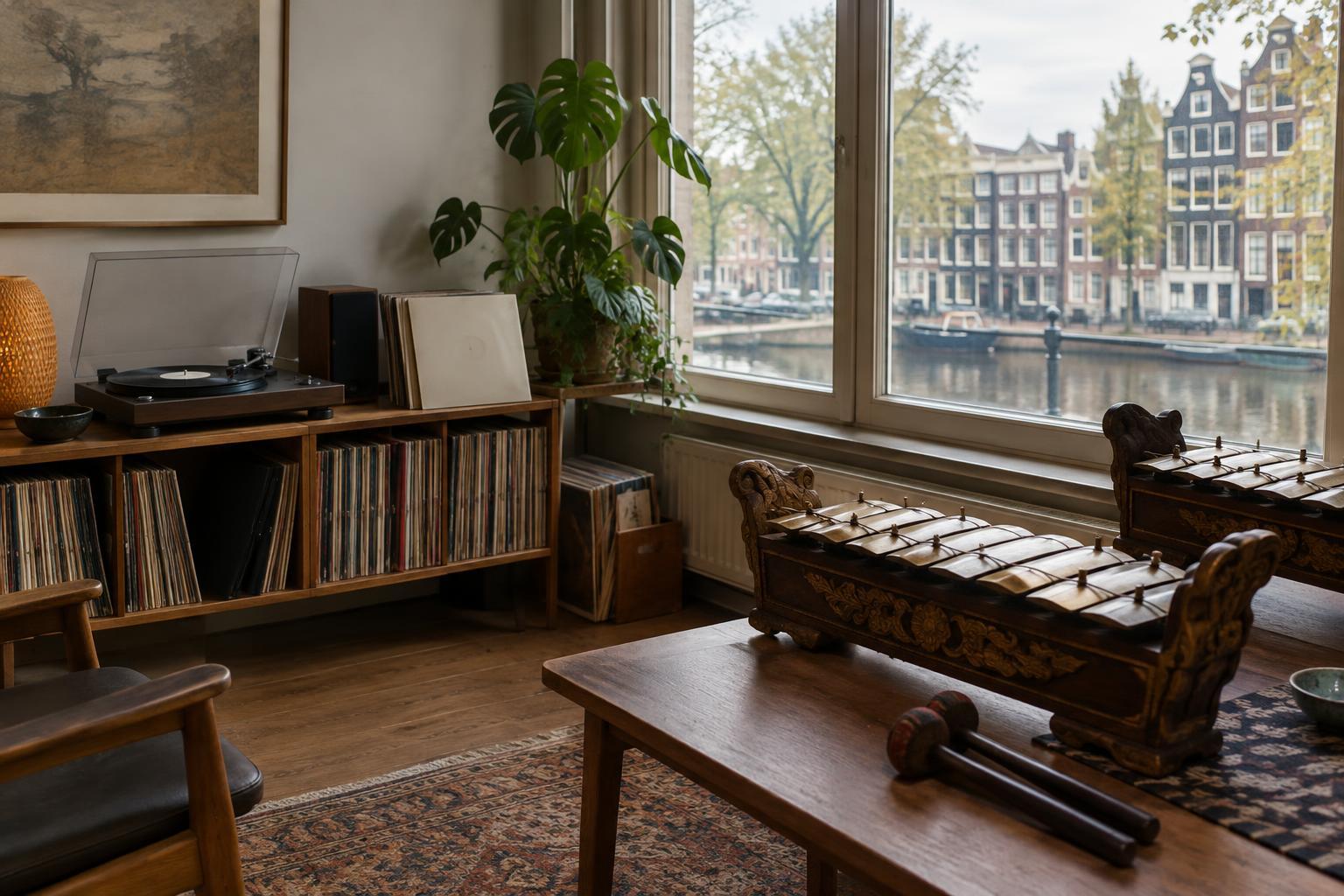
A connection carried by people
Surinamese music is not a single sound, and its place in Amsterdam cannot be explained by a single genre. The connection begins with people: families, musicians, DJs and listeners who have moved between Suriname and the Netherlands, brought recordings with them, made new ones and shared songs across generations. Amsterdam’s Surinamese communities have kept music present in homes, at celebrations and on dance floors, while also introducing it to listeners beyond those communities.
That movement has a longer history shaped by Dutch colonialism and migration. It is worth keeping that history in view without reducing the music to it. A record played in Amsterdam might carry memories of a gathering in Paramaribo, introduce a younger listener to a relative’s favourite singer or simply work as a great dance tune. Its meaning depends partly on who is listening and where.
Many traditions, many ways to move
Kaseko is one of the Surinamese styles a record collector may encounter. Often associated with energetic brass, percussion and dancing, it offers a useful starting point for hearing how musicians combine rhythmic drive with memorable melodies. Kawina draws particular attention to percussion, singing and the exchange between a lead voice and a group. Neither term describes every Surinamese record, and recordings within each style can differ considerably.
Suriname is home to multiple cultural traditions, including Afro-Surinamese, Hindustani, Javanese and Indigenous ones. Surinamese Hindustani music, for example, includes baithak gana, a social style of singing and instrumental performance. Other records may draw on Javanese musical practices or mix local and international popular styles. In an Amsterdam collection, these sounds may sit beside soul, jazz, reggae, disco or contemporary dance music. That proximity can invite comparison, but it should not flatten distinct traditions into one idea of a ‘Surinamese beat.’
From family collections to shared dance floors
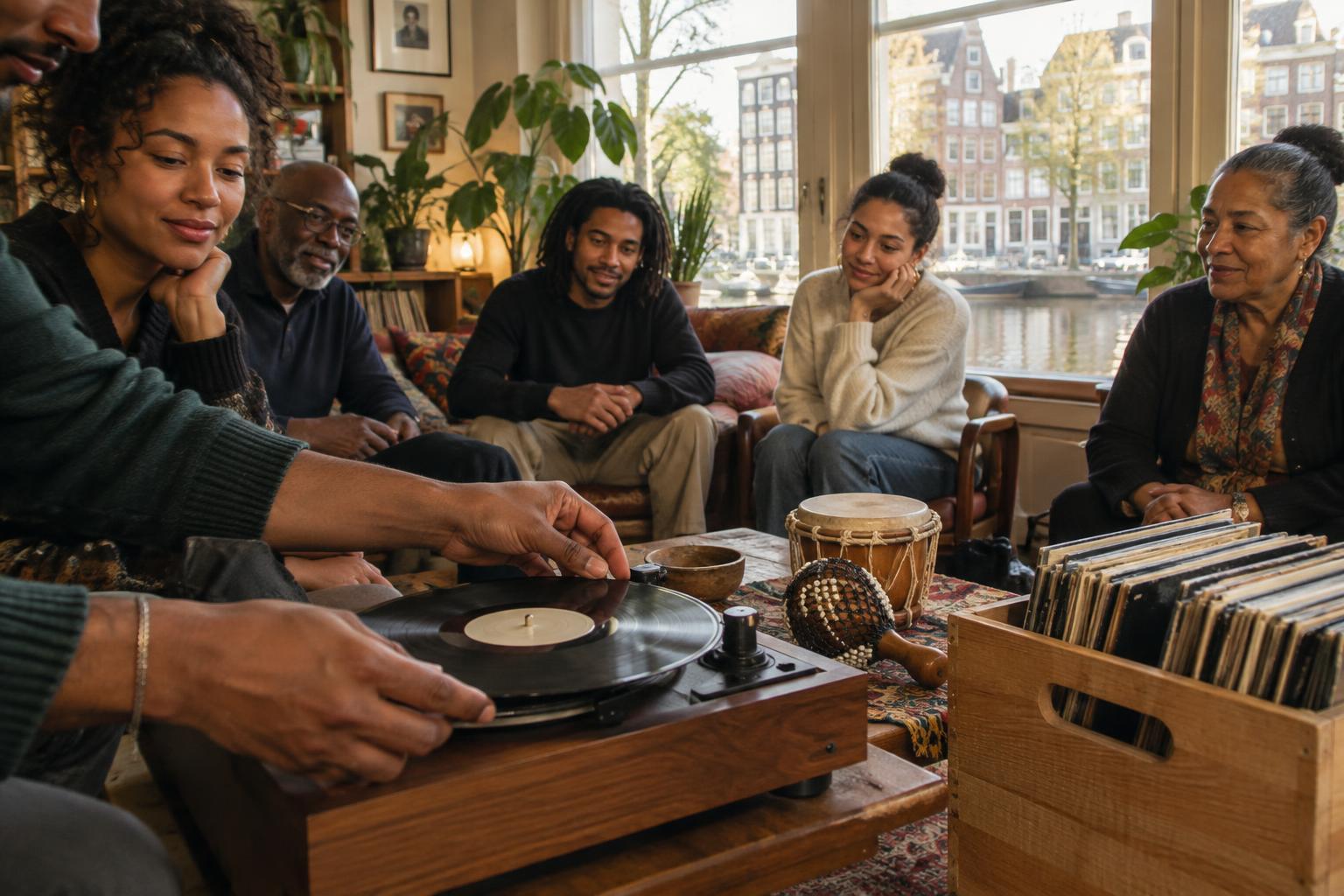
Records travel through ordinary relationships as much as through shops. Someone brings an LP from a family home, lends a single to a friend or plays a familiar song at a party. In this way, music can become part of a city’s shared vocabulary without losing its particular ties to language, community and occasion. For some Amsterdam listeners, a Surinamese record is a discovery; for others, it is a reminder of music they grew up hearing.
DJs and collectors also give recordings new contexts. A kaseko track placed among other dance records may reveal a rhythmic connection to a listener hearing it for the first time. A slower song can change the mood of a set and draw attention to its voice or arrangement. These choices help sounds circulate, though context matters: introducing a track thoughtfully is different from treating an unfamiliar tradition as an anonymous source of grooves.
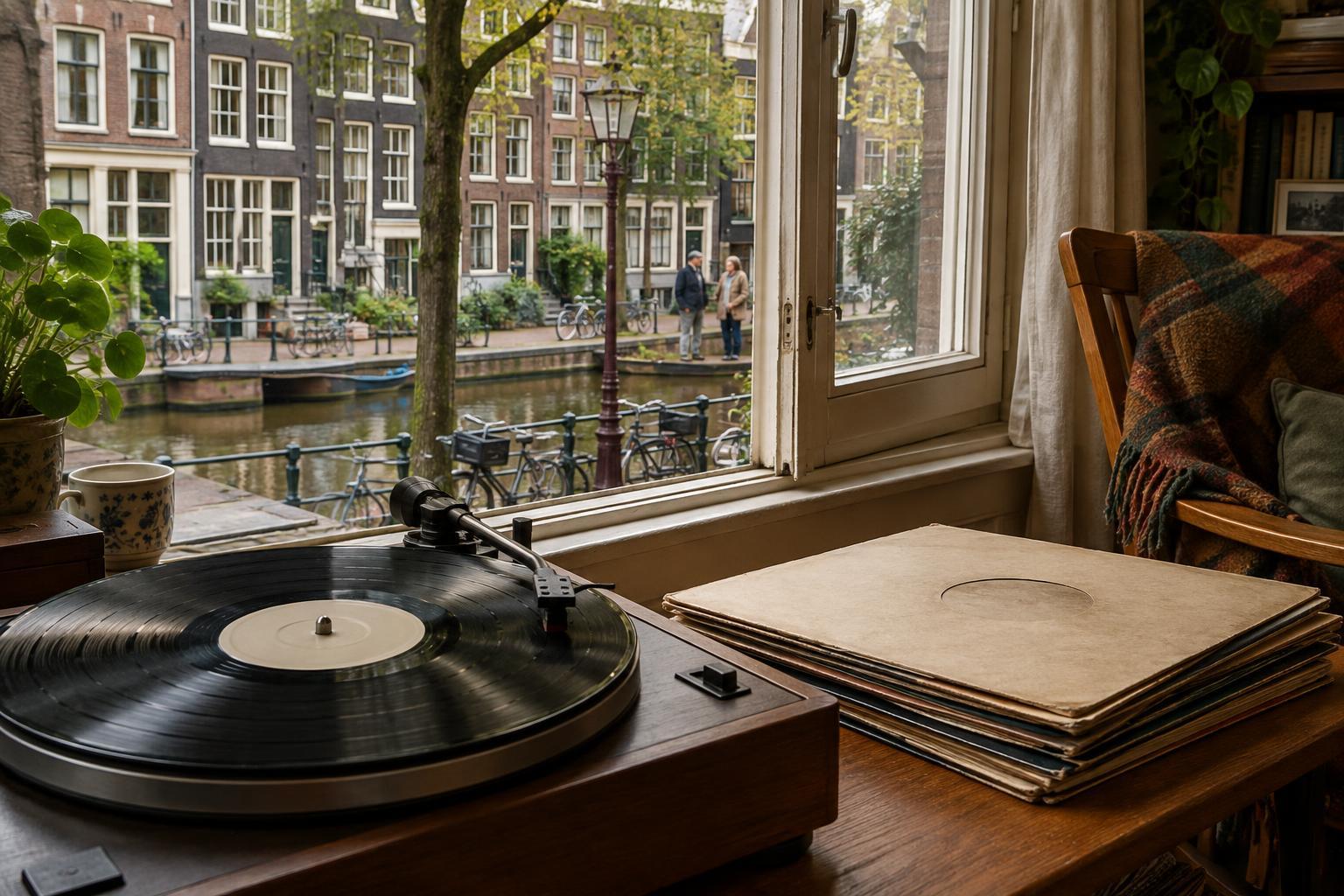
Vinyl makes some of these paths visible. A sleeve may show a label, musician credits or a note from a previous owner; its wear may suggest that the record was played often. Such clues can prompt questions, but they rarely tell a complete story. Asking what a record meant to the people who made and kept it is more rewarding than assuming its history from the cover alone.
How to listen—and collect—with care
If you are new to Surinamese music, start with the record itself. Listen for the relationship between percussion and melody, how voices answer one another and where an arrangement leaves room for dancing or storytelling. Compare different recordings rather than deciding that one track represents an entire genre. When credits are available, note performers, writers, arrangers and labels; those details can lead you toward a broader understanding of a scene.
Crate-digging in Amsterdam offers another opportunity to learn. Handle records carefully, ask sellers about unfamiliar titles without expecting them to provide a complete history and be open to recommendations that do not match a narrow search list. If you share a find, naming the artists and describing what you hear gives others a better path into the music than calling it an obscure curiosity.
Surinamese music has shaped Amsterdam’s sound not through one definitive record, but through sustained listening, making and sharing. Its presence is heard in personal collections and social spaces as well as in the musical connections people draw across genres. The best way to appreciate that influence is to follow those connections while remaining attentive to the many distinct voices behind them.