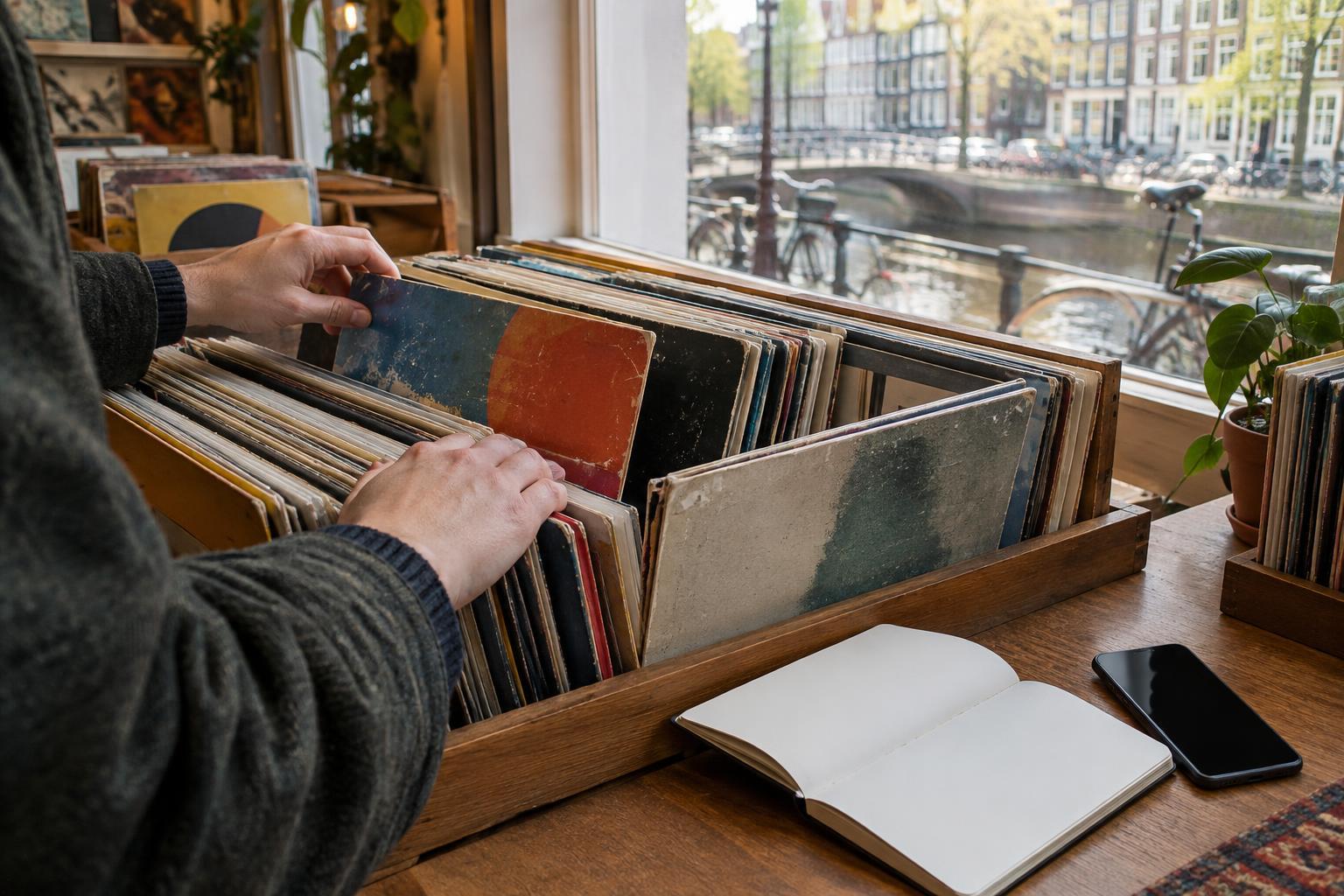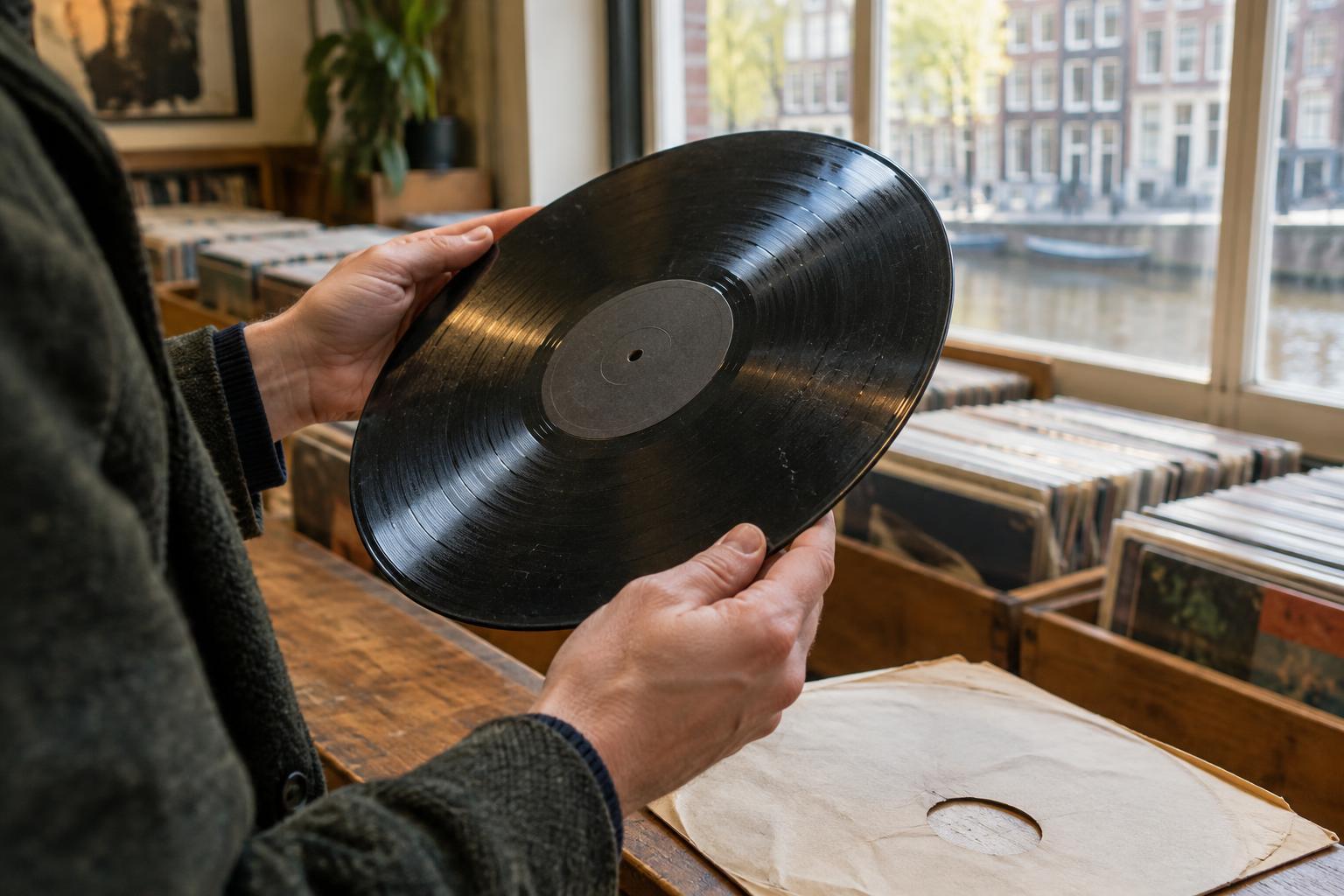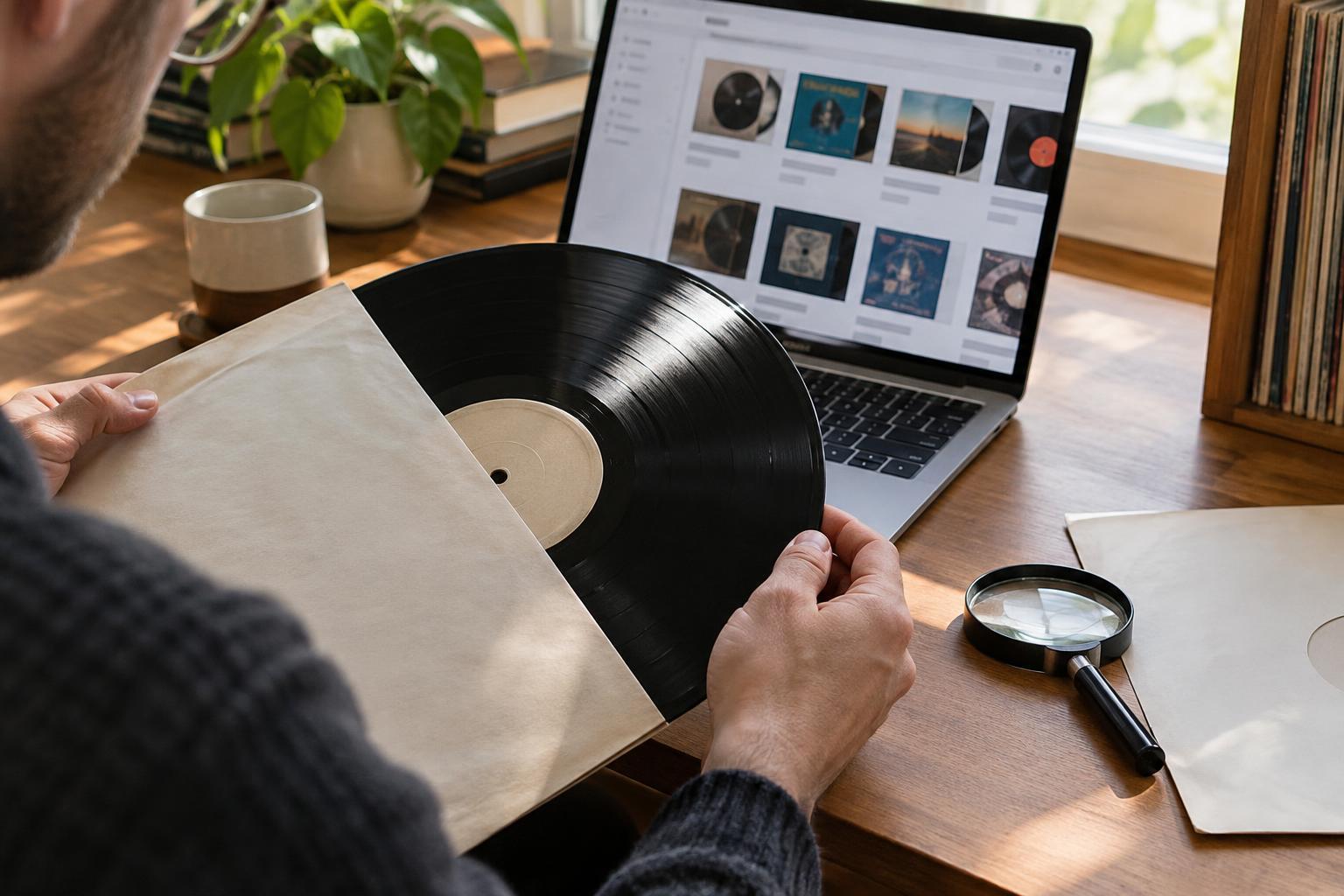
Confirm which record is actually for sale
Start with identification, not price. An album may have appeared in several countries and formats, with different mastering, artwork or track lists. Compare the listing’s artist, title, label, catalogue number and format with the version you want. Check whether it is a single LP, a multi-disc set, a 12-inch single or a reissue. A listing that names only the album may not tell you enough to make that distinction.
Photos can help, but a stock image may show a different edition. For a particular pressing, look for pictures of the actual front and back cover, centre labels and any inserts that matter to you. Runout markings—the letters and numbers etched or stamped near the label—can help distinguish versions that otherwise look alike. You do not need to decode every mark, but you can ask the seller to confirm one when the exact edition is the reason you are buying.
Read condition grades as a starting point
Condition grades are useful shorthand, not a guarantee of how a record will sound. Read any written notes alongside the grade. A description of light sleeve marks is more informative than a grade on its own; a note about a repeated click or a skip matters even more. Check whether the seller grades the disc and the sleeve separately, and whether the stated grade applies to every disc in a set.
Distinguish visual inspection from play testing. A record can look clean yet reveal noise during quiet passages, while some visible marks have little audible effect. If playback matters more to you than appearance, ask whether the record has been tested and whether any problem is audible on a specific track. For an expensive purchase, a short, clear answer about noise, warping or skips is worth more than an enthusiastic adjective.
The sleeve deserves its own inspection. Ring wear, seam splits, writing, stickers and damaged corners may be acceptable on a listening copy but disappointing on a collectible one. Original inner sleeves, posters and other inserts are not always included, even when the cover photo suggests they might be. Decide which details are essential to you before you contact the seller.
Use photos and questions to close the gaps
Look at what the photos show and what they leave out. Images taken at an angle under good light may reveal scuffs; glare or a distant shot can hide them. Check both sides of the disc if shown, along with the spine, edges and back of the sleeve. A visible defect is not automatically a reason to pass, but it should be reflected in the description and price.
When something important remains unclear, send a brief, specific question. Instead of asking, “Is it in good condition?”, try, “Is the mark across the first track audible?” or “Is the pictured sleeve the one being shipped?” Specific questions are easier to answer and give you a clearer basis for deciding. If a seller cannot verify a detail, treat it as unknown rather than assuming the best.
Check the full cost and delivery terms
The asking price is only part of the decision. Review postage, any applicable taxes or import charges, and the total you will pay. If the record is coming from another country, check whether the delivery method and possible extra costs still make the purchase worthwhile. Read the seller’s policy for damage, inaccurate descriptions and returns before ordering, especially when a listing is marked as final sale.
Packaging matters because a well-graded record can arrive damaged. Look for a stated plan to use a sturdy record mailer with appropriate padding. Many collectors prefer the disc placed outside its outer sleeve, in an inner sleeve, to reduce the chance of a seam split during transit; you can request this if the seller has not specified how it will be packed. Ask whether tracking or insurance is available when the value makes those options important to you.
Make the decision you will be happy with
Before ordering, reduce the listing to a few questions: Is this the version I want? Do I understand the likely condition of both record and sleeve? Are the missing details acceptable? Do the total cost and seller terms suit the risk? If one answer is no, keep looking or ask for clarification. Scarcity can make an incomplete listing feel urgent, but a record you cannot identify or assess is still a gamble.
Keep a copy of the listing description and any messages about condition or packaging until the record arrives. When you open it, compare what you received with those details and inspect it promptly. A careful pre-order check cannot eliminate every surprise, but it helps you buy for the qualities you value—whether that is a clean listening copy, complete artwork or one particular pressing.