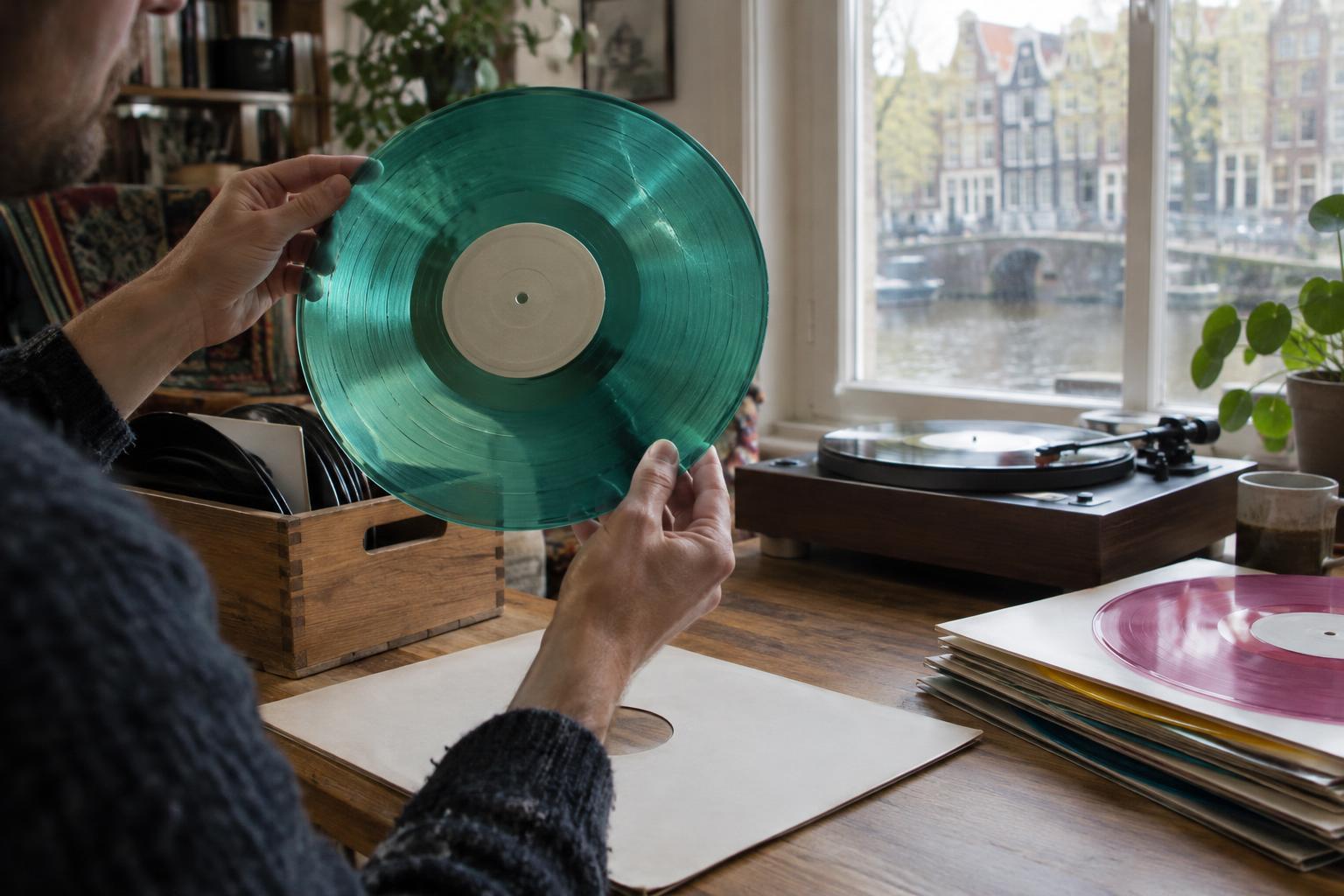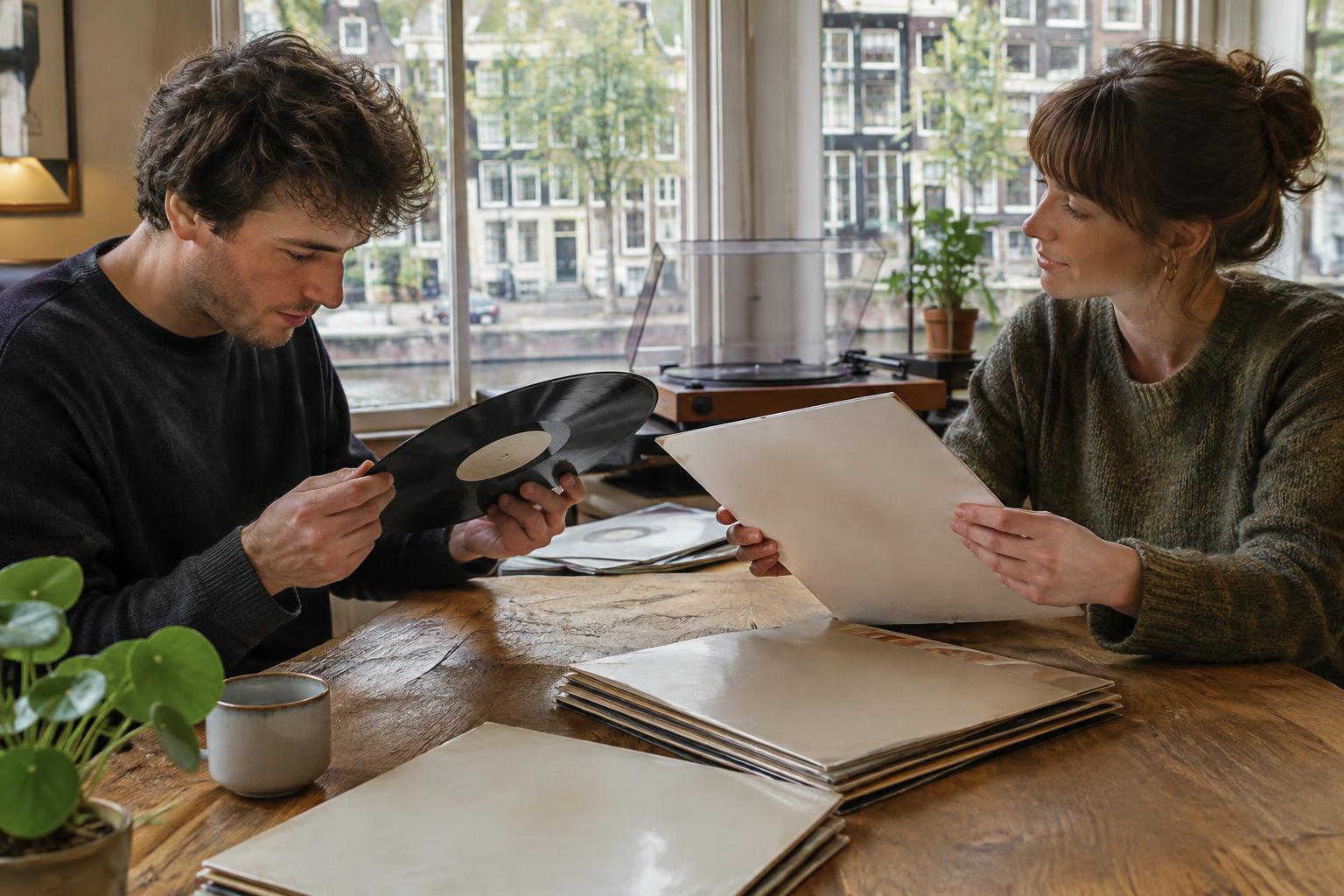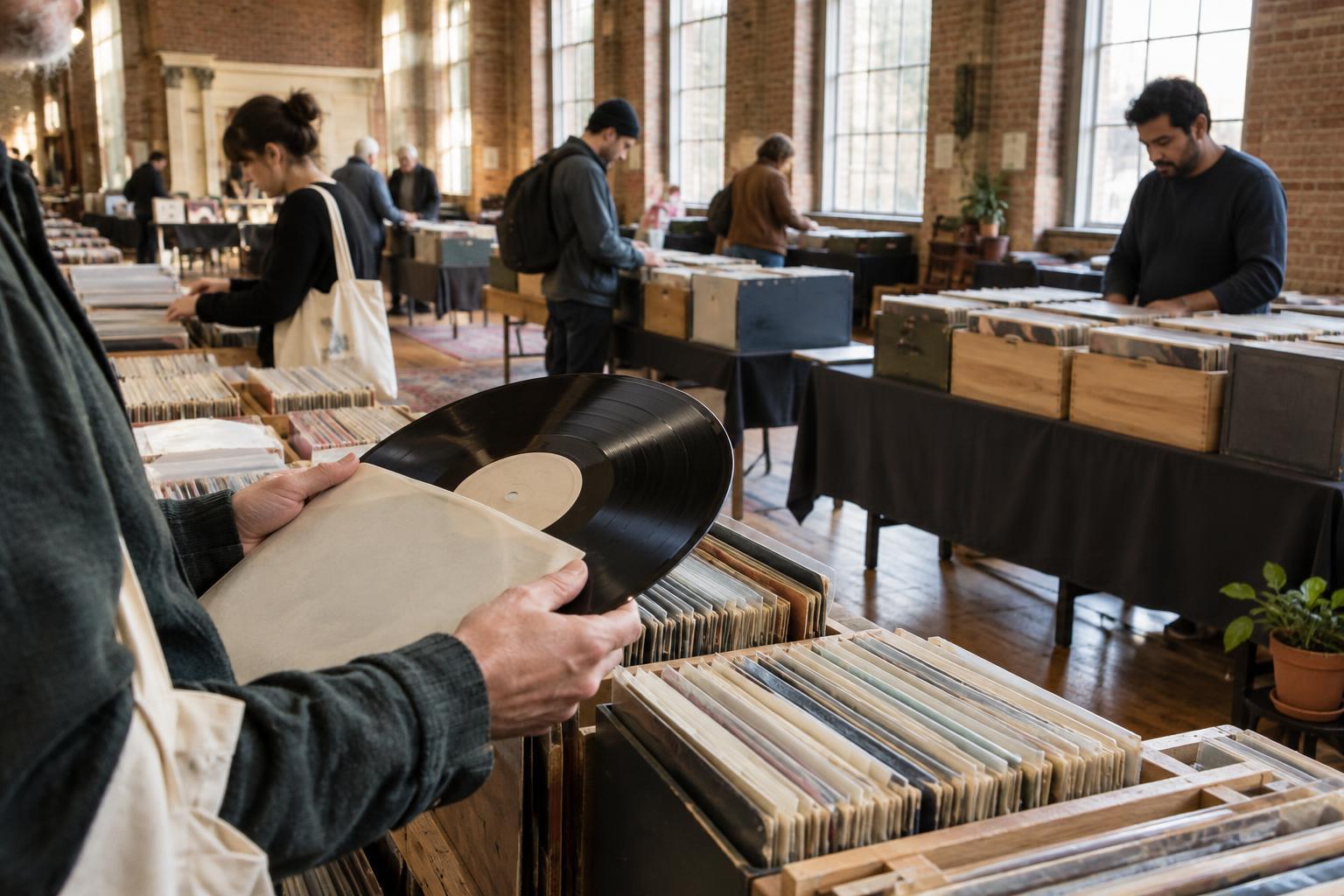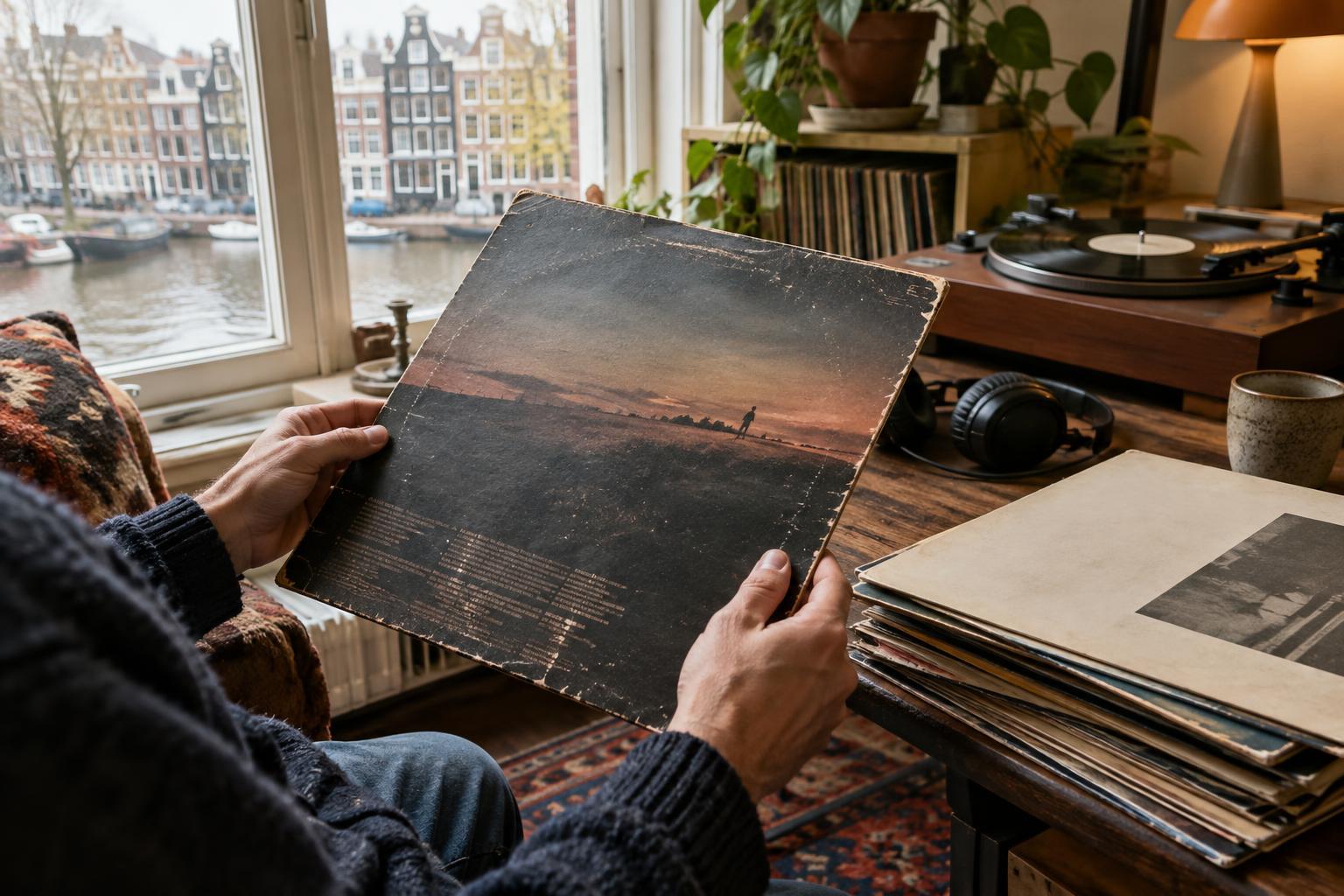
Start with a question, not a genre
Buying outside your usual tastes does not have to mean picking a record at random. Before you enter a shop or open a sale listing, choose one thing you would like to hear more of: an instrument, a rhythm, a production style or a mood. A listener who loves the spaciousness of ambient music, for example, might look for that quality in a jazz or electronic record rather than trying to embrace an entire new genre at once.
This gives you a reason to explore without making your taste a rulebook. Write down two or three qualities you enjoy and one you are curious about. “Warm vocals, patient arrangements, unfamiliar percussion” is more useful in a crate than “anything good.” You can still take a chance on an unexpected find, but you will have a way to decide whether it is a chance you actually want to take.
Read the sleeve for clues, not conclusions
Cover art can draw you in, but the back cover and labels often give you better questions to ask. Look for instruments, performers, producers, recording details and track lengths, where those details are provided. A long track may suggest room for an extended performance, though it cannot tell you how that performance will sound. Credits can also reveal a musician whose work you already know in a different setting.
Treat every clue as a lead rather than a guarantee. A familiar label may have released music across several styles, and an intriguing instrument credit does not mean that instrument dominates the record. If you notice a name or label appearing on several records that interest you, make a note of it. Over time, those connections can give you more reliable routes into unfamiliar shelves than sleeve design alone.
Listen with a small test in mind
If a shop offers a listening station, ask how to use it and follow its rules. Instead of dropping the needle briefly on every track, try listening long enough to hear how one piece develops. Then check a contrasting track if you can. Ask yourself whether the sound you came for is present, and whether something you did not expect makes you want to hear more. A short sample cannot settle every question, but it can help you make a more deliberate choice.
If listening is not possible, say so to yourself rather than filling the gap with certainty. A staff recommendation or a seller’s description may be helpful, especially if you explain what you like and what you hope to discover. Ask a specific question such as “Is this mostly voice-led or instrumental?” You are more likely to get a useful answer than if you ask whether a record is simply good.
Separate musical risk from condition risk
Trying a new sound is one gamble; buying a copy you may not enjoy playing is another. Check the record and sleeve under the available light, and read any condition description carefully. Visible marks do not always tell you exactly how a record will play, while a tidy-looking disc is not a promise of quiet playback. If condition matters to you, ask about returns or whether you can hear the copy before buying.
Set a modest discovery budget before you browse. It might cover one unfamiliar record alongside something you know you want. That limit makes it easier to enjoy an experiment without expecting every purchase to become a favourite. If you are comparing several copies, return them to the right places and leave listening equipment ready for the next person. Consideration for other crate-diggers helps keep browsing pleasant for everyone.
Give the record a second chance at home
A brief shop listen and a full side at home are different experiences. Once you have bought a record, play it in a setting where you can pay attention, then notice what held your interest: perhaps a bass line, an arrangement or the way one track leads into the next. If you keep a collecting notebook, a few words are enough. Record what you heard, not just the genre printed on the sleeve.
An unsuccessful experiment is useful too. You might learn that you enjoy a particular instrument but not a certain vocal style, or that the track you sampled was unlike the rest of the album. Those observations can guide your next search without closing off a whole category of music. The aim is not to become an expert on every shelf. It is to build a collection that leaves room for curiosity as well as old favourites.