Start with the question your catalog should answer
A catalog is most useful when it solves a problem you actually have. Perhaps you want to avoid buying the same record twice, find a particular pressing, remember which sleeves need replacing, or choose something to play without scanning every shelf. Pick one or two of those aims before choosing a tool. A simple list you keep updated will serve you better than an elaborate database you abandon after twenty records.
Begin with a small batch: one shelf, one genre, or your most-played records. Enter them, then try using the catalog to find an album or check whether you own a release. That test will reveal missing fields faster than designing a perfect template in advance. You can add detail later without having to finish the entire collection first.
Choose a spreadsheet or an app you will keep using
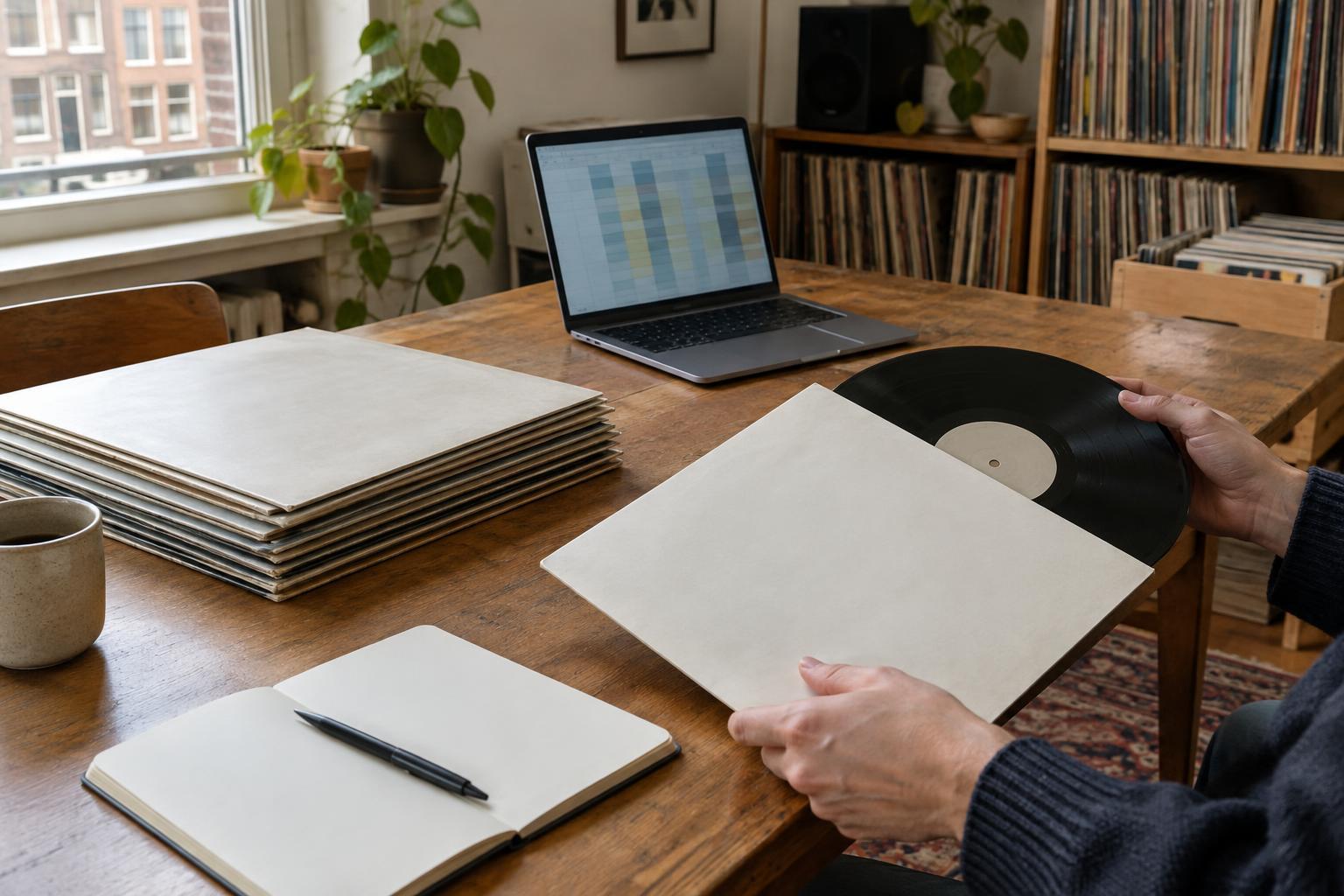
A spreadsheet offers control. You can name your own columns, sort by artist or storage location, and keep a local copy. It is particularly handy if you want to track personal notes, such as where a record sits on your shelves. The trade-off is manual entry: you will need to type or check most details yourself, especially when two editions share similar artwork.
A dedicated collection app may make adding releases quicker through its search tools and existing release entries. It may also be convenient while browsing records away from home. Before committing, check whether you can export your entries in a usable format and whether the app lets you correct or supplement its data. An app’s suggested match is a starting point, not proof that you own that exact pressing. Either option works; the best choice is the one that fits how you shop, listen and maintain records.
Record the essentials before chasing pressing details
For each item, start with artist, title, format, catalog number and a location code that makes sense in your room. Label and release year can help distinguish editions, but leave a field blank if you are unsure rather than guessing. If you own multiple copies, give each physical copy its own row or entry. That lets you note that one has a clean sleeve while another is your everyday listening copy.
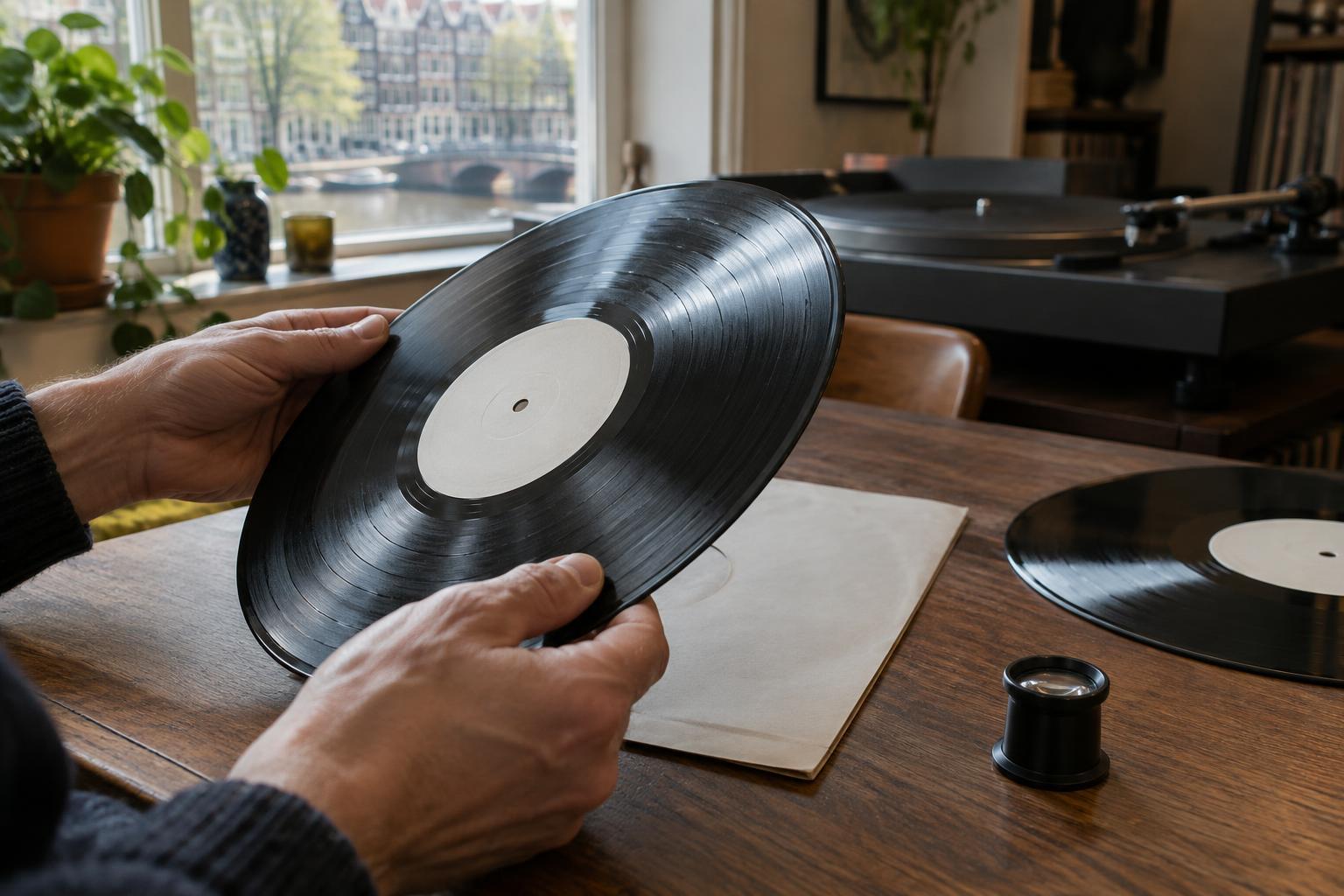
When identifying an edition matters to you, add the country, barcode if present, and the markings etched or stamped near the label in the runout area. These details can help separate pressings with similar covers and catalog numbers. Transcribe what you can read, and mark uncertain characters as uncertain. You do not need this level of detail for every record on day one: prioritize duplicates, unusual finds and releases whose versions are easy to confuse.
A useful template might contain: artist, title, label, catalog number, format, edition notes, media condition, sleeve condition, shelf location and personal notes. Add purchase price or source only if you expect to use that information. More columns are not automatically more useful.
Make condition notes specific and personal
Condition is easier to understand when a brief description accompanies any grade. “Light sleeve marks; plays quietly after cleaning” tells your future self more than a single letter or number. Keep the record and its sleeve in separate fields, since they often age differently. If you have not played a record recently, distinguish a visual inspection from a listening note instead of presenting the two as equivalent.
Personal notes can also capture what a standard release entry cannot: a favorite track, a missing insert, a replacement inner sleeve, or a reminder to clean a dusty copy. A shelf location is especially valuable if your collection is divided by genre or spread across several rooms. Use short, consistent terms so entries remain easy to filter.
Build a routine that survives the next crate-digging trip
Decide when new arrivals enter the catalog. Logging a record before shelving it is straightforward, but a small “to catalog” pile can work if you clear it regularly. When you bring home several records from an Amsterdam digging afternoon, enter the basic fields first; inspect runouts or write listening notes later. Separating those tasks keeps a backlog from feeling like an all-or-nothing project.
Review your entries occasionally for duplicates, inconsistent artist names and records whose shelf locations have changed. If you use a spreadsheet, save a second copy somewhere separate from your main device. If you use an app, export a backup when the option is available. The goal is not a flawless archive. It is a dependable map of the records you own, the editions you care about and the music you want to hear again.