What a turntable mat actually does
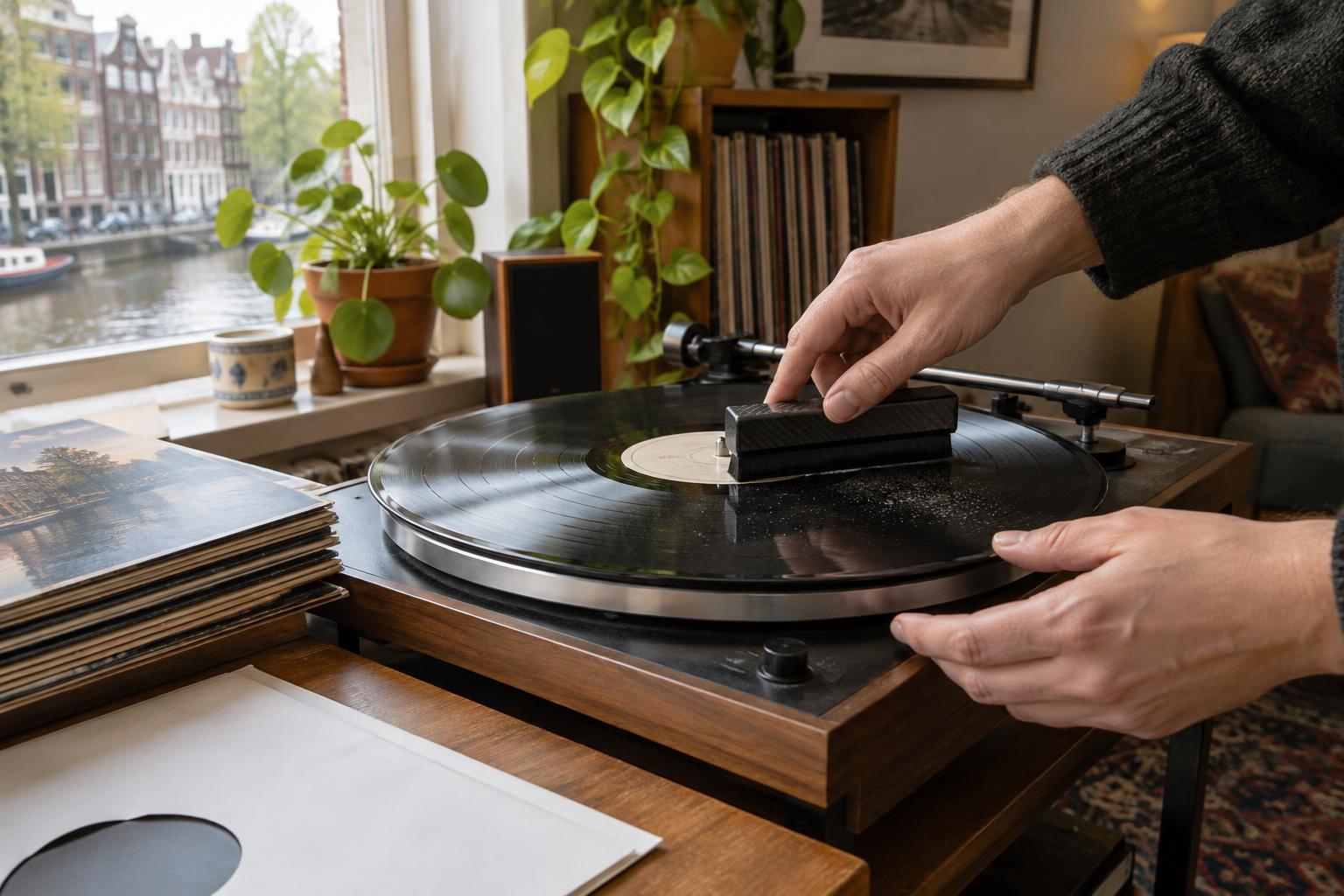
A turntable mat gives a record a surface to rest on while the platter rotates. It also helps separate the record from the platter’s material. Mats are often marketed as dramatic sound upgrades, but their most useful differences may be practical: how securely a record sits, how easily it lifts off, and whether the mat attracts dust or static.
Start with the mat supplied with your turntable, if you have it. It was likely chosen to work with that platter and the intended height of the tonearm. A replacement can be worthwhile if the original is damaged, missing or inconvenient to use. You do not need to replace a mat simply because another material is described as more detailed or warmer; those descriptions are subjective and can be hard to separate from other changes in a listening setup.
Felt, rubber and cork in daily use
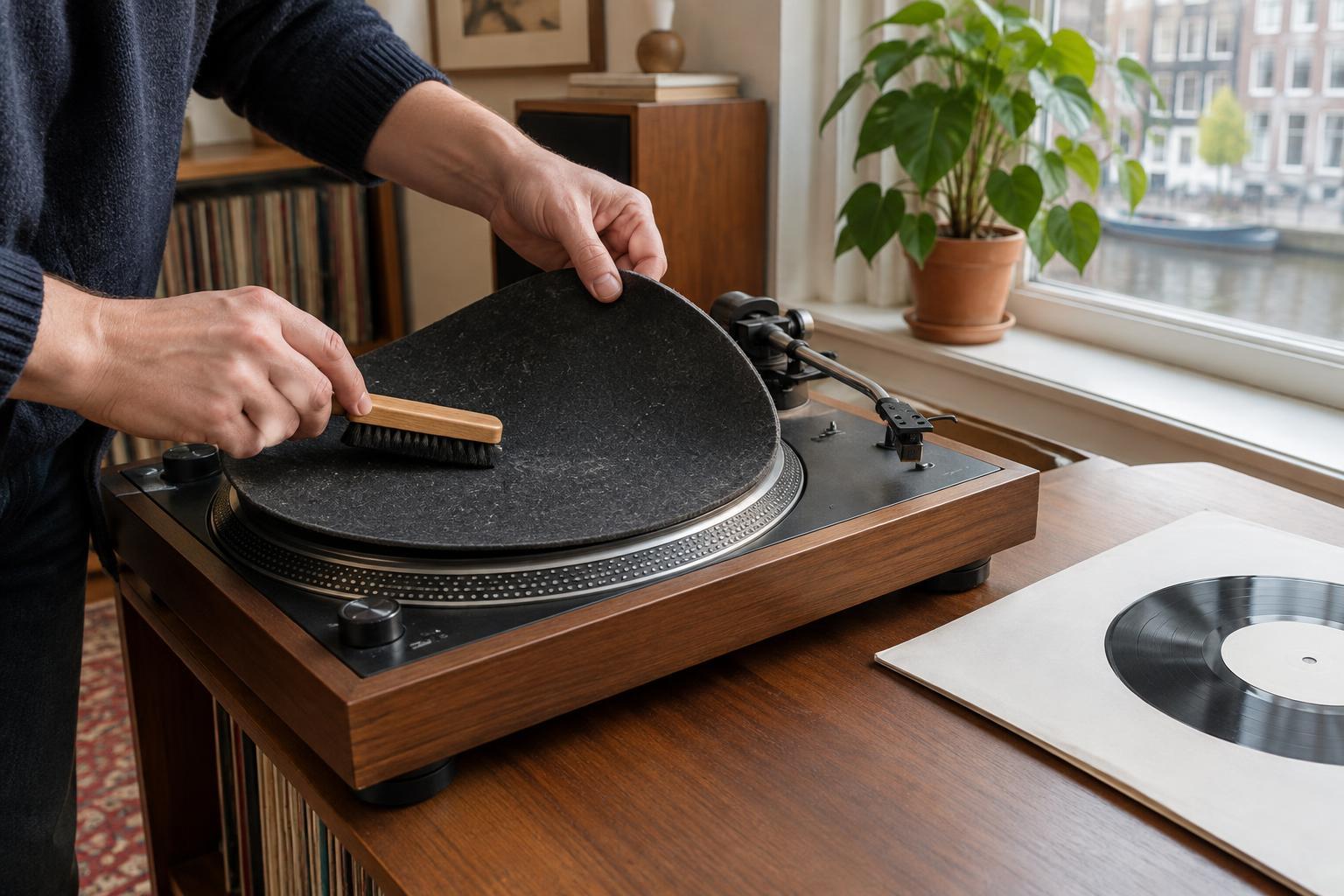
Felt mats are light and easy to lift. They are common on turntables used for cueing and handling records frequently. Their drawback is that they can cling to a record as you remove it, particularly when static is present. If this happens, pause before lifting the record fully so the mat does not come along with it. Keep felt clean and flat rather than brushing loose fibres toward the record.
Rubber mats tend to grip both the platter and the record more firmly. Many are easy to wipe free of visible dust and do not lift with the record as readily as a lightweight mat. Check the condition of an older rubber mat before relying on it: if it has become brittle, warped or sticky, replacement is more useful than trying to preserve it indefinitely.
Cork mats are another option, often chosen by listeners who want a light mat that stays relatively flat. Surface finishes and thicknesses vary, so the word “cork” alone does not tell you how a particular mat will behave. Whatever the material, a clean, flat mat that fits your platter is a better starting point than a promised sonic transformation.
Check fit and height before changing mats
Measure or compare the replacement against the original before setting it on the platter. It should sit flat without covering controls, rubbing against nearby parts or extending awkwardly beyond the platter. Its centre hole should fit over the spindle without bunching up. If your platter has a recessed area or raised features, make sure the mat has support across its surface rather than rocking when you place a record on it.
Thickness matters as well as diameter. A substantially thicker or thinner mat changes the height at which the record meets the stylus. Some turntables allow tonearm-height adjustment; many do not. If yours does not, a mat close in thickness to the original is the simplest choice. Avoid stacking mats as a quick fix unless you can confirm that the stack lies flat and leaves the tonearm operating as intended.
After a change, play a familiar, clean record and watch the turntable as it runs. The mat should remain still relative to the platter, and the record should lie as flat as it normally does. If something looks or sounds wrong, return to the original setup while you check the fit. Change one component at a time so you can tell what made a difference.
Make the choice fit your listening routine
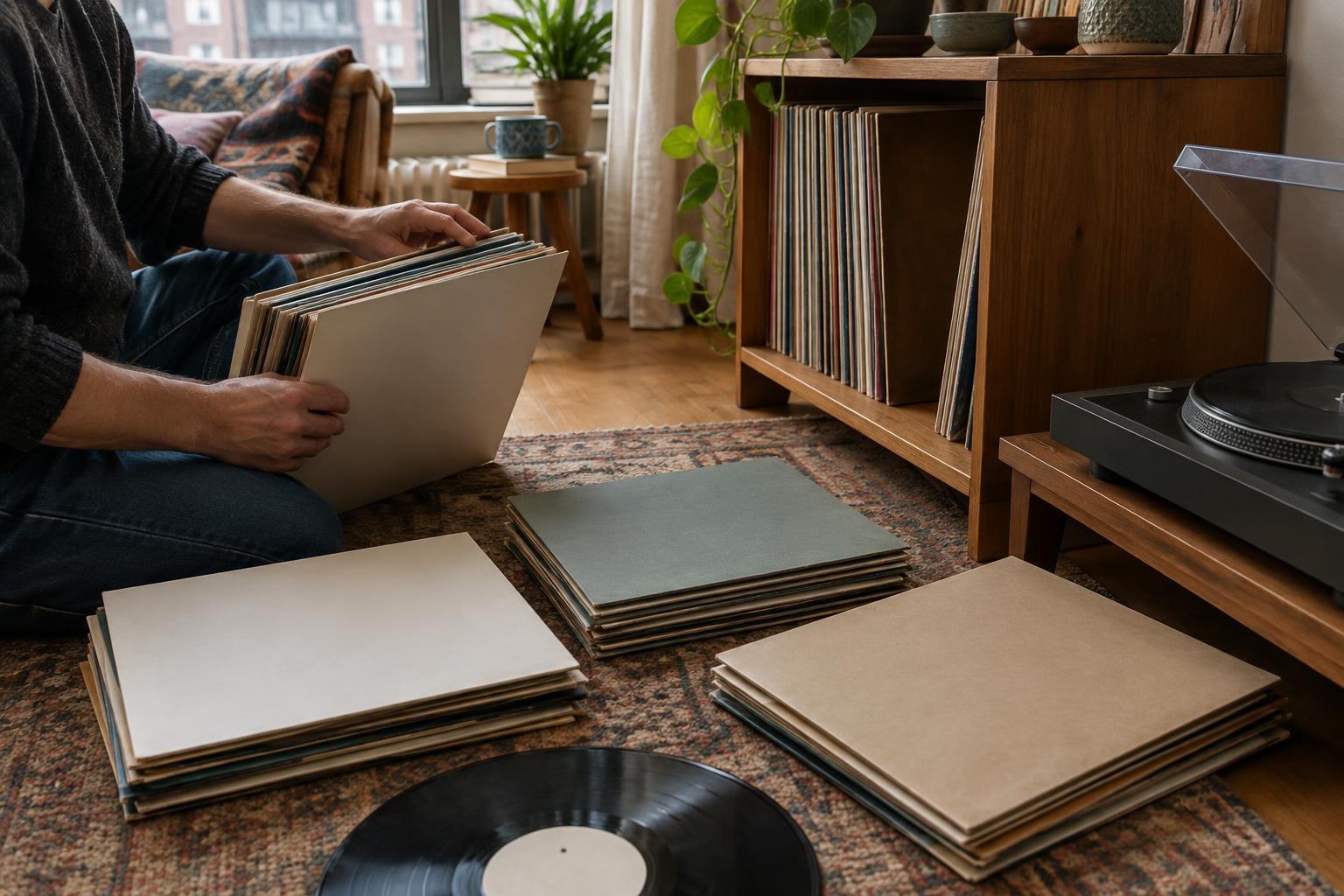
The best mat for home listening is usually the one you can use consistently without fuss. If records lift a felt mat every time you change sides, trying a different material may make handling easier. If your current mat stays flat, keeps records steady and causes no problems, there may be little reason to change it. Store any spare mat flat and away from dust so you can return to it if needed.
A record-listening session can also be an easy shared activity: let each person choose a side, make room to sit comfortably and show newcomers how to handle a record by its edges. For more ideas for time together beyond the turntable, browse Family Activities · Queens Family Journal. If you are looking for broader family reading after your listening session, explore Queens Family Journal.
Treat mat choice as a small part of a reliable setup, not a test of how seriously you listen. Correct turntable setup, careful record handling and a comfortable place to hear the music will generally give you more to work with than repeatedly swapping accessories in search of an uncertain improvement.