Why the mat deserves a look
Record care does not end when a disc goes into a clean inner sleeve. Each time you play it, one side rests on the turntable mat. Loose dust, lint or grit on that surface can transfer to the record, including a side you cleaned moments earlier. The mat is worth checking as part of your listening routine, especially if you often leave the platter uncovered.
You do not need to clean a mat after every play. Look at it under ordinary room light before putting on a record. If you can see loose particles, remove them first. If you regularly find dust on the underside of records after playback, the mat and the area around the platter are sensible places to check.
Start with a gentle dry clean
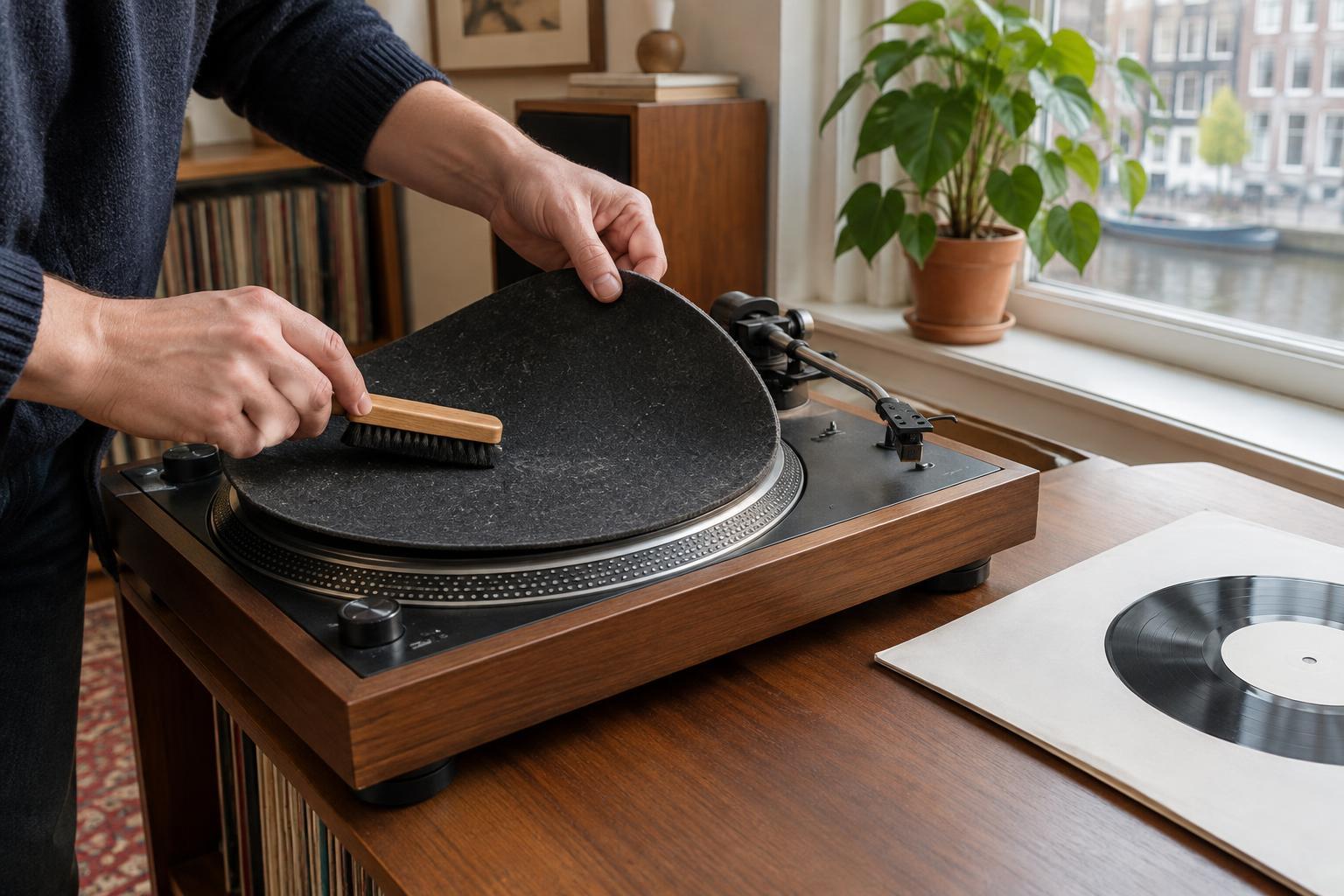
Stop the turntable and remove the record before touching the mat. If the mat lifts off easily, take it away from the tonearm and cartridge so that dislodged dust does not settle there. Hold it by the edges and inspect both sides; debris beneath a mat can keep it from lying flat.
For most mats, begin with a clean, soft brush or a low-lint cloth used lightly. Brush particles away rather than grinding them into the surface. A removable felt mat may release loose dust with a gentle shake in a suitable spot away from your records. Avoid vigorous rubbing: it can leave fibres looking rough and may create static. Do not use adhesive tape or a sticky roller unless the mat maker recommends it, because adhesive residue can be difficult to spot and remove.
Wipe the exposed platter surface with a suitable dry cloth before replacing the mat. Keep the cloth clear of the spindle, belt and other moving parts. If dust quickly returns, check nearby surfaces and where you set down sleeves during a listening session; cleaning the mat alone may not address the source.
Match the method to the material
Felt, rubber and cork do not respond to moisture in the same way. Felt can trap lint and may take time to dry if soaked. Cork can shed or change shape if it gets too wet, depending on how it is made. Rubber mats are often easier to wipe, but their finish and any attached layers still matter. If you have care instructions for your mat, use those before trying a general method.
When dry cleaning is not enough, a removable, plain rubber mat may be wiped with a cloth lightly dampened with water. Use little moisture, keep liquid away from the turntable itself and let both sides dry completely before putting the mat back. Do not assume that a felt, cork, leather or composite mat can be washed. If its material or construction is unclear, stick to dry cleaning until you can confirm a suitable method.
Skip household sprays, oils and strong solvents. Even if they make a mat look cleaner, they may leave residue that touches a record or affect the mat’s surface. Never put a damp mat under a record to finish drying.
Check for wear as well as dust
Cleaning cannot fix every mat problem. Watch for shedding fibres, crumbling edges, a tacky surface or a mat that no longer sits flat. Loose pieces can end up on records; uneven support may make playback less reliable. If the mat has changed noticeably, replacement may be more useful than repeated cleaning.
When choosing a replacement, check that it fits the platter and does not interfere with the spindle or the turntable’s operation. Mat thickness can affect the height at which a record sits, so it is worth checking the turntable’s guidance before switching to a substantially thicker or thinner design. There is no need to change a sound, clean mat just because another material is available.
Keep the platter area ready for the next record
A simple habit is to glance at the mat whenever you change sides, then remove any visible debris before lowering the next record. Use the turntable’s dust cover when it is not in use, if it has one, and avoid placing jackets or used cleaning cloths on the platter. Handle records by their edges and label so that a clean mat meets a reasonably clean disc.
If a record repeatedly comes off the platter dusty, inspect its inner sleeve too. Dust can move between the sleeve, the record and the mat, making it hard to identify one culprit. Checking all three is more useful than cleaning the same record again without looking at what it touches.