Decide what you want your shelves to do
Editing a record collection is not the same as reducing it to a fixed number. The useful question is whether your shelves make it easy to find and play music you care about. A record might earn its place because you listen to it often, because it represents a sound you want to explore, or because it holds a meaningful memory. You do not need to apply the same reason to every album.
Before pulling records out, name the problem you are trying to solve. Perhaps the shelves are full, purchases are hard to find, or you have several versions of albums you rarely play. A clear goal prevents a tidy-up from turning into a rushed clear-out. If space is the issue, decide roughly how much room you want to free; if finding music is the issue, reorganizing may help more than removing anything.
Sort by certainty, not by resale value
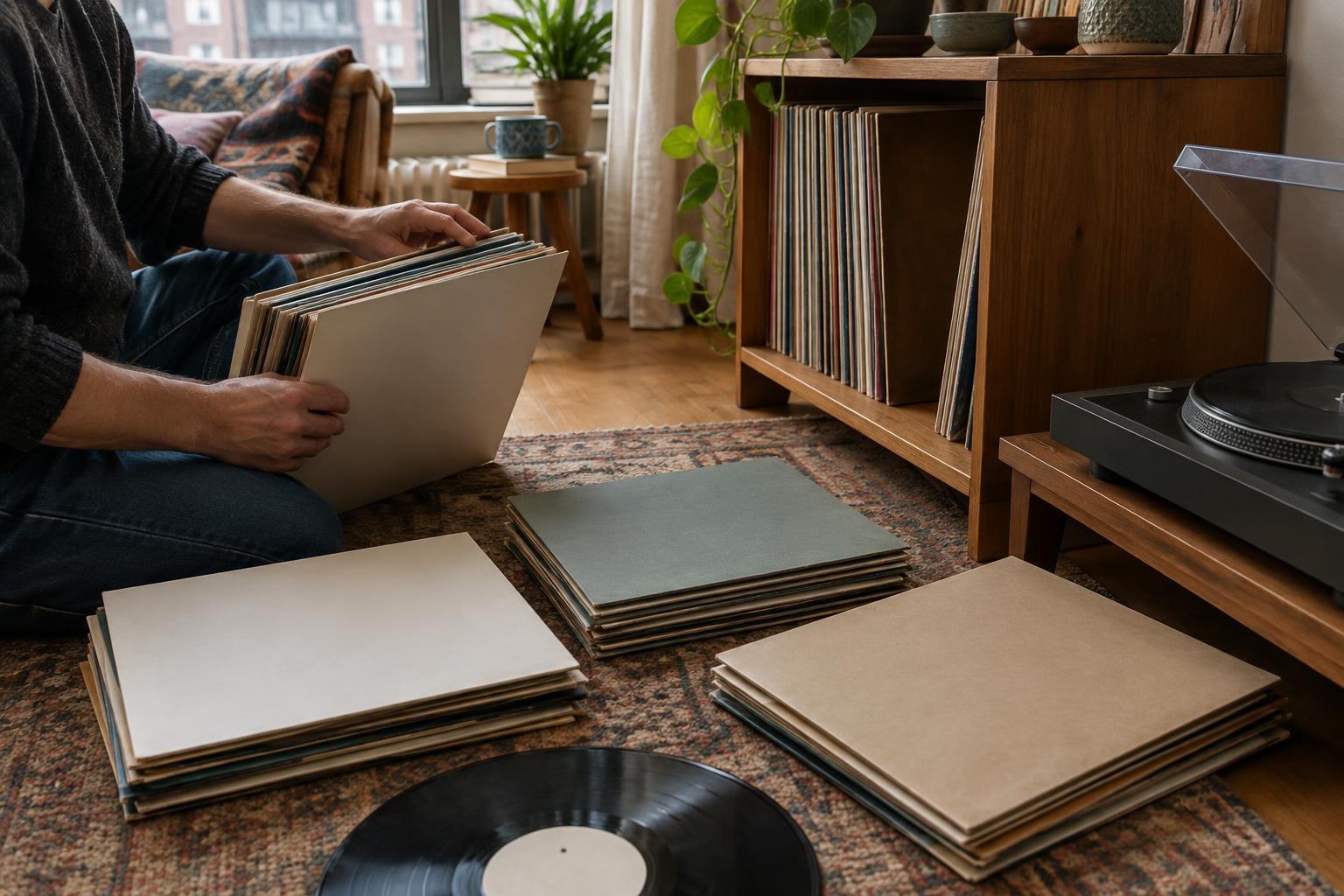
Work through a manageable section of the collection rather than emptying every shelf at once. Make three groups: keep, uncertain and ready to move on. Put records you regularly enjoy straight back. Set aside albums you cannot remember listening to, duplicate copies and purchases that made sense at the time but no longer suit your interests.
Avoid using a record’s possible resale price as the first test. An inexpensive album can be a favorite; a sought-after copy can sit untouched. Price matters when you decide what to do with a record, but it does not tell you whether you want to own it. Likewise, do not discard a record merely because your taste has changed recently. An uncertain pile gives you time to distinguish a passing mood from a lasting preference.
For duplicates, give each copy a purpose. You might keep the one you prefer to play and move on an extra, or retain two versions if their sound or track lists give you genuinely different listening experiences. You do not have to keep both simply because you already own them.
Give uncertain records a fair listen
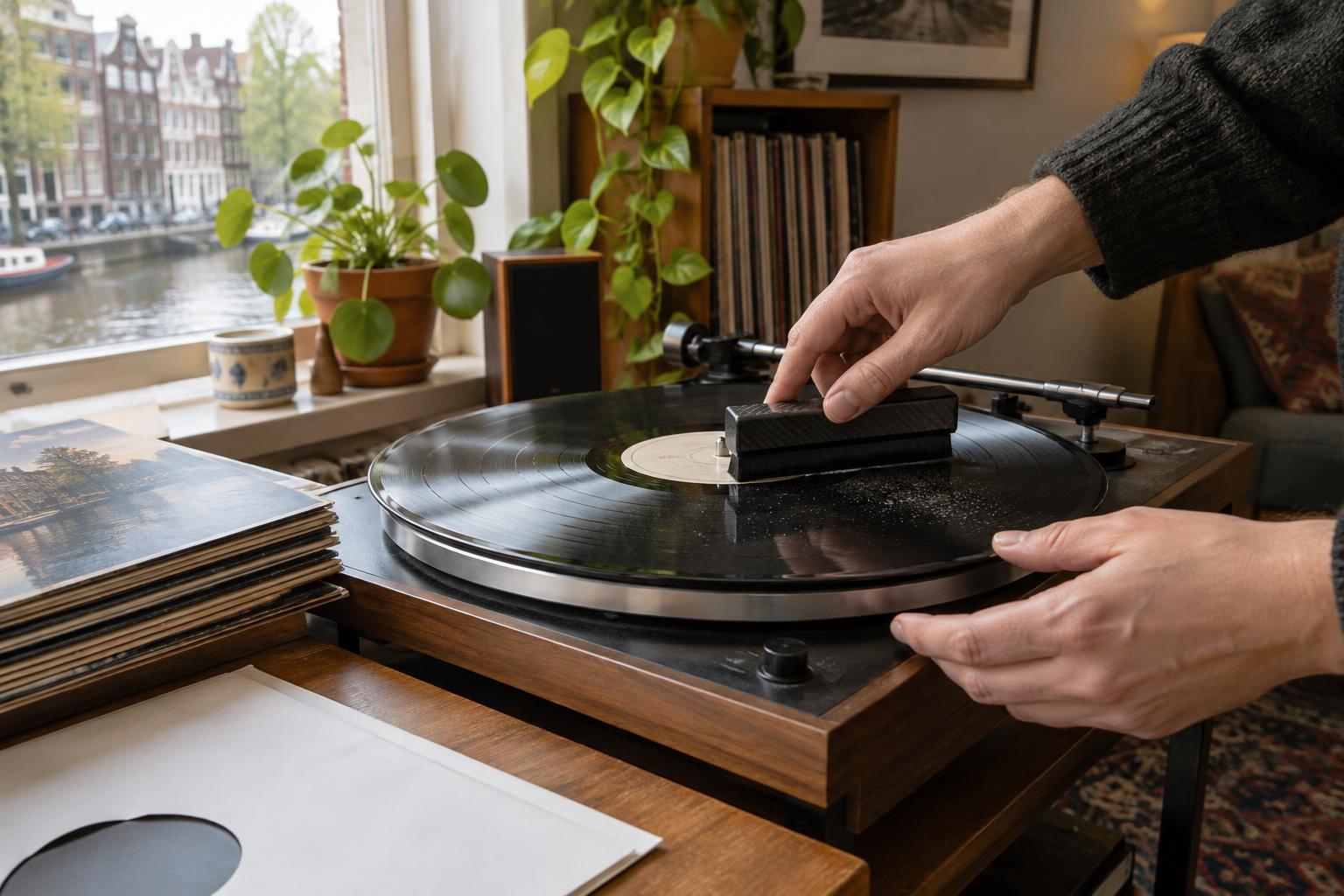
A record you cannot recall may deserve one more play before you decide. Start with the albums you feel curious about, not the ones you think you ought to appreciate. Listen long enough to get beyond a familiar opening track, and notice whether you want to hear more. If you cannot play everything now, keep the uncertain group separate and return to it over several listening sessions.
While listening, ask specific questions. Would you choose this record over others in the same style? Is there a song or side you return to? Does it fill a gap in your collection that matters to you? A sentimental record may be worth keeping even if it rarely reaches the turntable. That is a valid choice when you make it deliberately rather than by default.
You can also leave yourself a simple note about why a record stayed in the uncertain group. Without one, it is easy to reconsider the same album each time you rearrange the shelves. There is no need to force a decision on every copy in one weekend.
Choose an appropriate next home
Once you are ready to part with a record, consider whether to sell it, trade it, give it to someone or donate it. Selling may be worth the effort for records with enough demand to justify checking the exact release and describing its condition. For common titles, a straightforward trade or gift may be more satisfying than spending time on individual listings. A friend’s taste is a better guide to a good gift than your own desire to clear space.
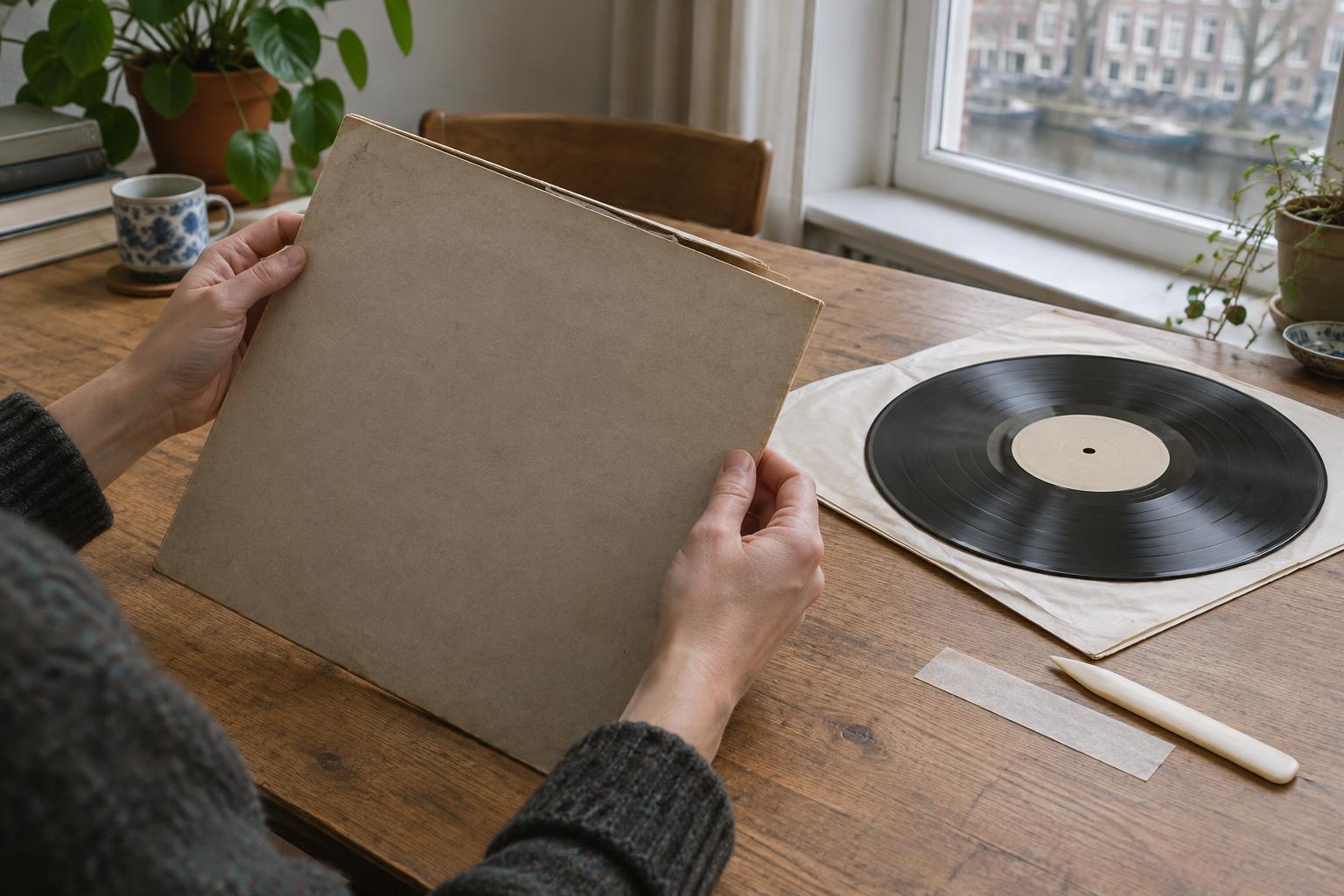
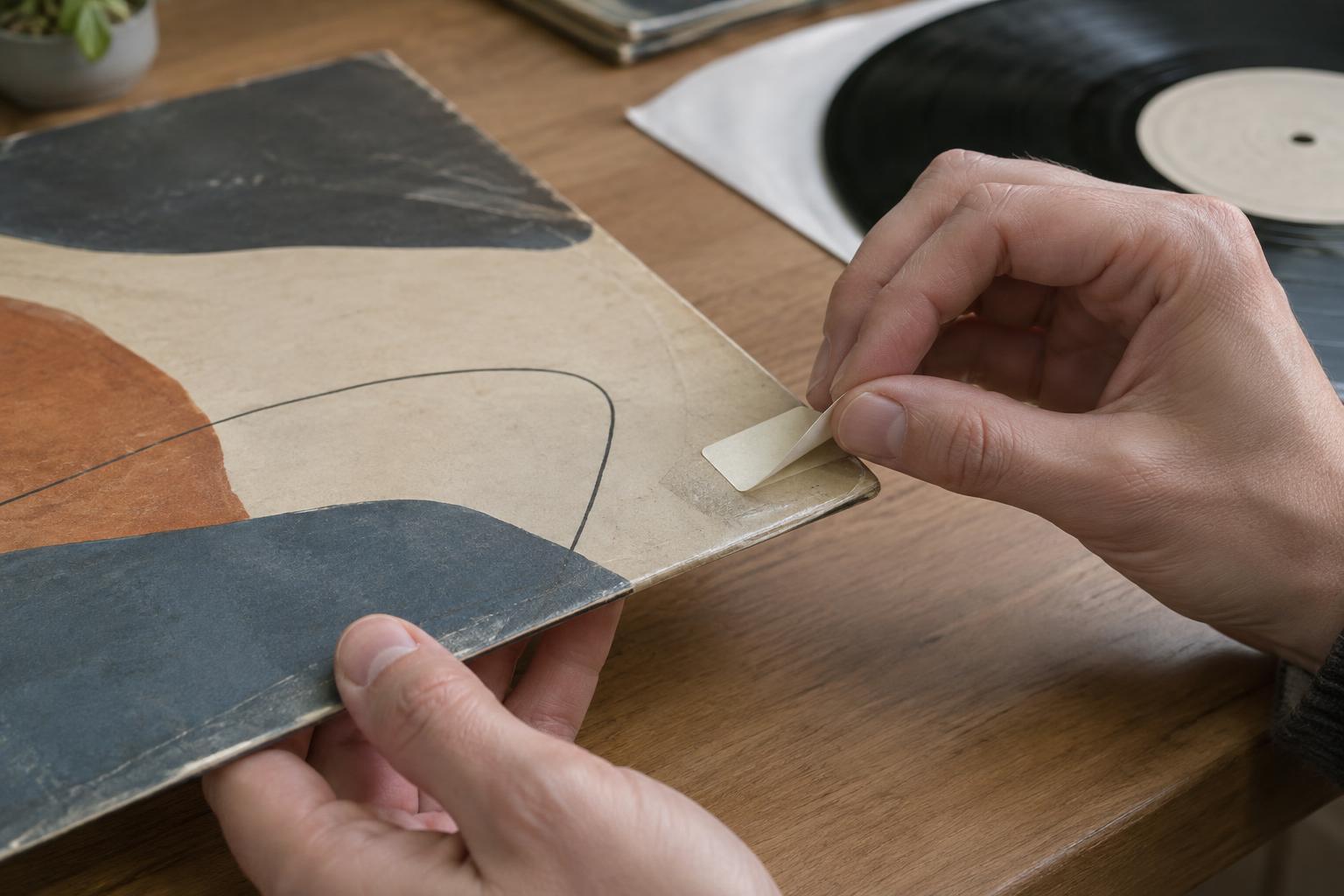
Be accurate about condition. Check the disc and sleeve separately, mention visible flaws, and listen to questionable passages if you can. Keep records protected while they wait for a new owner; a tidy outgoing pile is still part of your collection until it leaves. If you offer records locally, agree on the details clearly so neither person has to guess what is included.
Make the space useful again
After the outgoing records are gone, resist filling every gap immediately. A little open space makes browsing easier and gives future purchases somewhere to go. Place albums you want to hear soon where you can reach them, and return the rest in an order that makes sense to you, whether that is by artist, genre or a looser set of listening moods.
The best result is not a collection that passes someone else’s test of taste. It is one whose contents you understand and can enjoy. Editing can also reveal patterns in what you buy but seldom play. Use those patterns as a gentle check on your next purchase, while leaving room for the discoveries that make collecting fun.