Start with a question, not an institution
Amsterdam’s music history is too broad for a single archive visit. A focused question makes the search more rewarding: What did a particular venue look like? Which styles were heard in a neighbourhood? How was a record advertised, or where might a local artist have performed? Even a favourite sleeve can provide a starting point if it names a musician, photographer, designer, label or venue.
Write down the names you know, then add likely variations. A venue may have changed its name; a musician may appear under a stage name; a neighbourhood may be described differently in older records. Search in both Dutch and English when possible. Terms such as muziek, concert, affiche, foto and geluidsopname can reveal material that an English-only search misses.
Know what each collection can tell you
For the city around the music, begin with the Stadsarchief Amsterdam catalogue. Photographs, maps, printed matter and other records can help place a venue or scene in its surroundings. The Amsterdam Museum’s collection is another route into objects and images connected to city life. Neither should be treated as a complete history of local music: a photograph may document a building without identifying what was played inside it.
Sound recordings and broadcast material call for a different search. The Netherlands Institute for Sound & Vision is based outside Amsterdam, but its catalogue can be useful when looking for Dutch radio and television material involving Amsterdam performers or venues. For sheet music, publications and more specialised holdings, try library catalogues, including those of music institutions. Catalogue entries do not always mean an item is digitised or available to every visitor, so check access conditions before making a trip.
Record shops, private collections and fan-made discographies offer another kind of evidence. They may help identify a pressing, label or sleeve variation that a civic archive does not describe. Use them as leads rather than assuming every recollection or listing is definitive.
Search beyond the artist’s name
An artist search is useful, but a scene often becomes visible through the people and places around it. Try venue names, street names, promoters, festivals, labels, designers and photographers. A concert poster may lead to a venue; the venue may lead to a newspaper clipping or a photograph; a label address may suggest another part of the city to investigate.
Pay attention to catalogue details as you go. Record an item’s title, date if given, creator, collection name and reference number. Note whether a date describes the original event, the creation of the object or its later acquisition. These distinctions matter when you are piecing together a timeline. If two descriptions conflict, keep both in your notes until you can inspect the items or find further context.
Search results also have gaps. Informal parties, small clubs and short-lived scenes may leave fewer institutional traces than major concert halls. An empty catalogue search does not show that an event never happened; it may mean the material was not preserved, has not been described in detail or sits under an unexpected name.
Make a visit count
Before visiting an archive or collection, check its catalogue and visitor information. Some material can be viewed online, while other items require a reading-room request or advance notice. Access rules may differ for fragile objects, audiovisual formats and privately deposited collections. Bring a short list of references and a clear research question rather than arriving with only a broad interest in “Amsterdam music.”
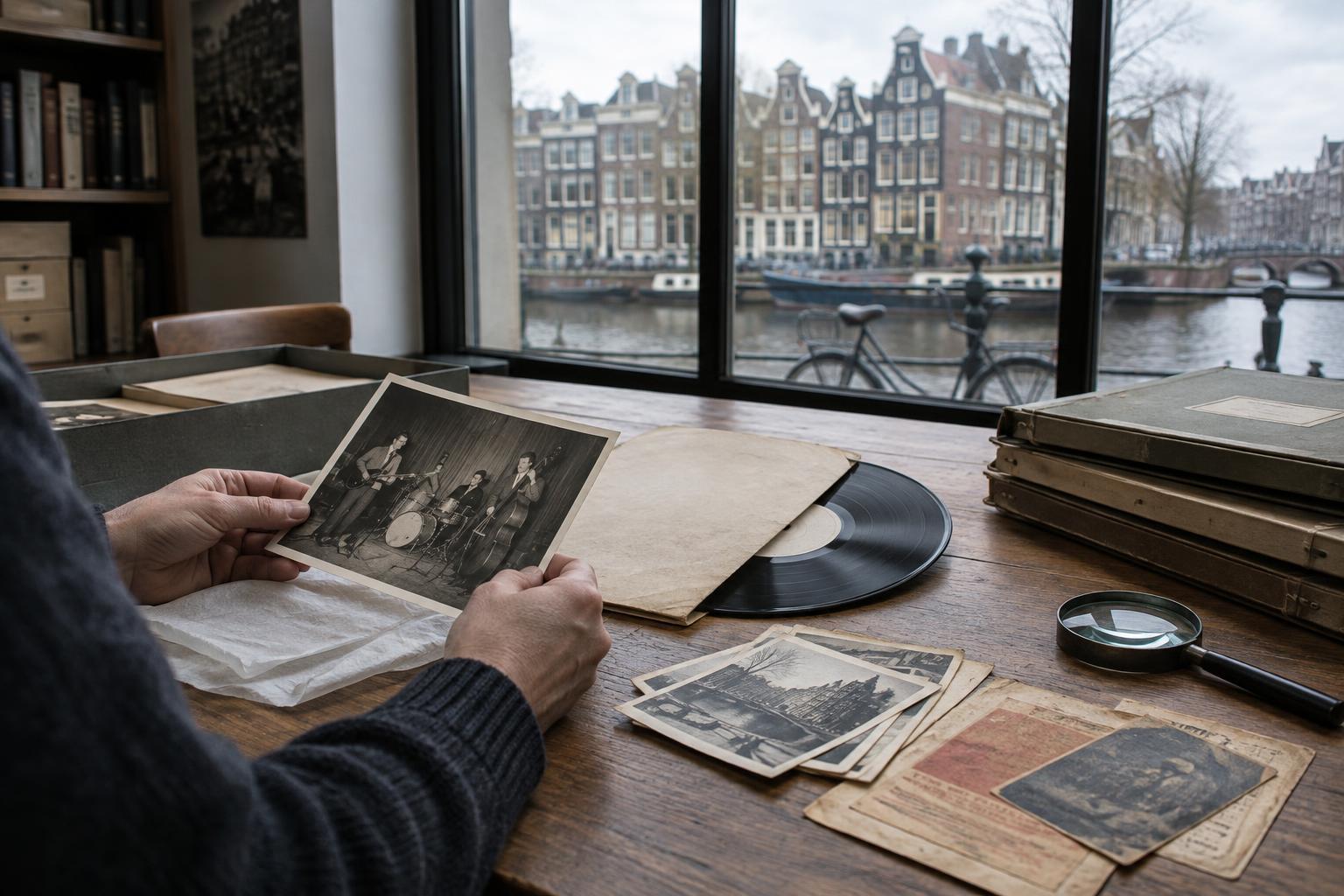
When examining an item, look beyond its headline. A poster’s printer, a photograph’s caption or the markings on a record sleeve may provide the next search term. Keep separate notes for what the object shows and what you infer from it. A crowd in a photograph, for example, can tell you something about an occasion, but not necessarily what everyone heard or thought.
Follow the collection’s handling and photography rules. If you hope to publish an image or audio excerpt, ask about reuse permissions; being able to view an item does not automatically mean you can reproduce it.
Bring the research back to listening
Archives are most engaging when they change how you hear a record. After finding a venue poster or an interview, return to the music and listen for the details that prompted your search. Consider what the source adds, and what it cannot tell you. A sleeve might establish who was credited, while a photograph might show the setting of a performance; neither captures the whole experience of being there.
Build a small trail of discoveries rather than trying to map the entire city at once. Save catalogue references alongside your listening notes, revisit uncertain identifications and leave room for overlooked voices and scenes. That approach turns a collection search into an ongoing conversation between Amsterdam’s surviving music materials and the records on your shelf.