Start with the cartridge, not the turntable
A replacement stylus is the removable part of a cartridge assembly that includes the tiny tip that follows the record groove. When shopping for one, the most useful identifier is usually the cartridge model, not the turntable make or model. The same turntable can carry different cartridges, especially if a previous owner changed it.
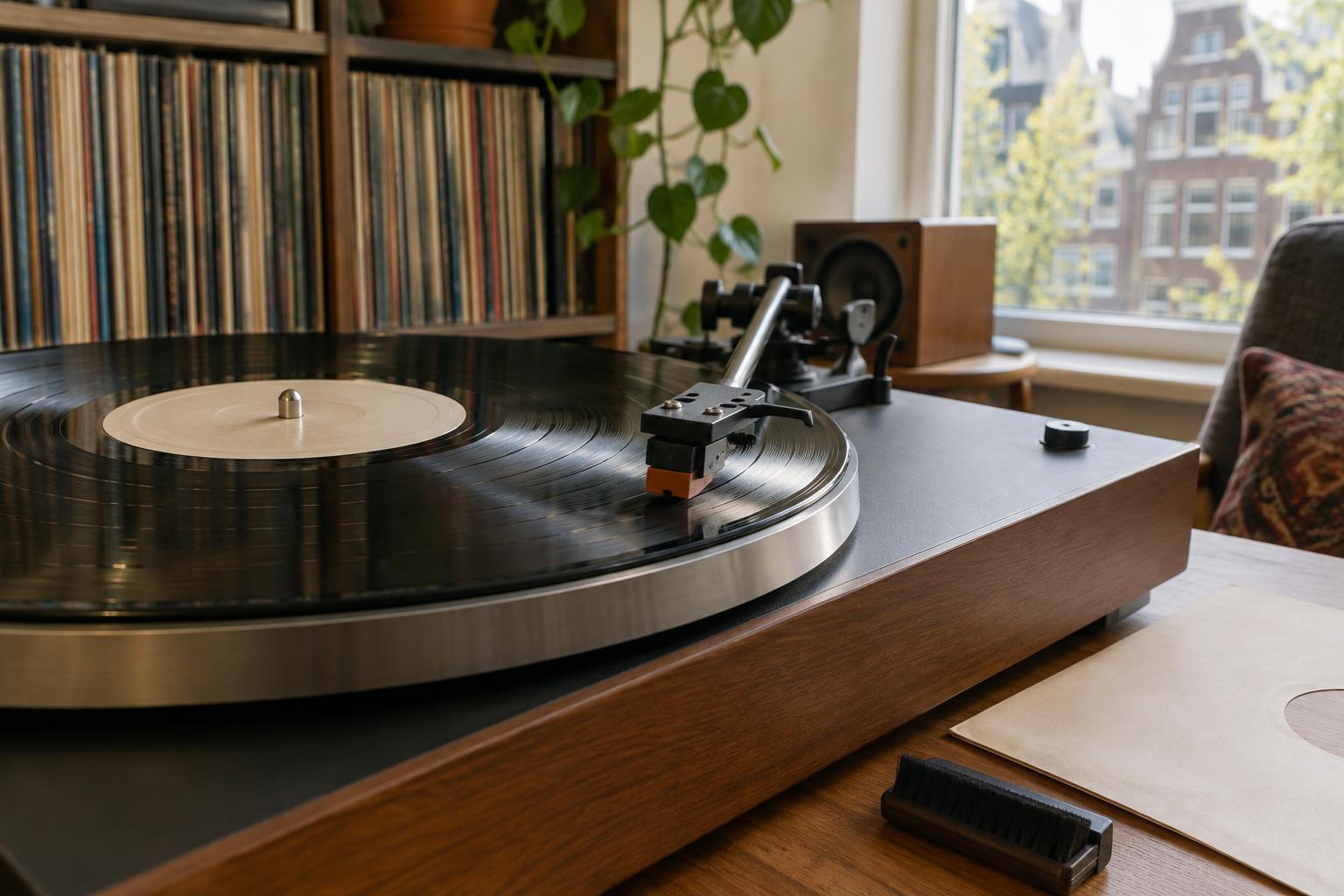
Turn off the turntable before inspecting the cartridge at the end of the tonearm. Look for a maker’s name or model number on its sides, top or front. A phone photo can help you read small lettering without repeatedly handling the assembly. If you cannot see a label, check any paperwork that came with the turntable, but treat it as a clue rather than proof: the fitted cartridge may no longer be the original one.
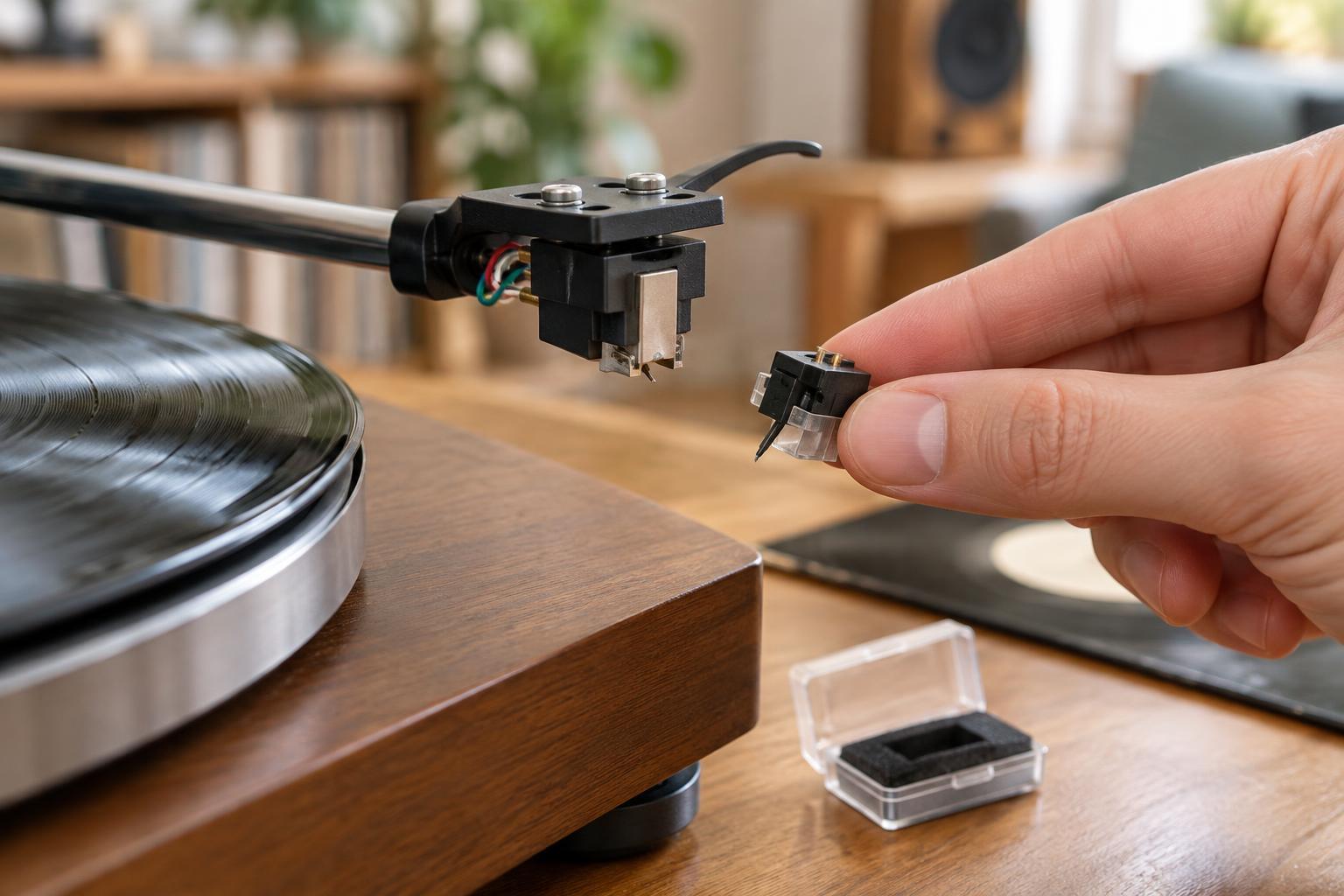
It also helps to distinguish a stylus from a complete cartridge. A cartridge is normally mounted to the headshell or tonearm and connected by small wires; a user-replaceable stylus assembly fits into its front or underside. Do not pull on the cartridge body or its wires while trying to remove a stylus.
Confirm that the stylus is replaceable
Many moving-magnet cartridges have a stylus assembly the owner can replace. Many moving-coil cartridges do not; servicing or replacing the complete cartridge may be the practical route instead. These are useful general patterns, not a way to identify an unfamiliar cartridge by sight. Look up instructions for the exact model before attempting to separate any parts.
If the cartridge cannot be identified, pause rather than ordering by appearance alone. Two stylus assemblies can look similar yet have different housings or seating points. A close, well-lit photo of the cartridge from the front and sides, along with any visible markings, gives a knowledgeable retailer or repair technician a better starting point. If the cartridge itself is damaged or its history is uncertain, replacing the whole cartridge may be simpler than guessing at a stylus.
Match the model and check the details
Search by the exact cartridge model and check whether the proposed stylus is listed as compatible with it. Some cartridge families accept several stylus grades, while others require a particular assembly. Pay attention to suffixes and revision letters: a shared brand name or similar-looking shell is not enough. If a seller lists only a turntable model, ask which cartridge the stylus is designed to fit.
An original-maker replacement can make the choice more straightforward, but a third-party stylus may also be suitable when its compatibility is clearly stated. Compare the published fit information, the tip type and the recommended tracking-force range. If those details are vague or conflict across listings, seek clarification before buying. Avoid forcing a stylus that does not seat as the cartridge instructions describe.
A stylus described as conical or elliptical refers to the shape of its contact tip. Other profiles may also be offered for some cartridge families. Tip shape can affect setup sensitivity and how the stylus contacts the groove, but a more expensive profile is not automatically the right choice for every listener or cartridge. Begin with a compatible option whose setup requirements you can meet.
Fit it carefully and reset the tracking force
Before changing the stylus, secure the tonearm and follow the cartridge maker’s removal and fitting directions. Handle the replacement by its plastic housing, not by the exposed cantilever or tip. Keep the stylus guard on when possible, and work over a clear surface where a dropped part can be found. If removal requires significant force or the new assembly does not sit properly, stop and recheck the model.
After fitting it, verify the tracking force against the recommendation for the new stylus rather than assuming the old setting still applies. Check anti-skate according to your turntable’s instructions. A stylus swap within the same cartridge family may not call for a full cartridge realignment, but it is worth checking that the cartridge remains securely mounted and that nothing shifted during handling.
For a first listen, choose a clean record you know well and listen at a modest volume. If you hear persistent distortion, skipping or an unfamiliar scraping sound, lift the tonearm and inspect the setup rather than continuing to play. The aim is not to make a new stylus work at any cost; it is to confirm that the replacement fits, tracks correctly and lets you enjoy the record without unnecessary wear.