Why a level turntable matters
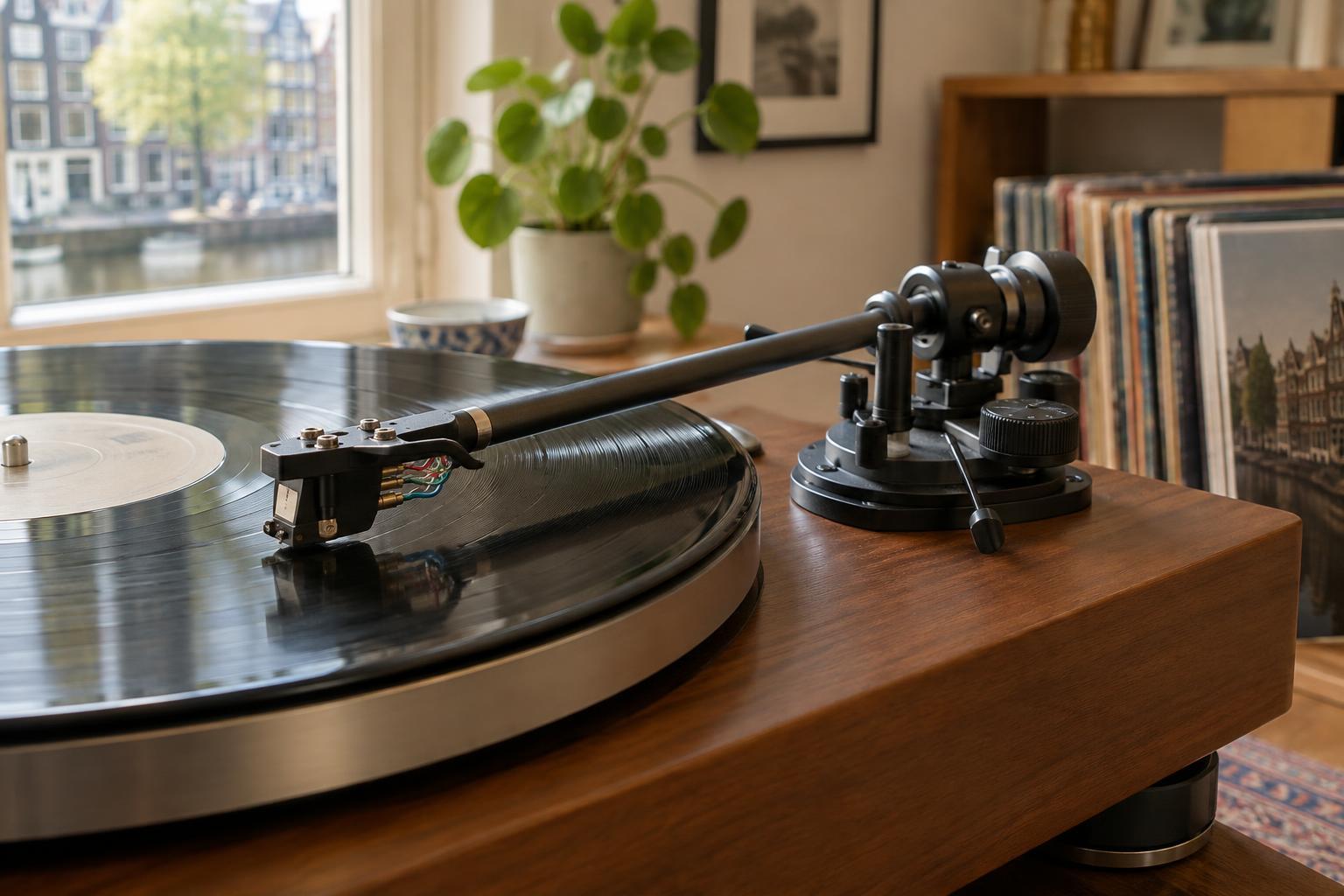
A turntable works through small, controlled movements. The platter rotates while the stylus follows the record groove, and the tonearm needs to move freely as it travels inward. If the turntable sits at an angle, gravity adds a sideways influence that the setup was not intended to have. A slight tilt may not produce an obvious fault, but a noticeably uneven surface can make tracking and tonearm adjustments less predictable.
Leveling is not a cure for every playback problem. A dirty stylus, an incorrectly set tracking force, a warped record or a nearby source of vibration can each cause trouble on an otherwise level deck. Think of leveling as the foundation: it makes the rest of your setup easier to assess without claiming to fix issues that have other causes.
Choose a stable spot before making adjustments
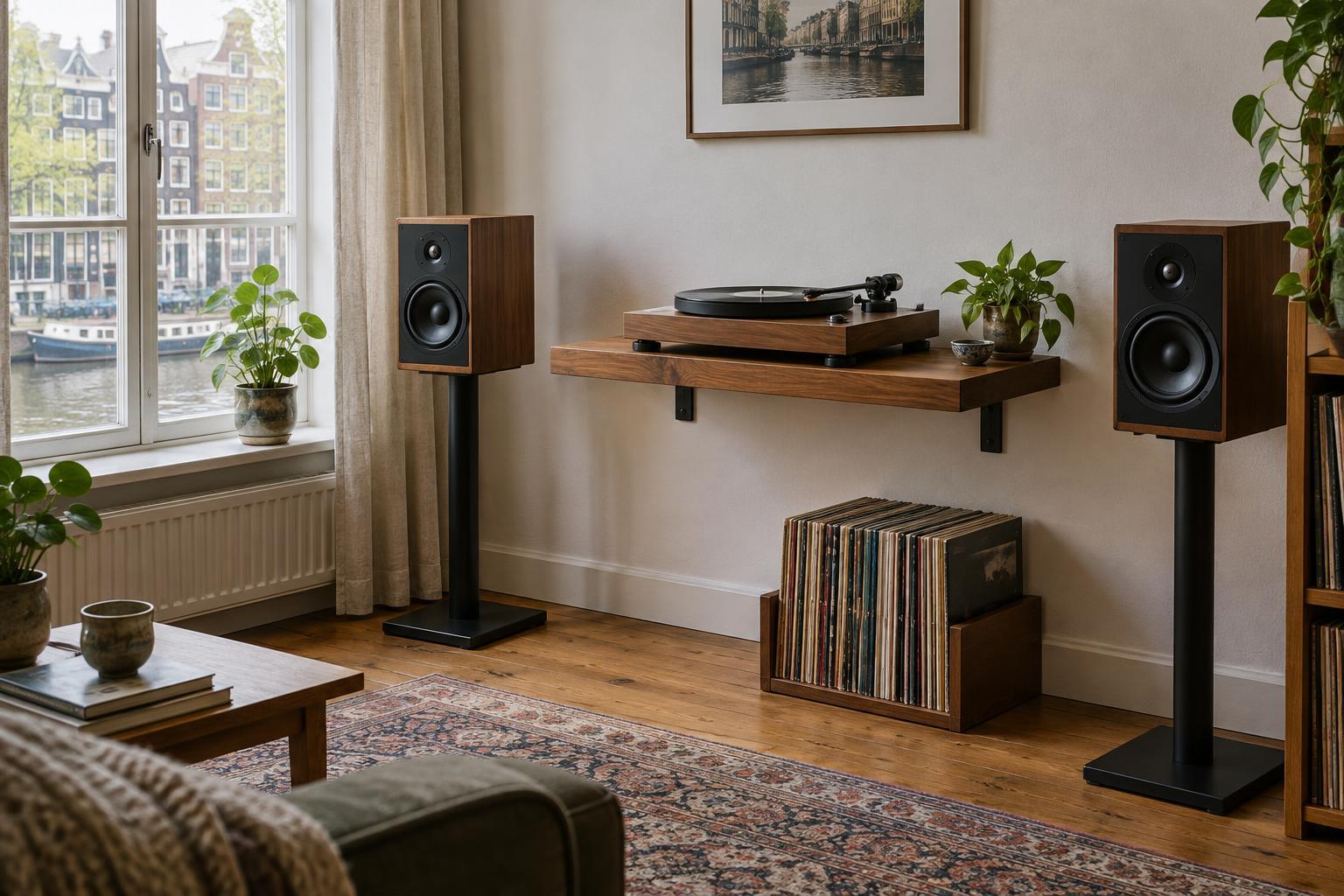
Start with the surface under the turntable. A sturdy shelf or cabinet that does not wobble when you walk nearby is more useful than a perfectly level but shaky table. Keep the deck away from places where speakers can transmit strong vibrations through the furniture. If the shelf rocks, deal with that first; adjusting the turntable feet cannot make unstable furniture stable.
Set the turntable in the position where you will actually use it, with its usual mat in place. Switch it off, remove any record, and make sure the platter is seated properly. If your model has a suspended chassis, follow its manual for any model-specific checks. Do not press down on a floating platter to take a reading, as that can give you a misleading result.
Check the platter in two directions
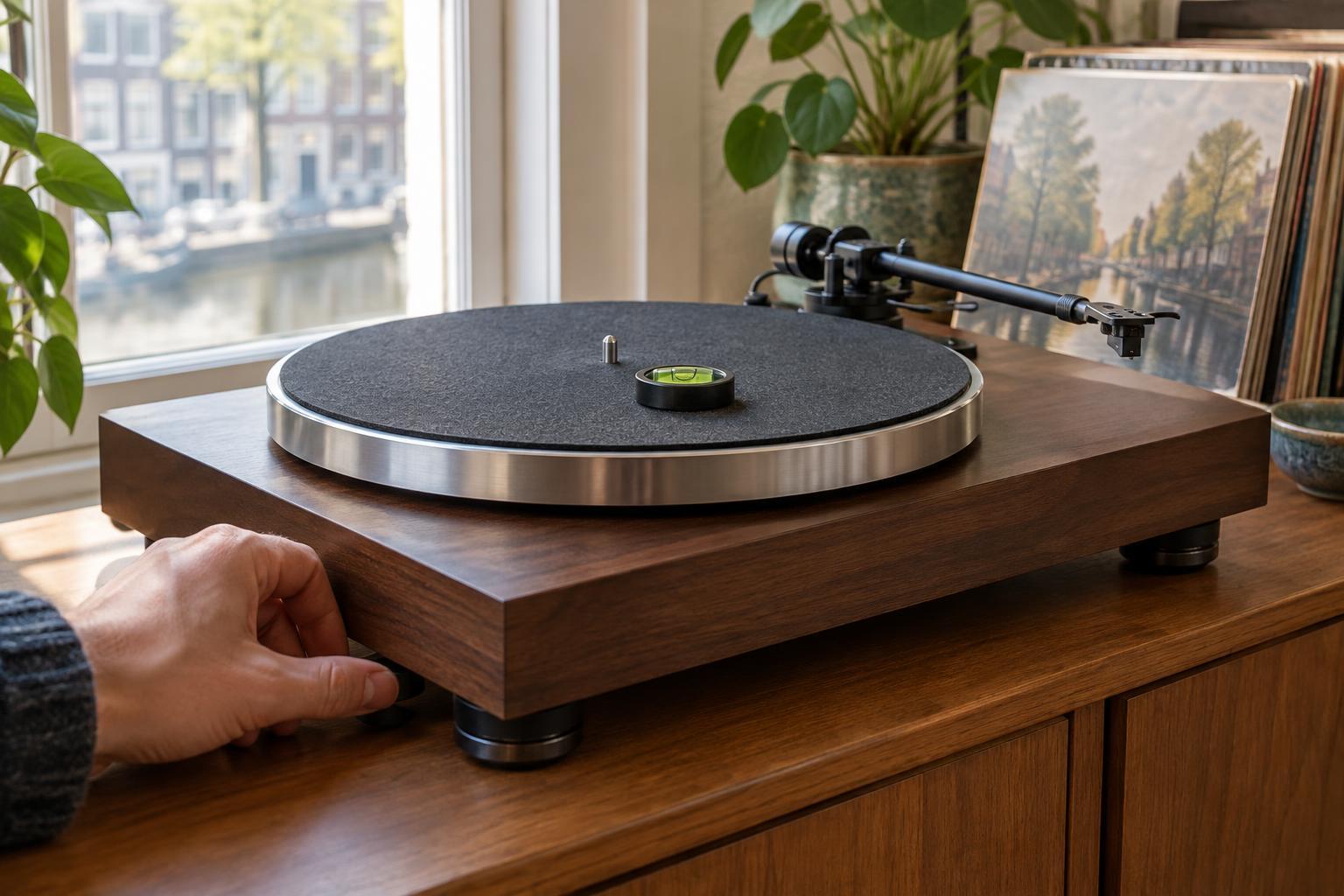
A small bubble level is a convenient tool. Place it on the platter, avoiding the spindle so the level lies flat. If the platter has an uneven surface, a flat record you do not mind handling can provide a consistent place for the level, though you should first check that the record itself is not warped. Take one reading from left to right and another from front to back. A circular bubble level can show both directions at once.
Adjust the turntable’s leveling feet, if it has them, in small increments. Change one foot at a time, then recheck both directions: correcting a front-to-back tilt can affect the side-to-side reading. If the feet are fixed, level the furniture where possible or use firm, stable shims beneath it. Avoid soft or loosely stacked materials that could shift. The aim is a deck that stays level during normal use, not a bubble that looks perfect only while you hold the shelf still.
Check the result without chasing every wobble
Once the platter reads level, rotate it by hand and take a few more readings. A bubble that changes position slightly as the platter turns may point to the level sitting unevenly, a mat that is not lying flat, or a platter that needs a closer look. Repeat the check on a reliable surface before drawing conclusions. A record edge rising and falling during playback, meanwhile, may simply indicate a warped record; changing the turntable’s feet will not flatten it.
You can also check a flat area of the plinth, but use the platter as the main reference for the record’s playing surface. On some designs, the plinth and platter will not give identical readings. If the difference is pronounced or you are unsure how an adjustable suspension should sit, consult the turntable’s manual rather than forcing parts into a position that looks level.
Finish with the tonearm setup
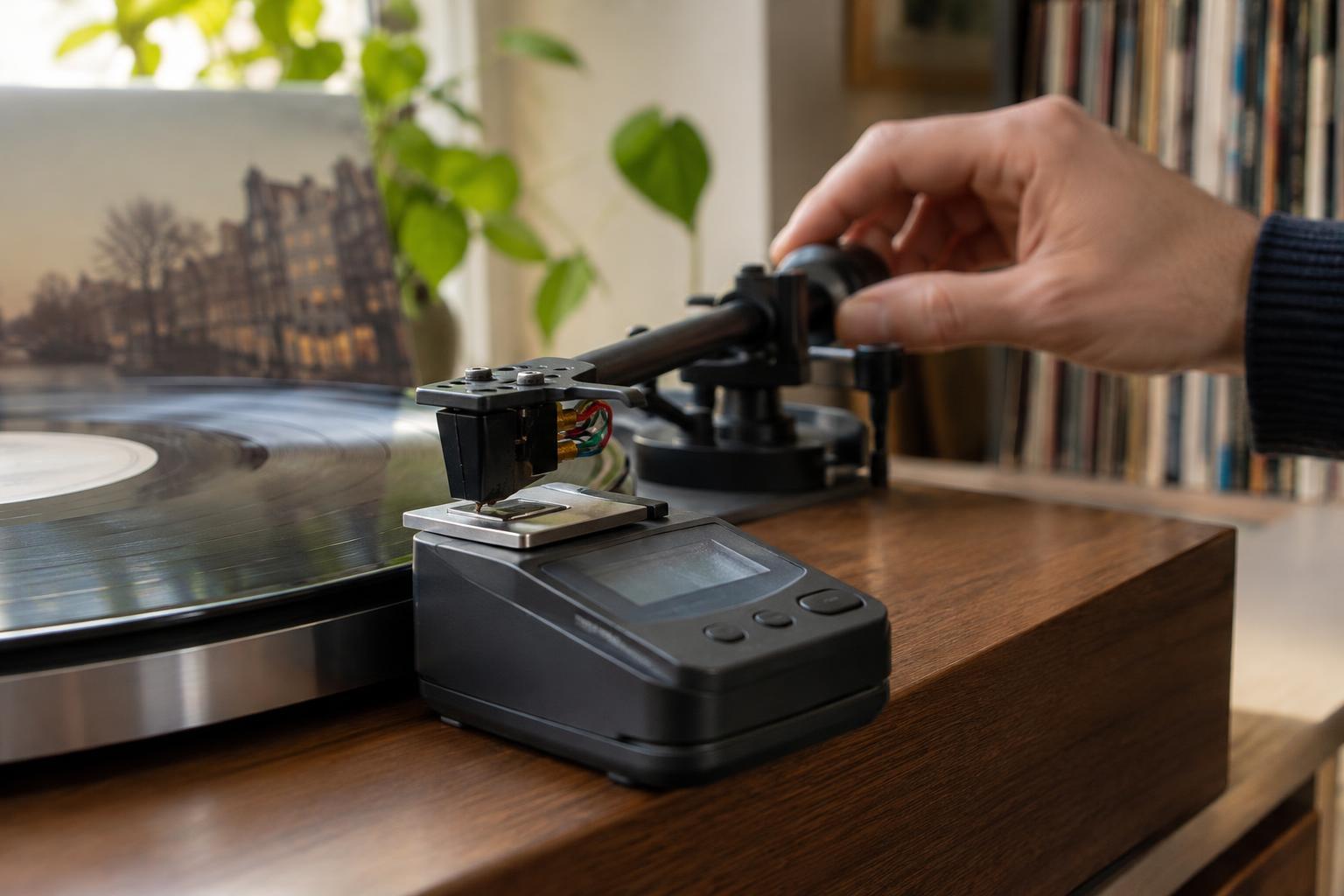
Leveling should come before setting tracking force and anti-skate, because those adjustments make more sense on a stable deck. Follow the instructions for your turntable and cartridge rather than guessing from how the arm looks. Leveling the turntable is also different from balancing the tonearm: one concerns the surface the record spins on, while the other is a step in setting the stylus’s downward force.
Recheck the level after moving the turntable, changing its furniture or adjusting its feet to clean underneath. You do not need to make it a ritual before every record. A stable location, a careful check in two directions and an occasional glance after changes are usually enough to keep leveling a simple part of good listening habits.