Start with the pulse, not the clicks
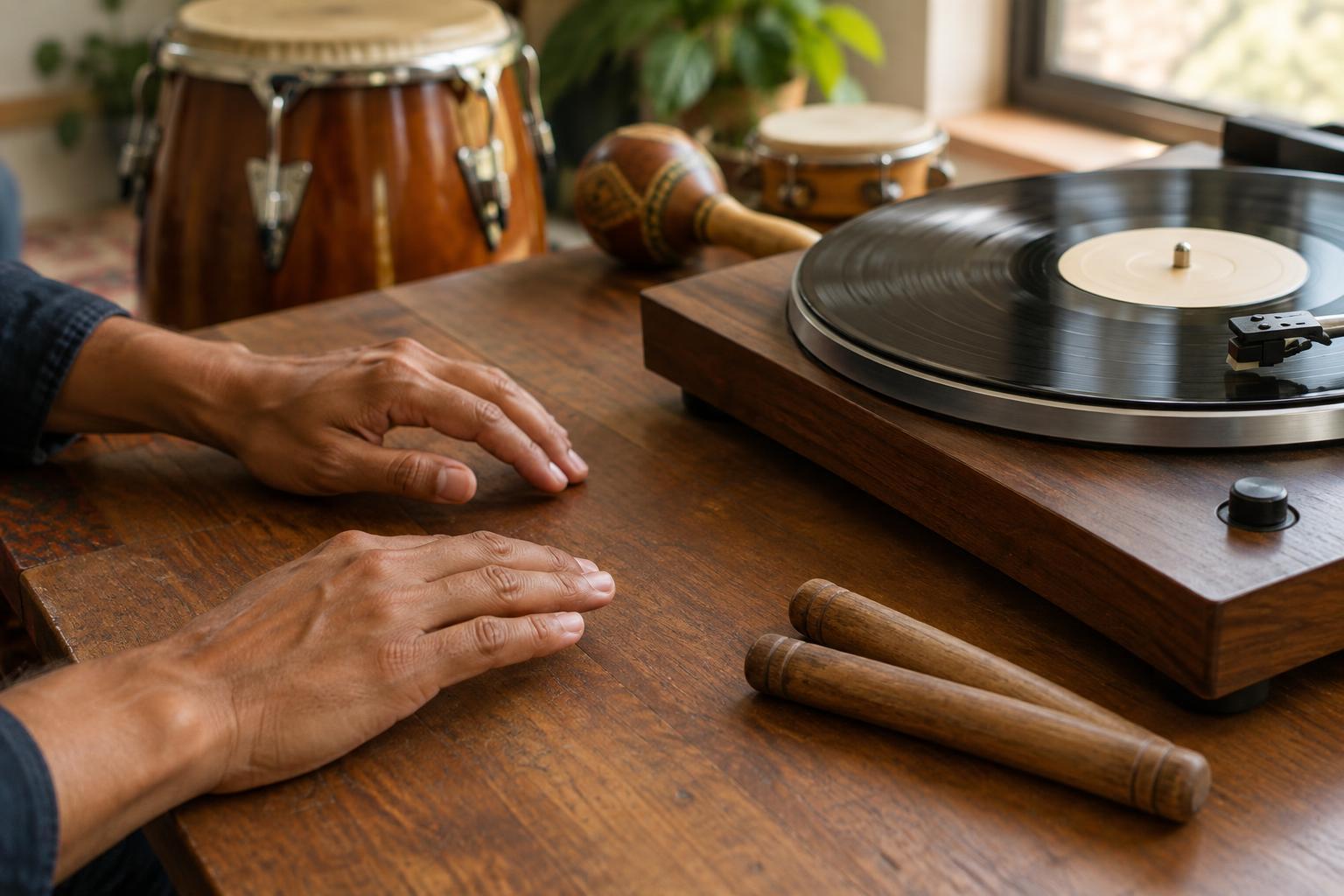
Put on a salsa record and you may hear a pair of wooden sticks making a crisp, repeating sound. Those sticks are called claves, and the pattern they play is also called clave. But the pattern matters even when no one is audibly playing the sticks. It provides a rhythmic reference that other parts can play with, answer or leave space around.
First, find a comfortable, even pulse. Tap your foot to the main beats and resist the urge to follow every drum accent. Clave is not simply the loudest percussion part, nor does it strike on every beat. Its shape becomes easier to hear when you can hold a steady count beneath the busier sounds.
Hear the two sides of son clave
A common starting point in salsa is son clave, a five-strike pattern spread across two bars of four beats each. One bar has three strikes, called the three-side; the other has two, called the two-side. In 3–2 son clave, the three-side comes first. Count each bar aloud as “1 and 2 and 3 and 4 and.” In the first bar, clap on 1, the “and” after 2, and 4. In the second, clap on 2 and 3. Keep counting through the gap before the pattern repeats.
To hear 2–3 son clave, begin with the two-strike bar instead: clap on 2 and 3, then play the three-strike bar. The numbers describe which side comes first, not two different sets of five notes. Try looping each order by clapping softly over a steady foot tap. You may find that the gaps, especially the pause between one bar and the next, make the pattern more recognizable than the individual strikes.
Listen beyond the percussion
Once you can clap the pattern on its own, return to a full arrangement. If the clave sticks are audible, follow them for several cycles without switching your attention to another instrument. Then listen again for the piano. A repeated piano figure, often called a montuno, may emphasize notes around the clave strikes or leave telling spaces between them. Horn phrases and vocal lines can also help you sense where each two-bar cycle begins and ends.
Do not expect every musician to play the clave pattern outright. The bass may pull your ear toward offbeats, while the congas, timbales and other percussion add rhythms of their own. The useful question is not “Which instrument copies the clave?” but “How do these parts sound together over the same two-bar span?” Keeping that span in mind can make a dense passage feel less like a collection of competing rhythms.
When you lose your place
An intro, a drum break or a dramatic stop can make the first beat hard to locate. If your clapping suddenly feels wrong, pause rather than forcing the pattern onto the music. Find the steady pulse again, listen for a repeated phrase, and wait until you can hear where it returns. A clear entrance by the piano, horns or singer may give you a better point of reference than the opening seconds of the track.
It also helps to practice with a short passage instead of an entire side of a record. Play a section several times: first tap the beats, then count two bars, then add your five claps. Finally, stop clapping and see whether you can still feel the pattern. Not every salsa recording foregrounds son clave in the same way, and other clave patterns exist, so treat this exercise as a listening tool rather than a rule to impose on every track.
Make it part of ordinary listening
You do not need to count through a whole song to enjoy hearing clave. After a little practice, alternate between focused listening and simply letting the record play. Notice how a horn line creates anticipation, how a singer enters after a gap, or how the percussion keeps the music moving without spelling out every beat.
If you are comparing records, choose two passages and listen to each more than once before deciding what you hear. On the first pass, find the pulse; on the second, test a two-bar clap; on the third, follow an instrument other than the claves. That small routine turns clave from an abstract diagram into something you can recognize in the sound of an ensemble.