Start with the pattern, then listen for what moves
In much minimalist classical music, a short musical idea returns again and again. That does not mean nothing happens. A note may enter later than expected, an accent may shift, or an instrument may join a pattern that was already there. The longer a figure repeats, the easier it can become to hear those small events. Rather than waiting for a dramatic melody or a sudden change of mood, try asking what has changed since the last time you heard the pattern.
“Minimalist” is a useful starting label, not a promise that every piece will sound alike. Some works have a firm beat and quick, interlocking notes; others use long tones with little obvious pulse. A piece can feel calm, insistent, playful or physically intense. Give it enough time to establish its own rules before deciding how closely to listen.
Hear pulse as a framework
Steve Reich’s Music for 18 Musicians is a rewarding place to explore pulse. Listen first for the regular notes that seem to mark time, then for the longer phrases moving across them. Individual instruments may be hard to separate at first. On another listen, choose one sound—perhaps a voice, piano or mallet instrument—and follow when it enters, drops away or changes its pattern. The pulse gives you a point of reference while the texture evolves.
Philip Glass’s “Opening,” from Glassworks, offers a more compact exercise. Its flowing piano figures invite you to notice how repeated motion can create a sense of direction without relying on a conventional tune. Tap along if that helps, then stop tapping and listen to the spacing between notes. A steady pulse is not just a background clock: it can shape how you perceive a new note or harmony.
Notice when repetitions drift apart
Reich’s Piano Phase demonstrates a different kind of gradual change. Two pianists begin with the same repeating figure; as one moves slightly ahead of the other, their notes form changing combinations. You do not need to track every beat to hear the effect. Listen for a fresh accent or an apparent new melody, then notice that it comes from familiar notes meeting in a new alignment.
Terry Riley’s In C gives performers 53 short musical figures to play in sequence, with room to decide how long to remain on each one. In a performance, several figures may sound at once as players move forward at different times. Try listening to the whole ensemble as one shifting surface, then focus on a single figure and follow its return. Different performances can make different details stand out, so one recording need not be your final word on the piece.
Make room for slower change
Repetition is not always a rapid run of notes. Some minimalist and closely related experimental music works with sustained tones, where changes in volume, pitch relationships or texture become the main events. If a long tone seems static, listen for beating or wavering sounds where pitches meet, and for the way the room and your listening position affect what stands out. Keep the volume comfortable; close attention should not require loud playback.
It can also help to abandon the question “Where is this going?” for a few minutes. Instead, ask “What can I hear now that I missed at the start?” That shift in attention makes gradual change easier to appreciate, even if you ultimately prefer music with sharper contrasts. Minimalism does not require a special listening skill so much as a willingness to let small differences count.
Try a focused vinyl listening session
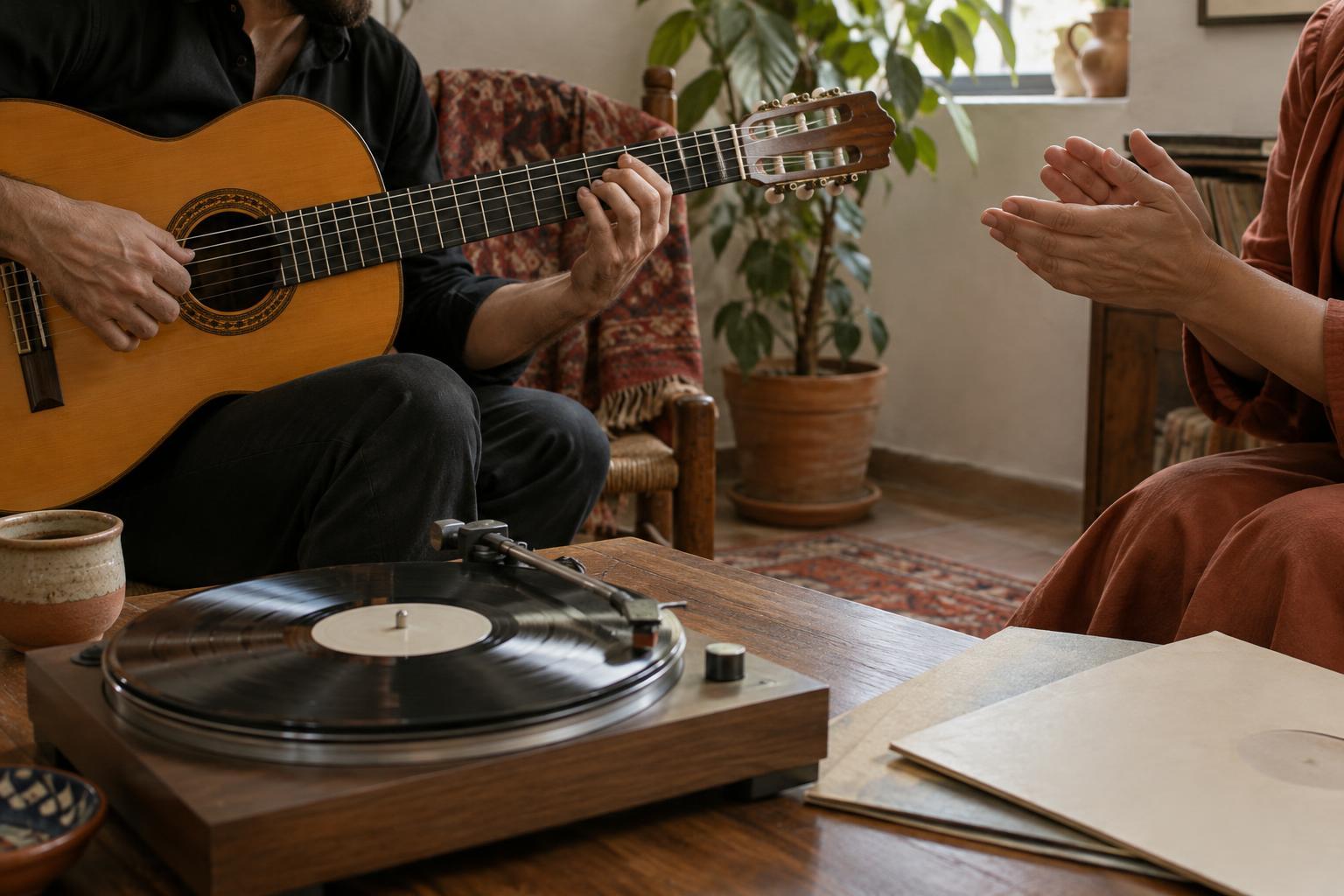
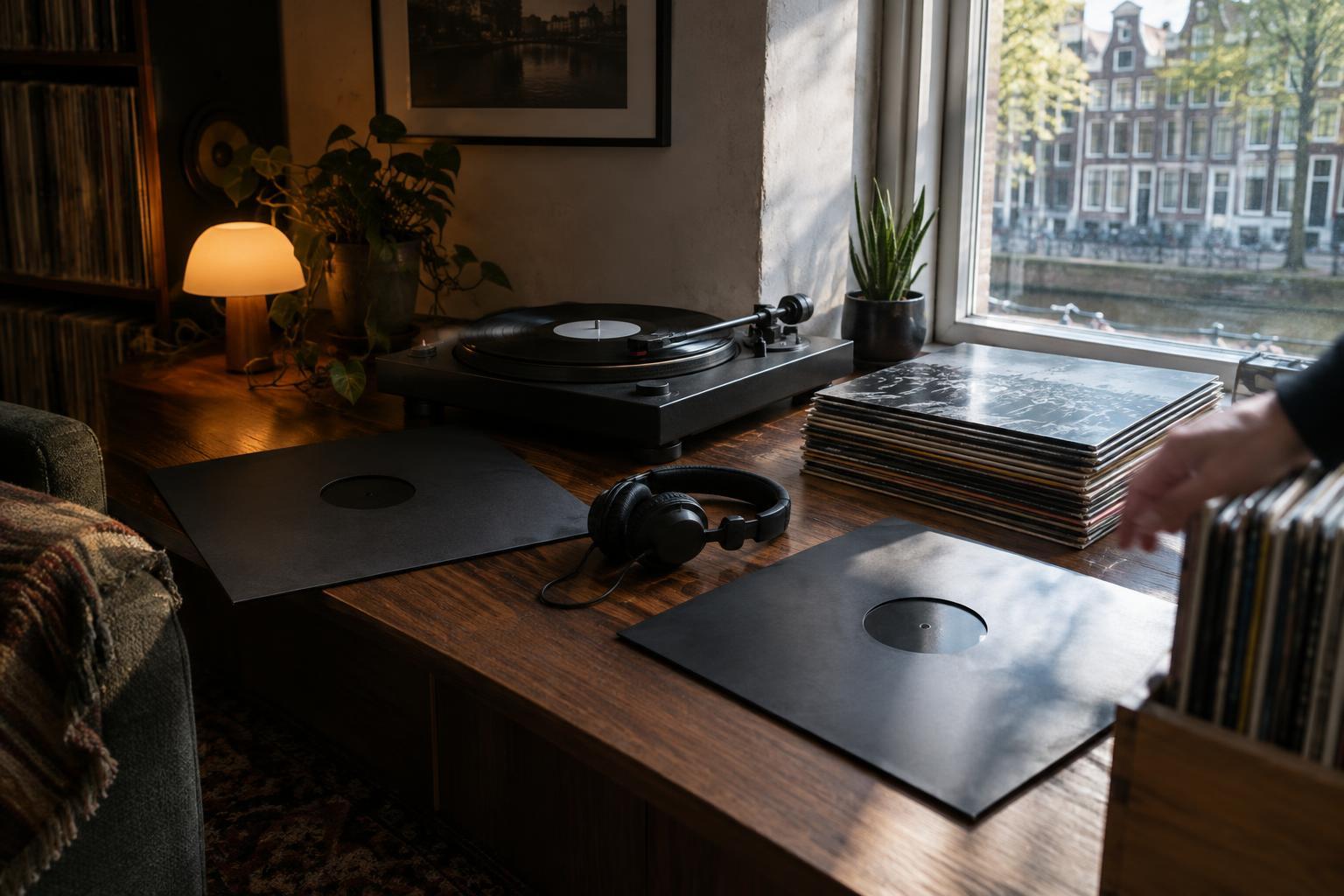
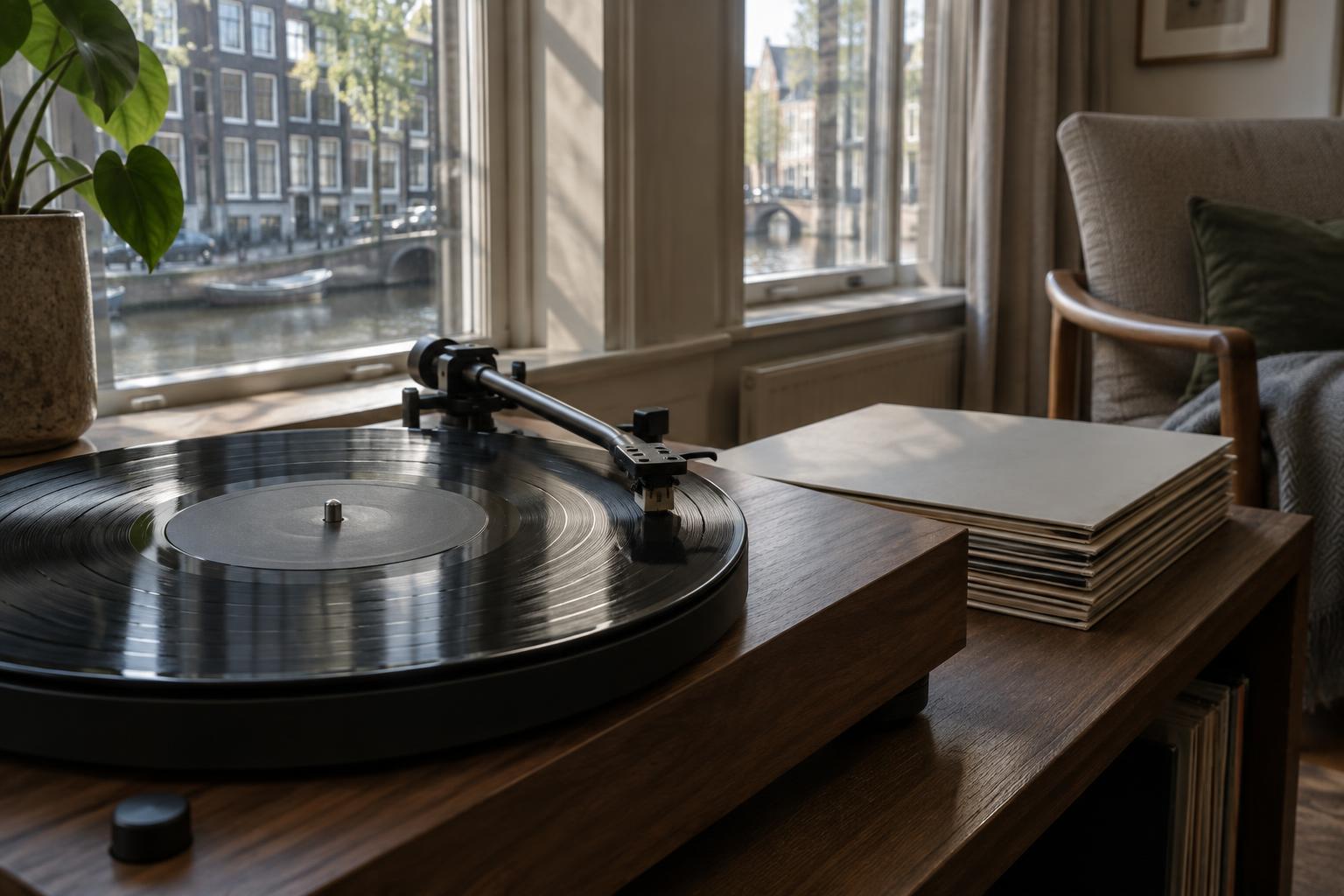
A record side provides a manageable stretch of time for this music. Put your phone aside, sit where both speakers are clearly audible, and play one side without skipping ahead. On a first pass, follow the overall energy. On a second, pick one feature: the pulse, a recurring figure, or the moment an instrument enters. If the record asks you to turn it over, use the pause to recall one change you noticed rather than treating the flip as an interruption.
Choose records for the music and performance, not for a supposed definitive format. Different recordings, mixes and pressings can emphasize different details, and some works may be easier to find or compare through other formats. Vinyl’s value here is partly the simple ritual of making time for a sustained listen. Start with one piece that holds your interest, return to it, and let the patterns become familiar enough for their differences to emerge.