Prepare the collection before packing
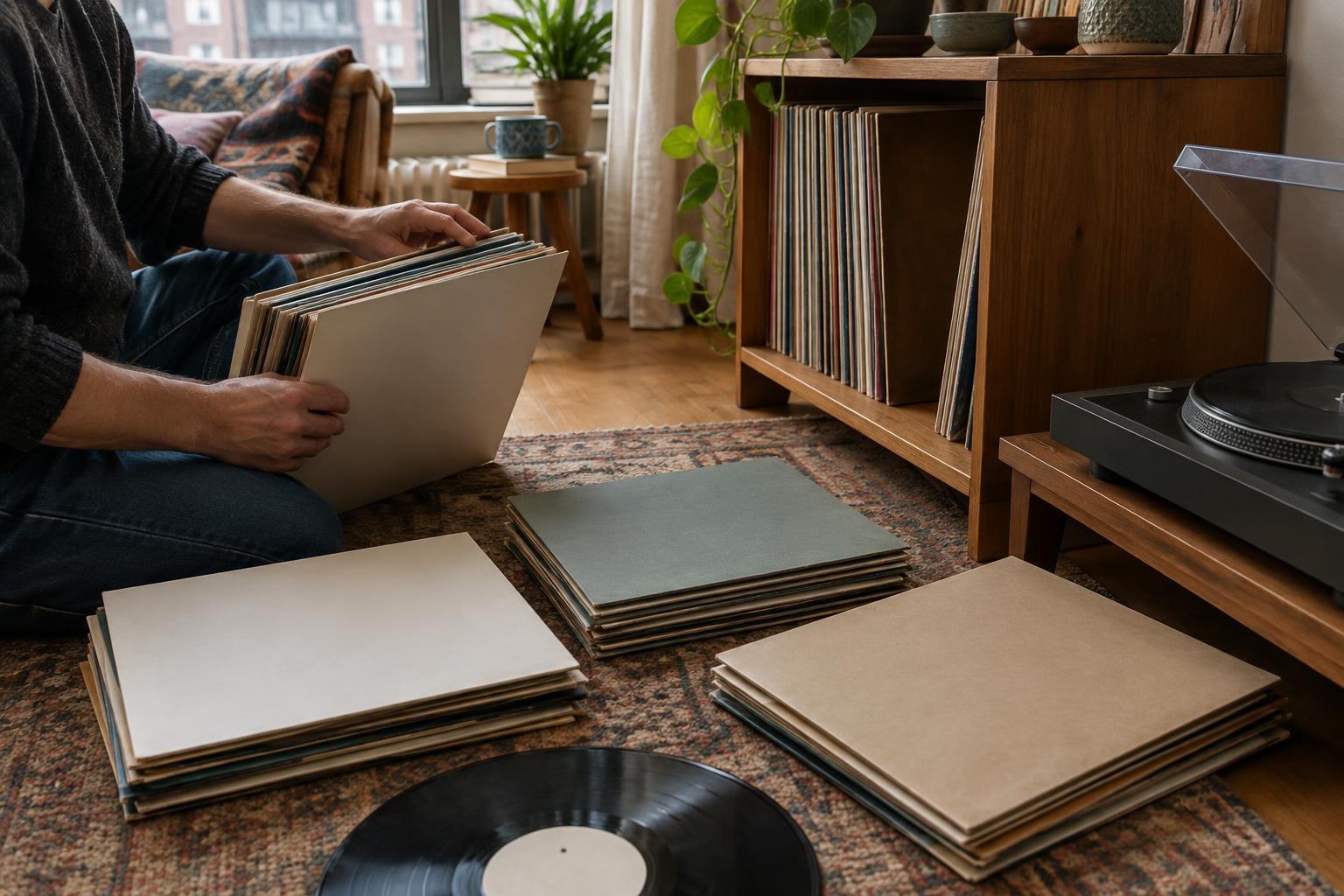
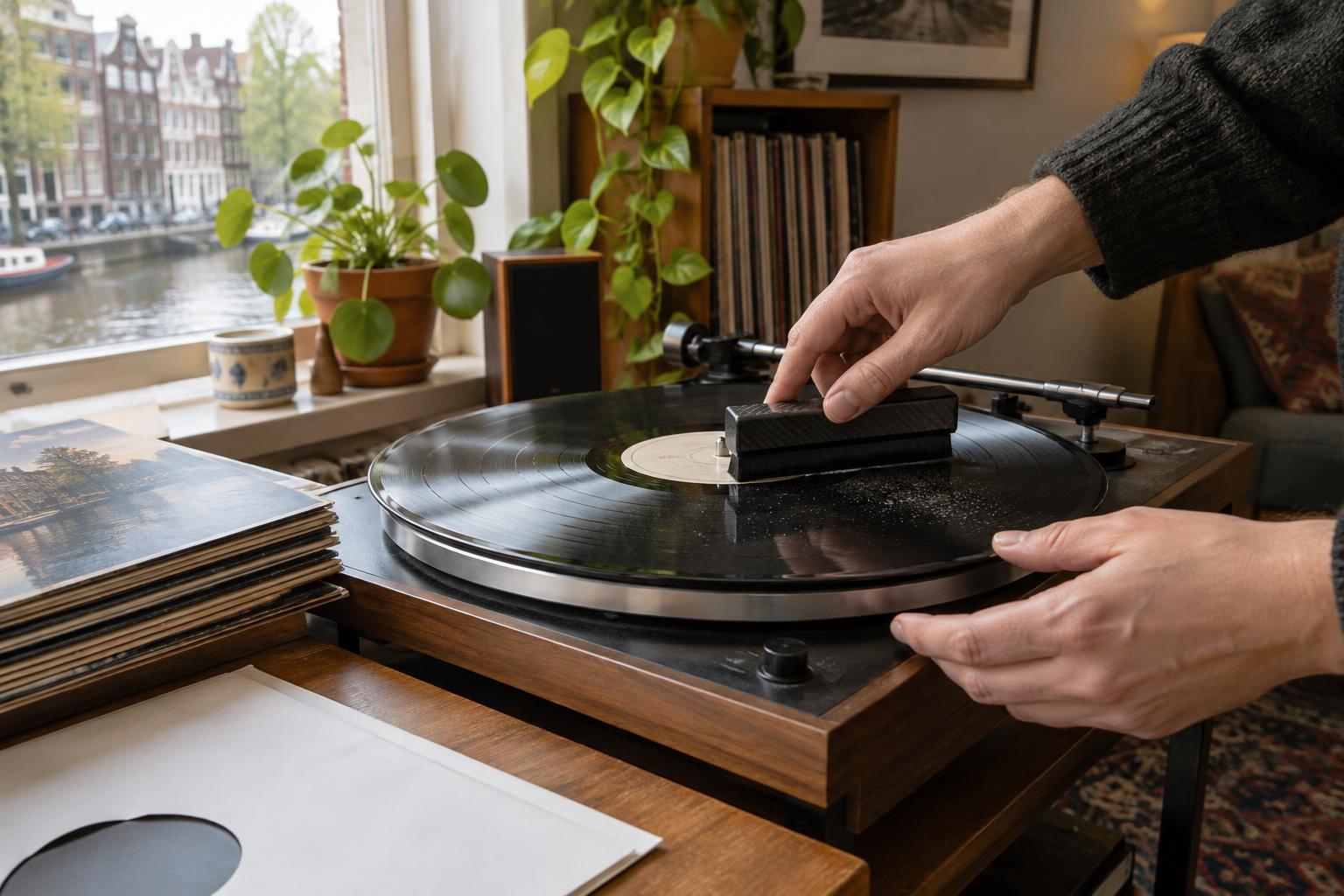
Start by setting aside time to handle the records without rushing. A house move is a useful opportunity to check for loose discs, torn inner sleeves and jackets that need extra support. Put each record in an inner sleeve before it goes into its jacket. If a sleeve is shedding paper or has grit inside, replace it rather than letting debris rub against the playing surface during the move.
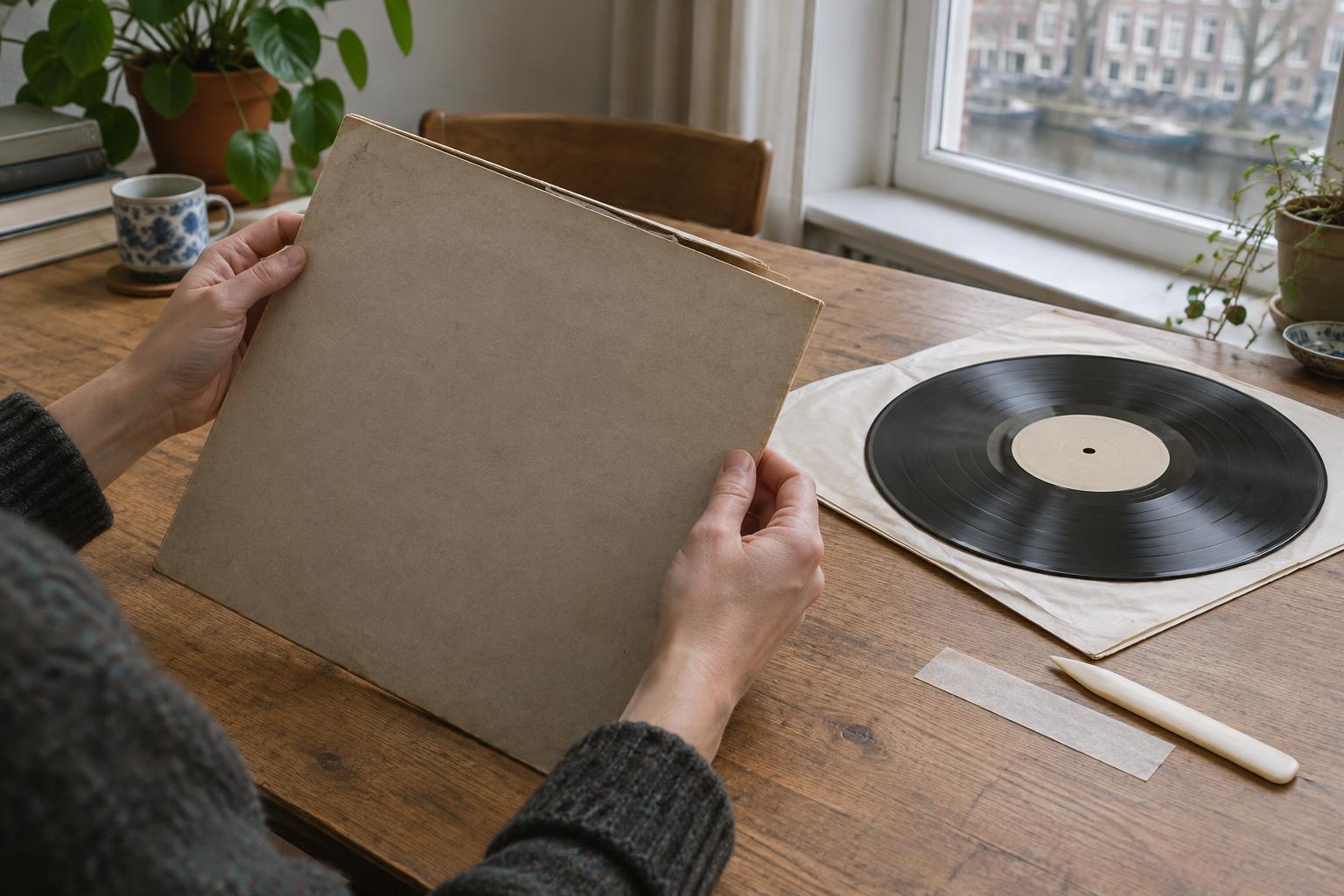
For records you handle often, the disc can usually stay in its inner sleeve inside the jacket. If a jacket is fragile, or you are especially concerned about a seam splitting, place the sleeved disc behind the jacket within a protective outer sleeve. This keeps pressure off the jacket’s edges while keeping the two parts together. Check that neither the disc nor the jacket can slip out when you lift them. Keep loose inserts with their records, but avoid forcing bulky contents into a tight sleeve.
Choose boxes that support records upright
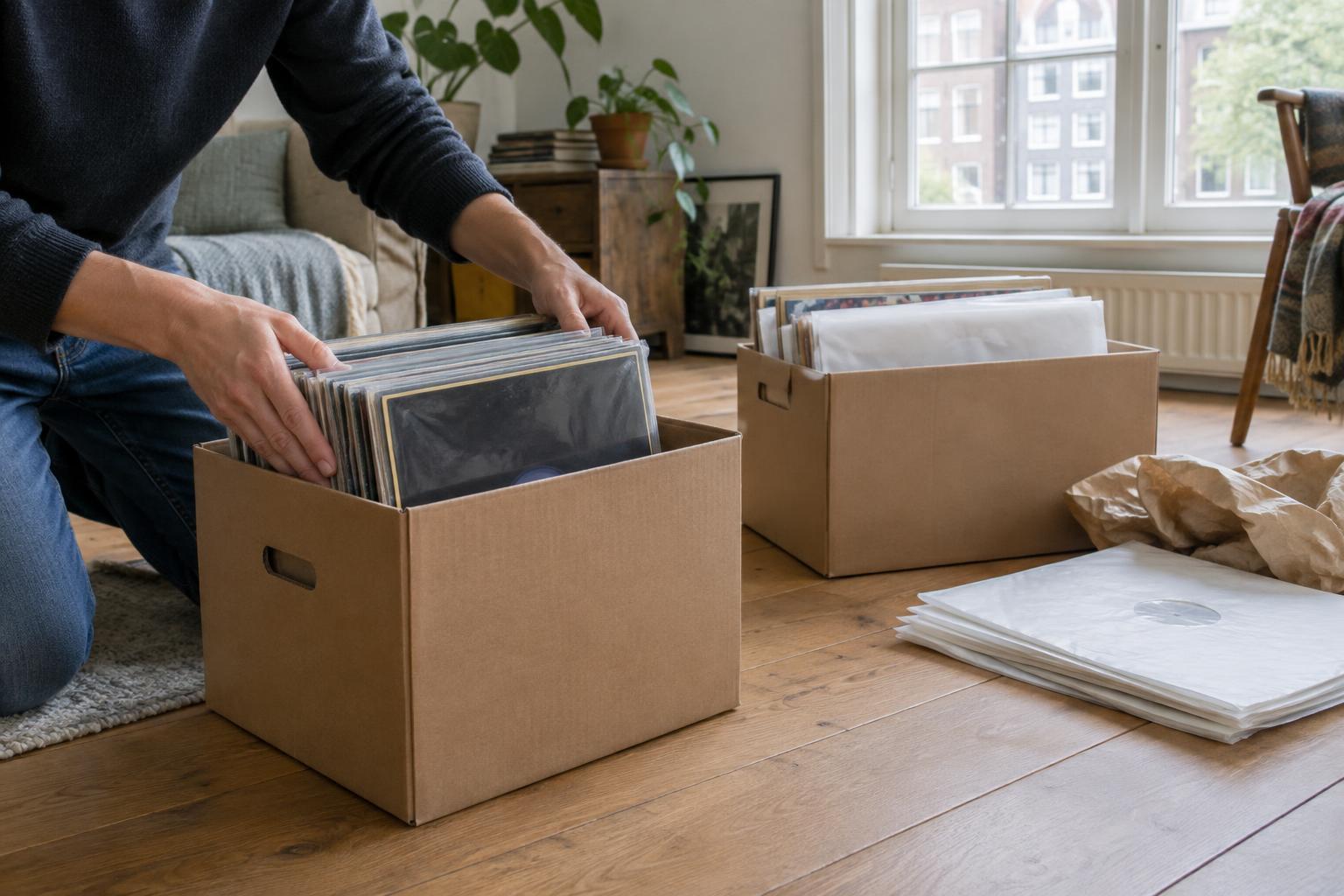
Use sturdy, clean boxes that fit records standing on their edges. A box that is much wider than the records lets them lean; one that is too narrow can bend jackets or make them difficult to lift out. Smaller boxes are generally easier to carry than a single box filled to the point of strain. Reinforce the bottom seams with packing tape, even if the box looks sound, and check that its base stays flat when lifted.
Line the bottom with a sheet of clean cardboard if it needs extra support. Pack records vertically, as they would sit on a shelf, with the spines facing up or to one side so you can identify them later. Fill empty space at the ends with clean cardboard or other firm, smooth packing material. The aim is to stop the records from tipping without squeezing them. If you have a small number left over, use a smaller box rather than leaving them to slide across a large one.
Close the box so its flaps do not press down on the top edges of the jackets. If records protrude above the box, choose a taller one. Label the box “Records” and “Keep Upright,” and mark it as heavy if appropriate. A simple list of what is in each box can make unpacking easier, especially if part of the collection needs to remain packed for a while.
Protect against pressure, moisture and heat
Records and jackets face different risks during a move. A record can warp when exposed to excessive heat or uneven pressure, while a jacket is easily crushed, scuffed or damaged by water. Keep packed records away from radiators, direct sun, damp floors and open windows. If rain is likely during loading, carry boxes under cover or use a temporary waterproof covering. Do not seal damp records or jackets inside plastic; trapped moisture can damage paper and encourage mould.
In a vehicle, place record boxes on a level surface where they cannot fall over or shift during turns. Keep them upright and secure them beside other stable items. Avoid stacking furniture or heavy boxes on top of them. If boxes must be stacked, make sure the lower box is sturdy, fully closed and not carrying more weight than it can support. Try not to leave a collection in a hot parked vehicle, even for a convenient break between trips.
Move carefully, then unpack without rushing
Lift each box from underneath rather than by its flaps or handholds alone. If it is awkward to carry steadily, repack it into smaller boxes. Tell anyone helping with the move that these boxes need to remain upright and should not be used as a base for heavier items. Clear a dry, accessible spot for them at the destination before unloading begins.
Once the boxes are indoors, allow them to reach room conditions before opening them if they have been in a cold vehicle or damp air. Unpack onto a clean surface and return records to a stable shelf, standing vertically with enough support that they do not lean sharply. Check any jackets that may have become wet or bent before shelving them tightly against others. A little patience at both ends of the move does more for a collection than elaborate packing materials used in a hurry.