Why jacket seams split
A record jacket is made to hold a heavy, rigid disc inside folded paperboard. When a record shifts during handling, its edge can press against the top, bottom or spine seam. Older jackets may already have worn corners or weakened glue, so a small opening can grow with repeated use. Tight shelves, overfilled outer sleeves and pulling a jacket out by its top edge can add strain.
Before repairing anything, look at what has actually failed. A seam may have separated neatly where its original glued flap came loose, or the paperboard itself may have torn. A neat separation is usually simpler to address. A torn seam with missing paper, printing that crosses the tear or a damaged spine needs more restraint: a repair that holds well may still be highly visible.
Prevent the next split
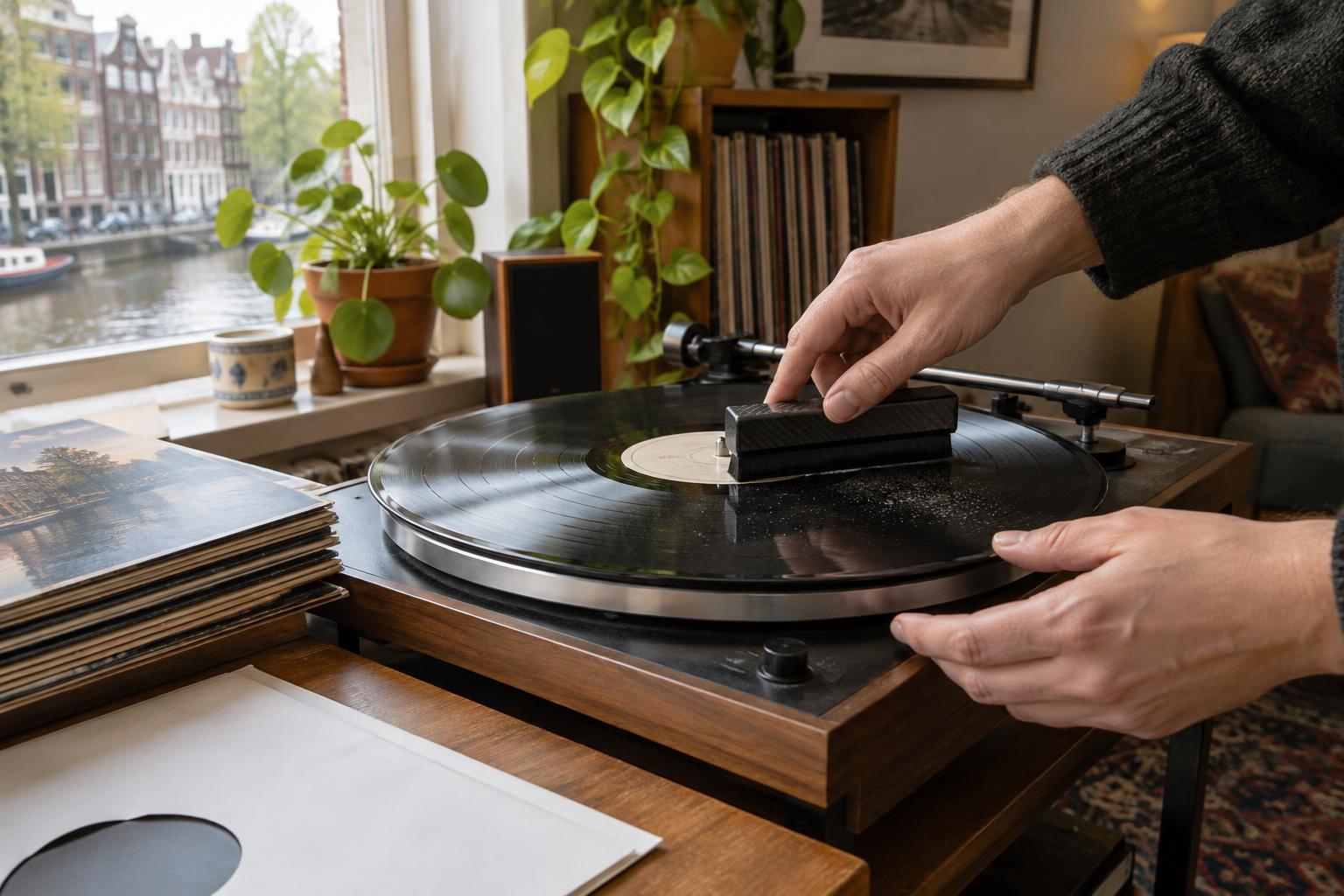
Give each record a clean inner sleeve that lets the disc slide without scraping the jacket. When removing the disc, support the jacket with one hand and guide the inner sleeve out with the other rather than shaking the record toward a seam. Hold the disc by its edge and label, and return it to the inner sleeve before putting it away.
If a jacket is fragile, you can store the disc in its inner sleeve just behind the jacket, with both inside a roomy protective outer sleeve. This keeps the disc’s edge from pushing directly on an old seam. Position the inner sleeve opening upward inside the outer sleeve so the record is less likely to slip out. Do not force a thick gatefold, insert or multiple-disc album into an outer sleeve that fits too tightly.
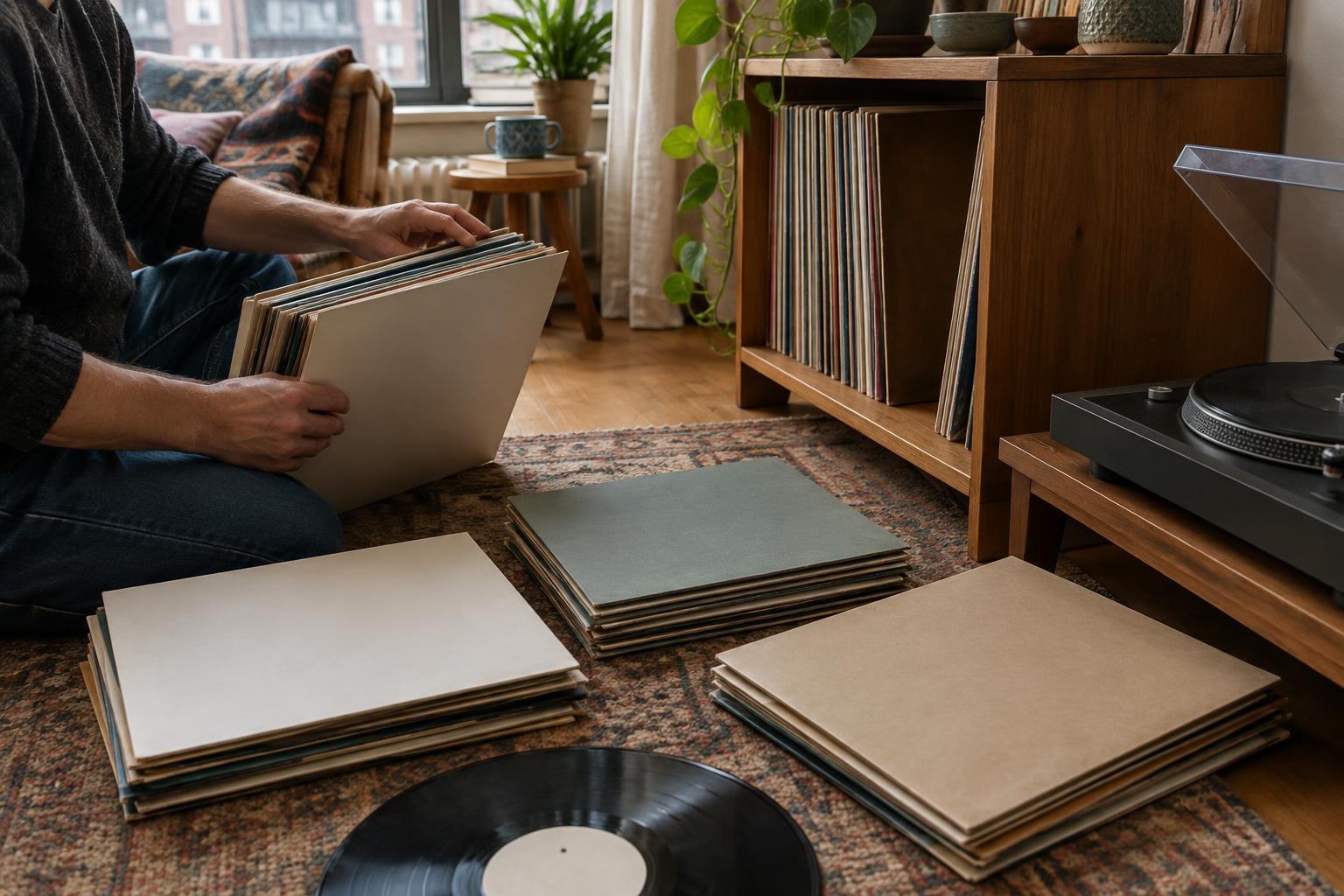
Store records upright, with enough room to lift one out without dragging its neighbours along. Avoid packing them so tightly that jackets bow, but do not leave a tall row leaning sharply. Keeping shelves away from damp areas and strong heat also helps paperboard and old adhesive stay in better condition.
Decide whether to repair
Not every split needs glue. If the disc is safe in an inner sleeve and an outer sleeve keeps the jacket together, leaving a worn seam as it is may be the least disruptive choice. This is worth considering for a collectible jacket, an unusual construction or a sleeve with artwork at the damaged edge. A visible amateur repair can be harder to undo than the original split.
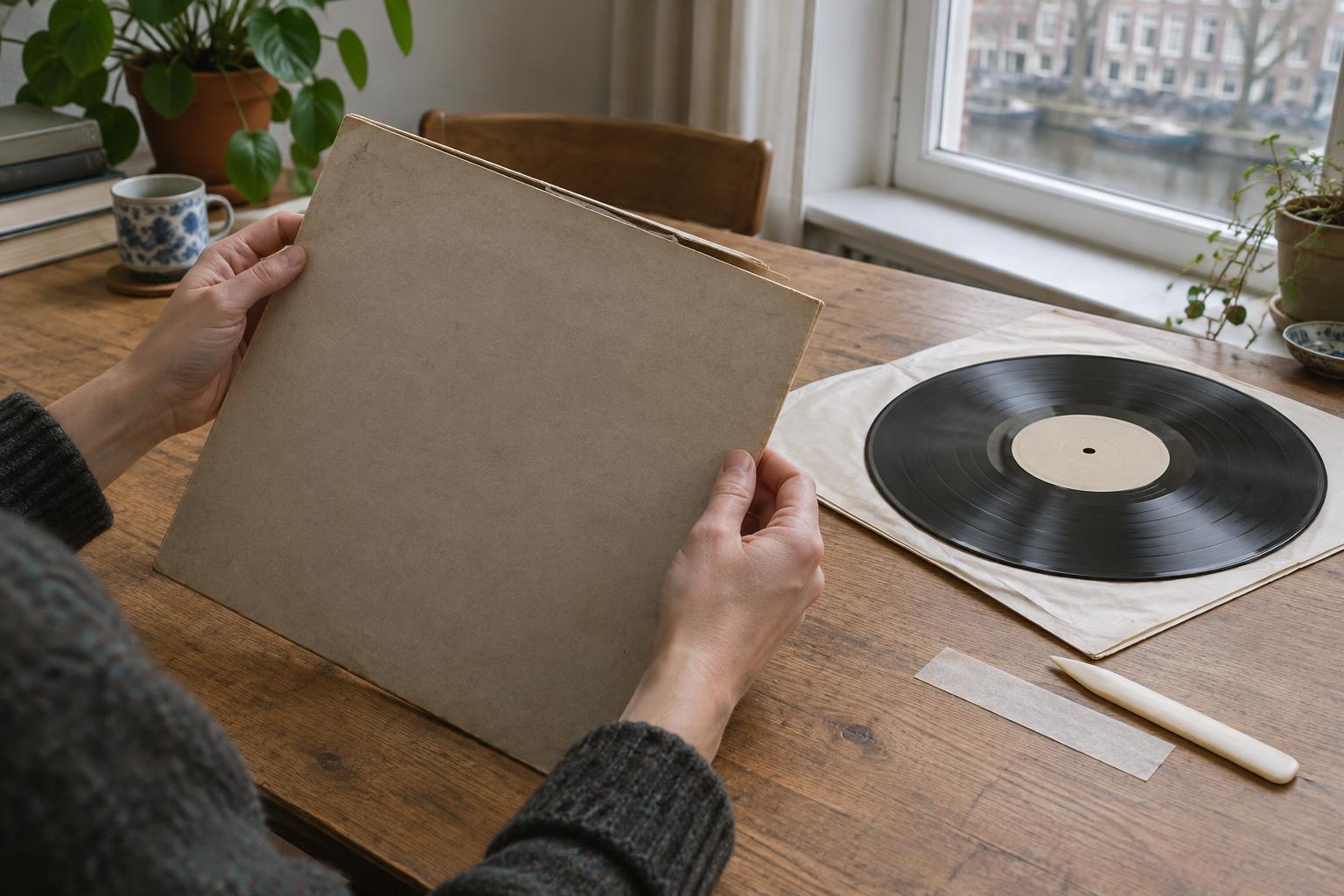
For an everyday jacket with a short, clean separation, a modest repair can stop the opening from spreading. First remove the record, inner sleeve and any inserts. Work on a clean, dry surface and gently clear loose dust from the seam. Check that the edges meet naturally; if you have to bend the jacket or pull the paperboard into place, do not force it.
Make a small, careful repair
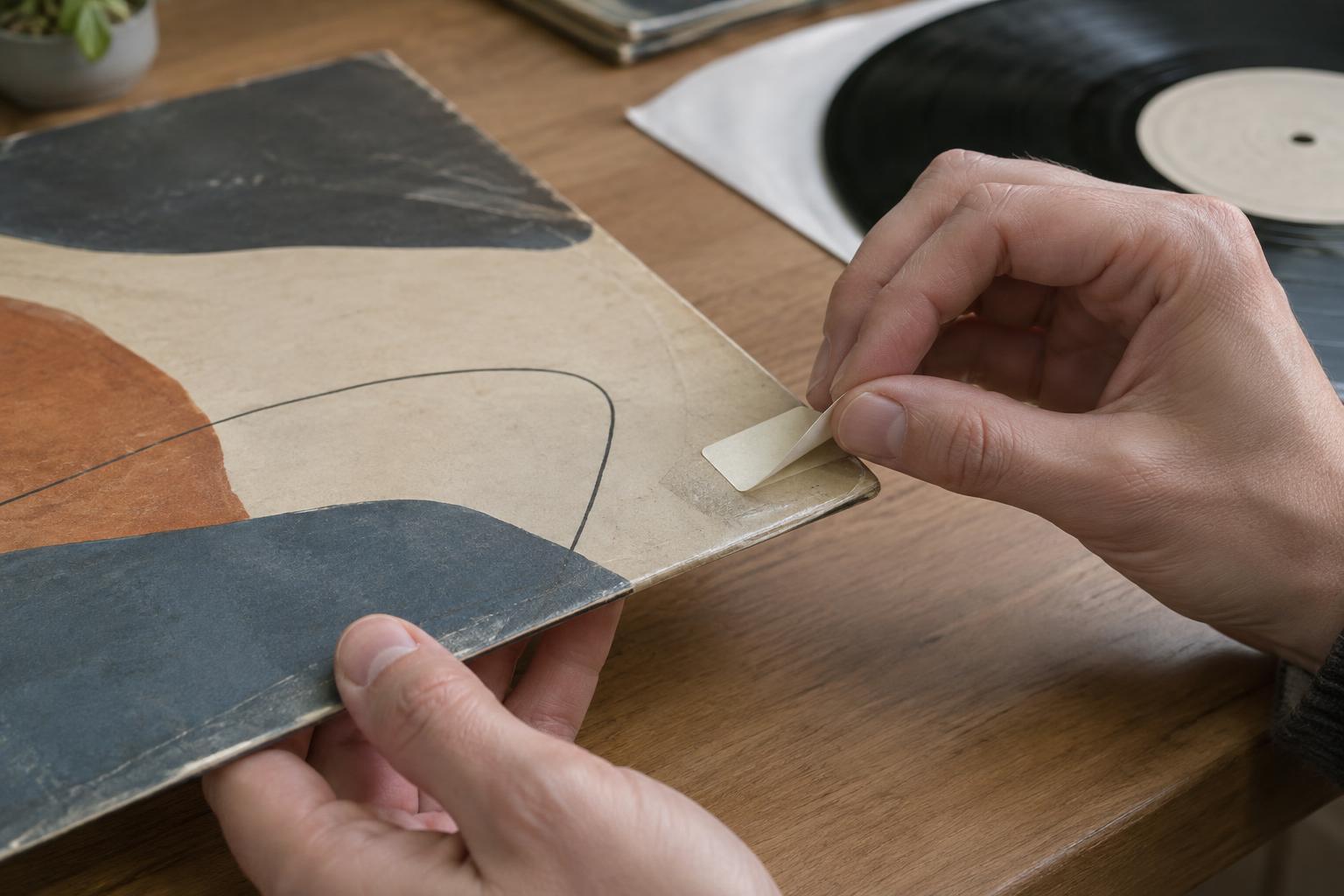
For a seam whose original flap has simply come unglued, apply a very thin layer of suitable paper adhesive to the original bonding area, not across the printed outside. A small brush offers more control than a glue bottle tip. Press the flap into alignment and wipe away any excess immediately, taking care not to spread adhesive onto the artwork or inside the jacket. Keep the jacket empty and open enough that its two faces cannot accidentally stick together while the repair dries. Follow the adhesive’s drying instructions before replacing the record.
If the paperboard has torn rather than separated at a flap, an internal support made from thin, acid-free paper may be less conspicuous than tape on the outside. It needs to sit flat and must not obstruct the inner sleeve. Test the fit without adhesive first. Paper and adhesives can discolour or affect printing, so avoid experimenting on a jacket whose condition matters to you. Do not use household clear tape, packing tape or thick glue as a quick fix; they can leave residue, stain paper or create a stiff edge that fails beside the repair.
Handle repaired jackets gently
A repaired seam is still a vulnerable part of the jacket. Once it is fully dry, check that the inner sleeve moves freely and nothing feels tacky inside. Put the record back only after that check. If the seam begins to open again, storing the disc behind the jacket is safer than adding more adhesive each time.
For a rare or personally irreplaceable sleeve, consider a paper conservator before attempting a repair. For most listening copies, the aim is simpler: protect the disc, keep the jacket usable and avoid turning a small split into a larger one.