Start with the catalog number
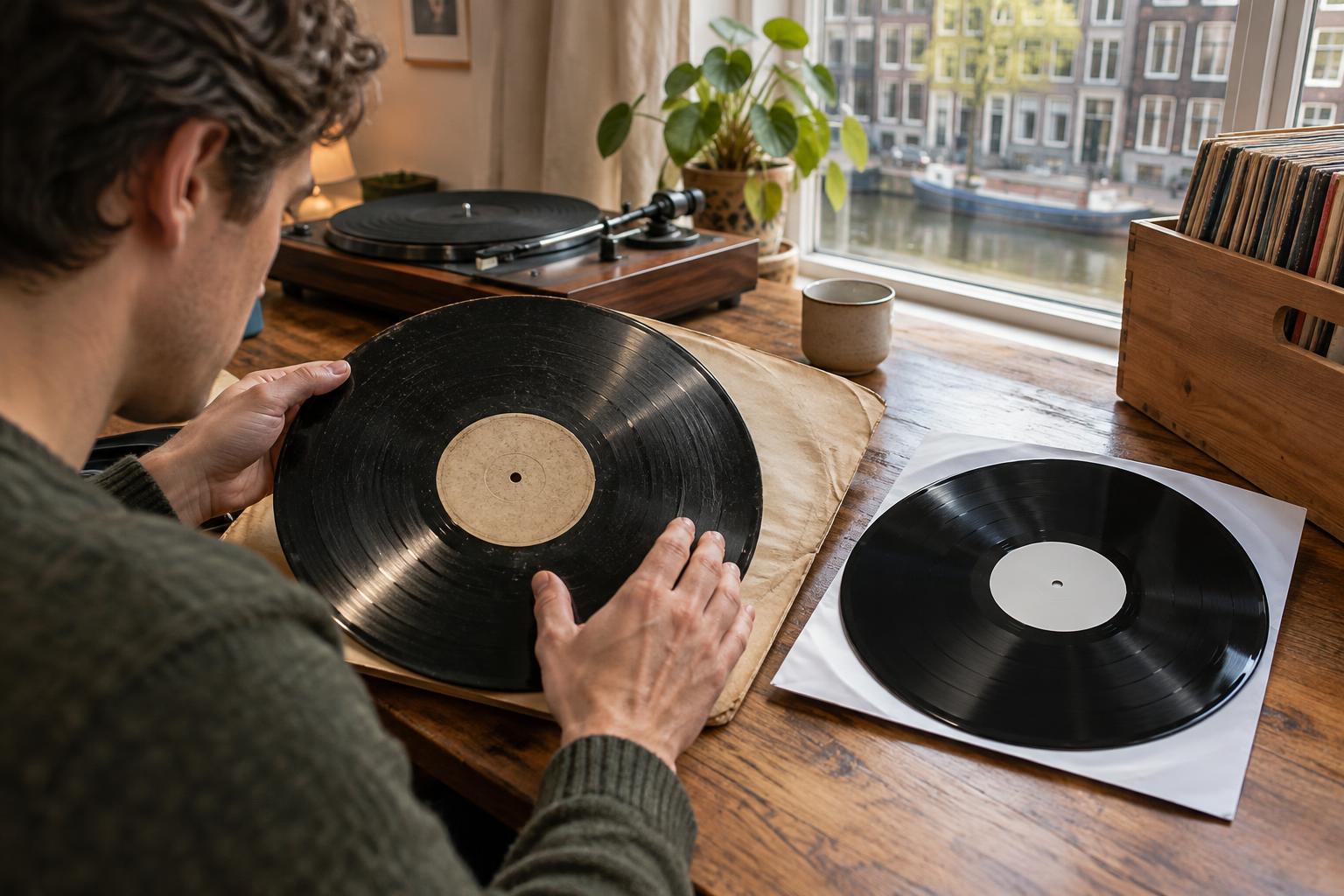
A catalog number is an identifier assigned to a release by a label or distributor. Look for it on the record’s centre labels and, often, on the sleeve spine, back cover or inner sleeve. It may combine letters, numbers, spaces, hyphens or a label prefix. Treat the whole sequence as useful: a small suffix can distinguish one version from another.
The catalog number is a good first clue, but it does not necessarily identify the exact copy in your hands. A sleeve and its record can have different printed numbers, particularly if packaging was reused or the two have been paired later. Reissues can also resemble earlier editions while carrying a different number on the label. Write down what appears on the sleeve and on each side of the record rather than assuming they match.
Find the markings in the runout
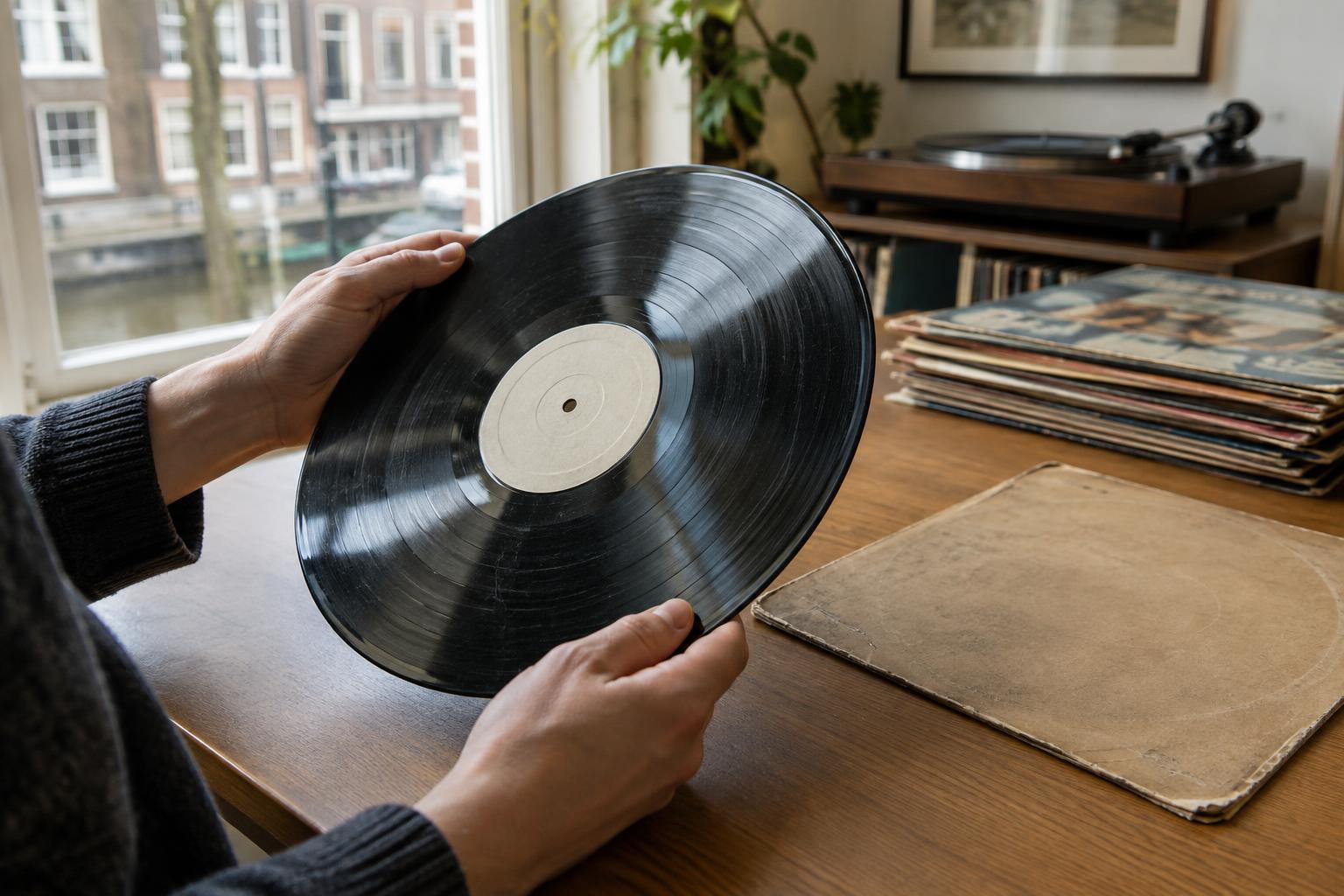
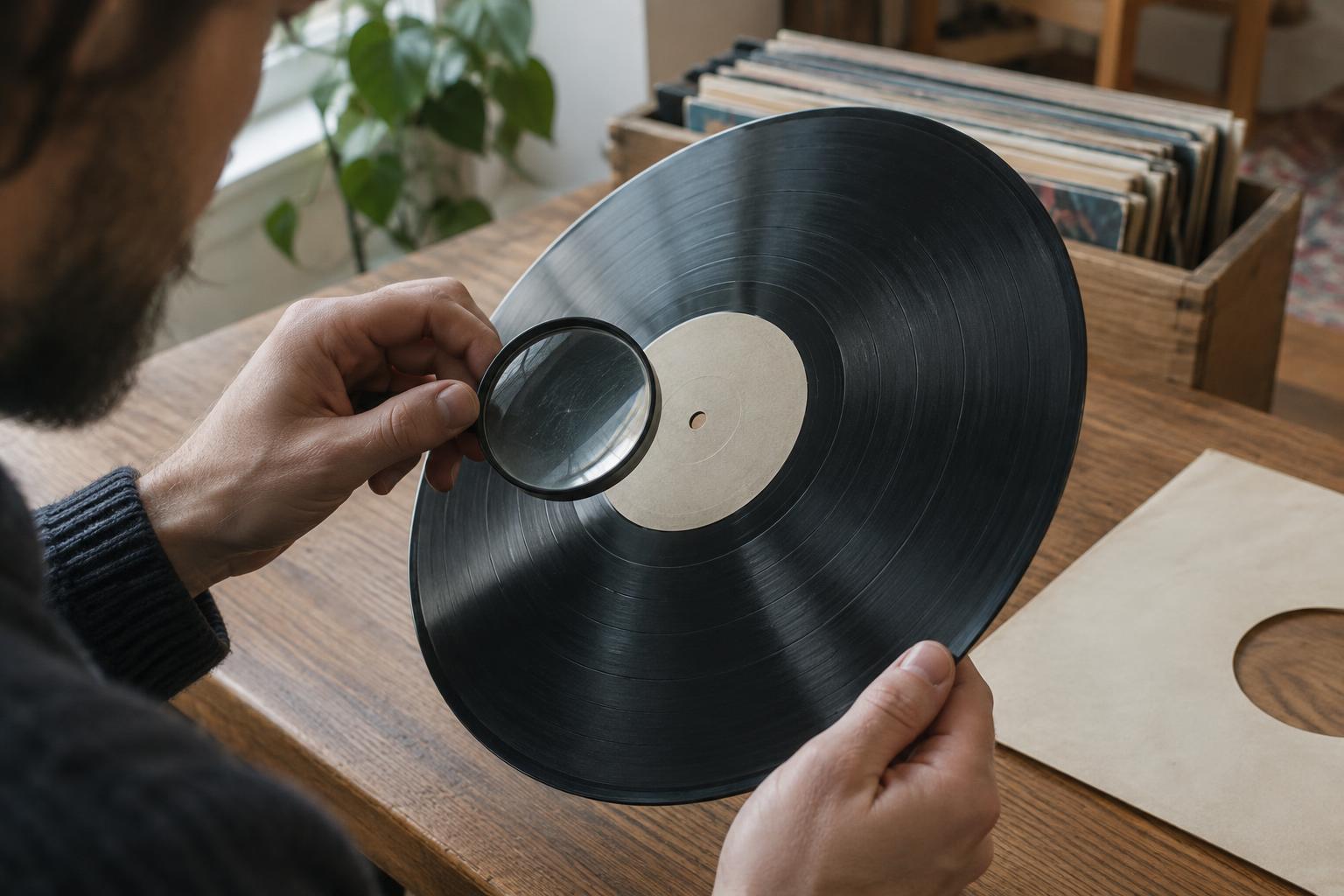
The runout is the smooth-looking area between the end of the recorded grooves and the centre label. Under a lamp, tilt the record gently and look for letters, numbers or symbols scratched or stamped into that space. Collectors also call it the dead wax, although its markings can contain some of a record’s most useful identifying details.
Runout text can be faint, spread around the circle or partly hidden by glare. Check both sides: they may have different inscriptions. To inspect them, hold the record by its edge and label, and turn the record rather than dragging a finger across the surface. If you are noting a mark, distinguish between a character you can read confidently and one that might be, for example, a 1 or an I. A photo taken at an angle can help you check later.
Understand what the markings might mean
A long string in the runout is often a matrix or lacquer-related number associated with a particular side. It may resemble the catalog number, but the two serve different purposes. Additional letters or numbers may indicate a cut, revision, side designation or manufacturing step. Stamped marks and handwritten etchings can appear together; the difference in appearance may reflect different stages or people involved in production.
You might also see initials, short words, logos or other symbols. Some are associated with mastering, cutting or pressing, while others are simply internal identifiers. There is no universal code that makes every runout readable on sight. An “A” does not always mean a first pressing, and a low-looking number does not prove a copy was pressed before every other version. Interpret a mark in the context of the rest of the record.
Compare the whole record, not one clue
When you are trying to identify a pressing, begin with the artist, title, track list and format. Then compare the catalog number on the labels and sleeve, the label design, the country information if printed, and the runout on each side. Details such as a different track order, a changed credit or an extra runout character can help separate versions that otherwise look alike.
For example, two copies may share a cover and catalog number but have different runout endings. That suggests a difference worth investigating; it does not, by itself, establish a different release date or sound quality. Conversely, matching runouts are helpful evidence, but worn labels, swapped sleeves and hard-to-read marks can still complicate identification. Keep your notes literal before drawing a conclusion: record exactly what you see, including spaces and uncertain characters.
Make the habit useful while crate-digging
In a shop or at a fair, you may not have time to decode every inscription. Check the centre label and sleeve first, then inspect the runout if a particular version matters to you. Good light and a little patience are more useful than a rushed guess. Handle the record carefully, return it to its inner sleeve and leave the browsing area tidy for the next person.
Catalog numbers and runouts are best understood as pieces of a larger puzzle. They can help you avoid buying an unintended duplicate, spot a record in the wrong sleeve or learn how different copies of a favourite album were made. The aim is not to turn every purchase into an investigation. It is to know where to look when a detail catches your eye—and to stay curious when the evidence does not give a simple answer.