Know what you are hearing
A stylus is designed to follow tiny movements in a record groove, so it can also respond to movement that has nothing to do with the music. A passing footstep may produce a thump or make the stylus skip. Vibration from a motor, appliance or loose piece of furniture may sound like a persistent rumble. Acoustic feedback is different: sound from the speakers reaches the turntable, travels through its support or the air, and is picked up by the stylus again. That repeating loop can become a low-frequency hum, booming bass or howl as the volume rises.
Before changing anything, listen at a moderate level and note when the problem occurs. Does it happen only when someone crosses the room? Does it increase with volume, even while nobody moves? Does it appear on several records? These observations help distinguish an environmental problem from a dirty or damaged record. If the sound becomes loud or the stylus starts jumping, lower the volume promptly rather than continuing the test.
Start with placement and a steady surface
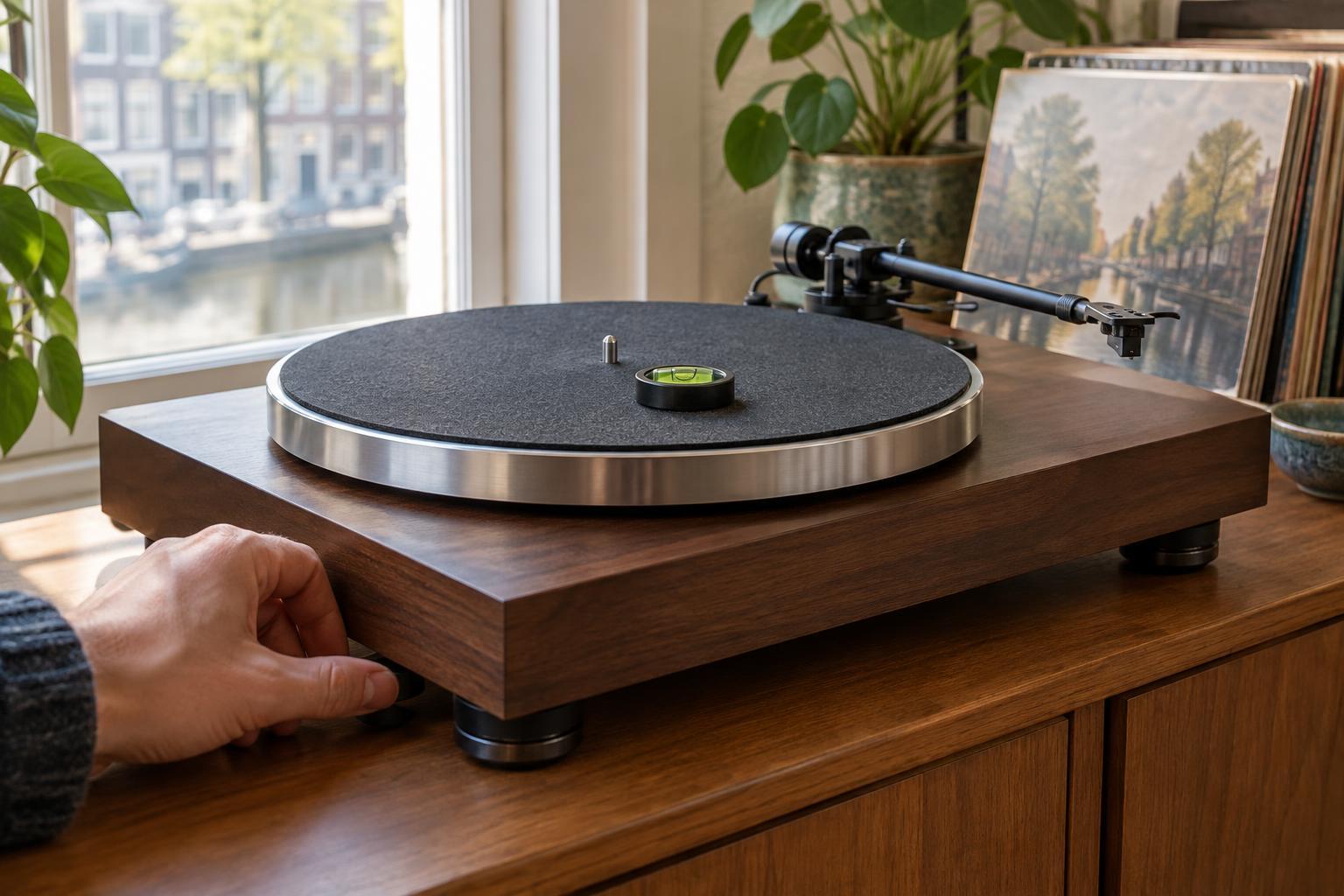
Give the turntable a firm, level home that does not rock when lightly touched. A cabinet with loose joints, a shelf that flexes or a table shared with a speaker can carry vibration straight to the cartridge. Tighten or stabilize furniture where possible, and keep the turntable away from doors that slam and surfaces people regularly bump. Use a small level to check the platter in more than one direction, adjusting the furniture or the turntable’s feet according to its design.
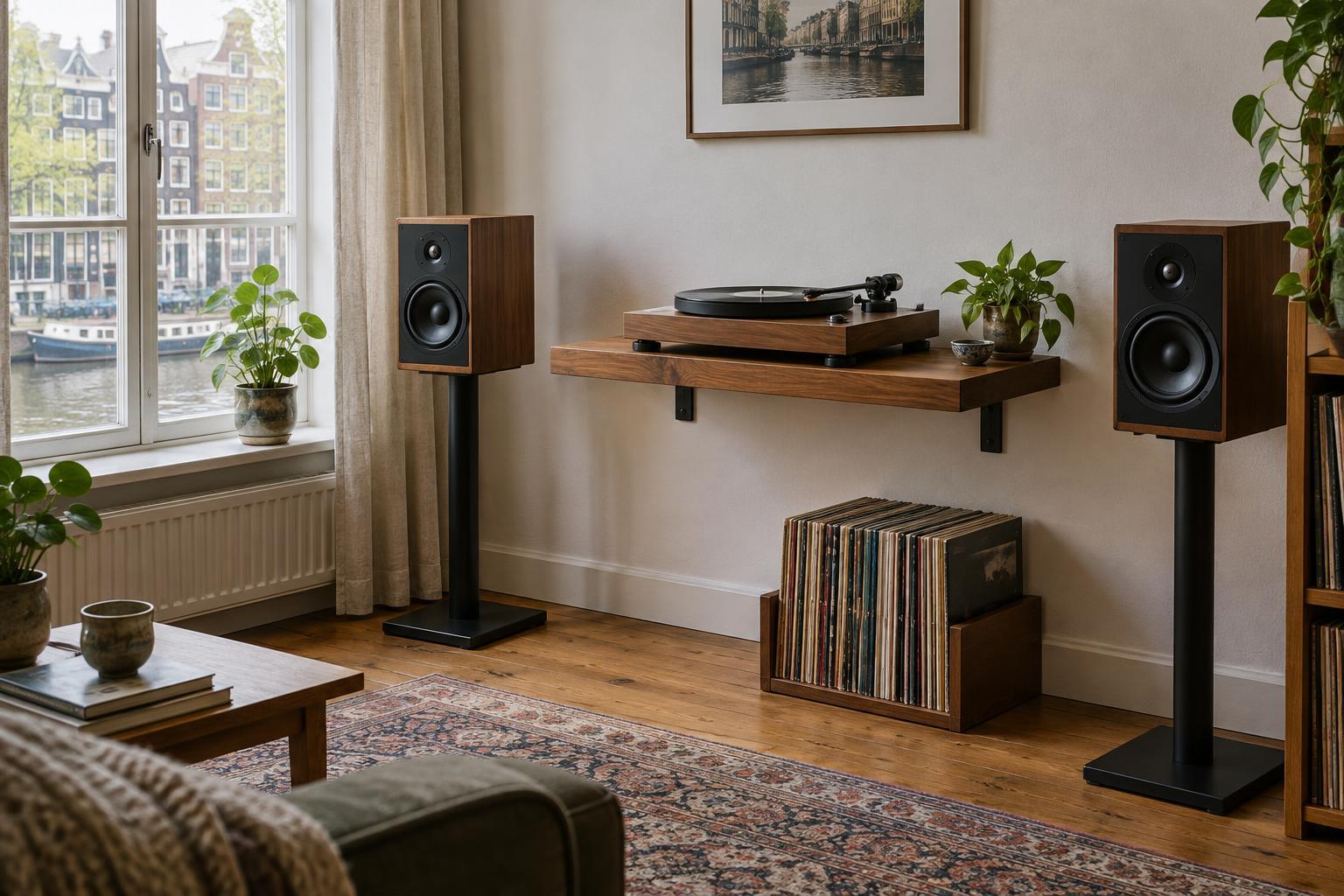
Speaker placement is often the simplest change to try. Do not put speakers on the same shelf as the turntable if you can avoid it. Moving the turntable farther from a speaker, especially one producing strong bass, may help with airborne feedback too. Try one change at a time at the same listening level, so you can tell what made a difference. In a compact room, even a modest rearrangement can be more useful than adding accessories without knowing the source of the vibration.
Choose isolation for the problem you actually have
Isolation aims to reduce vibration passing between the turntable and its surroundings. A solid wall-mounted shelf may help when footsteps make a flexible floor move, provided the wall and mounting are suitable for the load. A stable stand can also work well if the existing cabinet wobbles. If vibration is coming through otherwise sturdy furniture, appropriately sized isolation feet or a platform may be worth trying. Check the turntable’s weight and the product’s load range: a support that compresses too much or barely moves may not behave as intended.
More layers are not automatically better. Stacking a soft pad, heavy slab and springy feet can leave a turntable unsteady, particularly when cueing a record. Likewise, a heavy platform may steady a light cabinet or may simply add weight to furniture that already flexes. Make a small, reversible change, then check that the platter remains level and the turntable does not sway. Isolation can reduce vibration, but it cannot fully compensate for a support that is loose or badly positioned.
Check the turntable without masking a setup issue
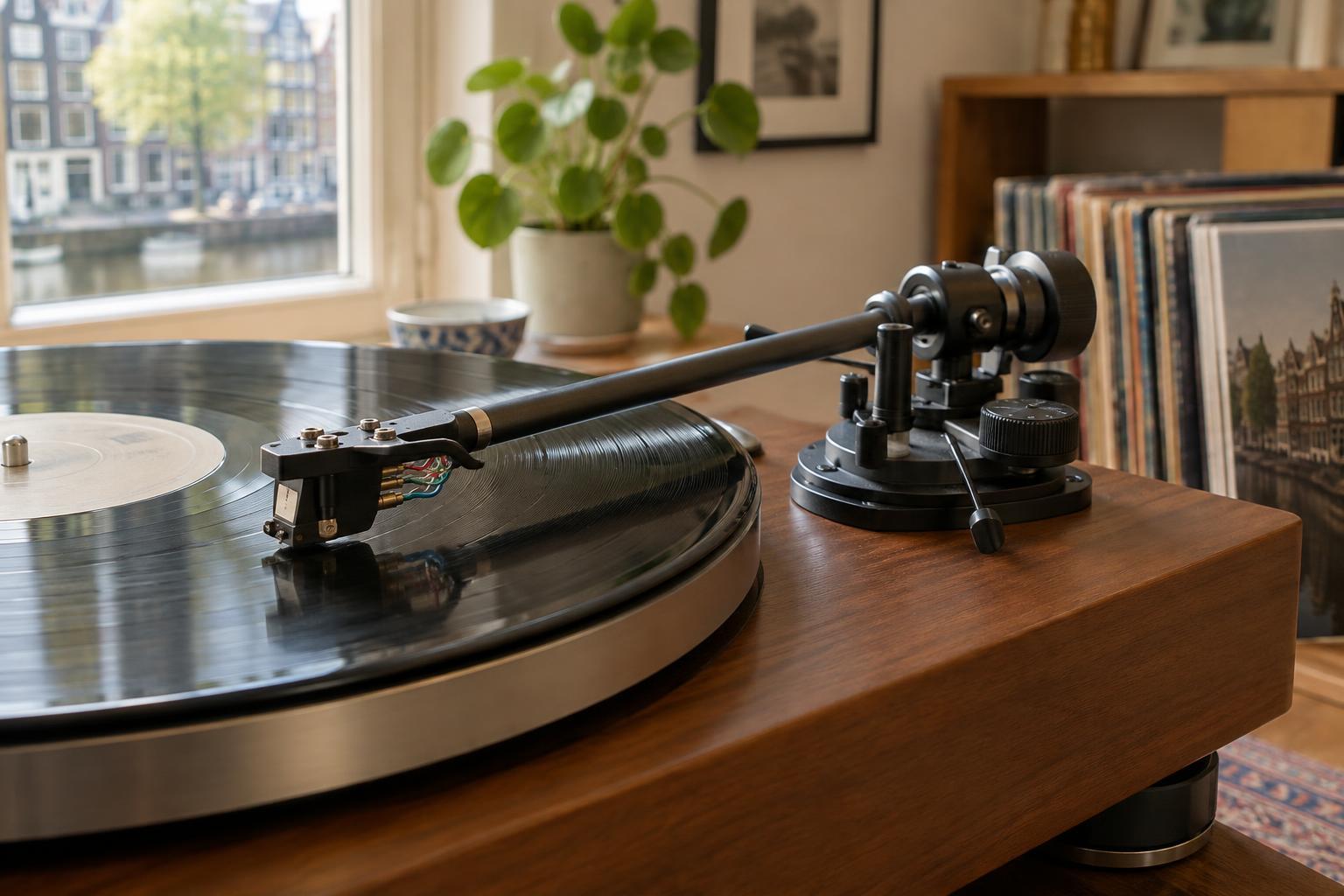
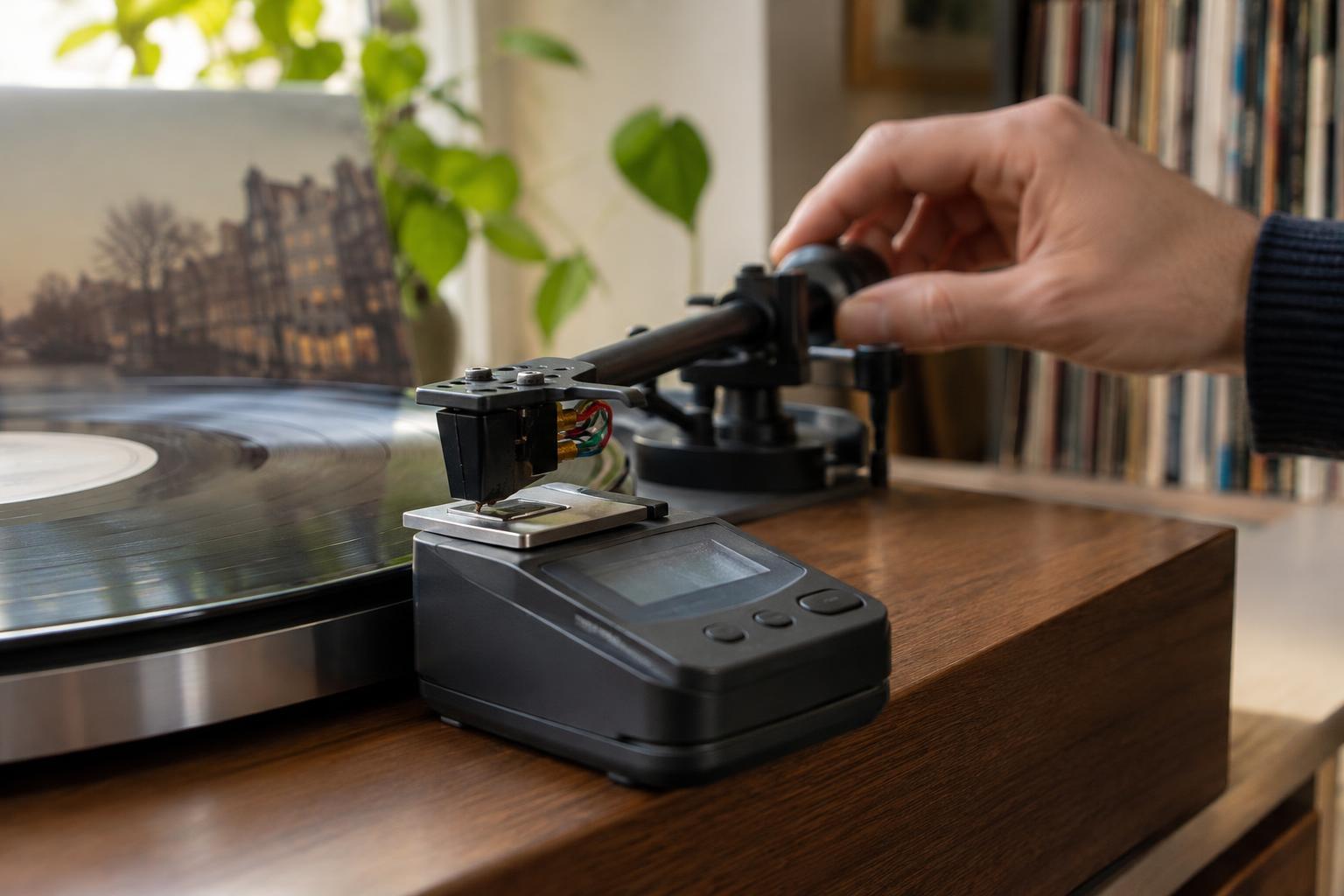
Once placement is sorted, make sure the turntable itself is assembled as intended. Its feet should sit evenly, the platter should be properly seated, and a removable transport lock should be released if the model has one. Keep the stylus clean using a method appropriate to the cartridge, and make sure the tracking force and anti-skate settings follow the cartridge and turntable instructions. Incorrect settings may make a stylus more likely to mistrack when disturbed, though increasing tracking force beyond the recommended range is not a vibration fix.
Some turntables have a suspended chassis that is meant to move in a controlled way; others depend on a rigid base. Avoid adding wedges, weights or improvised supports inside the mechanism unless the manufacturer recommends them. If a rumble persists at low volume across records, or you notice unusual mechanical noise when the platter runs, the cause may be within the turntable rather than the room. Model-specific instructions or a qualified repairer are a better next step than repeated guesswork.
Test changes at normal listening levels
After each adjustment, play a familiar record at a comfortable volume. Listen for the original symptom, then walk normally through the room and check whether footfalls still reach the stylus. To investigate possible acoustic feedback, gradually raise the volume only to a level you would ordinarily use. If bass begins to build or a howl starts, turn it back down. The goal is stable everyday playback, not finding the loudest level the system can survive.
There is no single isolation recipe for every room. Floor construction, furniture, speaker position and turntable design all affect the result. Start with the inexpensive fundamentals: a steady, level support and sensible distance from the speakers. Change one variable at a time and keep the arrangement that makes records easier to enjoy without making the turntable awkward or unsafe to use.