Check the surface before you start
A price sticker can look like a small nuisance, but the paper underneath may be more fragile than the sticker. Before trying to lift it, look closely at the jacket in good light. A glossy, coated cover may tolerate gentle handling better than an uncoated sleeve with a soft, papery surface. Old jackets can also have loose ink, scuffs or layers that have begun to separate. If you see damage around the sticker, removing it may make that damage worse.
Check whether the sticker is on the jacket itself or on removable shrink wrap. If it is on the wrap and you intend to keep the wrap, take the same care; a tear can spread quickly. If the sticker is on a printed jacket, consider whether it needs to come off at all. A small price label may be less distracting than a torn patch of artwork. There is no method that guarantees a clean result on every sleeve.
Prepare a clean, steady workspace
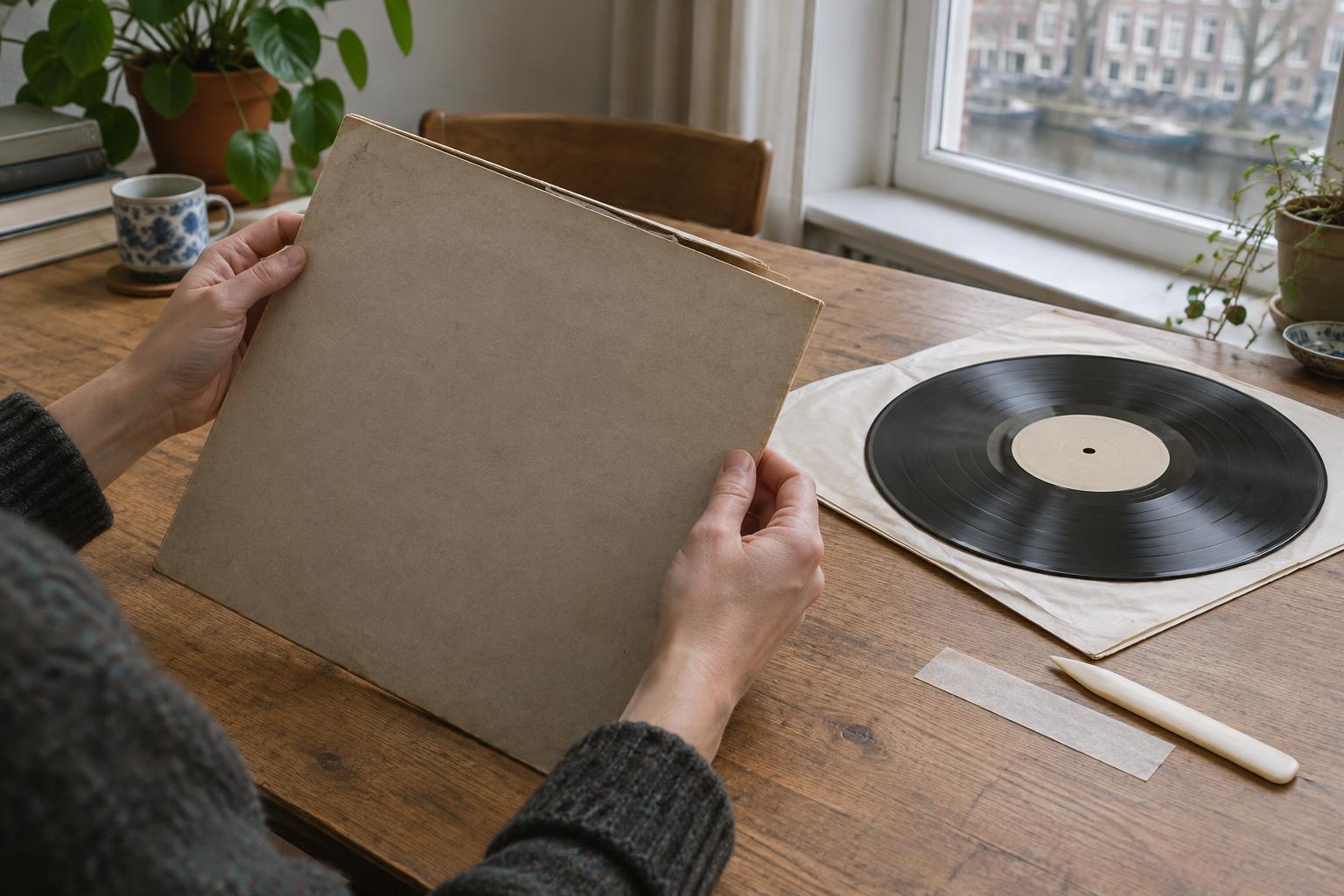
Take the record and any inner sleeve out of the jacket before working. This keeps pressure off the disc and lets you support the cover from inside if needed. Put the jacket on a clean, flat surface with enough room to turn it as you work. Wash and dry your hands so you can feel what the paper is doing without adding moisture or grease.
Start without liquids, heat or tools. Water can stain or swell cardboard, and common adhesive removers can affect ink, coating or glue in the jacket seams. A hair dryer may soften adhesive, but it also introduces heat that can be difficult to control near printed paper. The gentlest first attempt is a slow peel using your fingers.
Lift one corner and peel low
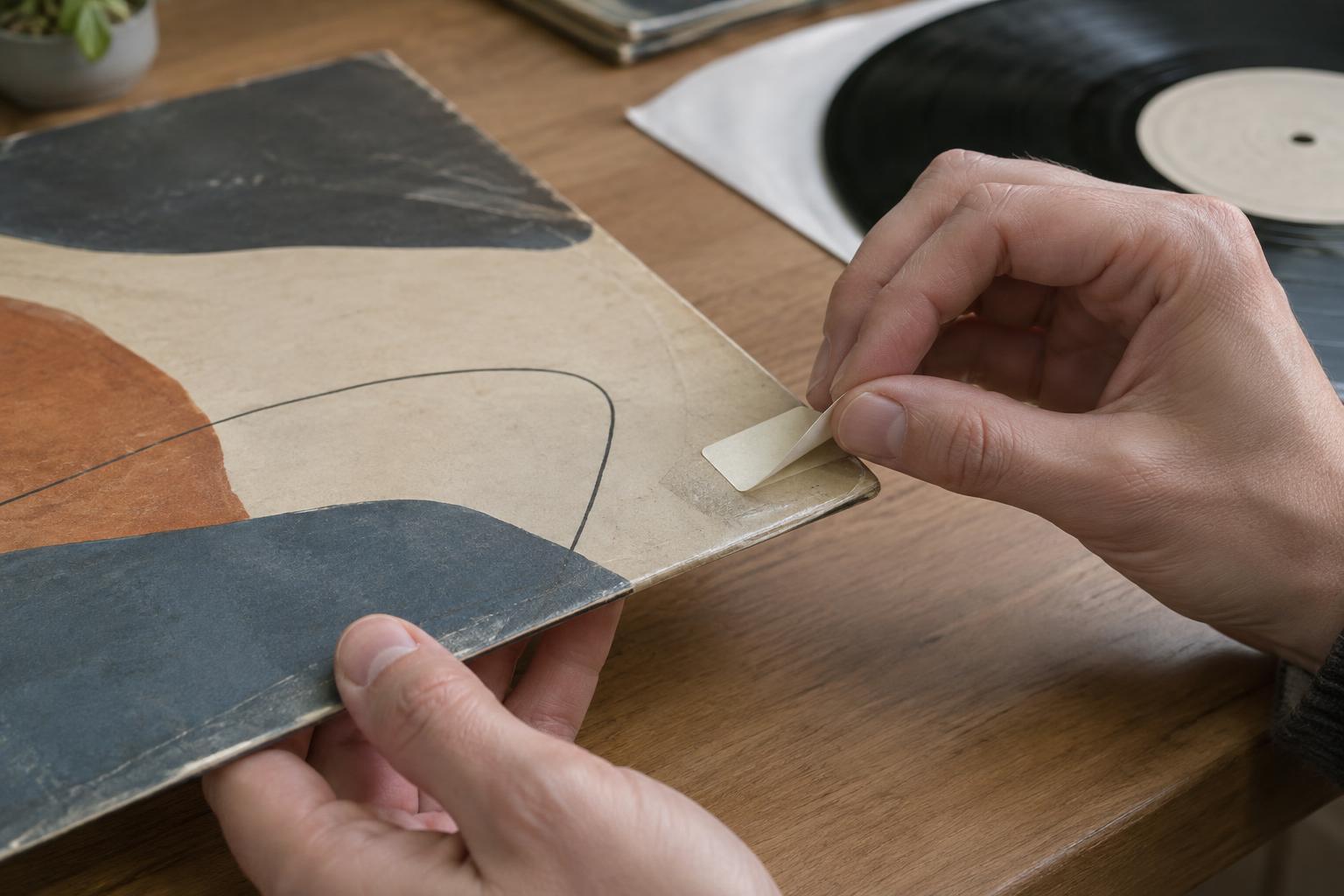
Choose a corner where the sticker already seems a little loose. Use a clean fingernail to ease up just the edge, taking care not to scrape the printed surface. Once you have a small tab to hold, pull it back over the sticker rather than lifting it straight up from the jacket. Keeping the peel low and close to the surface can reduce the upward force on the paper beneath it.
Move a few millimetres at a time. With your free hand, hold the jacket flat near the point where the sticker is separating. Watch the surface, not just the label: if ink, fibres or a layer of the cover starts to rise with the adhesive, stop immediately. You can try approaching gently from a different corner, but do not keep pulling through resistance. Forcing a stubborn section is the point at which a removable sticker can become a permanent tear.
Deal cautiously with leftover adhesive
Even if the label lifts cleanly, it may leave a tacky patch. First, give it time and check whether it is actually sticky to the touch; some marks are changes in the finish rather than residue you can remove. On a sound, coated surface, you can try lightly touching the residue with the adhesive side of the removed sticker, lifting straight away each time. Avoid rubbing, which can spread adhesive or dull the finish. Stop if the printed surface shows any change.
On uncoated or already damaged paper, leaving a trace of adhesive is often the safer choice. Household oils, alcohol, water and cleaning sprays may seem convenient, but they can soak into cardboard or alter the artwork. If a valuable or personally important jacket has a large, stubborn sticker, consider asking a paper conservator for guidance rather than experimenting on the cover.
Know when a sticker should stay
Some labels have bonded firmly to the jacket, especially where the surface is porous or worn. If the first careful attempt pulls up fibres, press the loose corner back down gently and leave the rest alone. You might also choose to leave a sticker that covers a weak seam, a crease or flaking print. A clean-looking cover is not worth losing part of its original artwork.
For future finds, inspect stickers before buying when jacket condition matters to you. At home, store records upright in protective outer sleeves so exposed corners and old labels receive less handling. Taking a minute to assess a sticker before peeling it will usually do more for the jacket than any aggressive removal trick.