Know what you are trying to identify
“Unofficial” and “counterfeit” are useful but different descriptions. An unofficial release may openly present itself as a live recording, an alternate version or a reproduction that was not issued by the rights holder. A counterfeit goes further by trying to pass as a particular authorized release. Either can cause disappointment if you expected an original pressing, a properly licensed reissue or a certain sound quality.
Start with the seller’s exact claim rather than the record’s appearance. Is it advertised as a first pressing, a later reissue or simply a copy of an album? Those claims require different checks. An unusual edition is not automatically suspicious: authorized releases can vary by country, manufacturing plant and production run. Your aim is to establish what this specific copy is, not to decide its status from one odd detail.
Compare the whole package, not one clue
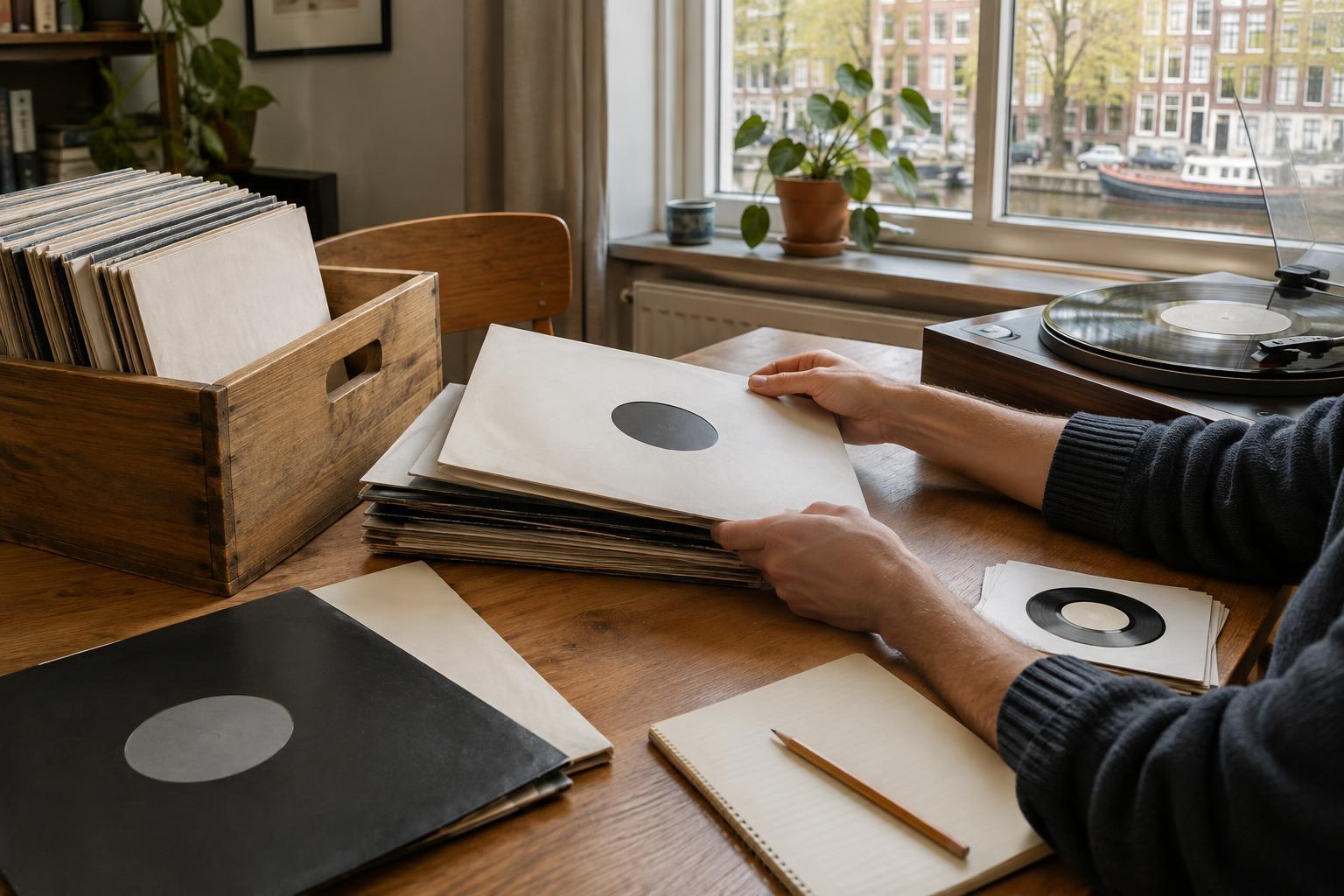
Examine the sleeve, spine, labels and inserts together. Warning signs can include blurry type or artwork, colours that look inconsistent across the package, missing credits, awkwardly cropped images or a label design that conflicts with the edition being advertised. Check whether the inner sleeve, lyric sheet or other extras match the seller’s description. Normal wear and manufacturing differences can explain some irregularities, so treat these as reasons to investigate, not proof.
Also consider whether the record’s parts tell the same story. A sleeve associated with one edition can be paired with a different disc, deliberately or by accident. A barcode, catalogue number or printed year may help you narrow down possibilities, but none confirms a pressing on its own. If you are buying remotely, request clear photos of both labels, the front and back cover, and any inserts before relying on a brief listing title.
Look closely at the runout area
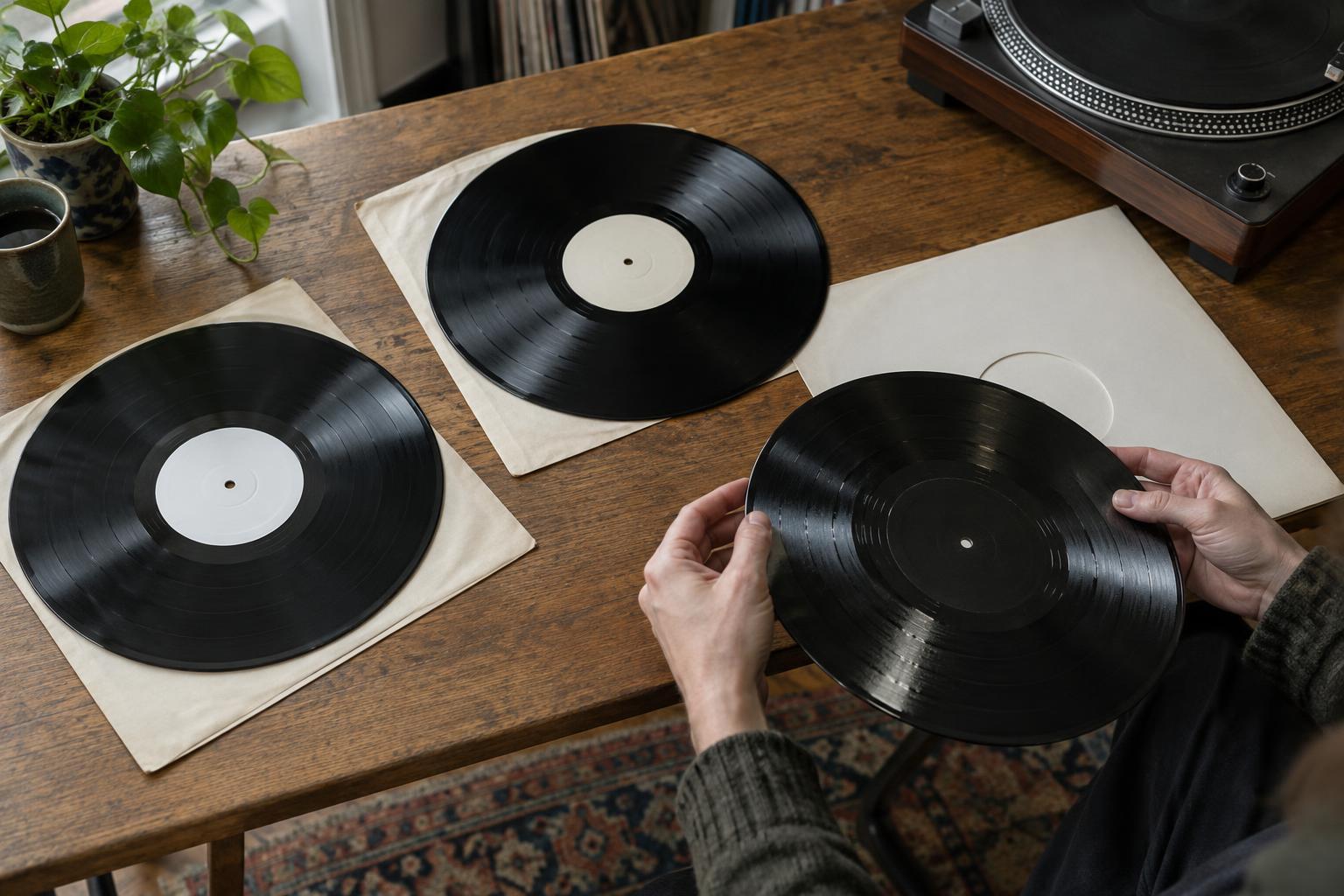
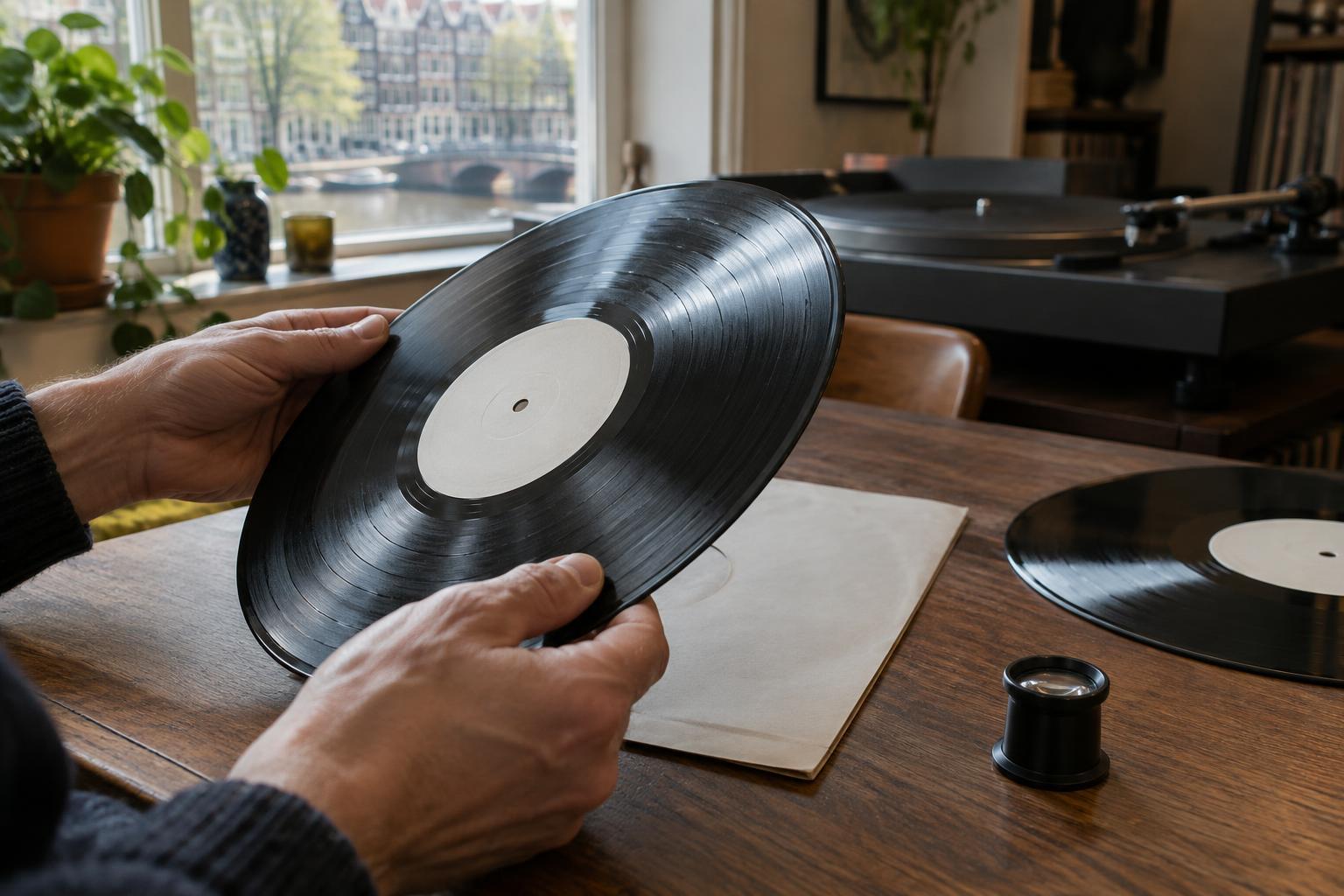
The runout—the space between the final groove and the centre label—often carries etched or stamped information used to identify a pressing. Compare the markings on both sides with the specific edition the seller claims to have. Look at the full combination of letters, numbers and symbols, as well as whether they appear etched or stamped. A single matching fragment may be shared by several versions.
Runout evidence has limits. Markings can be faint, hard to read or incompletely recorded in a seller’s notes. A counterfeit might imitate familiar details, while an authentic copy might have a legitimate variation. If a claimed pressing has the wrong runouts, ask for clarification; if the marks cannot be read, keep the identification tentative. Good light and angled close-up photos are often more useful than a transcription from memory.
Consider sound, price and the seller’s wording
If you can listen before buying, pay attention to persistent distortion, abrupt fades, unexpected track breaks or a recording that sounds unlike the edition you expected. None of these proves a record is unofficial: damage, poor setup and ordinary production choices can affect playback too. Sound is most useful when it prompts you to check the release details, rather than serving as a verdict by itself.
Price and description offer context. A sought-after pressing offered unusually cheaply may deserve a closer look, but bargains and mistakes do happen. Be cautious with vague phrases such as “rare original” when the seller cannot identify the edition or show the disc. Ask direct, neutral questions: Which pressing do you believe this is? Are the sleeve and record from the same copy? Can you provide runout photos? Clear answers help more than an argument over terminology.
Make a decision that fits your collecting goals
Not every collector has the same priorities. You may want an authorized issue, a particular pressing, a playable copy of the music or an unusual object for its own sake. Once you know what matters to you, decide what evidence you need before paying. For a costly or supposedly scarce copy, it is reasonable to pause when the identification remains uncertain, even if the record looks attractive.
When crate-digging in Amsterdam or anywhere else, handle records carefully, ask permission before taking photos and give a seller room to check details. If you find a discrepancy, describe the specific mismatch rather than making an accusation. Walking away from an uncertain purchase is fine. So is buying a clearly described edition that meets your needs. The important thing is to understand what is known, what is only suspected and what you are being asked to pay for.