Decide what your collection is for
Before buying a stack of records, ask what you want from them. Perhaps you want to hear familiar albums in full, explore a particular genre, collect music connected to Amsterdam, or give overlooked secondhand finds a chance. Any of those is a good starting point. A collection becomes easier to build when you can explain, in one sentence, why a record belongs in it.
Choose a focus narrow enough to guide your decisions but broad enough to stay enjoyable. You might begin with albums you already return to, a handful of favourite artists, or one style you want to understand better. Make a short wish list, then mark the titles you would actually play soon. This helps you distinguish a meaningful purchase from a record that merely looks interesting in the shop.
Set a budget for the whole hobby
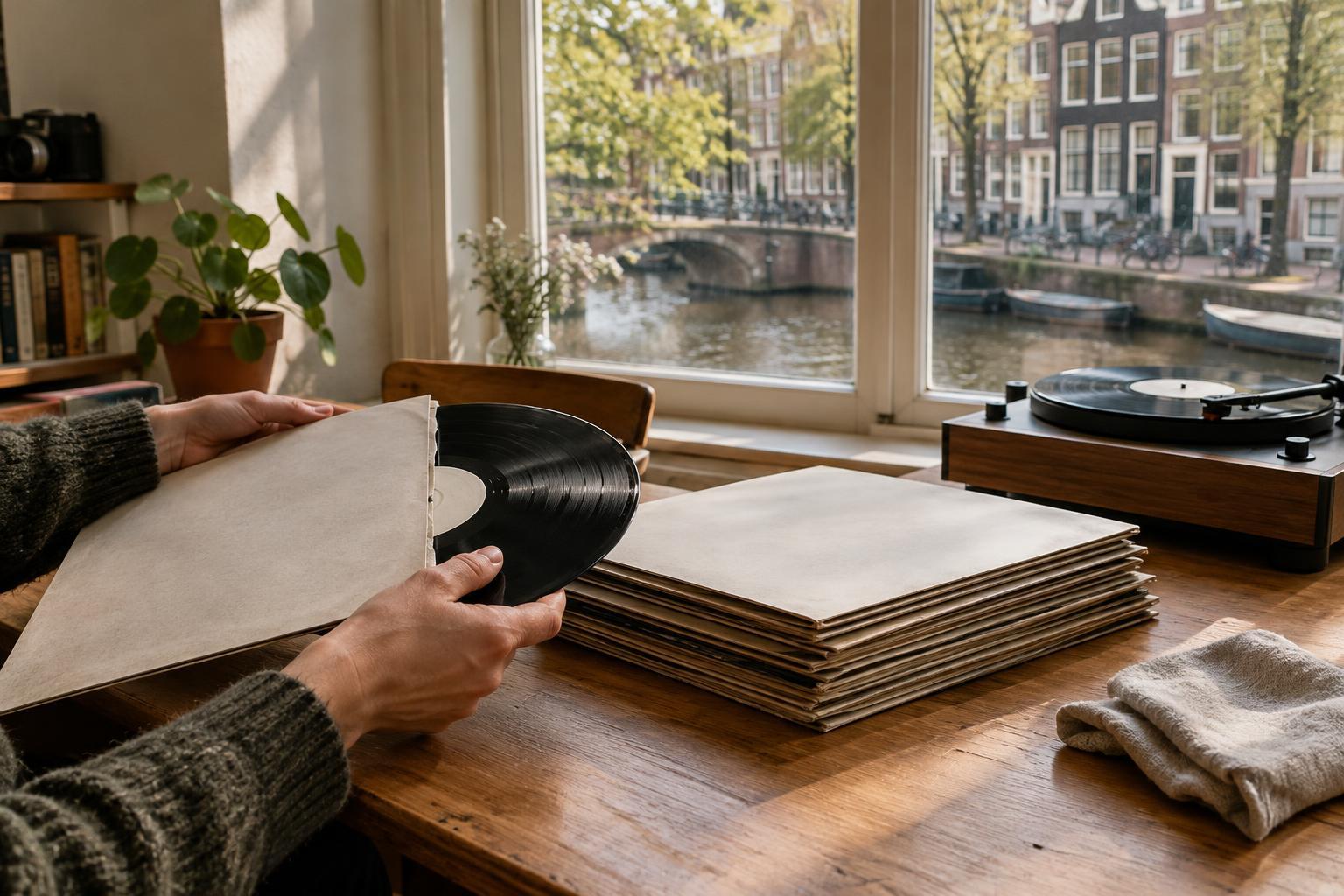
Decide what you can comfortably spend over a month or another period that suits you. That amount should cover more than records: a usable turntable setup, replacement stylus when needed, inner sleeves and basic cleaning supplies all have a place in the budget. If you do not yet have a way to play vinyl, start there. Buying records faster than you can listen to them can make the hobby feel like an accumulating bill.
Give yourself a limit for individual purchases as well. There is no universal price at which a record becomes a bargain; condition, availability and how much you want to hear it all matter. A modest allowance for unplanned finds can keep crate digging fun, while a separate wish-list fund lets you wait for a more expensive title without disrupting your regular spending. It is fine to leave a shop empty-handed.
Buy music you will listen to, not just records that seem collectible
A useful first shelf mixes trusted favourites with a little curiosity. If you know you love an album from beginning to end, owning it on vinyl gives you a reliable reason to put it on. For unfamiliar music, consider listening first where possible or asking a seller whether a listening station is available. A striking cover, limited-edition sticker or familiar name is not, by itself, a reason to spend beyond your plan.
Keep a simple record of what you own and what you are seeking. A note on your phone can prevent duplicate purchases and remind you which pressing or version you meant to find. It can also show whether your focus still fits your listening habits. If you keep buying records outside your original theme and playing them often, change the theme rather than treating your first plan as a rule.
Learn to inspect used records
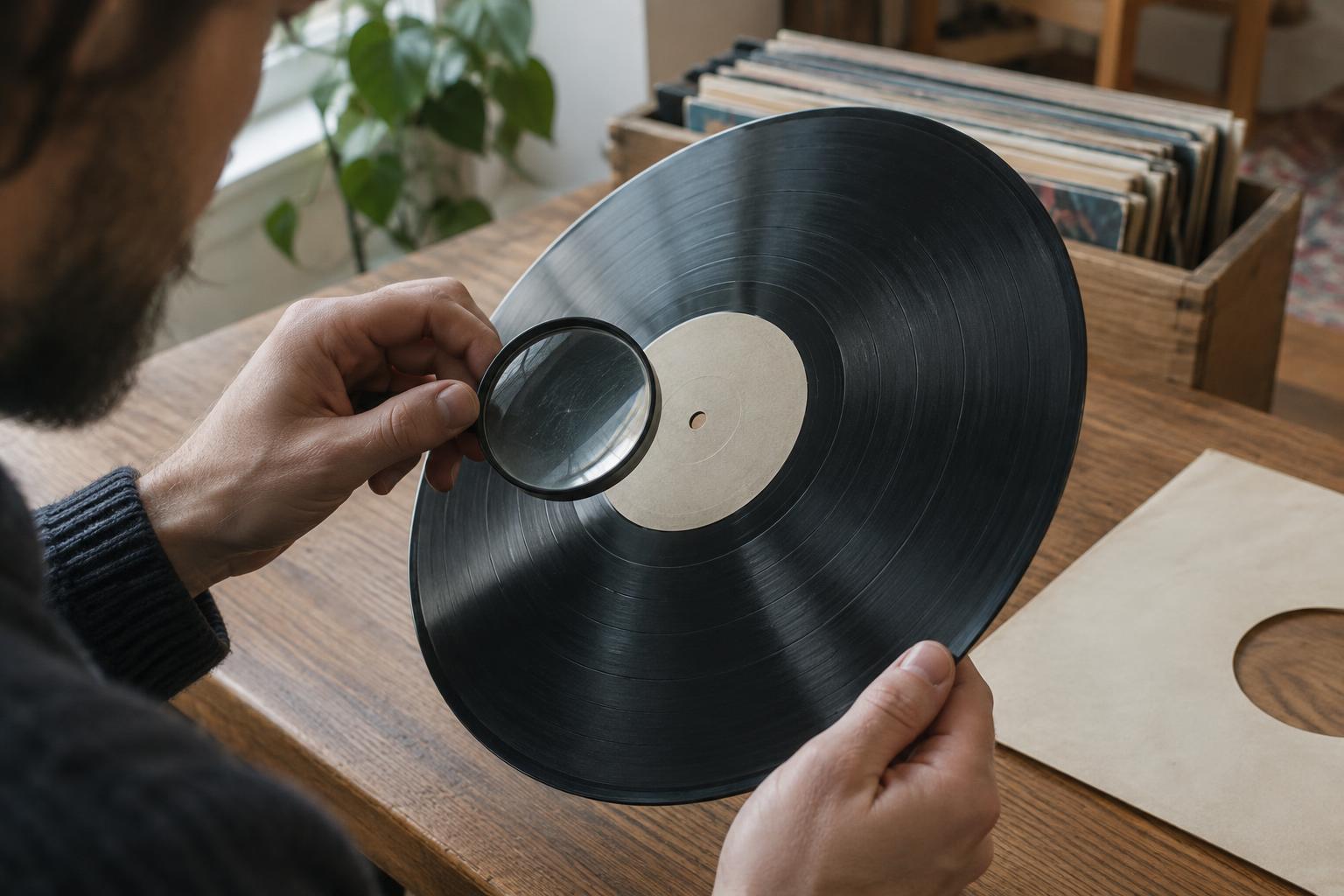
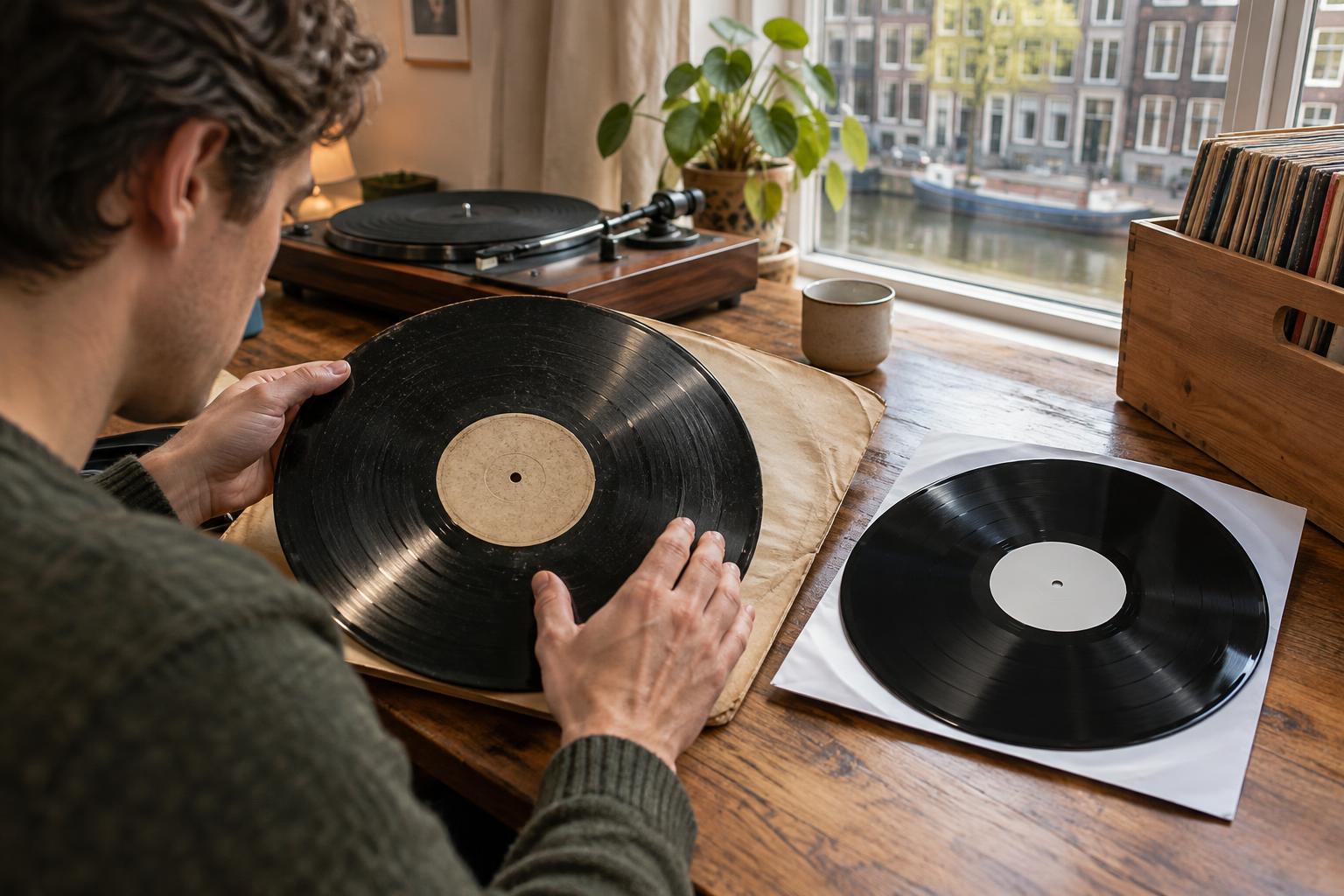
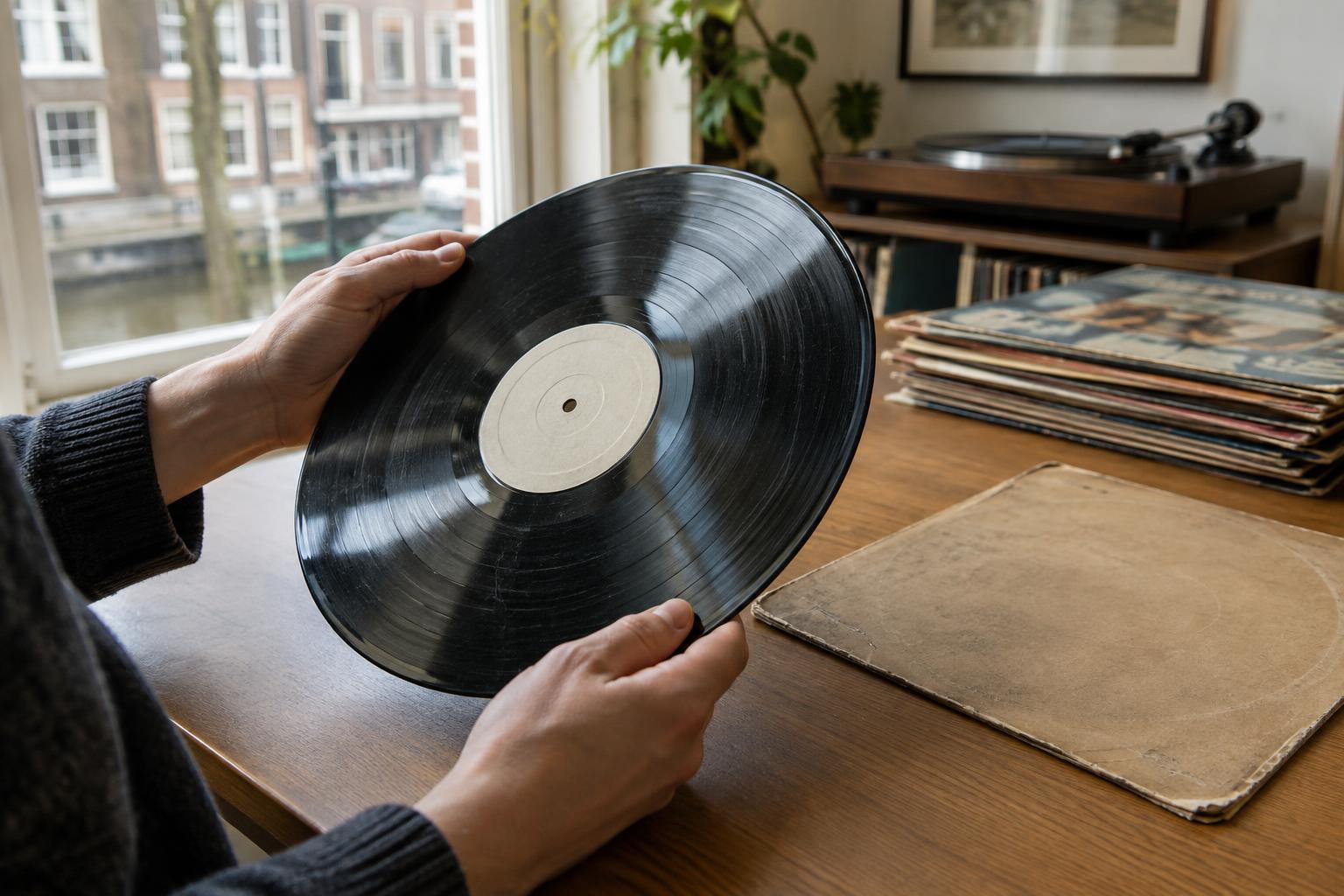
Secondhand shops and markets can be good places to build a collection gradually, but condition deserves attention. Under good light, look for deep scratches, warps, heavy scuffs and dirt. Check that the record and sleeve match, and notice whether the sleeve protects the disc properly. Light surface marks do not always mean poor playback, just as a clean-looking disc does not guarantee silence. If the seller permits it, listening is more informative than appearance alone.
Read condition descriptions carefully when buying remotely, and ask questions if a detail matters to you. A copy with sleeve wear may be perfectly satisfying if your priority is listening; a visibly damaged disc may not be worth a low price. For a record you especially want, waiting for a copy that suits both your budget and your expectations can be more rewarding than buying the first one you see.
Make room for discovery without losing your focus
A clear focus should help you explore, not shut out surprises. In an Amsterdam record shop, for example, you might browse beyond your usual section or ask what connects a local artist to the music you already enjoy. Be considerate while crate digging: handle sleeves gently, return records to the right place and give other browsers room. Conversation can open up new listening paths, but there is no need to buy something simply because it was recommended.
Once a record comes home, play it before planning the next purchase. Store discs upright, return them to their sleeves after listening and keep them away from heat. Over time, notice which records earn repeat plays and which sit untouched. That listening history is a better guide than the size of your shelf. A focused collection is not a finished checklist; it is a small, changing account of the music you want to spend time with.