Why upright storage needs support
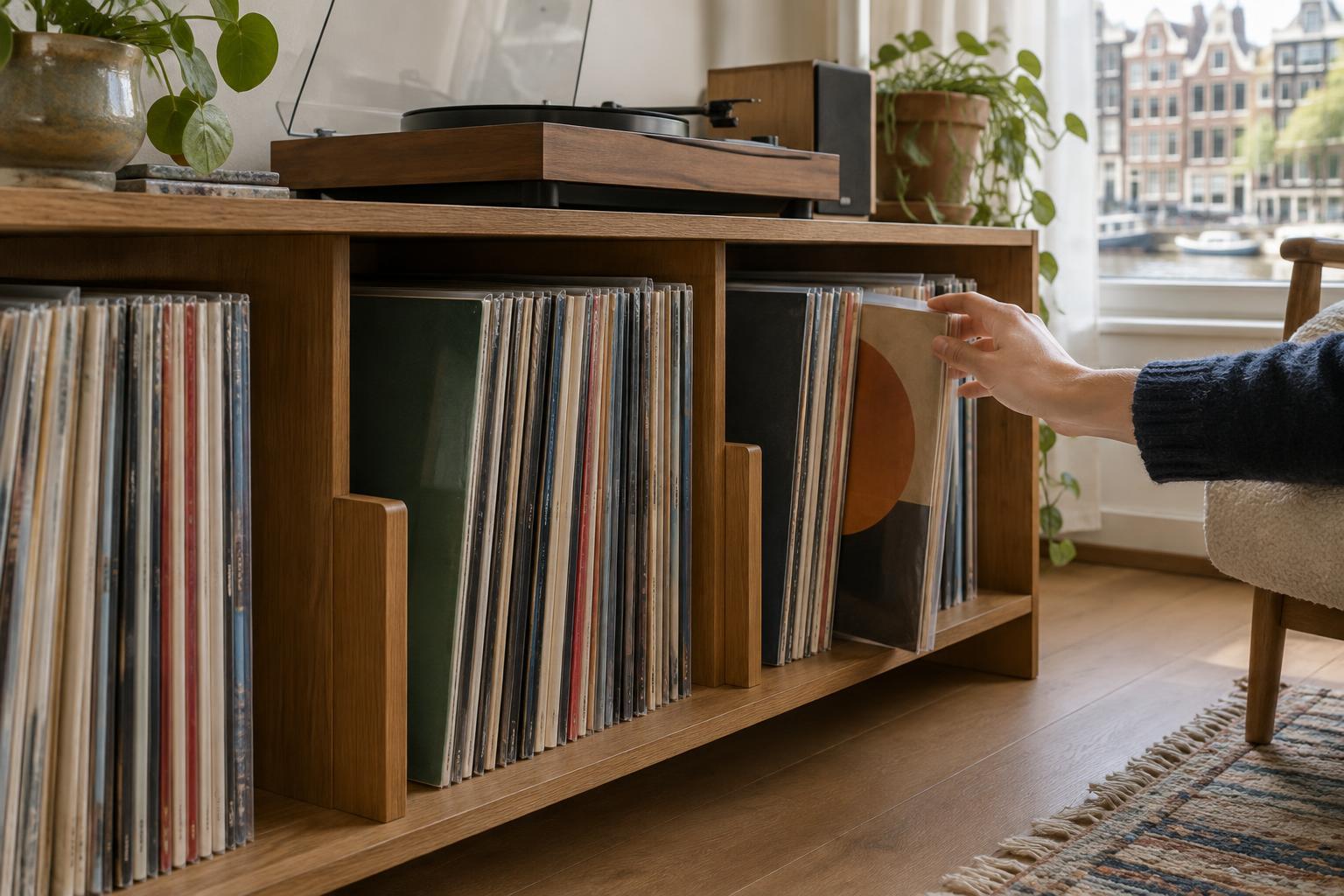
Records are easiest to browse and put away when they stand vertically, like books. The important detail is support: a row should not lean sharply toward an empty space or be squeezed so tightly that pulling one record drags its neighbours along. Both situations put unnecessary pressure on jackets and make everyday handling awkward.
Aim for a row that stays upright while allowing you to remove and replace a record with one hand. There is no magic gap to measure. If you have to force a sleeve into place, the row is too full. If several records topple sideways when you take one out, it needs a divider, a bookend or a smaller compartment.
Choose a shelf that carries the load
Vinyl becomes heavy quickly, so start with furniture that feels stable and has shelves suited to the size and weight of your collection. A useful compartment is deep enough for the records to sit securely, tall enough that their tops do not scrape, and wide enough for browsing without creating a long, unsupported run. Check the furniture maker’s load guidance where available, especially for adjustable shelves.
Set the unit on a level floor and make sure it cannot wobble when you browse. Where appropriate, secure tall furniture against tipping, particularly in a home with children or pets. Avoid storing records where they overhang a shelf edge. A record that is only partly supported is easier to knock and may leave its jacket bearing weight unevenly.
Break long rows into manageable sections
Dividers are useful even if you do not sort your collection by genre or artist. They stop a half-filled shelf from becoming a sloping stack and give you places to expand. Choose dividers or bookends that stand firmly without sharp edges pressing into sleeves. A narrow compartment can provide the same support without any added hardware.
When a section fills up, move a few records into another section rather than packing in one more. You should be able to spread the jackets slightly to read spines and lift out a choice without tugging. Leave a little spare space for new finds, but not so much that the whole row collapses toward it. As your collection changes, adjust the dividers; a setup that worked last month may need a quick reset after a few crate-digging trips.
Keep sleeves protected without making rows bulky
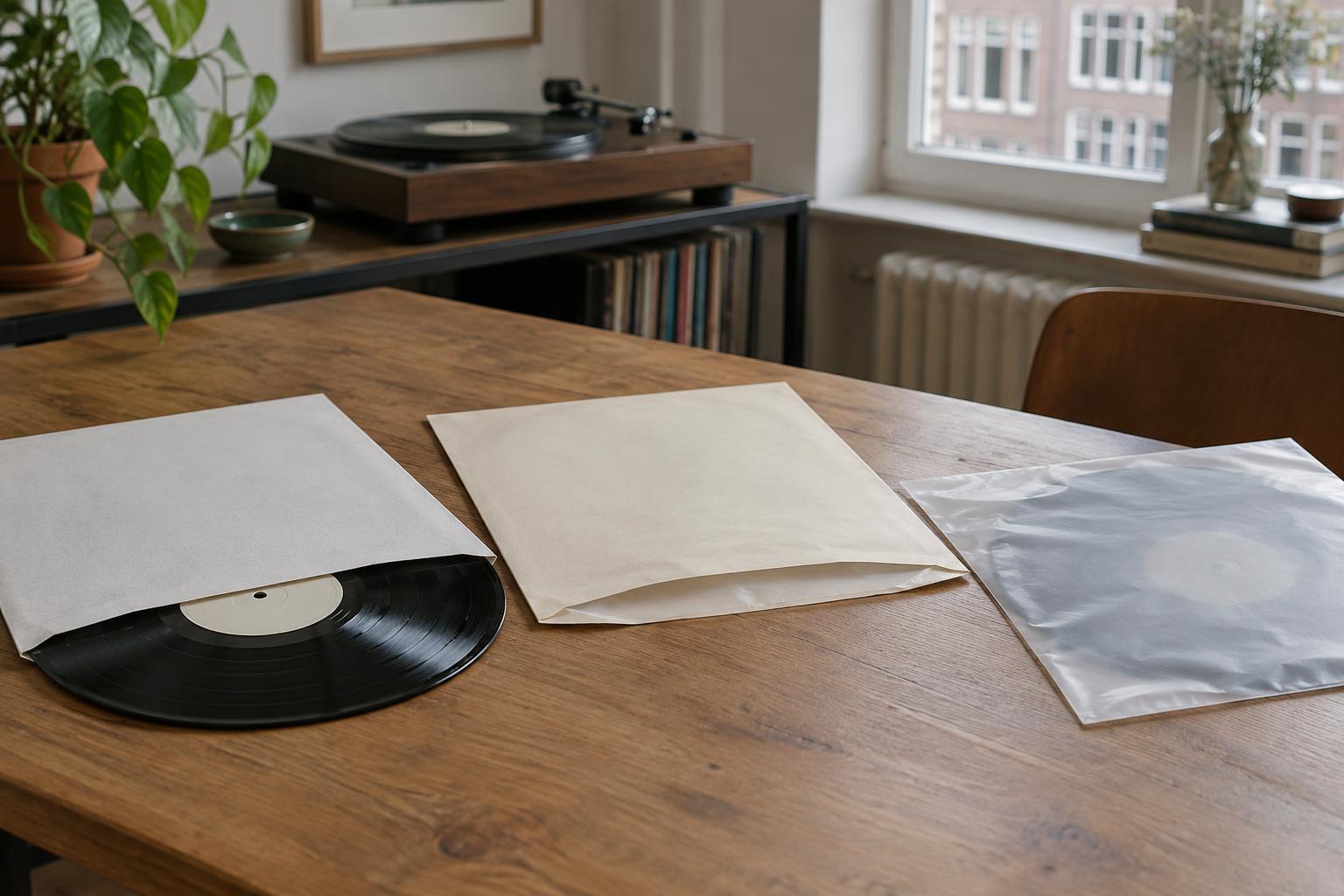
A clean inner sleeve helps protect the disc from dust and scuffs, while an outer sleeve can take some wear that would otherwise reach the jacket. Outer sleeves add thickness, however, so allow for them when judging how many records fit in a compartment. Oversized gatefolds and box sets may need more room than standard single albums; do not use them as wedges to make an overfull row fit.
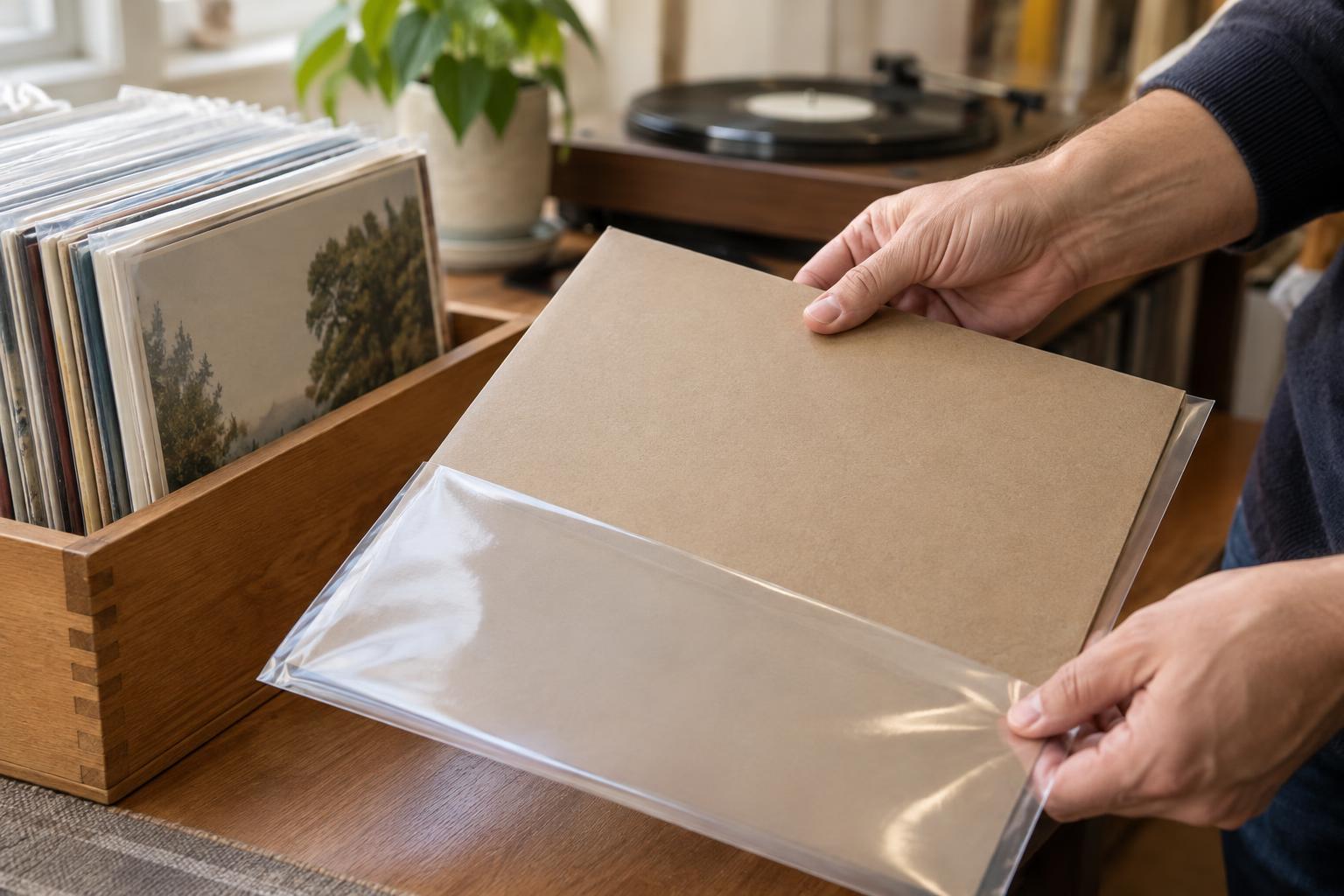
Keep each record properly seated inside its jacket or protective sleeve before shelving it. If you store an inner-sleeved disc outside the jacket but inside an outer sleeve for easier access, check that the outer sleeve supports both pieces and that nothing can slide out as you browse. Whichever arrangement you prefer, consistency makes it easier to return records without bending corners or catching sleeve openings.
Place the collection well and check it occasionally
Put shelves away from direct sunlight, radiators and other sources of heat. Try to avoid damp spots and areas where temperatures swing noticeably, such as a poorly insulated storage space. A reasonably stable room environment is more useful than chasing a precise number. Keep records off the floor if spills or dampness are possible, and leave enough access to dust the shelf and inspect the sleeves.
Every so often, look along each row rather than just at its spines. Are jackets bowing? Has a divider slipped? Is one heavy box set pushing its neighbours out of line? Small adjustments—moving a handful of albums, straightening a bookend or clearing space on another shelf—keep storage comfortable to use. The best arrangement is one you can maintain while still enjoying the collection, not one that looks perfectly packed on the day you set it up.