First, work out when the hum appears
Turntable hum is frustrating because several different problems can sound similar. A steady low tone, a sharper electrical buzz and a mechanical noise coming from the deck itself may have different causes. Before moving any cables, turn the volume down and note what happens with the turntable stopped, running and playing a record. Is the sound present only when the phono input is selected? Does it change when you touch the tonearm or move a cable? Is it in one speaker or both?
These observations narrow the search. If the noise is audible on every input, the turntable may not be the source. If it appears only during playback, listen closely to distinguish sound coming through the speakers from vibration you can hear near the turntable. Some surface noise and faint system hiss are normal; a persistent hum that distracts from music is worth investigating. Change one thing at a time and listen again, so you can tell which adjustment made a difference.
Check the signal path and input settings
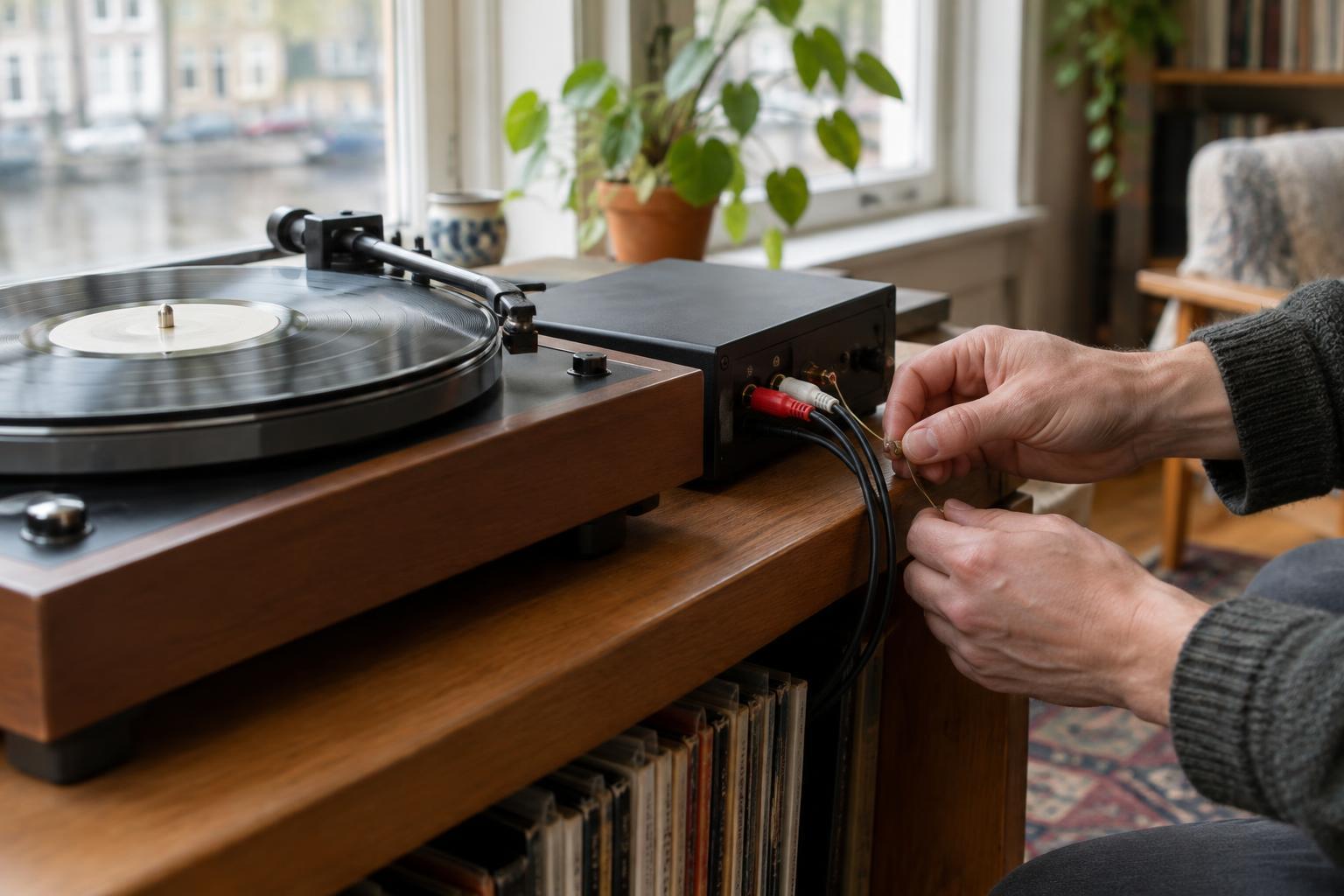
Turn the equipment off before changing connections. Follow the path from cartridge to turntable outputs, then to a phono preamp if you use one, and finally to the amplifier or powered speakers. A turntable without a built-in phono stage generally needs a phono input or an external phono preamp. A turntable with its built-in stage switched on generally connects to a line-level input, not another phono input. Matching the output and input correctly can prevent distorted or unexpectedly noisy sound.
Make sure left and right plugs are seated firmly, without forcing them. If the turntable has a separate ground wire, check the manufacturer’s instructions for where it should connect; it commonly attaches to a ground terminal on the phono preamp or amplifier. Not every turntable has or needs a separate ground wire. Do not remove the protective earth from a mains plug or improvise an electrical-ground connection to quiet the system.
Look for cable and placement problems
The signal from a cartridge is small, so the cable running to the phono input is a sensible place to check for interference. Keep phono cables reasonably short and avoid running them alongside power cords, plug strips or power adapters for long stretches. If cables must cross, try crossing them rather than bundling them together. Move an external phono preamp away from power supplies and large electronic devices, then listen for a change.
Check the turntable’s position, too. A deck close to a speaker can pick up vibration, particularly at higher volumes; this can sound more like a swelling low-frequency rumble than a constant electrical hum. Try a stable surface farther from the speakers. You can also switch off nearby devices one at a time to see whether a particular adapter or piece of equipment affects the noise. If a move helps, keep the new arrangement tidy and accessible rather than stretching cables tight.
Isolate one component at a time
If the hum remains, make a simple comparison. With the volume low, try another input on the amplifier. If you use an external phono preamp, confirm that its power supply and connections are secure and correctly matched to that unit. Where suitable replacement cables are available, testing a known-good signal cable may reveal a faulty lead. Always power equipment down before swapping cables, and bring the volume up cautiously afterward.
A hum in only one channel may point toward a loose connection on that side, but it does not identify the exact fault by itself. If the headshell is removable, consult the turntable’s instructions before checking that it is seated properly. Cartridge pins and their tiny wires are delicate: do not pull on the wires or keep reseating them as a first experiment. If a particular component consistently brings the hum back, you have a useful clue to share with a repair technician.
Know when to stop troubleshooting
A good troubleshooting session ends with a clear result, not necessarily a home repair. Write down when the noise occurs, which speaker it affects and what you have already tried. That record can save time if you ask a technician to inspect the turntable, phono stage or amplifier.
Stop using the equipment and seek qualified help if you notice a damaged power cord, burning smell, unusual heat or an electrical shock. Do not open mains-powered equipment or defeat its safety features to chase a hum. For ordinary connection problems, patient, low-volume tests are usually more productive than changing every part of the setup at once.