Begin with the connections, not a single sound
There is no one sound that represents Indonesian music in Amsterdam. Indonesia is home to many languages, communities and musical traditions; Amsterdam is a city where people encounter those traditions through family life, performances, recordings and collecting. A useful listening guide should make room for that variety rather than treat every record with an Indonesian connection as part of one genre.
The Netherlands’ colonial history in Indonesia is part of the context. So are migration, family memory and musicians’ own choices about what to preserve or change. Those histories are not interchangeable: an older recording made under colonial conditions and a recent release by an Indonesian artist call for different kinds of attention. When browsing, look for the performers, place and circumstances of a recording, not just a country name on the sleeve.
Listen for ensemble and texture in gamelan
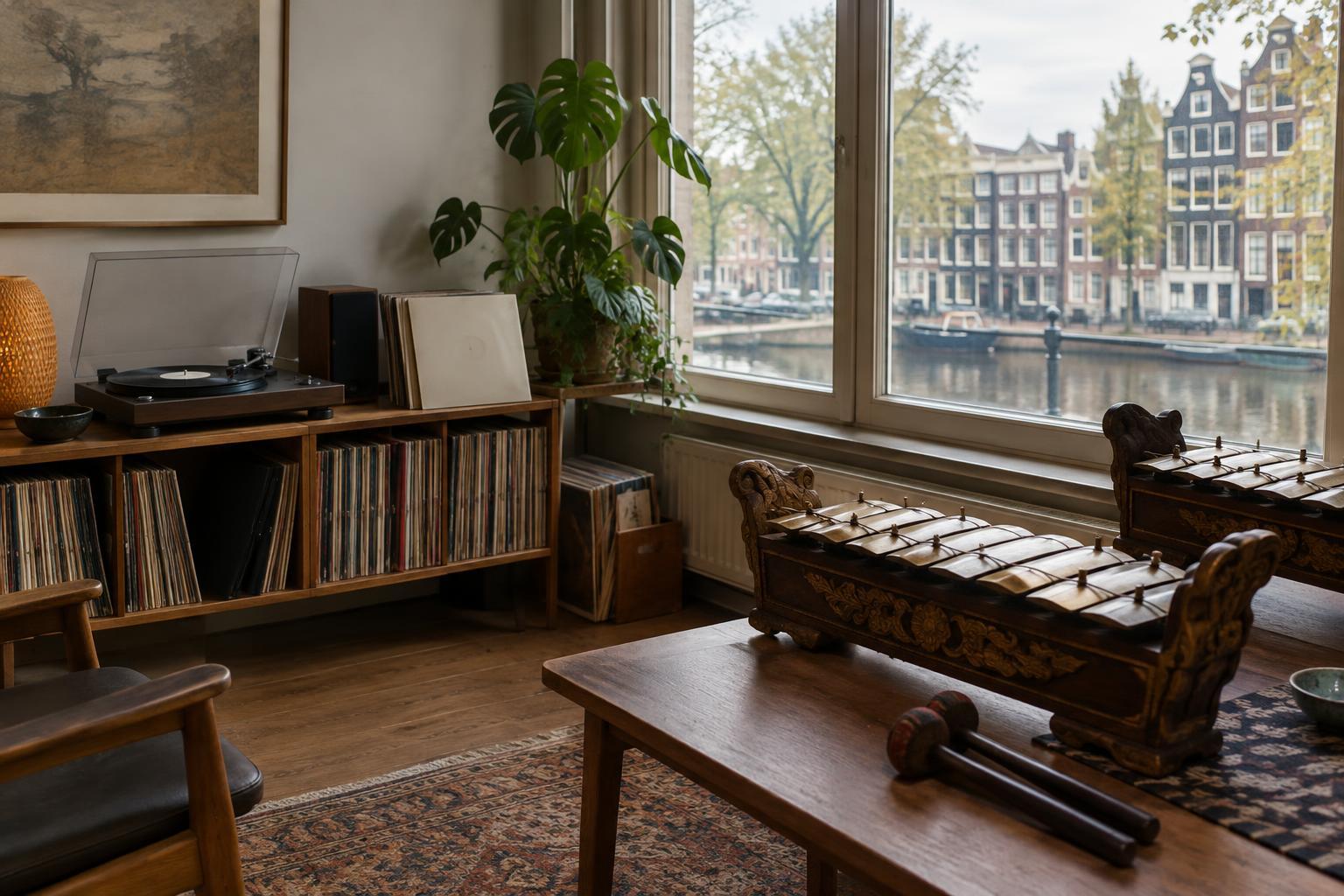
Gamelan is a starting point for listeners curious about Indonesian ensemble music, but the word covers varied practices rather than a fixed set of instruments or rules. Many gamelan ensembles feature tuned percussion, with parts that interlock and repeat in shifting patterns. A recording might invite you to follow the pulse, then notice how a melody appears across several instruments. Others may place voices or dance accompaniment at the centre.
On vinyl, give the music time before deciding where its main tune sits. Try listening to a full side without skipping tracks, then replay a passage and focus on one layer at a time. Sleeve notes can help identify an ensemble or regional tradition; check them rather than assuming that two records labelled “gamelan” document the same practice. A live performance, when available, adds the sight of players coordinating their parts—something an audio recording cannot fully convey.
Follow songs across borders: kroncong and Indo-rock
Kroncong offers a different route into the listening guide. Often associated with plucked-string accompaniment and vocal songs, it has changed over time and has been interpreted in different settings. Listen to how the rhythm supports the singer and how a melody leaves space for phrasing. If you find several versions of a song, comparing their tempos and arrangements can be more revealing than trying to choose a definitive one.
Indo-rock opens another chapter in Dutch music history. Musicians with family connections to Indonesia helped shape guitar-led popular music in the Netherlands, drawing on and contributing to wider rock-and-roll culture. It is worth hearing these records as music made by particular players, not simply as evidence of an influence. Compare the lead guitar, rhythm section and vocals with other popular recordings from a similar era. The differences may be as interesting as the shared vocabulary.
Make room for popular and contemporary music
A listening path that ends with archival records misses the point: Indonesian music continues to be made and remade. Dangdut, pop, rock, electronic music and independent releases can all lead to rewarding discoveries, though none stands in for the whole country. Start with one artist whose sound catches your ear, then follow the musicians, producers or styles named on the record. That approach gives you a more useful trail than collecting by broad geographic label alone.
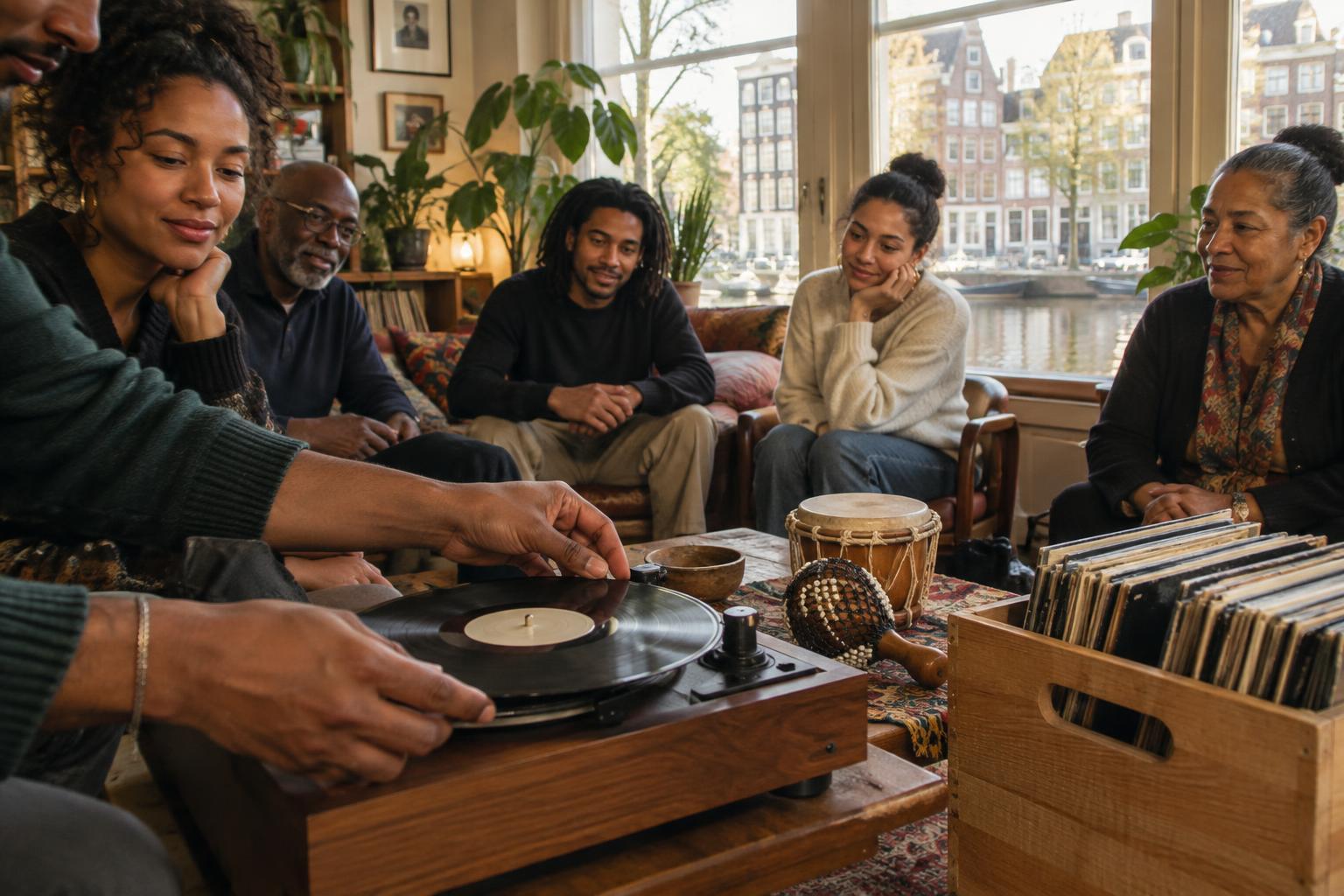
In Amsterdam, a record sleeve, a concert listing or a recommendation from another listener can be a doorway into this music. Ask what a particular recording is and who made it, rather than expecting someone to explain an entire culture. If a release combines Indonesian and Dutch musical references, listen for the choices the artist makes: which elements are foregrounded, which are transformed, and which are left behind?
Build a thoughtful Amsterdam listening habit
For a practical first session, choose three contrasting recordings: one ensemble performance, one vocal song and one guitar-led or contemporary track. Read whatever credits are available, play each without interruption, and jot down a question you want to pursue. A label such as “world music” tells you little on its own; the names of performers, instruments and places will usually give you better next steps.
Crate-digging can be part of that process, but approach an unfamiliar record with care. Check its condition and credits, and avoid treating an old sleeve’s description as the final word on the music. When possible, seek out releases that identify and credit the musicians clearly. Amsterdam’s musical connections with Indonesia are best heard as an ongoing conversation, with room for history, pleasure, disagreement and new work—not as a single chapter already complete.