Related sounds, not opposing camps
Jungle and drum and bass are closely related forms of fast, bass-heavy dance music. Jungle emerged from a blend of breakbeat-driven club sounds and influences including reggae and dancehall; drum and bass developed alongside and out of that musical world. The names are useful, but they do not mark a clean border. Records, DJs and listeners have long used them in overlapping ways, and a track can plausibly be described as both.
Rather than treating the labels as a test with one correct answer, listen to how a track handles three things: its drums, its low end and the space between them. Production choices and musical references often tell you more than a tempo reading. That approach also makes crate-digging more rewarding: a record filed under either name may contain exactly the sound you were hoping to find.
Breakbeats: chopped conversation or driving pulse?
Both styles make extensive use of breakbeats: short passages of recorded drumming that can be looped, sliced and rearranged. In jungle, those pieces often feel restless and conversational. A snare may arrive where you expect it, then be interrupted by a rapid run of kicks, ghost notes or cymbals. The edits can draw attention to the character of the original drum sound, including its rough edges.
Drum and bass can be every bit as intricate, but many tracks put greater emphasis on a steady forward pull. The main kick-and-snare pattern may stay easy to follow while smaller percussion details shift around it. Other tracks use sharply programmed drums that sound less like a loop being pulled apart. Neither description applies to every record: a smooth jungle tune and a densely chopped drum and bass tune can quickly overturn a tidy rule.
Bass: weight, movement and musical reference
Low frequencies matter in both genres, so “lots of bass” will not help you distinguish them. Listen instead to what the bass does. Jungle often places a heavy bass phrase against busy drums, letting the rhythm section sway even at high speed. You may hear bass sounds and vocal fragments that point toward reggae or dancehall, though those influences are not present in every tune.
Drum and bass covers a broad range of low-end approaches, from rounded, sustained notes to tightly shaped bass sounds that change timbre as they move. In some tracks, the bassline is a repeating anchor; in others, it becomes the main melodic or textural event. On vinyl, avoid judging that balance from a quiet or poorly positioned setup alone. Speaker placement, room acoustics and playback level can change how clearly you hear the relationship between bass and drums.
Tempo tells only part of the story
Jungle and drum and bass generally occupy a similar fast tempo range, often around the mid-160s to 180 beats per minute. That overlap makes speed a weak way to identify either one. A track can sound frantic because its breaks are packed with quick notes, or spacious because its drum pattern leaves gaps, even when both tracks run at nearly the same pace.
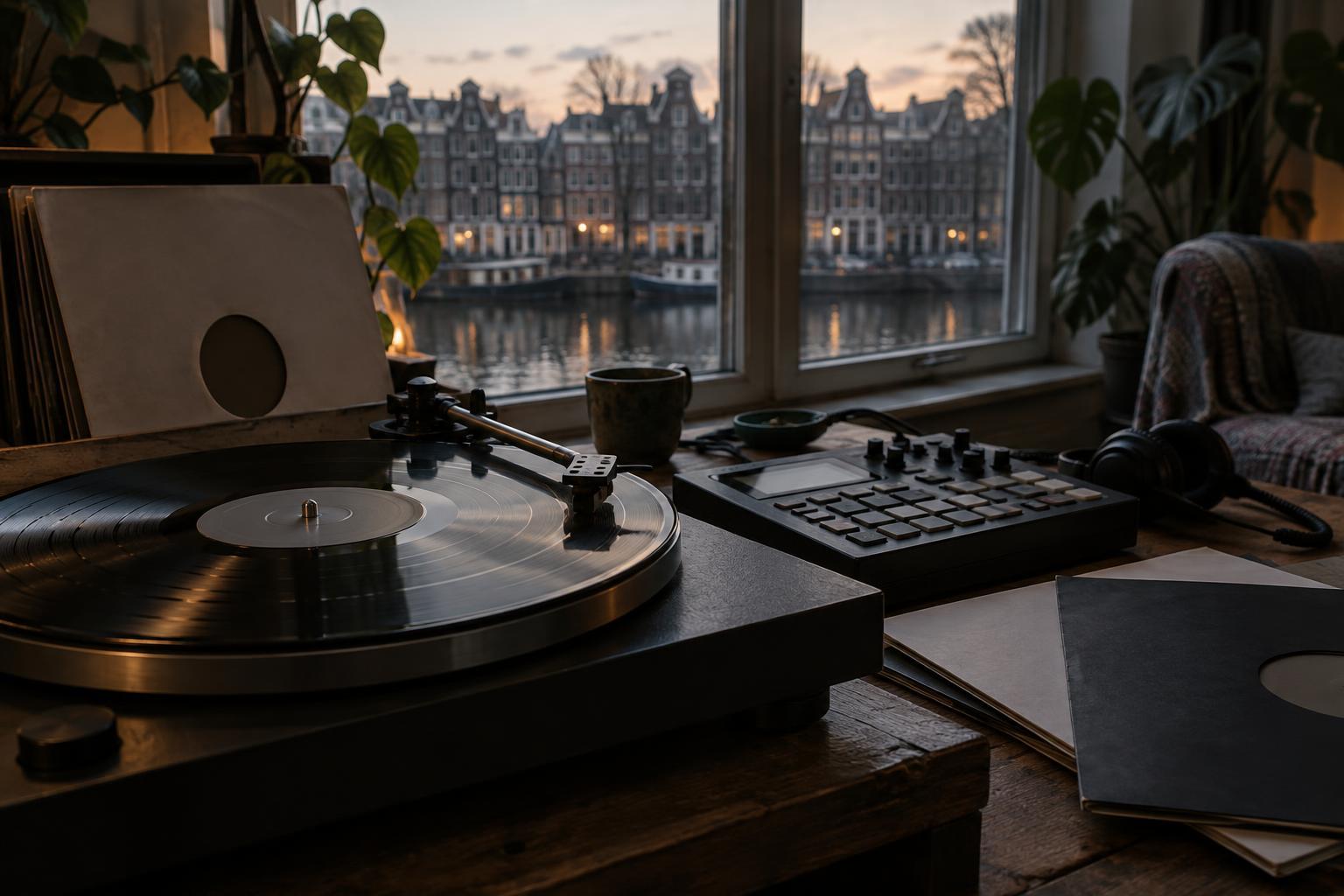
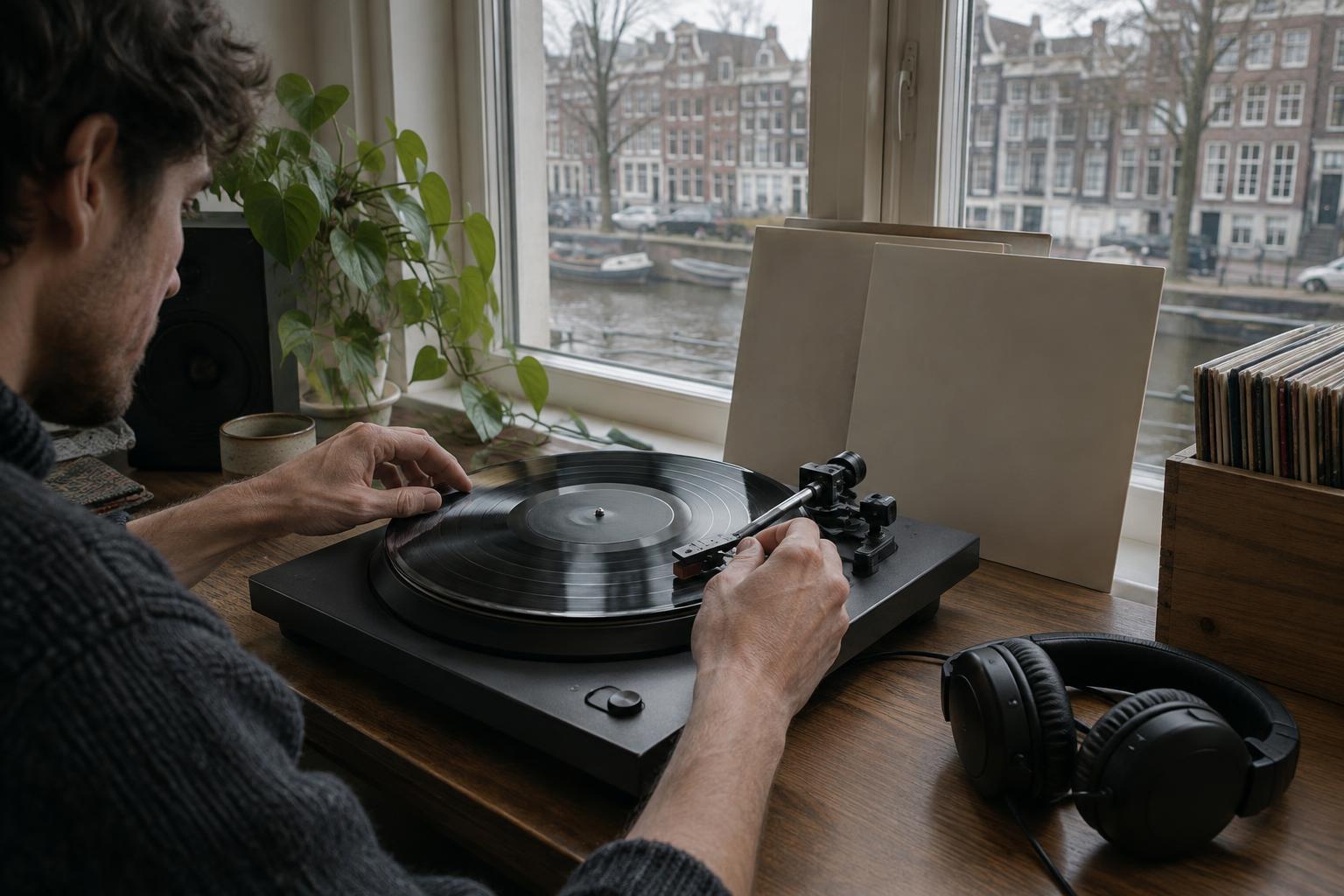
Try listening at two levels at once. Follow the snare as a regular marker, then notice the quicker kick and percussion figures around it. You can also feel the music at half the counted tempo, which often makes its groove easier to grasp. If a record feels unusually fast or slow on your turntable, check that the platter is set to the speed printed on the label before drawing conclusions about its style.
A listening method for record collectors
When comparing records, start with a short stretch where the drums and bass play together. First, follow the break: does it keep changing shape, or does it settle into a strong recurring pattern? Next, focus on the low end: does it sway underneath the drums, hold long notes, or push forward as a sharply defined riff? Finally, listen for vocals, melodic samples and the way the arrangement makes room for them.
Repeat the exercise with another track rather than relying on a single signature sound. Sleeve notes and shop dividers can suggest where to begin, but your ears will reveal connections across the labels. For a vinyl collection, that flexibility is useful: you can organise records by the terms printed on them, by the way they mix together, or by the particular drum-and-bass interplay that makes you want to play them again.