Start with three separate questions
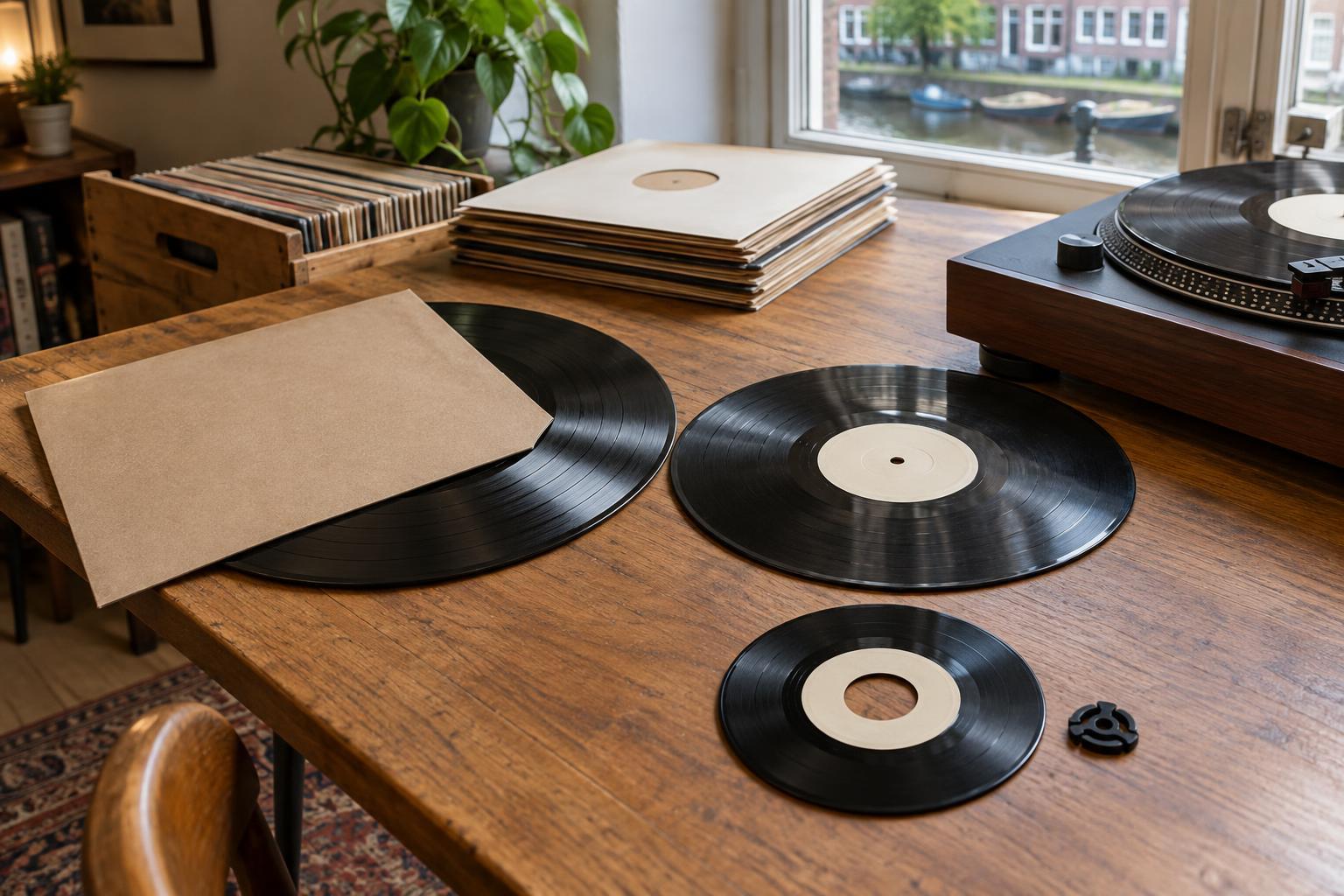
Vinyl formats are easier to understand when you separate physical size, playing speed and the kind of release. Size describes the diameter of the disc, commonly 12 or 7 inches. Speed describes how fast it turns, usually 33⅓ or 45 revolutions per minute (rpm). Terms such as LP, EP and single describe how the music is presented: an album-length program, a shorter collection or a release built around one featured track.
These categories overlap rather than forming a rigid set of rules. A 12-inch record is not necessarily an LP, and a 7-inch record does not always play at 45 rpm. The label or sleeve is the best place to check. Before putting a record on the turntable, look for its stated speed and inspect the track listing on both sides.
LPs: the album format
LP stands for long-playing. In everyday collecting, it usually means an album on a 12-inch record played at 33⅓ rpm. Its sides can hold several songs, making it a familiar choice for a full sequence of music. Some albums span two or more discs to accommodate longer programs or give the grooves more room.
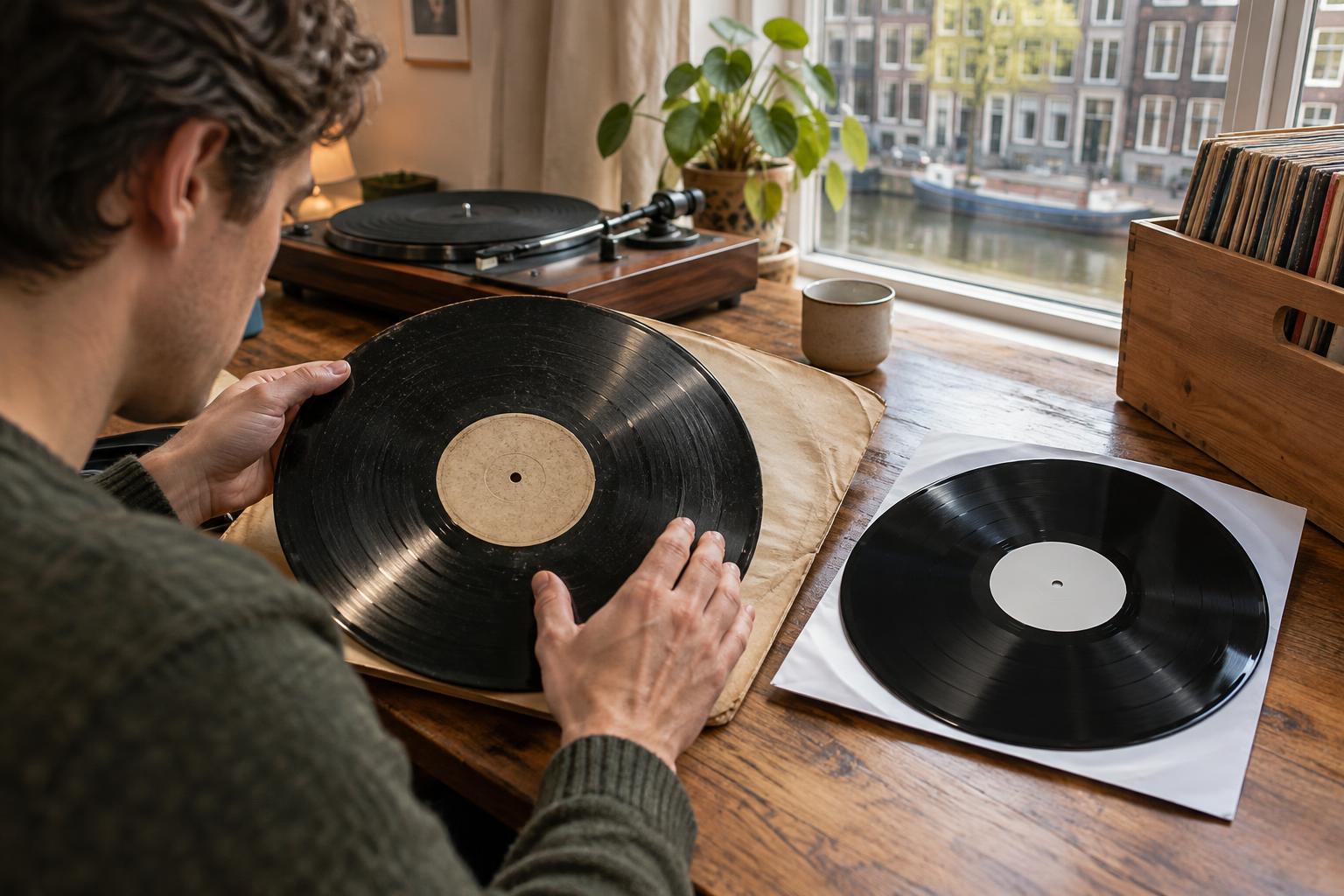
Not every album follows that pattern. Some LPs play at 45 rpm, and albums have also appeared on smaller discs. If you are browsing a second-hand bin, check whether a sleeve contains every disc the track listing calls for. An attractive cover can hide a missing second record, while a handwritten speed note may be less reliable than the printed label.
EPs: more than a single, less than an album
EP means extended play. It generally describes a release with more material than a conventional single but a shorter program than an LP. An EP might introduce a handful of related songs, gather alternate versions or give a small musical idea its own space. The term tells you more about the scope of the release than the diameter of the disc.
You can encounter EPs on 7-inch, 10-inch or 12-inch vinyl, and their speeds vary. That flexibility makes the track listing especially useful: two releases labeled EP may offer quite different amounts of music. If you are collecting a particular artist, an EP may contain material that does not appear on the album you already own, but check the titles rather than assuming it does.
12-inch and 7-inch singles: two ways to spotlight a track
A 12-inch single often gives one featured track ample space on a side, with another version, remix or companion track on the reverse. The format is closely associated with music intended for DJ play, including dance music, though it appears across genres. Depending on the release, it may play at 45 or 33⅓ rpm. Extra room for the groove can help accommodate a loud or bass-heavy cut, but size alone cannot tell you how a record will sound; mastering and condition matter too.
A 7-inch single is smaller and commonly plays at 45 rpm. It typically pairs a featured track with a B-side, making it a compact way to explore an artist’s work outside an album. Some 7-inch records have a large center hole and need an adapter on a standard spindle; others have a small hole. Check the speed even if the record looks familiar, since exceptions exist.
What to check in the crate and at home
When deciding between formats, start with the music you want. An LP may suit someone who wants the full album sequence; a single may be the better find if its particular mix or B-side is the draw. Compare track listings carefully, especially when a song appears on several releases. The album version, radio edit and extended mix may not be interchangeable.
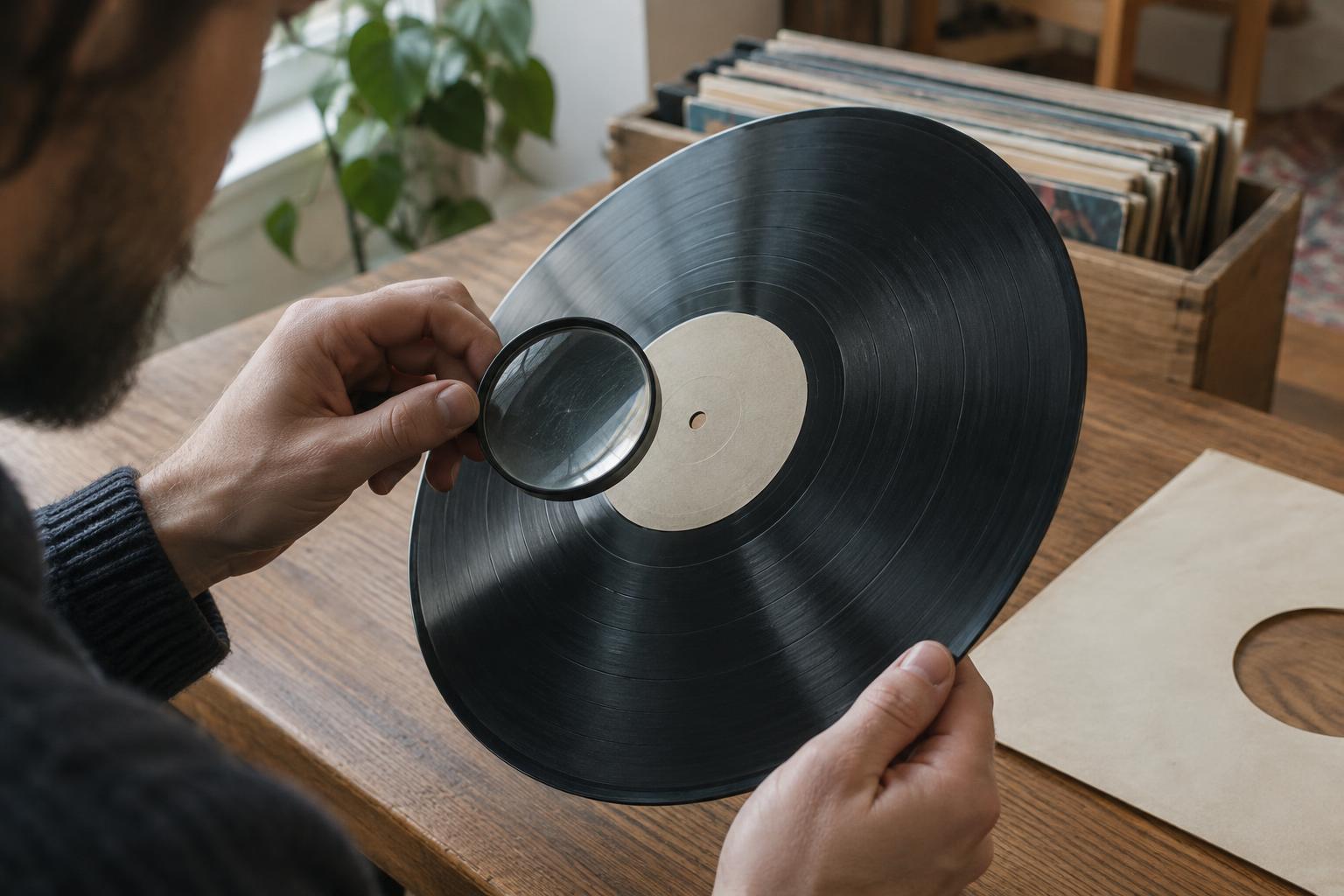
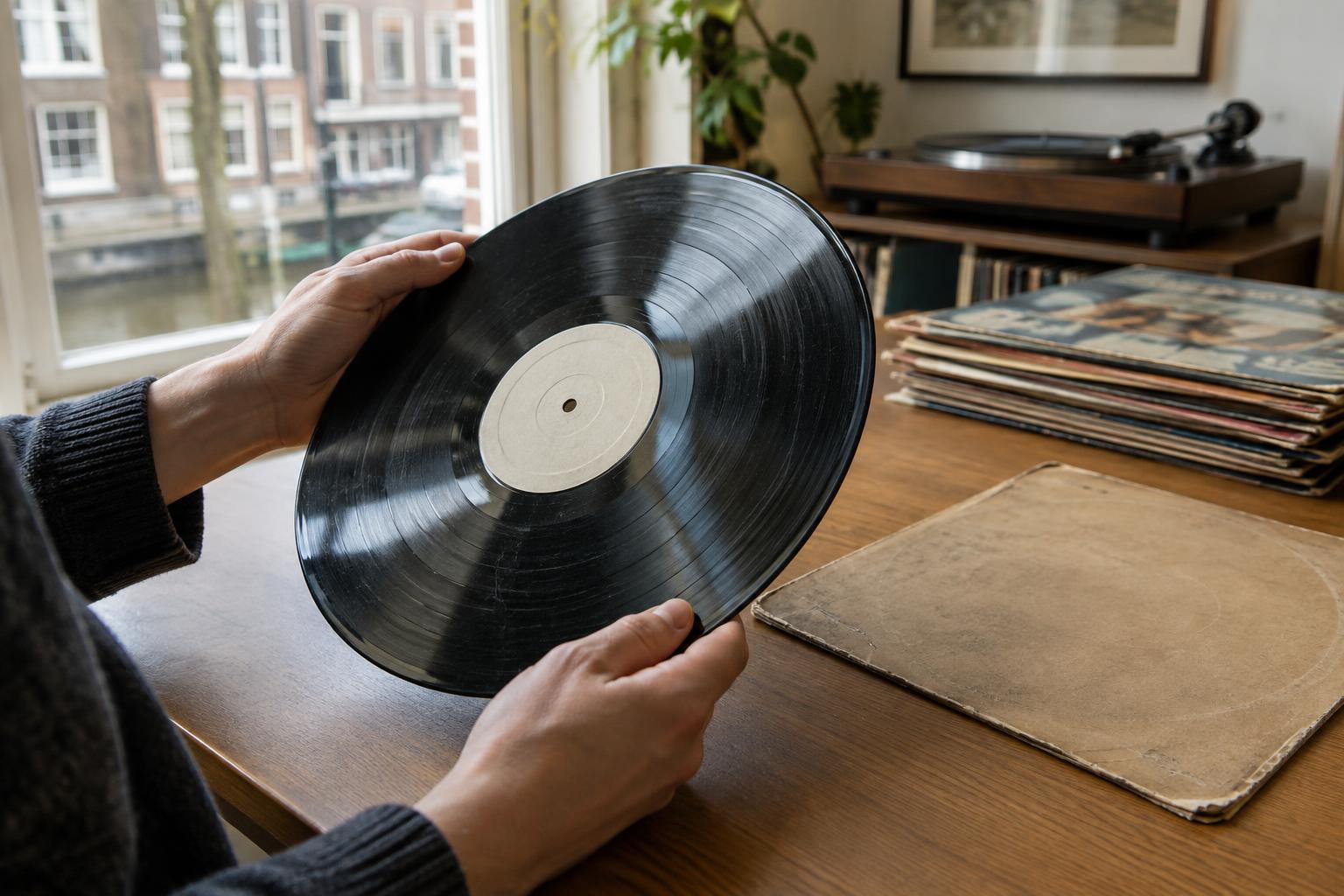
Then inspect the copy itself. Hold it by the edges and label, look at both playing surfaces under good light, and check that the record matches its sleeve. Confirm the speed before playback and use the correct turntable setting and any needed center adapter. Whether you are browsing in Amsterdam or sorting a home collection, those small checks help you understand what you have found before the needle drops.