Start with the problem you are trying to solve
Record cleaning is most useful for removing loose dust, fingerprints and residue that a dry brush may leave behind. It cannot repair scratches, pressing defects or groove wear. If a record remains noisy after a careful clean, another round with stronger equipment may not change it. Begin by checking the disc under good light and listening for the difference between occasional dust-related ticks and noise that repeats at the same point.
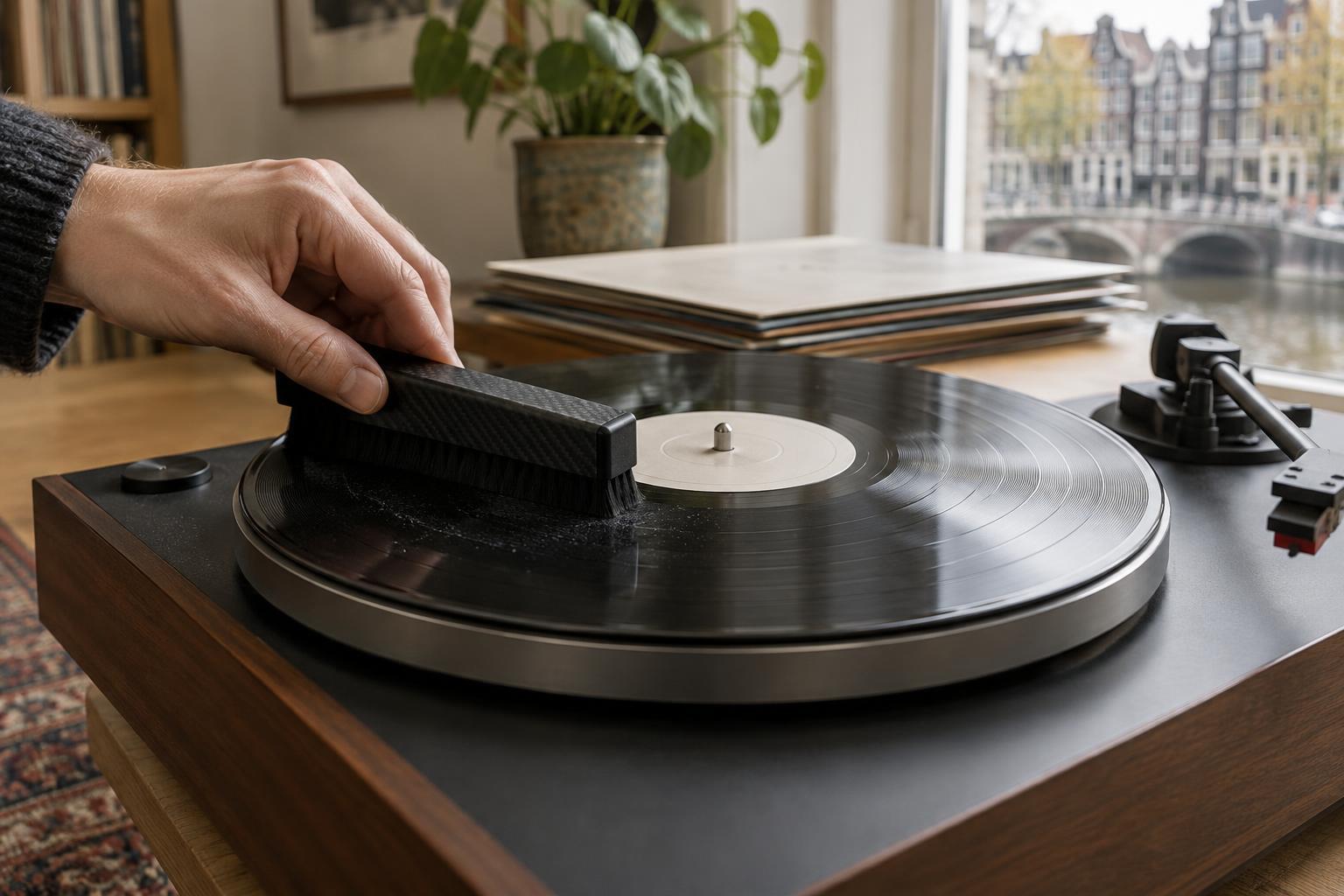
Your routine matters as much as the machine. Handle records by the edges and label, keep the stylus clean according to its maker’s guidance, and return dry records to clean inner sleeves. A visibly dusty second-hand find may need a wet clean before its first play; a record that has been stored well may only need a gentle dry brush. Whichever method you choose, avoid pressing grit into the grooves and let the record dry fully before sleeving it.
Manual cleaning: an accessible starting point
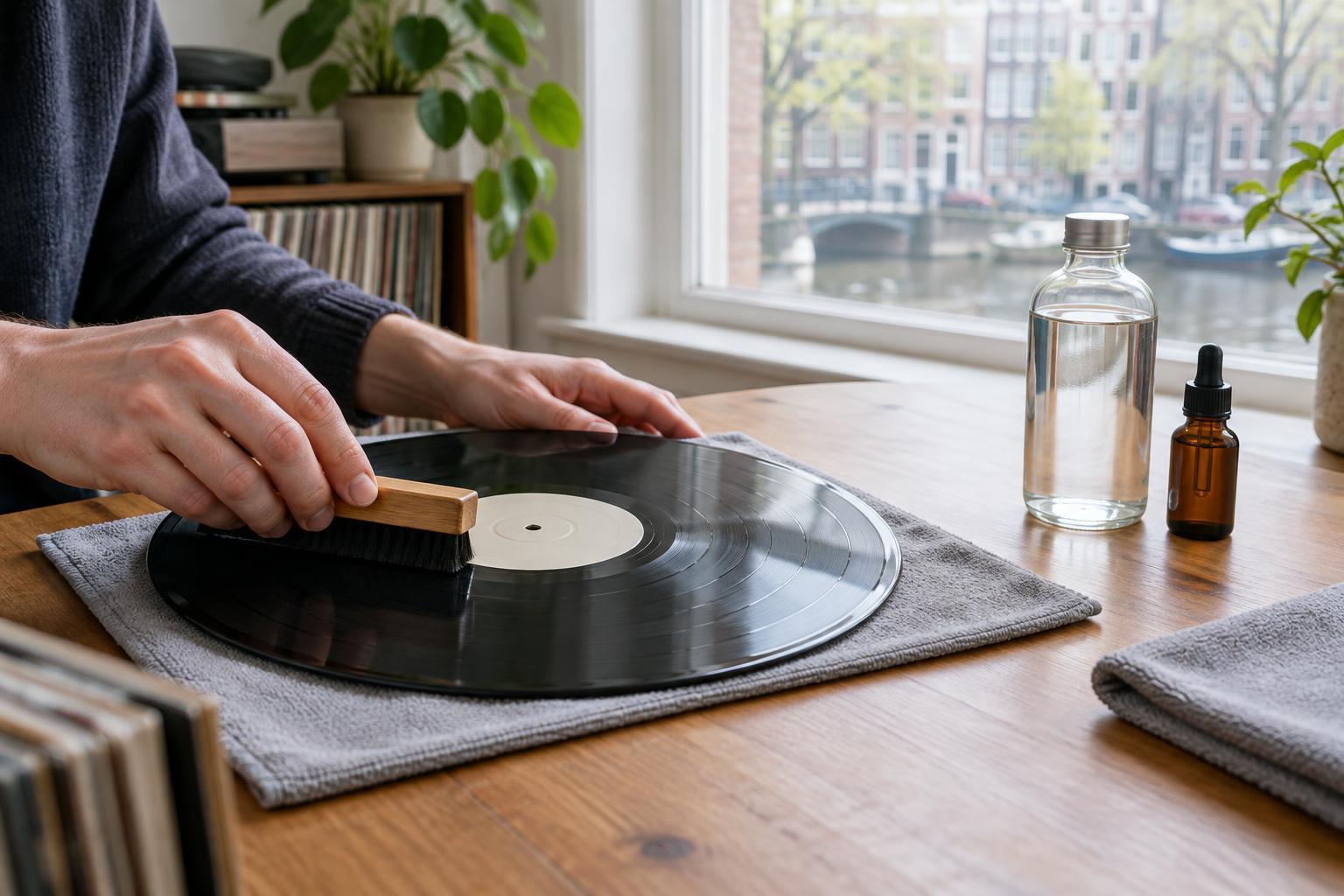
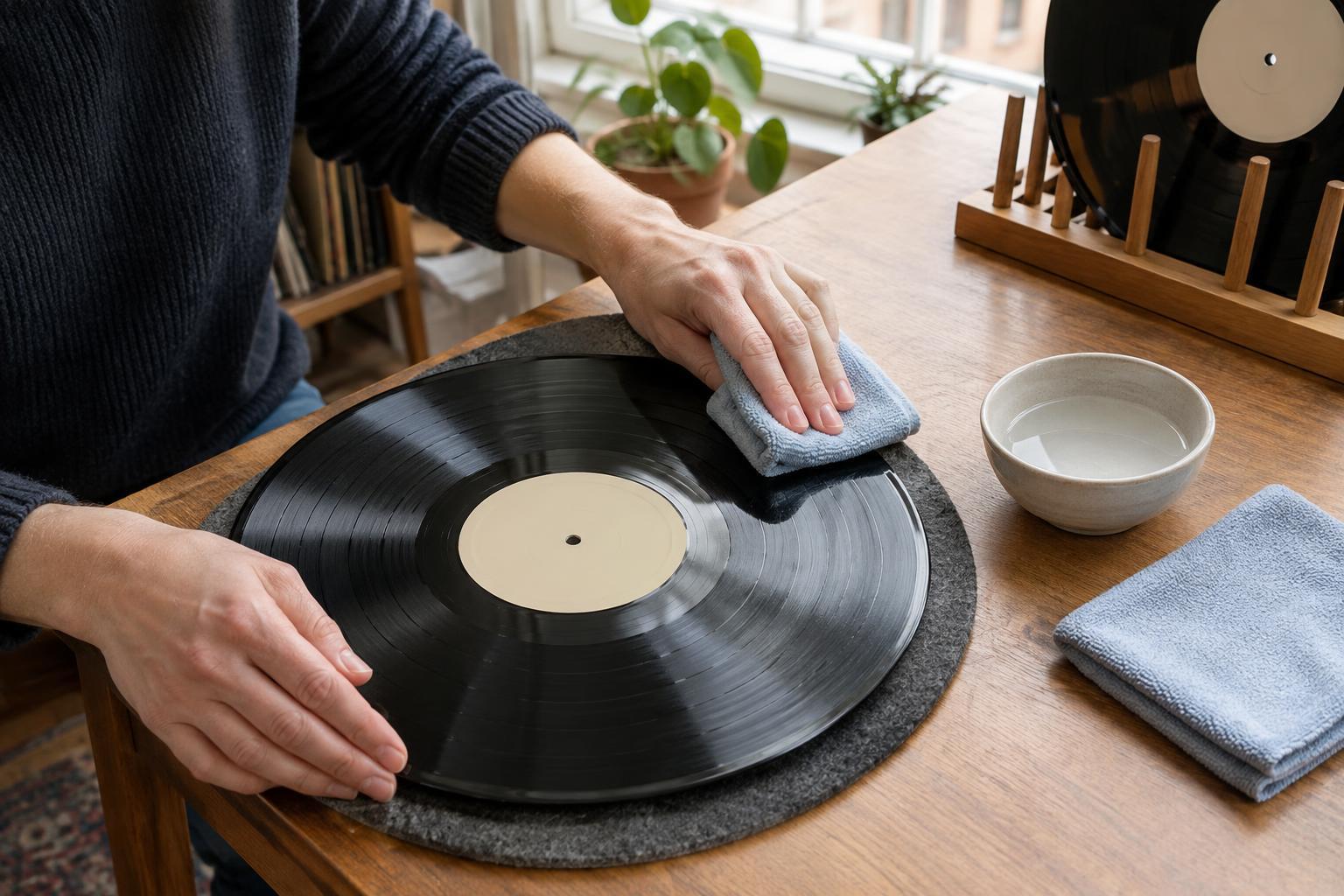
Manual wet cleaning uses a record-safe fluid and a suitable brush, pad or cloth to loosen dirt, followed by a rinse or careful removal of the fluid. It has the lowest equipment barrier and lets you give particular attention to a grubby find. It also takes practice: too much liquid, a dirty cloth or an incomplete rinse can leave residue behind. Protect the label from excess moisture, and use separate clean materials for washing and drying.
Manual cleaning suits collectors who clean occasionally, have limited storage space or want to try wet cleaning before buying a machine. Use a solution intended for the record material, follow its directions, and avoid household cleaners or improvised mixtures whose ingredients you cannot assess. When choosing rinse water, purified water can help reduce deposits. Set the disc somewhere clean to dry without touching the playing surface, and resist the temptation to put a still-damp record straight into its sleeve.
Vacuum cleaning: a practical step up for batches
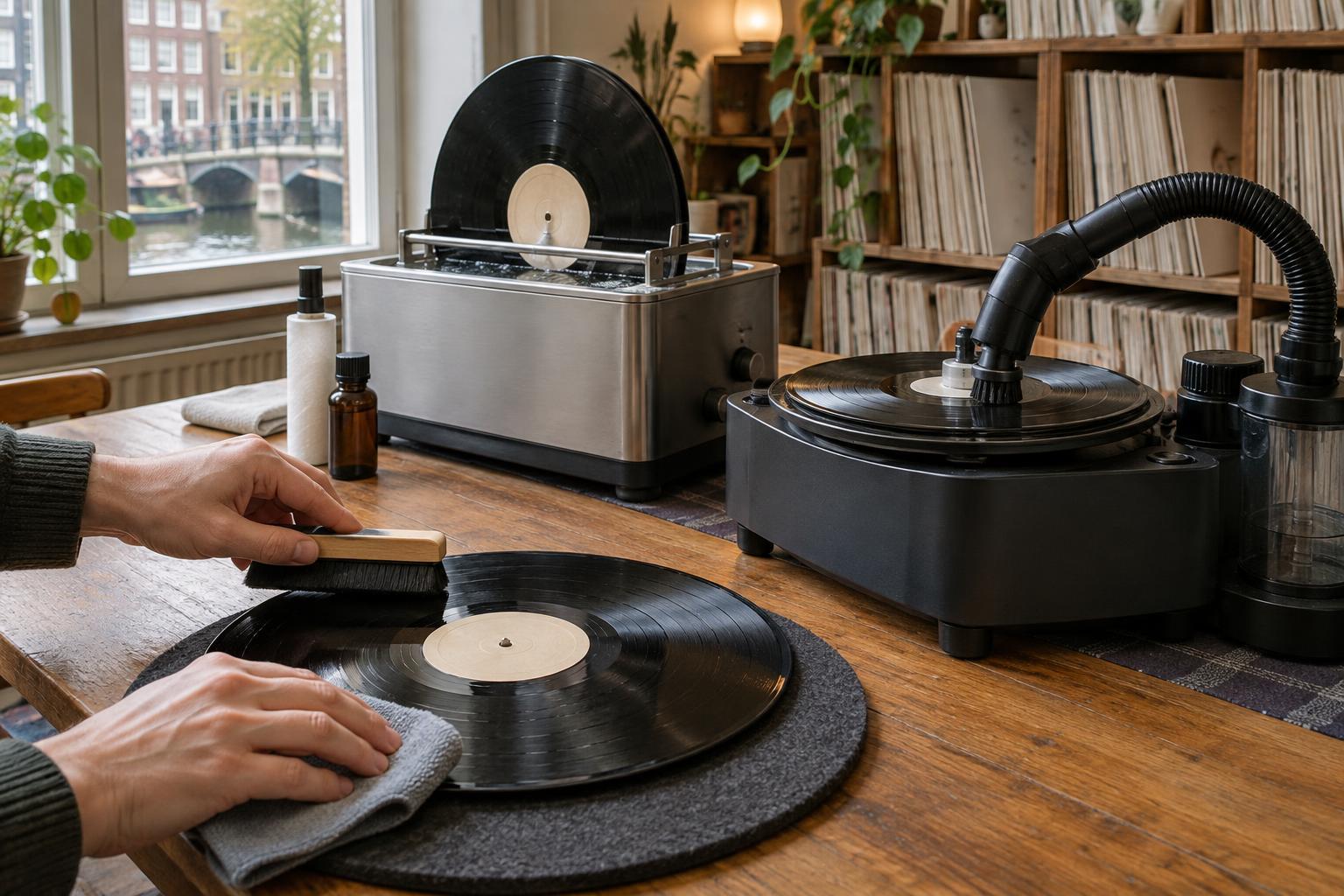
A vacuum record-cleaning machine typically combines a wet wash with suction that lifts used fluid from the surface. The main advantage is controlled removal: you are less dependent on a cloth to pick up loosened dirt and leftover cleaning solution. That can make repeated cleaning more convenient, particularly when a stack of second-hand purchases is waiting beside the turntable.
The trade-offs are cost, space, operating noise and upkeep. The suction wand or contact strips must stay clean so they do not carry grime from one record to the next. Follow the machine’s instructions for fluid, rotation and maintenance rather than assuming that more liquid or more passes will improve the result. A vacuum machine can make a consistent routine easier, but it is not a cure for damaged grooves or a substitute for clean sleeves and careful storage.
Ultrasonic cleaning: useful, but not automatic
Ultrasonic machines use vibrations in a liquid bath to help dislodge contamination. Depending on the machine and process, they can be appealing for records with dirt that has settled into hard-to-reach areas. Results depend on the equipment, fluid, cycle settings and what is on the record. Not every ultrasonic cleaner is designed for vinyl, and a record still needs a safe way to rinse and dry if the process leaves liquid or residue on it.
Consider the whole workflow before investing. You need space for the machine, time to prepare and change the bath, and a way to keep cleaned records separate from dirty ones. Follow the manufacturer’s instructions on temperature, fluid and cycle length; aggressive settings are not a sensible shortcut. Check compatibility before cleaning unusual formats or materials: older shellac discs, for example, may need different treatment from standard vinyl LPs.
Choose for your habits, then judge the results
If you buy a few records at a time, careful manual cleaning may be all you need. If you regularly bring home dusty crates’ worth of vinyl, a vacuum machine may save effort and make drying more predictable. Ultrasonic cleaning may appeal if you have a large collection, want a repeatable batch process and are willing to manage the extra equipment. You can also combine methods; some collectors use an initial wash for heavily soiled records before a machine cycle.
Try your chosen process on an ordinary record before using it on a valued copy. Inspect the surface, listen, and check that no residue or dampness remains. Keep the process gentle and consistent rather than chasing silence from every groove. The right method is the one you can use safely whenever a record actually needs cleaning—not necessarily the most elaborate machine available.